
From the early-to-mid 2010s, Telltale Games was on a certifiable hot streak, helping to solidify narrative adventure games as a mainstay genre for a new generation. Hot on the heels of their award-winning first season of The Walking Dead in 2012, they followed it up in 2014 with an adaptation of another somewhat obscure comic book series: Fables. Many regard the resulting game as Telltale’s magnum opus, and its sequel remains one of the most requested titles in the 12 years since it launched. Now, with its sequel finally being promised for next year, there’s no more fitting time to revisit this noir fantasy classic with The Wolf Among Us Remastered.
So is The Wolf Among Us truly that good, or was its overwhelmingly positive critical reception the result of a simpler, less jaded time? Thankfully, it’s much the former, and its story and writing still hold up 12+ years since its original release. As both an adaptation and original story in its own right, The Wolf Among Us is so good, in fact, that some have gone so far as to suggest that it’s superior to the source material. While I personally agree with that sentiment, I still wouldn’t let that deter you from reading through the Fables anthologies for yourself.
There’s an atmosphere and ambience to The Wolf Among Us Remastered that is just intoxicating to be in. Its gritty, neon-soaked setting and grounded-yet-fantastical tone and story effortlessly draw you in. By the cliffhanger ending of the first episode, you’re hooked and want to see Bigby’s efforts to keep Fabletown safe from the dire, violent predicament put upon it through to its potentially bitter end.
If I were to summarise what I love about The Wolf Among Us‘s story in a single sentiment, it would be that it’s the furthest thing from a fairytale. Even with the best intentions and most morally righteous choices you can make for the betterment of Fabletown and its denizens, it’s clear that the good you’ve done is merely a salve, and Fabletown would require larger systemic changes to be “fixed.”
This isn’t to say that the story is entirely bleak and hopeless, or that the choices you make are pointless. There’s still plenty of impact both Bigby as a character and you as a player can have. Rather, many choices lead to what seem like unsatisfying closures, but ultimately serve the game’s larger narrative arcs. In these, we see Bigby and companion Snow White realise that Fabletown’s government is corrupt, and, reluctant as they are to admit it, that they are part of that corruption.
More impressively, The Wolf Among Us conveys all of this without feeling tonally overly “edgy” or grimdark for its own sake. It tells a dark noir tale, yes, but it still has several heart-filled moments, and even more moments of humour that feel earned and, importantly, never out of place within the bigger picture.
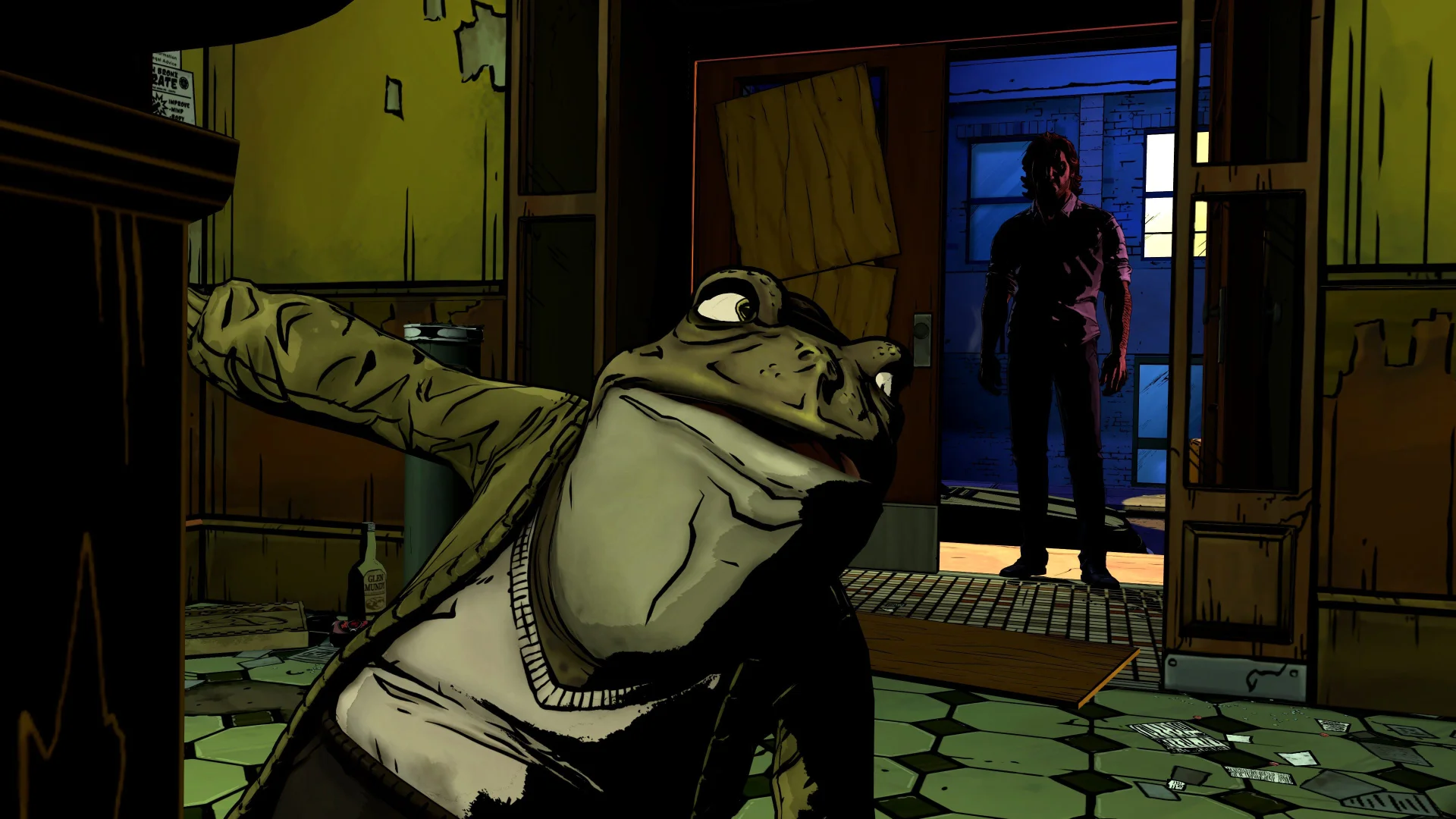
The Wolf Among Us Remastered is an effort by Telltale (which has made a resurgence in recent years since its infamous closure in late 2018) and PM Studios, both of which are responsible for the upcoming The Wolf Among Us 2. Of course, it’s clear that the remaster is an attempt to both renew interest in the original and drum up hype for the sequel, yet it also implies that certain, if not all, decisions made in this game will carry over to the sequel. That could well be false, but the emphasis on logging in to your Telltale account when you boot up the remaster to, among other things, “log your decisions” suggests otherwise.
And yes, to be clear, all five episodes of the original game are already present and accounted for in The Wolf Among Us Remastered, so no need to worry about whether you’re paying for the full game or segments of a story here.
The remaster is impressive at first glance, but its improvements are limited to the game’s visuals. Gameplay-wise, The Wolf Among Us Remastered still plays like a Telltale adventure game from the 2010s. That is to say, it’s almost entirely dialogue scenes followed by quicktime events, with occasional exploration of a limited environment and scenery inspection. To be clear, I don’t consider any of that a criticism, as I’m a huge fan of Telltale; just to inform newcomers that the story is the main attraction here more than the gameplay.
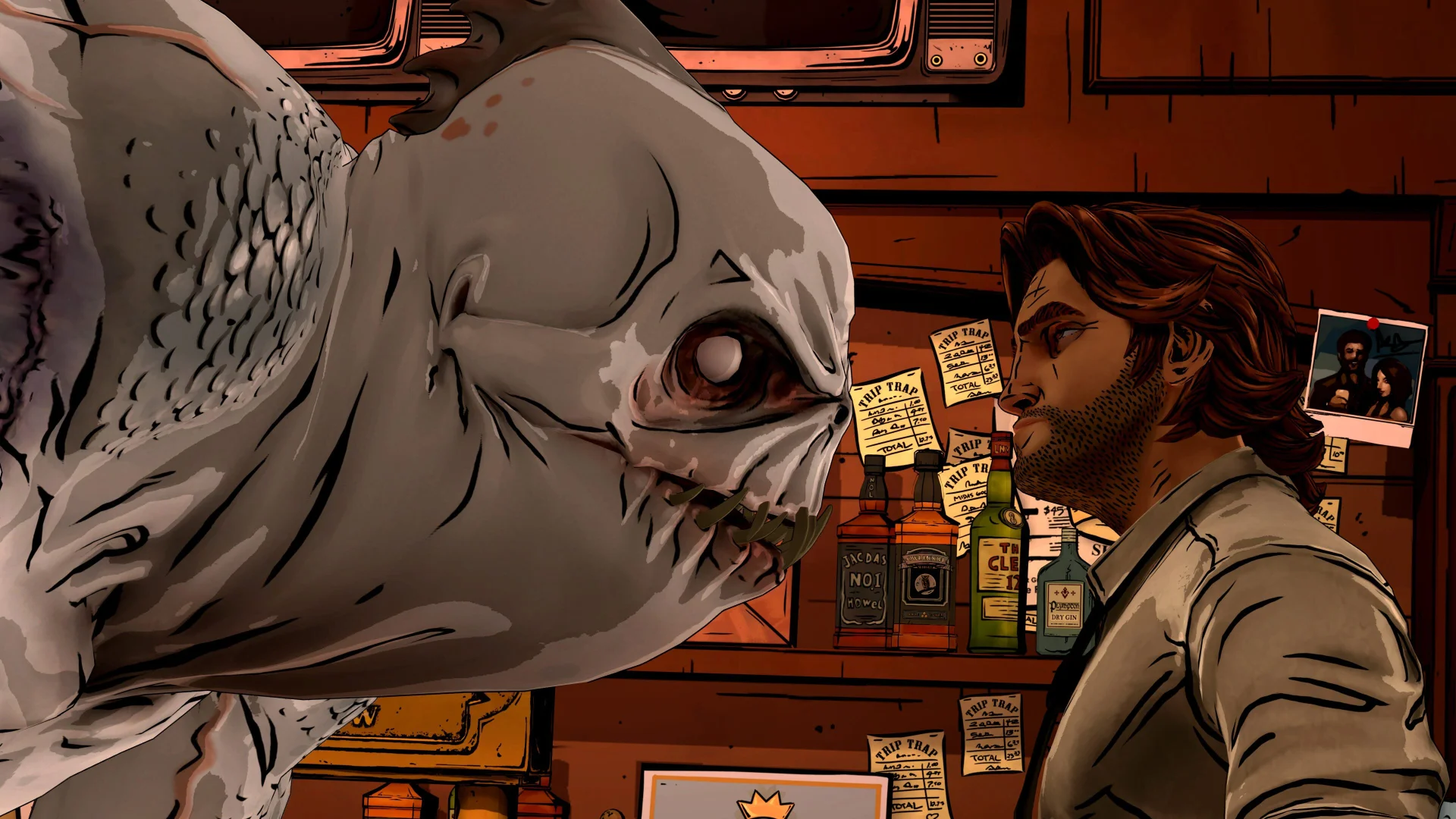
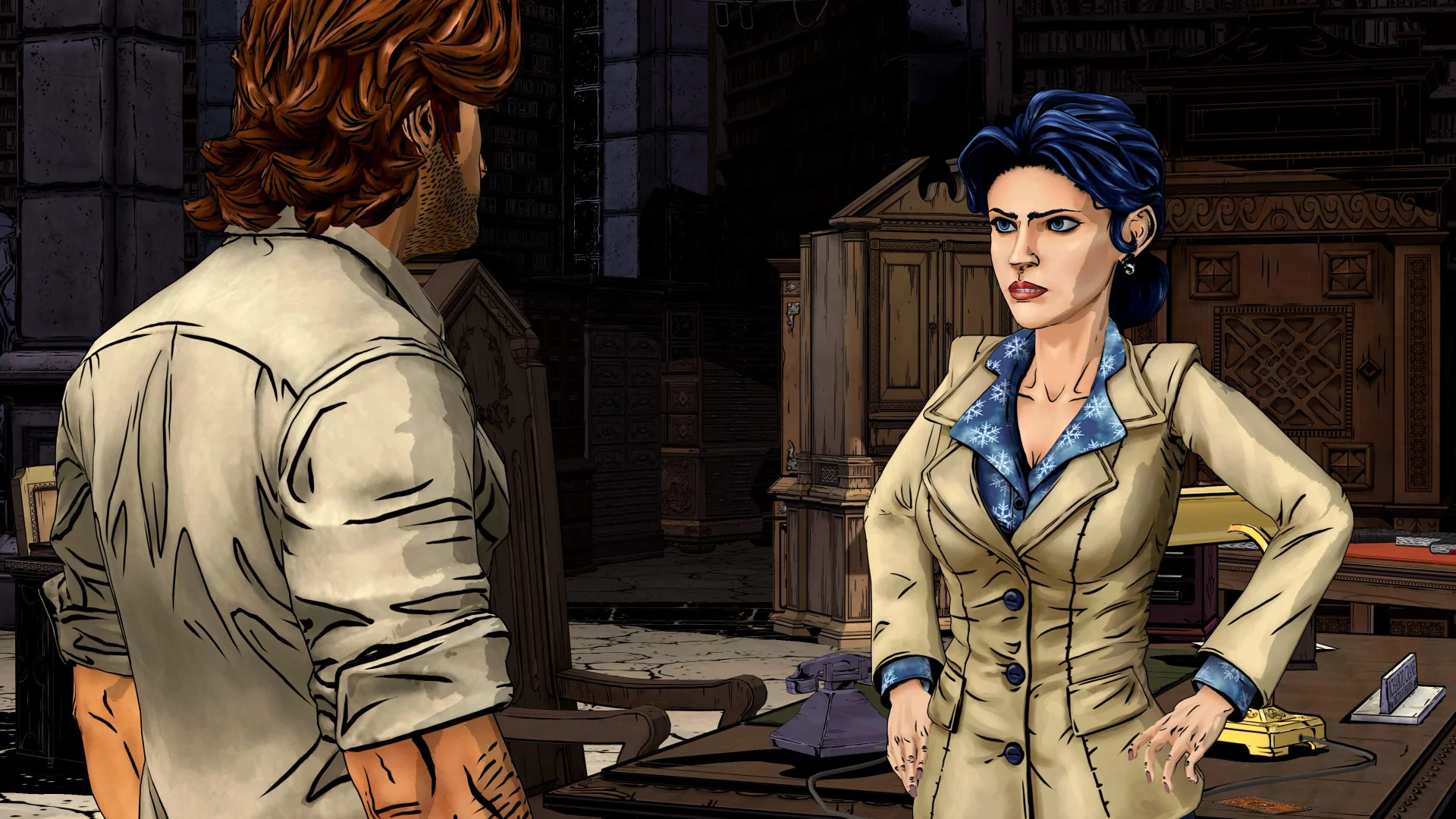
As for the updated visuals in The Wolf Among Us Remastered, they’re surprisingly contentious. They’re not bad, per se; far from it. It’s more a matter of personal preference whether you prefer how this remaster looks versus the original. It’s not a wholesale improvement. You may argue that remasters rarely are wholesale improvements and that it’s always a matter of preference, but especially here, opinions seem split.
There’s particular emphasis on the lines and shading on characters and environments to accentuate the comic book look, but the process isn’t always for the better. I personally prefer the look of a few characters in the original rather than in Remastered. Namely, Bigby’s wolf forms have been wildly redesigned from how they originally looked. It’s not clear why they did this; perhaps it plays into The Wolf Among Us 2 in some way, but I definitely prefer how they looked in the original game.
One area that has thankfully not been touched at all is the game’s sound design, particularly its soundtrack and voice acting, both of which are stellar. The Wolf Among Us soundtrack is a dark, synth-heavy soundscape that perfectly complements the seedy, neon-drenched streets of Fabletown and the depraved dealings that go on within it.
The voice cast, led by Adam Harrington and Erin Yvette as Bigby Wolf and Snow White, respectively, is impressive across the board, with nary a weak performance amongst them. Adam’s voice lends a particular gravitas to Bigby that shows that despite his measured demeanour, he’s still capable of losing control and becoming violent; a recurring theme in the game. Erin is also excellent as Snow, with her voice complementing the authoritative, yet deeply compassionate Snow White, who just wants the best for Fabletown, despite the often oppressive circumstances they live in.
Among The Wolf Among Us Remastered‘s several additions to the base game experience is Noir Mode. This toggleable visual setting makes the game black and white to emulate the detective noir stories that inspired both Fables and The Wolf Among Us. It’s a cute touch, but ultimately negligible, and just comes across as a filter they slapped on there rather than something that changes the experience in any meaningful way. If you like the look, by all means, try it out, but I didn’t find it to warrant more than a cursory glance, let alone another playthrough with it enabled.
Really though, The Wolf Among Us Remastered‘s main draw for returning fans of the original is its bevy of bonus content, featuring a concept art gallery, behind-the-scenes interviews, and playable deleted scenes. It’s an impressive addendum, but the execution is decidedly mixed. The concept art gallery is solid, featuring artwork from the original game and The Wolf Among Us Remastered, showing how they approached retouching the original’s environments and character designs. It could have been a little more robust, but it’s still great to flip through concept art.
The behind-the-scenes interviews are… okay? The interviews with Adam Harrington, who plays Bigby and “Woody” the Woodsman, and Molly Benson, who plays key character Nerissa, are great. So is the interview with Kim Lyons, the environmental art lead on the original game, and it’s cool to hear her insights on how they defined the look of Fabletown. That said, I’m not sure we needed to hear from the creative director at DC, and he doesn’t really bring much to the interview, no offense to him.
The interviews themselves are also weirdly poorly mixed, with the audio sounding very quiet and sort of tinny at times. They’re also not edited compellingly, consisting mostly of raw interview footage with occasional splicing of game footage and even more occasional splicing of development footage, the latter of which I’d love to have seen a lot more of.
As you may guess, the playable deleted scenes are the star attraction of the bonus content. I wasn’t even aware that they would be playable going into The Wolf Among Us Remastered, so I appreciate their inclusion. I should note that the scenes are clearly unfinished, with little-to-no character animation and very slow and awkward transitions between dialogue. As for the scenes themselves, well, it’s clear why they were left on the cutting room floor. They don’t add anything to the game or the original scenes, and likely would have hurt the overall pacing had they stayed in. That said, even in their primitive state, I appreciated the chance to see those scenes, but if you go in expecting anything of substance, you may be left wanting.
All told, The Wolf Among Us Remastered is a more than worthy update to the already excellent original, especially if you’re a newcomer. If you’re a long-time fan, however, the mixed quality of the bonus content and contentious redesigned visuals may not make the remaster a required purchase.