
The success of indie farming sims like Stardew Valley and the resurgence in popularity of long-running series like Story of Seasons and Rune Factory have ushered in a new era of farming sim/RPG hybrids seeking to capture the ever-growing community of Cozy Gamers. While most of these titles stick to the 2D pixel art visual style popularized by Stardew Valley, more developers are beginning to tap into the vibrant, polygonal worlds of the PlayStation 2 era.
One such title is Town of Zoz from Studio Pixanoh, a unique take on the farming sim/RPG genre that wears its visual (Radiata Stories, Dawn of Mana, Dark Cloud 2) and cultural (Central and South American traditions) inspirations on its sleeve. Town of Zoz nails the aesthetic presentation and is buoyed by an engaging premise and charming cast, but falters in its technical foibles and combat mechanics, offering an experience full of promise that doesn’t quite deliver.
Town of Zoz’s narrative is initially promising, with our plucky young hero Ito returning to his hometown (the titular Zoz) after spending a significant period of time in the wilds accompanied only by his spirit companion, Zee. Upon arriving back home, it becomes immediately clear what motivated Ito’s change of scenery; his warm, good-natured mother Eeza is happy to see him, but his gruff, taciturn father Conki seems significantly less thrilled.
This core conflict between Ito and his dad provides the foundation for Ito’s character motivations, as he tries both to win his father’s approval and step out of his shadow. The cause of their rift seems to be Ito’s shamanistic abilities and his friendship with spirits like Zee. Conki is a warrior who previously fought to protect Zoz from unruly spirits and thus views all spirit creatures with distrust. Much of the storyline involves Conki begrudgingly teaching Ito the traditions of their people and the duties he must assume as father passes the mantle to son. Ito bristles beneath the weight of his father’s judgment and expectations, and seeks to find his own path.
While the story in Town of Zoz takes a while to get going initially, and meanders a bit in its later acts, the growth and development of the father-son relationship between the two (and Ito’s parallel relationship with Zee) provides a satisfying journey.
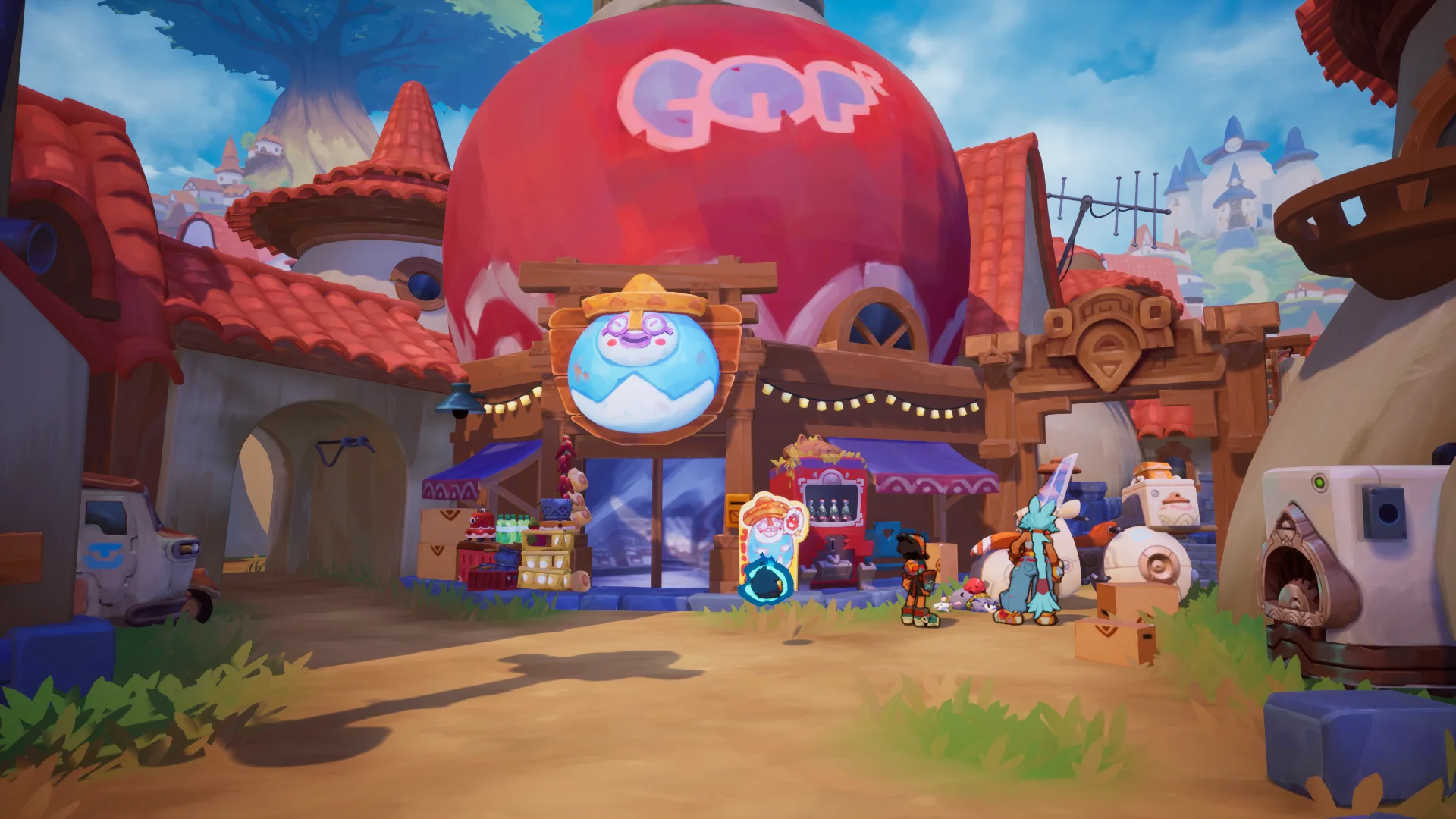
The town of Zoz is a vibrant, lively place full of interesting characters to interact with. Ito has a chummy relationship with Boomi, a courier and athlete who repeatedly helps Ito in his journey (when she’s not getting herself into trouble). He nerds out with Zade, the town’s junk dealer who upgrades Ito’s abilities using soul carts (devices that contain spirit power and look suspiciously like Nintendo 64 cartridges). The local smith Osana acts as a sort of big sister to Ito, looking out for him despite shouldering many other burdens from the townsfolk.
Interacting with these characters was always a joy, and Town of Zoz understands how integral developing a sense of community is for a farming RPG set in a single location. As the story shifts into darker territory in the latter half, exploring the struggles of these characters through Ito’s eyes kept me going, even when other aspects of the game lost their luster.
The strongest aspect of Town of Zoz is easily the visual design. The game’s cutscenes are impressively detailed hand-drawn animations full of expressive movements influenced in equal parts by anime and Saturday morning cartoons. The in-engine visuals are no slouch either, with the colorful, vibrant South American cultural setting establishing a unique identity while also evoking other low-poly, cell-shaded masterpieces like Mega Man Legends or Dark Cloud 2.
The music incorporates a mix of electronic and Latin American influences to deliver a robust soundscape unlike that of other games in the genre, lending the setting a sense of authenticity beyond mere set-dressing. The character designs incorporate traditional Central American indigenous fashion with modern sensibilities, conveying a social and cultural framework that feels familiar to Latin American culture, yet also suitably fantastical.
Unfortunately, for as polished and well-executed as the aesthetics and narrative elements are, the game stumbles repeatedly in its game design. Although I introduced Town of Zoz by comparing it to other popular farming RPG series like Rune Factory, the distribution between these core focuses is much more lopsided here. Whereas most of the most popular titles in the genre have a healthy mix of dungeon crawling combat and farming/social sim gameplay, the farming and social aspects are an overall minor portion of the overall gameplay experience in Town of Zoz.
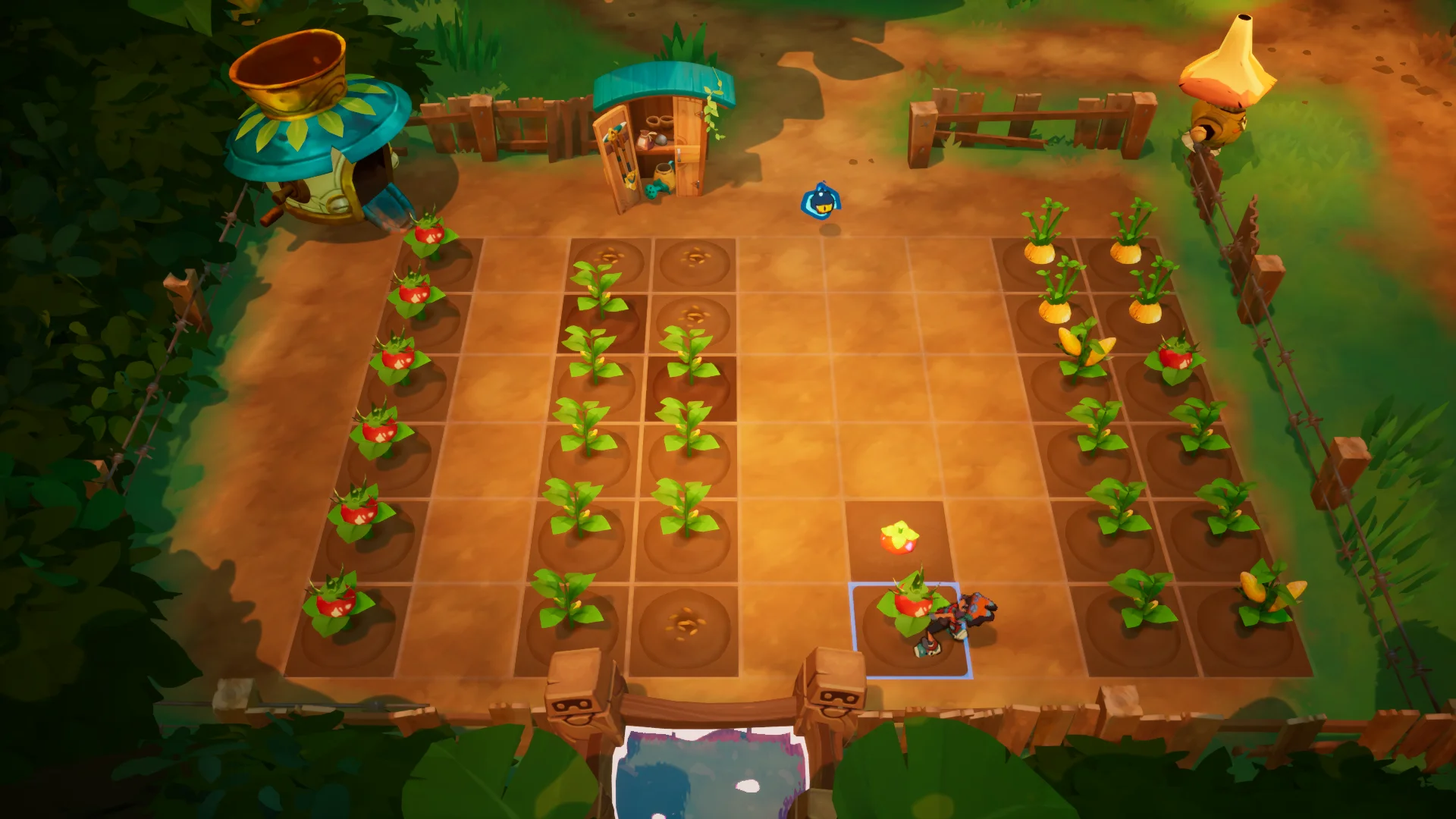
Ito has a few small fields surrounding his family home where he can plant crops, but beyond watering them each day, there really isn’t much interaction required. There are a decent number of crops on offer, and you can sell them to raise cash or use them as cooking ingredients. However, they don’t have any use in a larger crafting system, nor are there seasonal shifts or a calendar system to manage. While Ito does have a stamina bar, it’s only relevant during combat, so the addictive day-by-day planning, preparation, and time management that defines the core gameplay loop in most farming RPGs is absent here.
Town of Zoz‘s farming feeds primarily into the cooking mechanics, and although this emphasis on cooking traditional Central American cuisine is thematically fitting, it lacks a meaningful purpose in gameplay. Cooking takes the form of a basic minigame where you must complete a series of simple quicktime event button presses under a set time limit (quite similar to the crafting lives in Fantasy Life i: The Girl Who Steals Time). All food you can cook comes with its own specific buff to Ito’s stats or abilities, but you can only obtain one buff from food per day. Any additional food you cook and consume will simply restore health until the first buff received fades away the next day.
This could potentially lead to strategic planning around which foods to prepare and consume, but unfortunately, the recipes you have access to are heavily restricted by your progress in the story. For most of Town of Zoz‘s run time, you don’t have enough recipes where the choices between them feel meaningful, and most days begin with Eeza cooking and feeding Ito a specific meal according to the story, forcing you into particular buffs and eliminating any opportunity for player agency. I found the integration of the various dishes in the story to be thoughtfully done, but the overall implementation of cooking mechanics into the gameplay loop to be rather disappointing.
The biggest sore spot for Town of Zoz lies with its combat mechanics. Combat takes place from a zoomed-out, fixed-angle camera perspective, and Ito has a basic three-hit combo he can perform with his machete as well as a heavy attack to end combos. You can also freely control his spirit companion, Zee, with the right stick to possess and weaken enemies, or leave him to his own devices to attack and hamper the enemies.
There is a dash Ito can use to dodge out of the way, but it’s rather slow and without invincibility frames (meaning you can still be hit while using it). Dashing out of the way of an attack often puts you right in the path of another aggressive enemy attack with no way to react. The general sluggishness of the controls affects all aspects of the combat, and you cannot cancel out of a combo or heavy attack once you’ve committed to it.
Enemies are comparatively quite agile and hit hard, leaving many situations where avoiding all damage is impossible, and soaking up large amounts of damage is inevitable. To mitigate this, Ito carries a lunchbox storing copious healing potions and food items to restore health. Other than a quick healing animation, there is no real downside to chugging down restorative consumables. These factors all combine to create a combat system that feels sluggish and unwieldy, but is also devoid of challenge in most encounters since it’s optimal to tank hits and heal repeatedly.
Further exacerbating these combat system woes are the damage sponge enemies. At the beginning of Town of Zoz, it’s not so bad, but about halfway through the story, the nightmare sections are introduced. These locations feature corrupted versions of normal enemies that deal more damage and possess significantly more health. The underlying mechanical problems keep the challenge from becoming insurmountable in these areas, but the increased enemy health (and lack of a damage boost for Ito to compensate) turns battles against the nightmare-infused creatures into sluggish wars of attrition as you slowly whittle down their health while gulping down healing items.
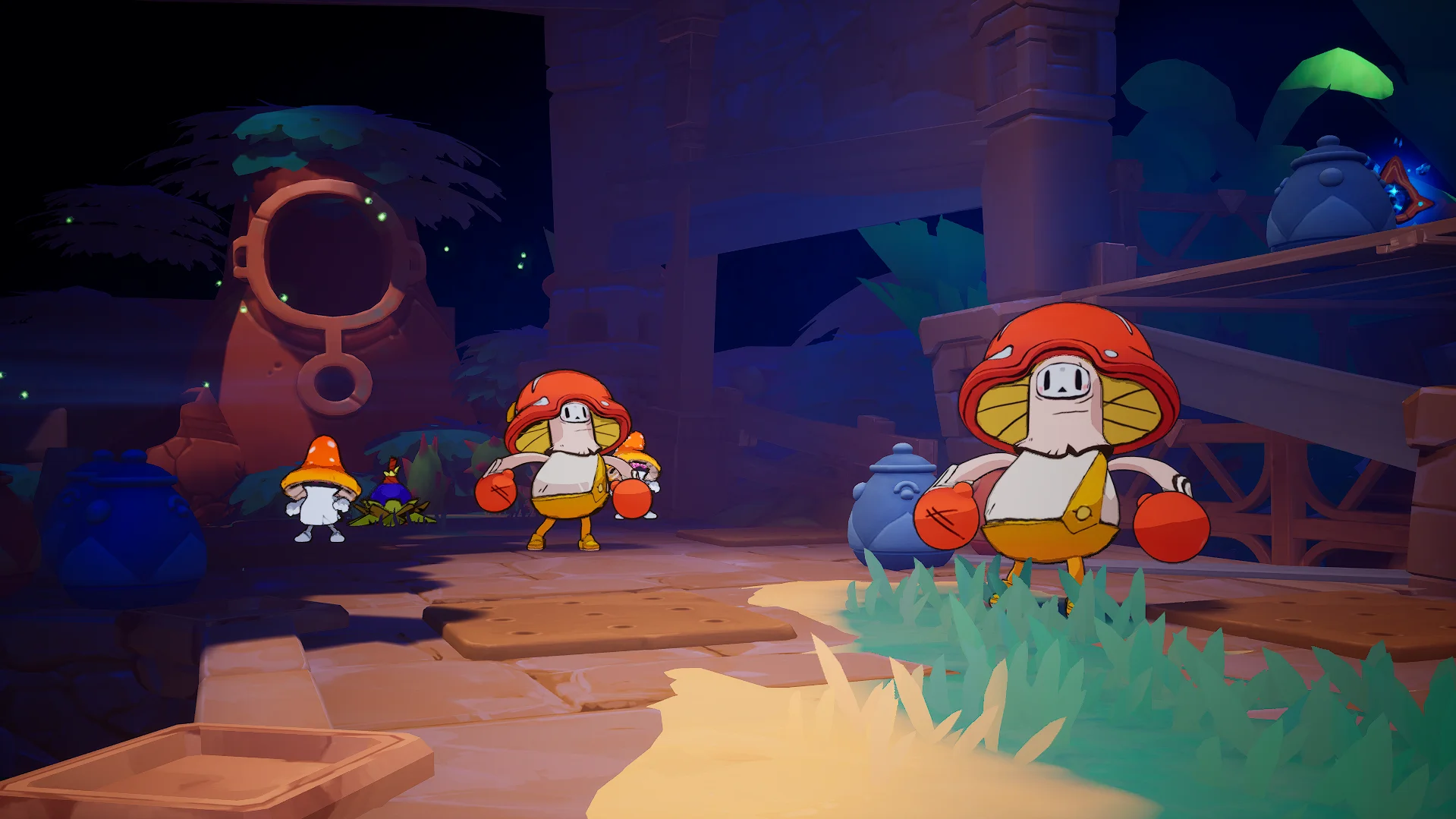
Town of Zoz tries to incorporate a little more variety into the experience by introducing puzzles and short platforming challenges, but these sections are so simple (or so frustrating) that they do little to break up the monotony of the long, drawn-out combat encounters. Most puzzles are simple box carrying, switch slipping, torch lighting affairs you’ve seen in countless other games.
The platforming is poorly implemented, as Ito does not possess a dedicated jump command and can only jump if approaching a ledge at full sprint (similar to how jumping functions in The Legend of Zelda: Ocarina of Time). Since most platforming challenges are located in spaces that double as combat arenas, sprinting requires the use of Ito’s limited stamina, and running up to a ledge just to run out of stamina right before the edge and fall straight off is an all too common occurrence.
Since the dungeons and combat encounters make up about 80-90% of the game’s runtime, particularly in the latter half of the game, these issues pile up and make the overall experience a chore to play rather than a joy like the vibrant visuals would suggest. Had the farming and cooking mechanics been more robust, or if there were more variety in the gameplay loop beyond the core combat and dungeons, I might look on my time spent in Town of Zoz more fondly.
As it stands, these core design problems, coupled with a host of technical issues (frequent crashes, bugs that softlock the game, textures loading improperly half the time, etc.), leave me unable to give a wholehearted recommendation. Perhaps if the developers tweak the combat system and iron out some of the technical problems, a trip to Zoz will become one worth taking. For now, it’s better to spend your summer vacation elsewhere.