
One of the most admirable qualities of smaller, independently developed games is their ability to remix and revitalize older game formulas for a modern audience. Such revisits to classic concepts are particularly notable when the previous standard bearers have shifted their focus. The Legend of Zelda series may be all-in on massive-scale, open-world design, but many fans (myself included) opine for the small-scale yet tighter, densely packed design found in older entries like Link’s Awakening. Under the Island seeks to meet this desire, delivering on a classic Zelda-style experience while adding a few twists of its own. The narrative and combat design falter a bit, but the detailed, vibrant world Slime King Games created here shines through the rough patches.
Under the Island follows teenage protagonist Nia as she moves to the remote Seashell Island with her scientist parents. Her folks are eager to study the island’s unique history, but Nia is upset about leaving her friends and old life behind. This initial premise grabbed me, as I could relate to Nia’s predicament; I, too, had to move around a lot as a kid and leave behind personal connections. Unfortunately, this promising narrative thread is dropped rather quickly. Once Nia starts wandering around the island and falls into a hidden dungeon beneath the ground with the local girl Avocado, the journey begins immediately.
A mysterious figure explains that the island will sink beneath the ocean unless the girls collect four gears that keep it afloat. Nia rushes off to secure each one (conveniently located behind various dungeons in each corner of the island) without much buildup or justification. I don’t mind being thrown into the thick of things, but the sense of urgency to save this island she resents, and a bunch of people she just met, feels unearned. It doesn’t help that most of the friends Nia makes along the way serve more as guideposts than they do characters. In addition to Avocado, Nia makes friends with a treasure hunter named Lemon, but most of their interactions are perfunctory exchanges that reveal the next objective. This is true of most of the island’s other inhabitants, too: dialogue is plentiful, but actual substance and characterization remain thin. There are some exceptions to this, like when I helped a young girl reunite her feuding father and uncle, but for the most part, the people of Seashell Island lack enough personality to carry the game’s copious dialogue. After seeing what other indie Zelda-likes achieved with little or no dialogue (Hyper Light Drifter and Tunic come to mind), I think Under the Island would’ve benefited from a less-is-more approach rather than inundating the player with inane dialogue exchanges.
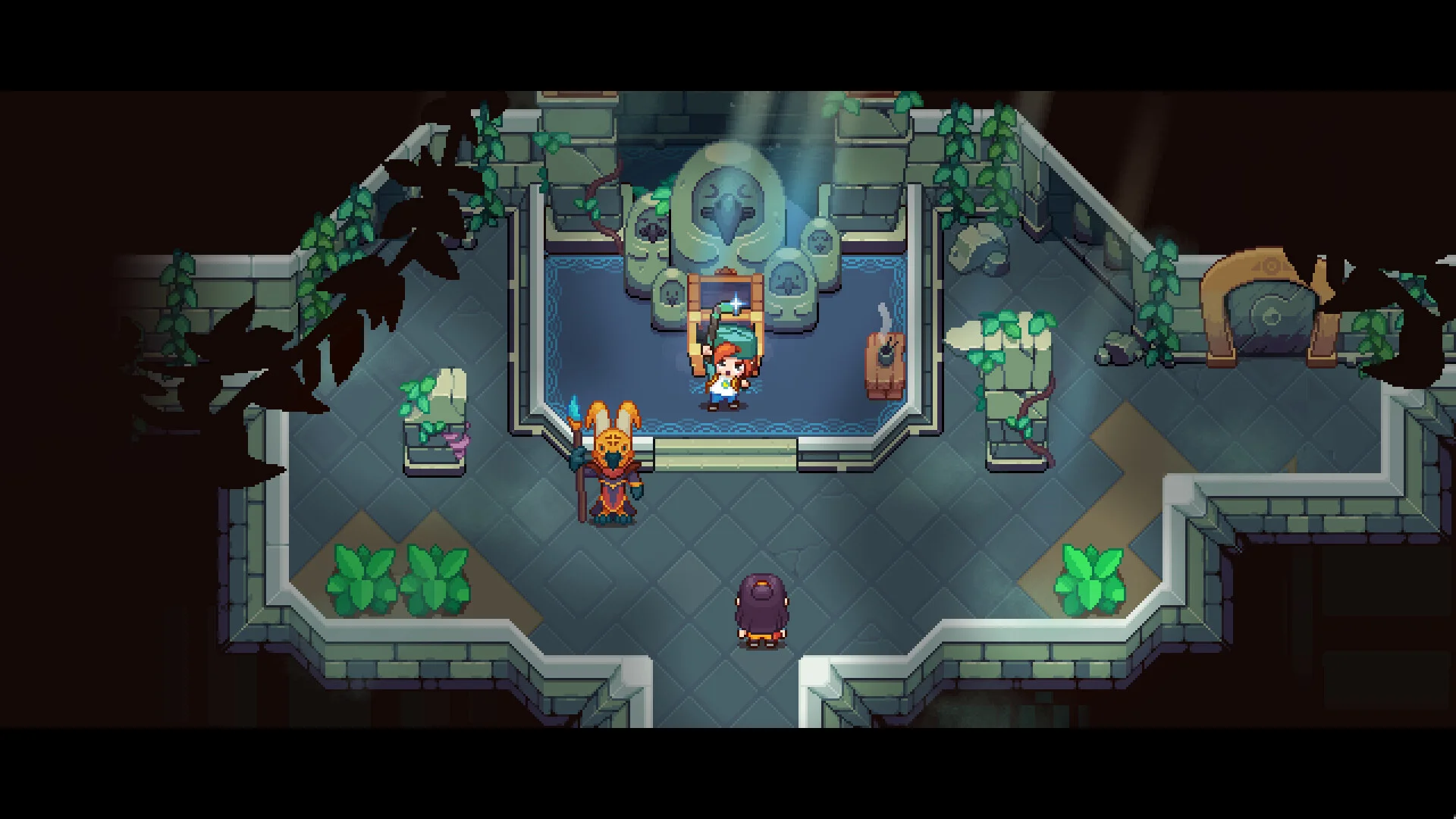
Another sore point is Under the Island’s combat. Nia’s initial descent leads her to the resting place of the legendary weapon…only to find it missing, with a discarded hockey stick in its place. This stick functions as your sword and has a standard three-hit combo. I appreciate the tongue-in-cheek switchup, but where this approach falters is in damage output. Classic Zelda titles had simple combat systems that worked because enemies died in just a few hits; by contrast, Under the Island gives every enemy a prodigious healthbar, forcing you to hack away repeatedly with your hockey stick to defeat even the weakest foes. Some foes can be dispatched more easily with a little ingenuity. For example, there is a wolf that pops out of the ground and can be tricked into surfacing underneath a bomb, and a toxic slime-belching plant enemy that is difficult to approach, but vulnerable to a well-placed fireball. Most items other than the hockey stick are too slow to be effective in combat, but the hockey stick is too weak for most of the game to feel satisfying. Combat improves after a few weapon upgrades, but materials require significant exploration, and by the time I upgraded Nia’s weapon of choice enough to make it feel impactful, the game was nearly over. Compounding the spongey enemies is Nia’s lack of defensive options. There is no dodgeroll or shield to block attacks, so I ended up tanking a lot of damage in fights. Under the Island is never difficult enough that I was worried about dying, but the lack of defensive options contributes to the overall sloppy feeling of combat encounters.
Thankfully, Under the Island puts its best foot forward with the level design, exploration, and puzzle design. The world map consists of 40 distinct areas, each packed with details and secrets to uncover. Mainstays like bombable walls, cuttable grass revealing hidden holes, and pushable blocks are all here, but remixed and combined in ways I hadn’t seen before. Every screen had something cool to uncover, sometimes even multi-step mini-dungeons or challenges I had to return to later with new equipment. The map does a good job of distinguishing between areas and managing secrets and objectives, so I was able to get the most out of each moment spent exploring every nook and cranny of Seashell Island. Fast travel is available, but travel points are only accessible after clearing cleverly designed block pushing puzzles. Such attention to detail illustrates how Under the Island refuses to hand over conveniences without making you work for them.
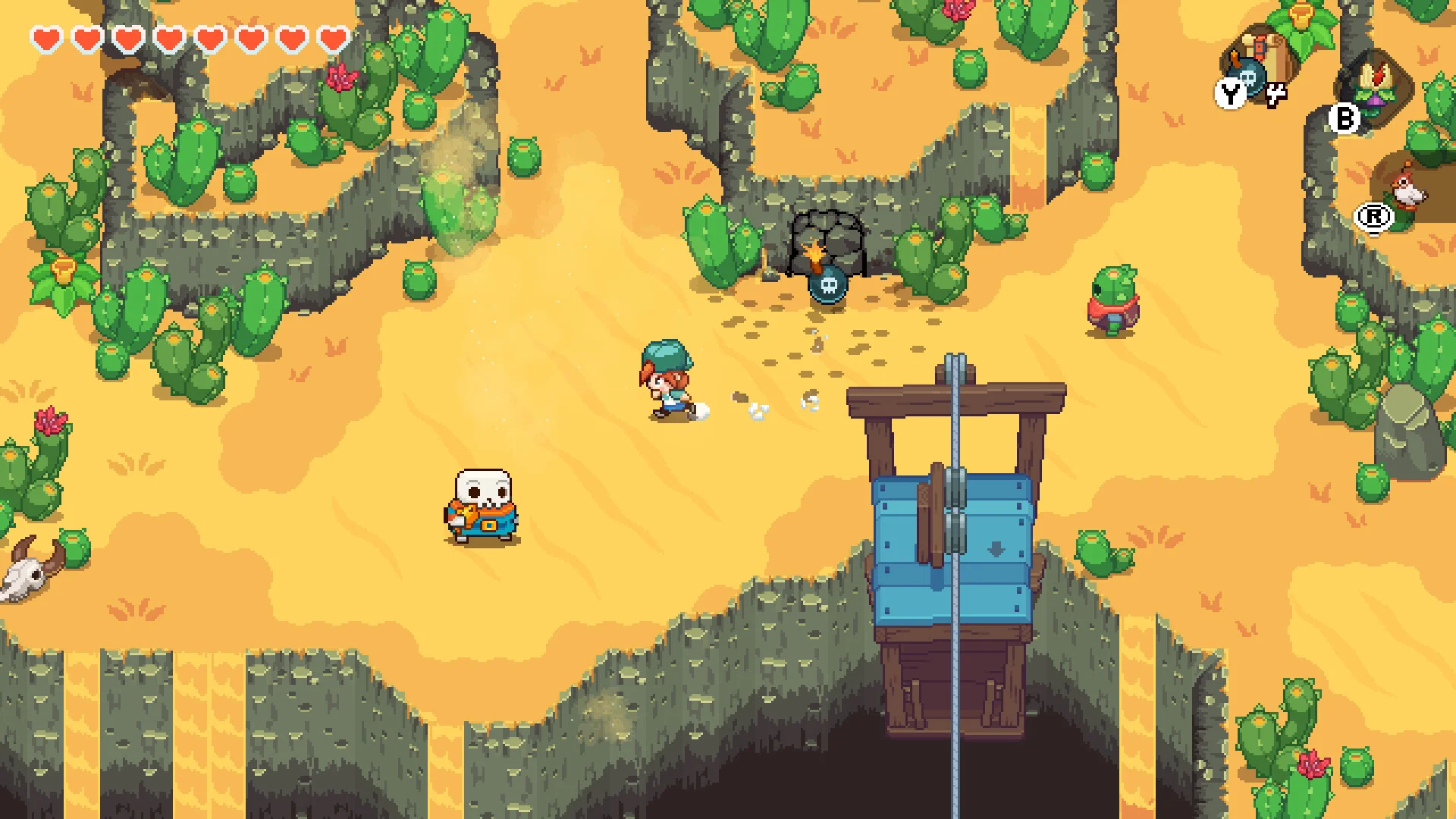
This creativity found in the world layout and environmental puzzles extends to the dungeons. Each one follows the typical Zelda format of locked doors and puzzles focused around a new item acquired in each dungeon, though not in the way you might expect. There are bombs, of course, and a flower that shoots fireballs much like the fire wand, but also some unconventional tools in Nia’s arsenal. A bag of animal treats offers a particularly clever innovation, tasking you with laying out a path of treats to lure beasts onto pressure plates or to careen into obstacles. Nia can also launch treats with her hockey stick to reach far-off locations. Later on, she acquires a bird companion tasked with retrieving hard-to-reach collectibles or activating otherwise inaccessible switches. These items are often used in conjunction with one another, and dungeons always build upon the last one, so no item becomes useless after a single dungeon (I’m looking at you, Twilight Princess).
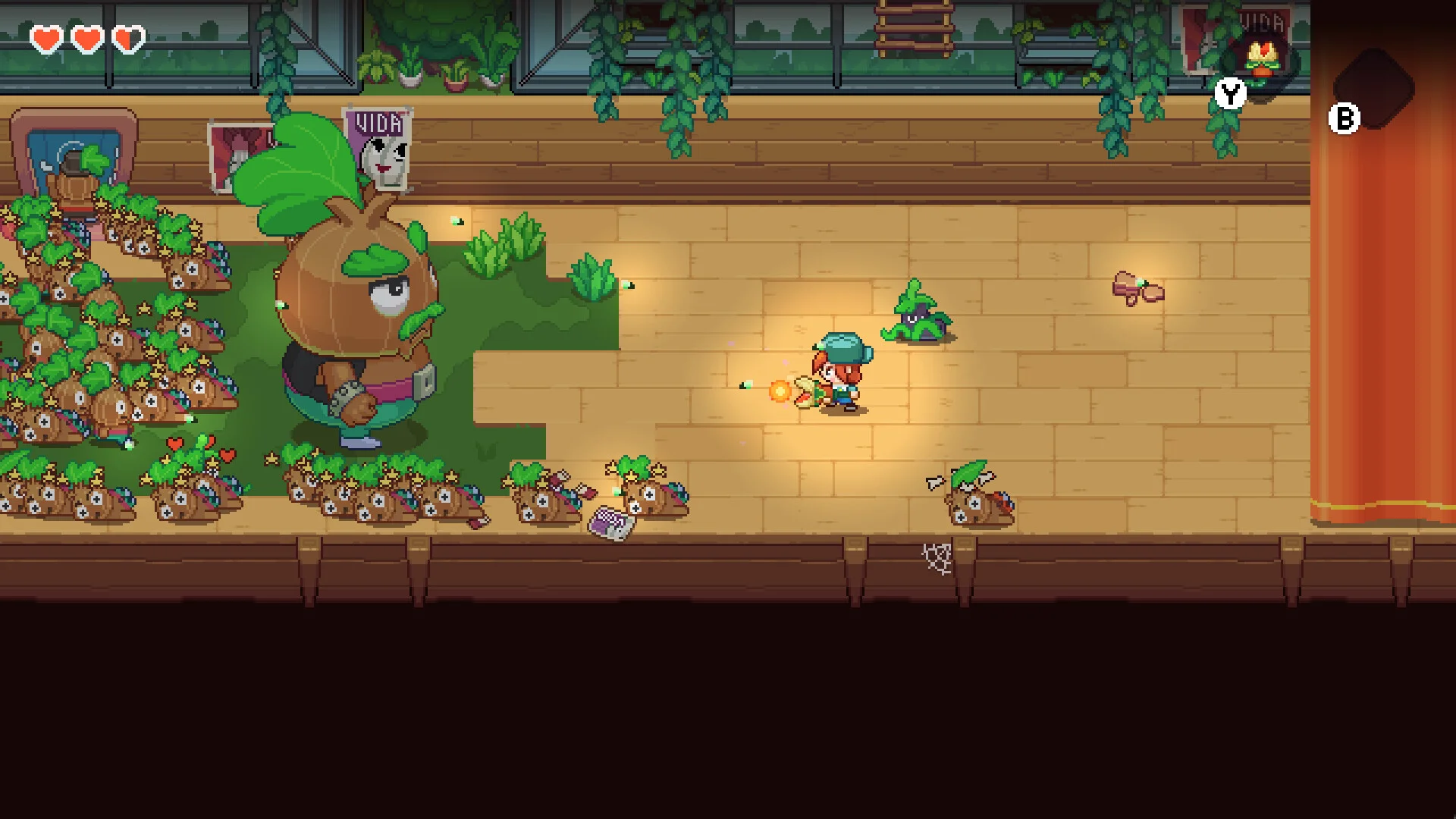
The boss fights are particularly unique and clever, often because they aren’t really “fights” at all. One dungeon sees Nia managing the lighting for a stage production and warding away unruly fans from storming the stage, while another has her competing in a cooking competition show. The developers flexed their creative muscles with these boss concepts, and it pays off in a memorable encounter every time, particularly because these climaxes don’t rely on the lackluster combat mechanics.
The colorful aesthetics of Seashell Island offer a pleasant vibe, and the landscape is surprisingly varied. Nia travels from sandy beaches to snowy mountains, wet and overgrown swamps lead into arid deserts, all with new enemy designs and environmental details to match. The chibi character designs are cute with charming animations for both NPCs and enemies. The music is top-notch, with some tracks evoking classic Zelda (the town theme seems directly inspired by Wind Waker’s Outset Island theme), and others wholly unique. Each piece feels appropriate to the setting, and I was always excited to hear a new track once I arrived in a new location.
Under the Island falters in its combat and storytelling, but more than makes up for those shortcomings with engaging world design, clever puzzles, and creative boss encounters. Link’s boots are admittedly difficult to fill, but Under the Island has enough good ideas to set itself apart from its inspiration. The journey is a short one at only eight to ten hours, but I enjoyed my time with the game. It’s no Link’s Awakening, but in its best moments, it gets close enough to scratch the old-school Zelda itch.