A burgeoning trend involves fusing RPG and survival horror mechanics alongside traditional horror aesthetics and atmosphere. Recent horror RPGs like Vultures – Scavengers of Death and House of Necrosis adeptly identify common fundamentals between the two genres, like resource management and strategic planning under pressure. The best games lean into these shared elements, highlighting where two disparate genres overlap to enhance the core emotional experience of tension, foreboding, and fear of the unknown that both horror games and RPGs rely on.
Another similar mashup currently gaining popularity is horror and farming RPGs. I’m a huge fan of both genres, but I’m skeptical that the tension, unease, and unpredictability needed to cultivate an effective horror atmosphere can coexist symbiotically with a farming sim’s repetition of mundane tasks, typically cozy social simulation, and significant length. On paper, these two genres could not be more disparate; in practice, recent attempts like Welcome to Elderfield have their merits as both RPGs and farming/social sims, but fail to cohesively combine the genres so that the presence of one improves the other. I’m happy to say that Village in the Shade, the newest work from NIS’s accomplished Yomawari team, buried my misgivings in an early grave. Village in the Shade is the definition of a slow burn, drawing on horror classics like Twin Peaks and Saiko! The Large Family, as it takes a location and community that appears idyllic and peaceful on the surface and slowly peels back the outer, leafy layers to expose the rot within.
Village in the Shade begins with a child, lost and confused, wandering through a forest. The kind hunter from the nearby village, named Komako, stumbles upon them. Komako guides the child back to Kagatsu Village and the village’s young leader, Rin. Rin explains that no one in the village is missing a child, but remarks on the child’s uncanny likeness to a child who went missing ten years ago, when most of the village’s current inhabitants were children themselves. Komako pleads for mercy for the child, and Rin allows the child to remain in Kagatsu Village, so long as they do their share of labor.
Rin takes the child to an abandoned farmhouse and field, and offers up a deal: the farm can be their home if they work the fields. Of course, a place to stay doesn’t come cheap, and Rin deviously explains that between lodging, key money, and the requisite tools & supplies, our youthful protagonist owes over 200,000 yen. Yes, the juvenile protagonist is essentially forced into indentured servitude, an initial hint towards the darkness at the heart of Kagatsu Village and its social relations. The game proceeds similarly to a classic, familiar farming sim; Rin tasks the child with cleaning up the field and shows them how to plant and grow crops, and suggests that the child introduce themselves to the other villagers (longtime Story of Seasons players know this setup, since each of those games starts in much the same way). However, the village’s inhabitants (who were previously friendly and helpful) all give the child a cold shoulder and refuse to speak with them. Rin explains that this is due to one of the village’s eight rules in their governing code of conduct: keep your distance from strangers. Only after you make an offering to the Kagatsu Village god by dumping your hard-earned crops into the well in the middle of town do the village residents accept you as one of their own.
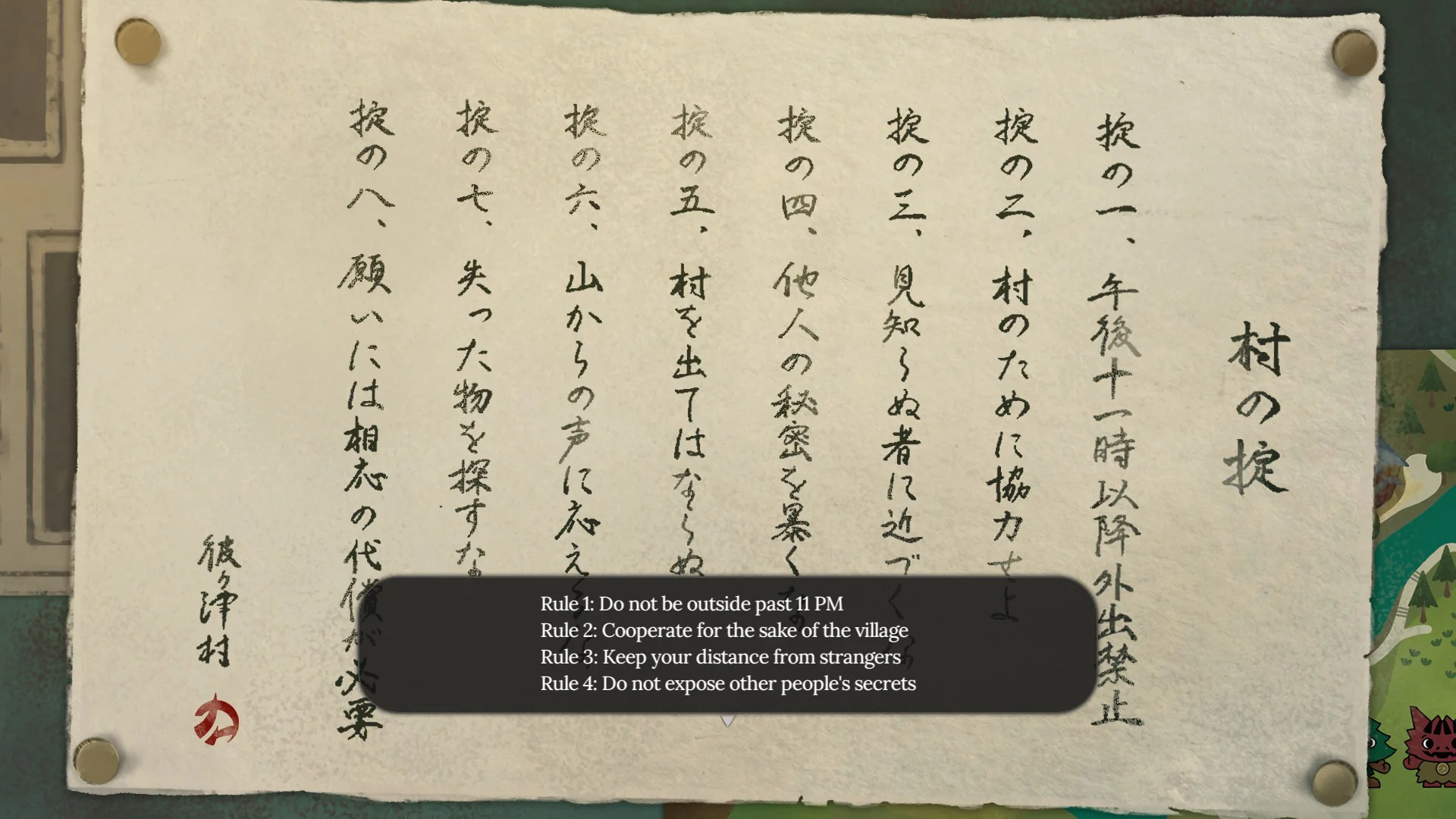
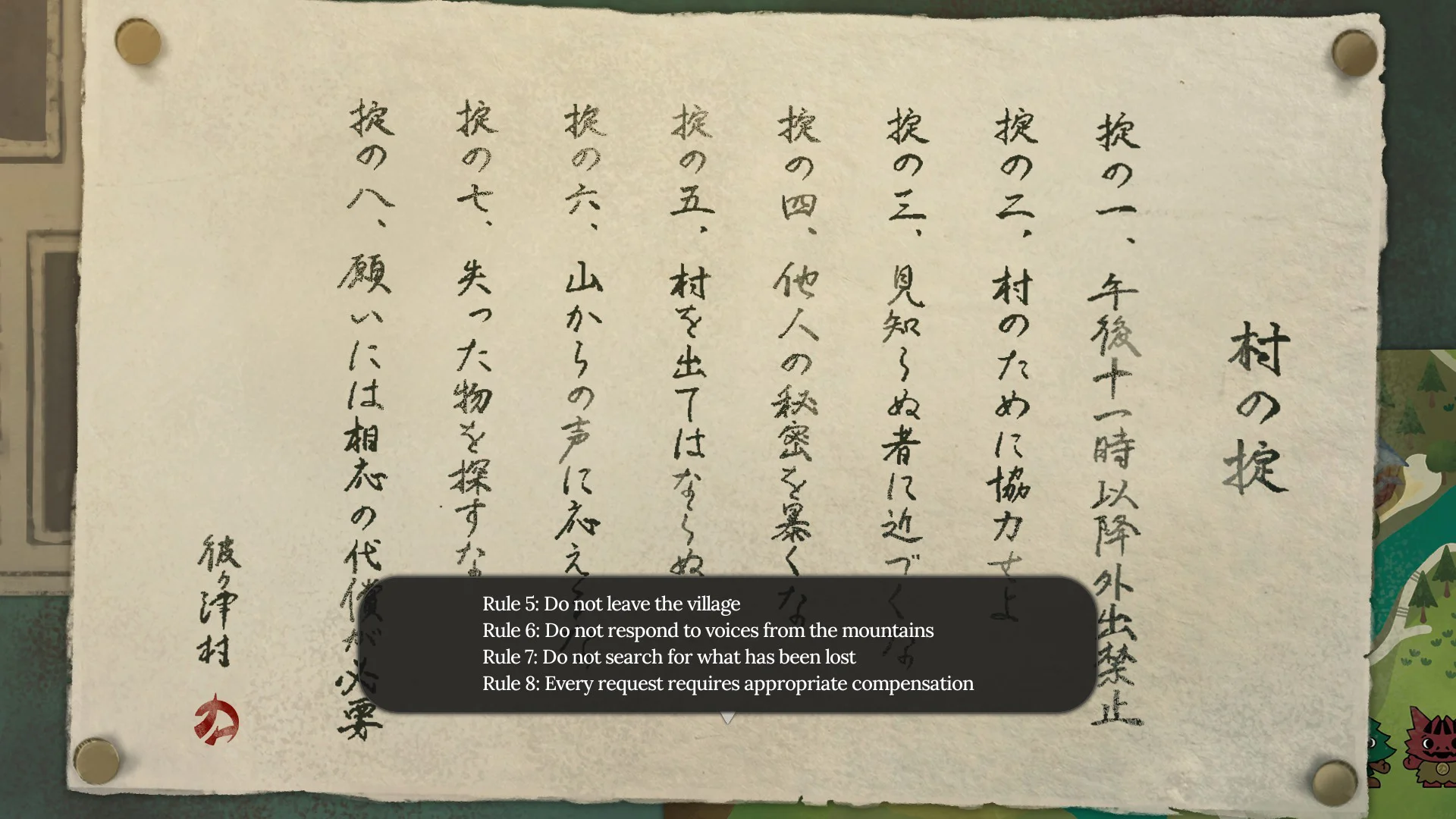
The hint of darkness bubbling beneath the surface of Kagatsu Village rears its ugly head again as Rin makes an offering of her own: she throws a live baby goat down into the well (complete with a horrifying yet darkly comedic bleating sound effect that slowly fades as the goat disappears impossibly deep into the darkness). These village rules are central to Village in the Shade’s narrative, and firmly establish the game within the rules-based horror literary genre. Each major story chapter sees the child violate one of the eight rules (enduring the accompanying consequences) as they pursue the truth behind the traumatic events that curse Kagatsu Village and its inhabitants, and unravel the mysteries of their own origins.
Once you’ve formally joined the village, Village in the Shade’s farming sim structure establishes a familiar rhythm. You spend the day tending your fields and crops, speaking with villagers, doing tasks for them, and exploring the surrounding wilds full of activities like fishing, hunting, or mining in the abandoned quarry. Daytime gameplay adheres closely to the classic formula set by past Harvest Moon/Story of Seasons titles. The farming mechanics most closely resemble early entries like Back to Nature or Friends of Mineral Town, requiring dedicated player input and careful stamina and time management. Later games in that series and other modern farming sims have leaned toward automating or streamlining farming tasks, but Village in the Shade takes a back-to-basics approach, instilling a strong sense of grueling labor and establishing tradeoffs between activities to reinforce the darker narrative tone. Modern conveniences like quest tracking and a slicker, intuitive user interface keep the gameplay from feeling too archaic while maintaining a sharper edge than most modern entries in the genre.
Nighttime gameplay shifts gears entirely into horror territory, drawing heavily from the development team’s past work on the Yomawari titles. You venture out into the darkened streets of Kagatsu Village in the middle of the night armed only with a flashlight (in violation of rule number one), exploring and completing tasks while avoiding the supernatural foes that haunt the village under the cover of darkness. These supernatural beings draw heavily from Japanese folklore, and the wide array of creepy, unsettling horrors, each with its own behavioral patterns, pursue the player to keep the tension high during these segments. Although you can sometimes ignore these segments and remain safe at home, venturing out at night is integral to both gameplay and story progression.
You may encounter another villager breaking the code of conduct and assist them with a task; other nighttime explorations are entirely self-directed, and you can collect Magatama to offer at the village shrine to unlock new gameplay elements and blueprints. You may interact with neutral spirits who demand crops or other items in exchange for impactful gameplay benefits like blessings, unique items, or stamina upgrades. Village in the Shade masterfully establishes narrative and mechanical stakes, ensuring you repeatedly brave the supernatural horrors in spite of that danger. The nighttime segments maintain the vital unpredictability necessary for tension and fear, since you can’t venture out every night. Spending too long hiding from things that go bump in the night reduces your available stamina for the next day.
Every action you take in Village in the Shade has consequences effectively reinforced by the narrative and gameplay mechanics. The familiar pace and predictability of the daytime sections lull you into a false sense of security, only to break the illusion of idyllic village life through various narrative developments or bespoke horror-focused gameplay segments. Village in the Shade embraces a lengthy, repetitive game design structure that could easily undermine key horror elements, but leans into the slow-burn nature of rules-based horror and narrative mystery to strengthen them instead.

Social simulation is integral to any good farming sim, and Village in the Shade has the strongest cast I’ve ever encountered in the genre. The social interactions and slowly revealed motivations and backstories of everyone in the village illustrate the heavy Twin Peaks influence, but expressed through a new cultural context that prevents the narrative from feeling derivative. Each character has a unique, vibrant personality, yet grapples with personal struggles and character flaws that connect back to Kagatsu Village’s underlying mysteries.
Rokkako, the proprietor and cook at the village’s only restaurant, raises his timid and sweet niece, Yoh, on his own after the death of her parents. His stubborn insistence on squirreling away a nest egg for her causes him to fall delinquent on his contributions to the village coffers. Village “doctor” Hasumi does her best to tend to the other villagers without formal medical training while raising her younger brother Sumire, but the burden of these responsibilities sees her turn to alcohol and drunkenness as a means of escape. Some villagers treat the child cruelly and standoffishly at first, like the village carpenter and handyman Kisuke, but warm up to the protagonist as their bond develops. As a result, these relationships feel rewarding rather than artificial.
Village leader Rin seems cold and exacting at first, but over time reveals a softer side. Rin grants mercy from the village rules and customs when she can, but strictly enforces them when she has to because she views them as her only means of protecting the villagers after the traumatic events that took place ten years ago. Residents like village secretary Konno are more villainous. His interactions with the protagonist involve petty financial extortion befitting his haughty, conceited attitude. His arrogance belies a fundamental insecurity caused by past financial failures, as he views amassing money as his only means to escape the village. Most village inhabitants seek to escape the seemingly idyllic rural community physically or mentally. This central theme of being trapped in a life you don’t control due to past traumas deepens each character’s struggles and reinforces the psychological horror.
Village newcomer Yuta comes to Kagatsu to escape his past, yet repeated encounters with Kagatsu’s supernatural horrors threaten his carefully constructed rural fantasy. Tobari is standoffish and keeps to herself, rejecting all aspects of village life as a form of rebellion. Yet her dogged pursuit of the truth behind the tragic events ten years ago alongside the protagonist keeps dragging her into Kagatsu’s darkness despite her attempts to resist. Whether you reject or embrace life in Kagatsu Village, the inescapable inevitability of tragedy creates an underlying atmosphere of palpable horror, even during gameplay sections where direct scares are few and far between.
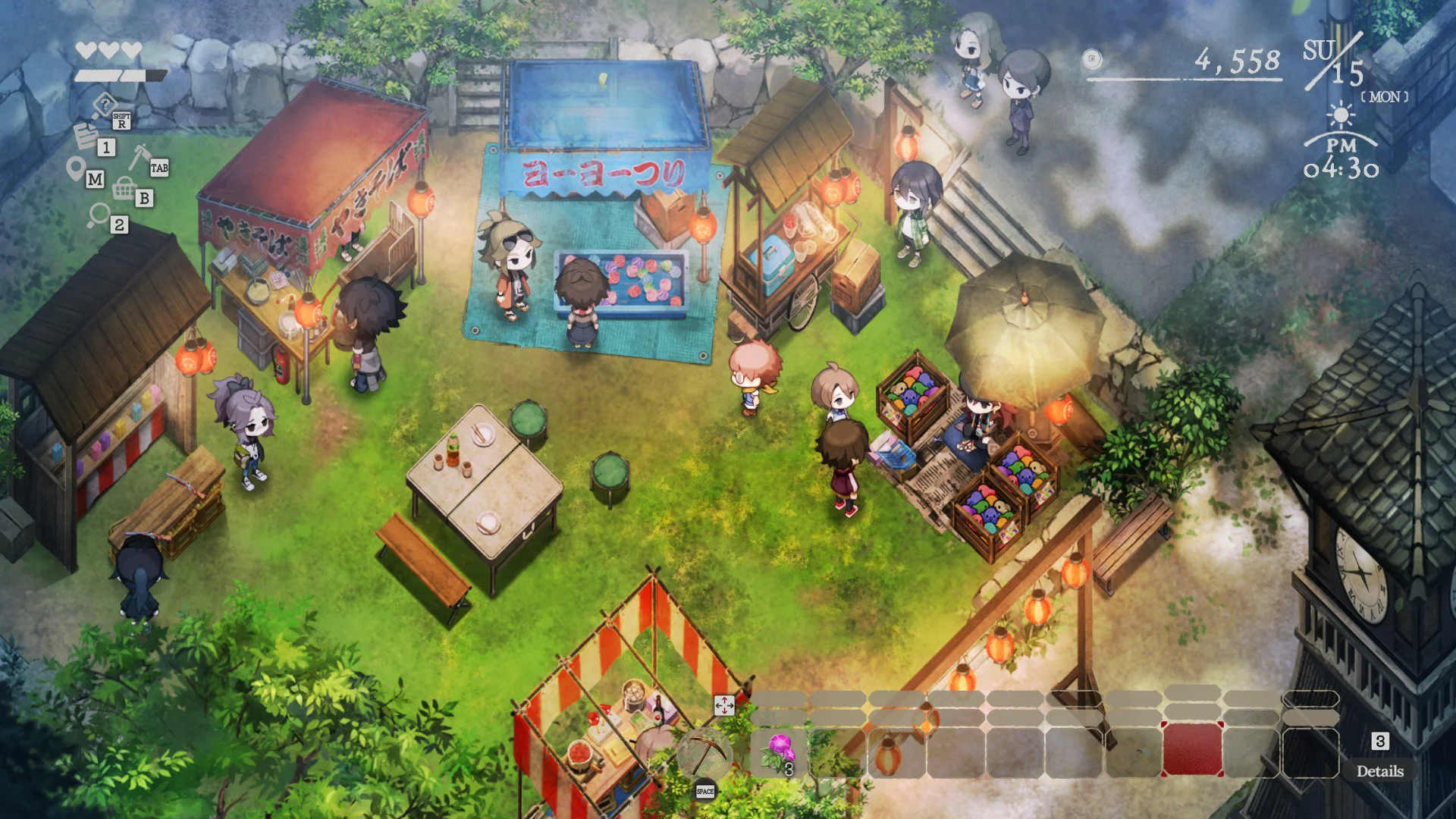
I don’t want to give the impression that there is no levity or positive character interactions. As you bond with each character, their unique personalities show through. I appreciated the positive aspects and communal love shared between the various inhabitants. Each resident has complex familial and found-family relationships with the others, and these bonds hold the tenuous community together in the face of shared tragedy and mounting dangers from the curse. As the protagonist contributes to the town and supports the residents, they slowly become enmeshed in the culture and included in this network of human connection. Village in the Shade critiques the stasis, insularity, and underlying physical & social decay that define many slowly dying rural communities; it also illustrates the close-knit attachments formed under shared hardship and hard labor where all must carry their weight for the good of the whole.
Despite the supernatural horror elements, Village in the Shade establishes a sense of realism and authenticity that many farming and horror games lack through the mundane dangers of rural life. Conventional threats like wild animals, drowning in the forceful rivers, or becoming lost in the isolated mountain setting are made clear through narrative events and character interactions. A frustration I’ve long had with many modern farming sims and entries in the related “cozy game” genre is that they lean too heavily into pure escapist fantasy. Village in the Shade bucks that trend by acknowledging the dangers inherent in rural life, creating cohesion between the fantastical supernatural horror of the nighttime sections and the grueling repetition of sweat and sacrifice of each day’s labor. The moments of levity, camaraderie, and fulfillment are hard-won, making the feeling of accomplishment that propels farming sims all the more impactful, and the social relationships authentic. Village in the Shade rejects the perfunctory box-checking that defines the farming gameplay and social simulation of many modern farming sims, and is all the better for it.
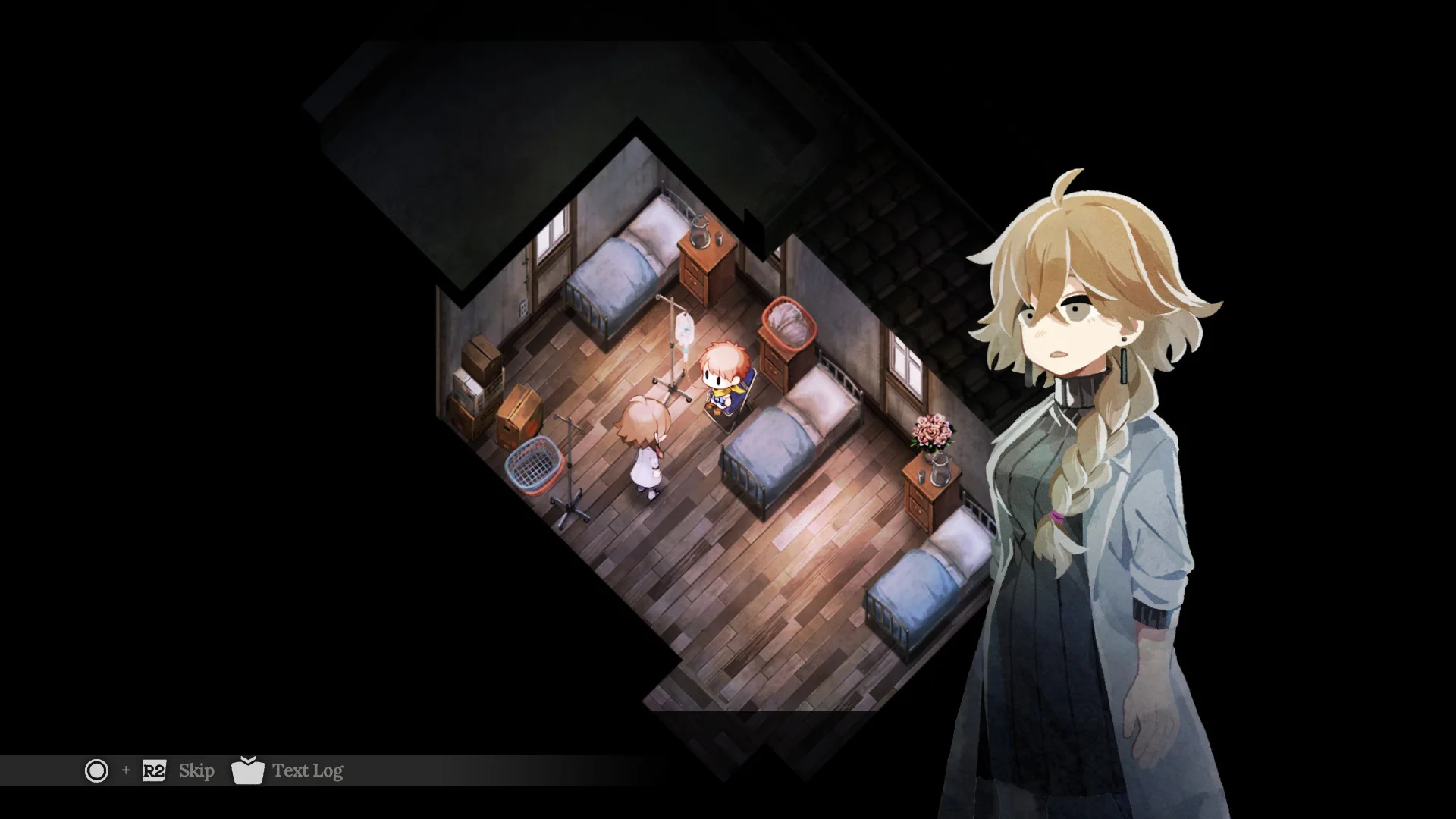
Perhaps what sets Village in the Shade most obviously apart from its contemporaries in the genre is the presentation. The hand-drawn 2D artwork is masterful, from the way light spills down onto the ground below, dappled through the leaves of its many trees, to the grotesque, otherworldly creature designs that roam the streets at night. Each character’s slightly chibi sprite and character portrait animates lovingly, with unique gestures and expressions conveying each character’s personality palpably despite the lack of voice acting. The music is evocative, from light, cheery daytime tracks that change each season and accompany your daily farm tasks, to the pulsing, unsettling pieces that underscore your flight from supernatural foes. Many tracks feature traditional Japanese instruments like taiko drums, reed flutes, and shamisen to create an immersive soundscape befitting the rural Japanese setting.
I left Kagatsu Village utterly enraptured by Village in the Shade’s narrative ambition and hauntingly effective storytelling, which creates a tense atmosphere of dread. In a lesser title, robust farming and social sim mechanics would undermine this atmosphere; here they strengthen it, as every slightly off character interaction and supernatural occurrence builds a satisfyingly awful mystery to solve. Years spent crafting multiple effective 2D horror games have served the team well, as they expertly weave the exploration-focused horror design into a new framework. Village in the Shade proves not only that this seemingly disparate genre fusion works, but that “cozy games” can (and should) demand more thematically and emotionally from their players. If you can’t handle the spooky stuff, the game even offers a “Village in the Sun” mode that removes the horror elements for a more conventional farming experience, but doing so would be a disservice to a horror masterpiece. Every subsequent horror/farming sim will be judged against the gold standard set here.