
War has swept through the lands of Middle-Earth as the Dark Lord Sauron’s forces march north to reclaim a mysterious Ring with the power to rule the world. An unlikely hero, however, is carrying the Ring south, into the heart of darkness, to the one place the Ring can be destroyed… but you knew all of that. The recently shadow-dropped The Lord of the Rings: War in the North – Legacy Edition dares to ask: what were a few other dudes doing in the background of fantasy’s all-time classic?
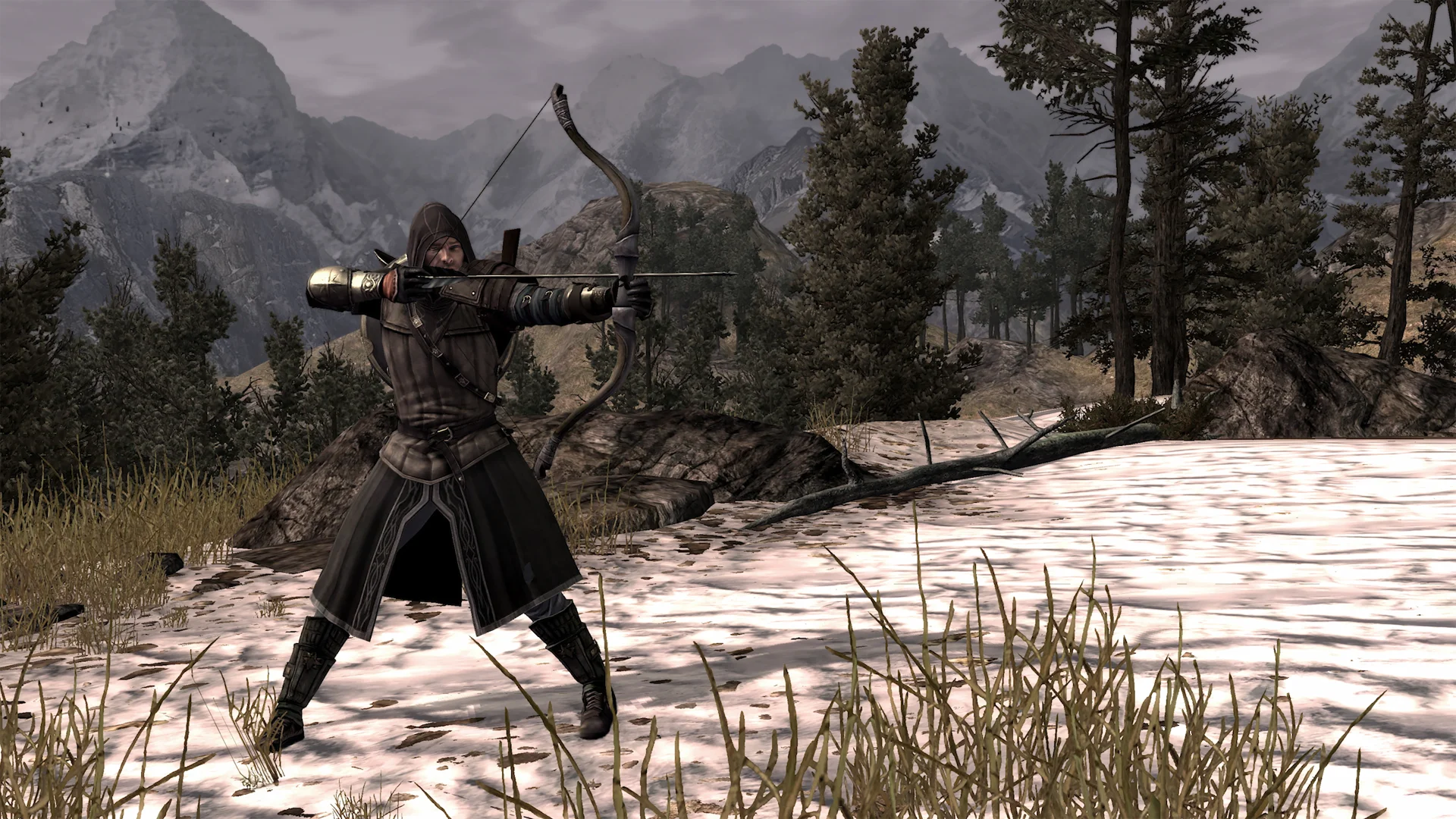
On paper, War in the North’s premise is pretty compelling. As the would-be king Aragorn awaits Frodo and co. at the Prancing Pony, running parallel with the start of The Fellowship of the Ring (picture the Peter Jackson movies, as that’s the aesthetic this game pulls heavily from), Aragorn calls on three previously unseen heroes: Farin, a dwarf warrior; Andriel, an elf mage; and Eradan, a human rogue. At Aragorn’s request, the heroes are to travel to the north to distract the orc forces that amass there and put a stop to Sauron’s servant, a powerful human spellcaster named Agandaûr (like the playable heroes, an original character to the game).
As a diehard Tolkien fan since I was about nine years old, I wondered why I missed War in the North when it first released on PS3 in 2011. Oh, right, it came out a mere ten days before The Elder Scrolls V: Skyrim and was poorly received to boot. With this new Legacy Edition handled by developer Aspyr, War in the North now runs at a smooth 60 fps (though not on the first Nintendo Switch, which also lacks couch co-op), a more detailed UI for other party members, and, most importantly, the ability to swap between the three heroes when in single-player. But is a tune-up enough to justify taking the ride?
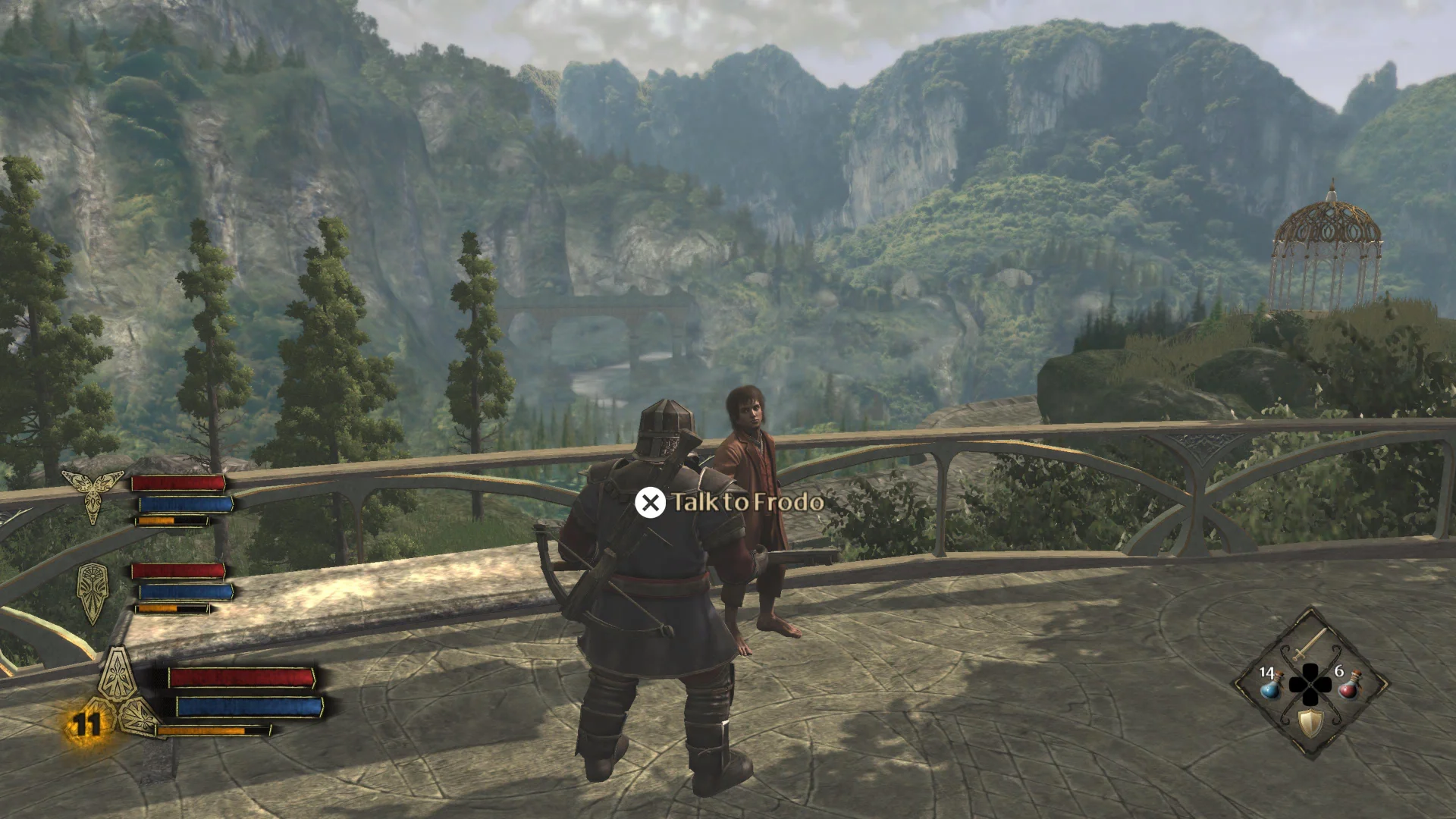
Simply put, War in the North is still a bad—sometimes terrible—looter action RPG in single-player… and a goofy beat ‘em up blast in co-op. I was looking forward to playing with my oldest childhood friend, but the initial days of the PS5 release had busted online multiplayer, meaning I played halfway through the 12-hour campaign solo.
The story checks all the boxes of a Middle-Earth adventure, including orcs, goblins, eagles, dragons, and cameos from heroes and their relatives from The Hobbit and The Lord of the Rings. Annoyingly, they use a ridiculous amount of dialogue real estate to repeat names of people and places and cover up potential plot holes this game might insert into The Lord of the Rings. Almost every conversation goes something like:
“Well, [Person] of [Place], shouldn’t you go help Frodo, the Ring-bearer?”
“That’d be wise, [Person] of [Place]! But here’s why I cannot…”
War in the North‘s cast includes an all-star lineup of video game voice actors, including Laura Bailey as Andriel the elf and Nolan North as the human, Eradan. They do their best to elevate the material, though depending on which hero you’re playing, the other heroes act and speak surprisingly tranquil during the dialogue segments, which play out via Mass Effect-like choice wheels. As expected of composer Inon Zur, the original soundtrack is notably strong, evoking but never aping the Howard Shore scores from the films.
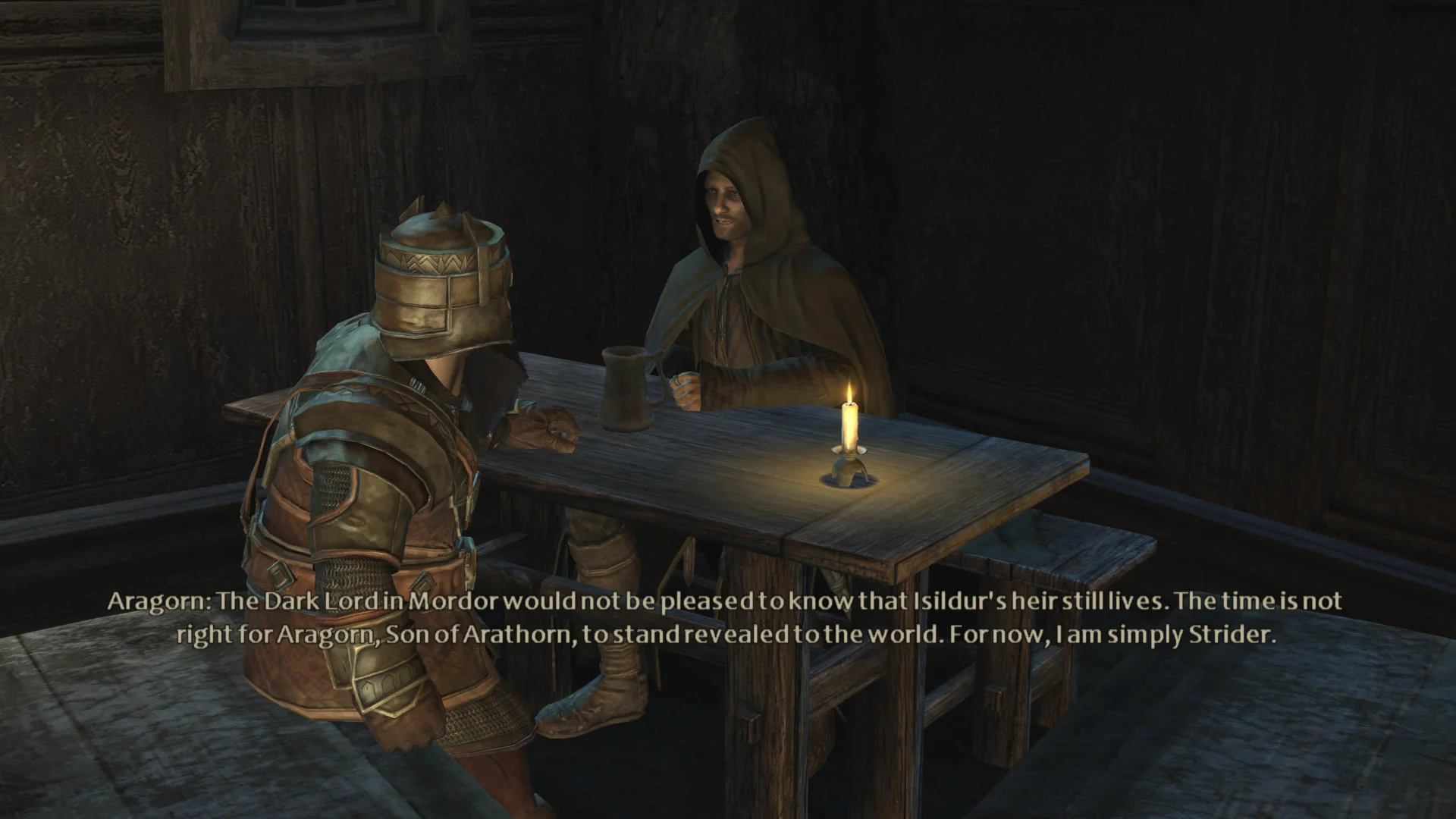
Aside from the wax figure faces of movie cameos (please don’t haunt my dreams, pseudo-Aragorn), War in the North looks great for a PS3-era game, especially in its environs and with its seemingly hand-painted skyboxes. Being M-rated, the game does have a strange fixation on black, spurting blood and decapitation, including a post-chapter segment tally of enemy limb dismemberments that I think would send Mr. Tolkien rolling in his grave. That aside, it captures the aesthetic of the Peter Jackson films (in turn inspired by the paintings of Alan Lee) quite well.
The gameplay, then. Hoo boy. I like the combat less than half as well as it deserves, which is to say, it stinks. From the jump, players mash square to chop at orcs and goblins’ sizable but invisible health pools until a yellow indicator says it’s time for a heavy triangle attack. Chaining enough hits puts you in hero mode, in which your momentum from doing heavy damage or decapitating one enemy chains to the next, so you can rack up kills like Legolas and Gimli at Helm’s Deep.
War in the North also has a third-person-shooting bow/crossbow/staff ability, though on Normal difficulty even a standard orc can take upwards of six arrows to fell. You can block (which is mostly useless) and roll, and as you level up, you gain various abilities via a skill tree. Unfortunately, the buttons were often unresponsive, and it felt like I was mostly locking enemies into clunky chains of hitstuns.
Each character is vital to your party, though none so much as Andriel because of her elvish healing magic and projectile-blocking bubbles. Eradan has an interesting sneak ability, and Farin the dwarf, who I spent most of my time as, simply goes berserk and does AoE damage skills. You can build each character with a variety of specialties, though two-handing or dual-wielding for heavy damage output was the obvious choice. I think the game should have granted a few skill points at its start to allow more interesting abilities in the first few hours.
With the single brain cell shared between them, my AI allies spent much of the game standing outside their own healing circles and subsequently crawling around on the floor calling for revives. It made the game far more difficult than it should’ve been in an “enemy stats overtuned” way rather than a skill-based way.
In single-player, it was cumbersome shifting loot between the three characters, especially in mid-chapter shopping breaks, considering every character has their own wallet and picks up plenty of loot that only other classes can use. Thankfully, gifting items to other characters works smoothly.
After about six hours solo, I started to hate the repetitive gameplay and the hordes of damage-sponging orcs the story threw at me. Thankfully, Aspyr patched the PS5’s online, and, like a mighty eagle, my oldest friend Travis swooped in.
War in the North is certainly a game built with co-op in mind. Things clipped along at double the speed they had solo, with us cleaving through the spiders of Mirkwood Forest and clobbering mountain trolls. I think I cried from laughter three times thanks to our braindead AI-controlled Eradan’s misadventures and the way enemies rag-dolled into the sky from our explosive abilities. Inventory management became naturally streamlined, and we shared in my dialogue decision-making, though we laughed through most of that time due to the writing and delivery.
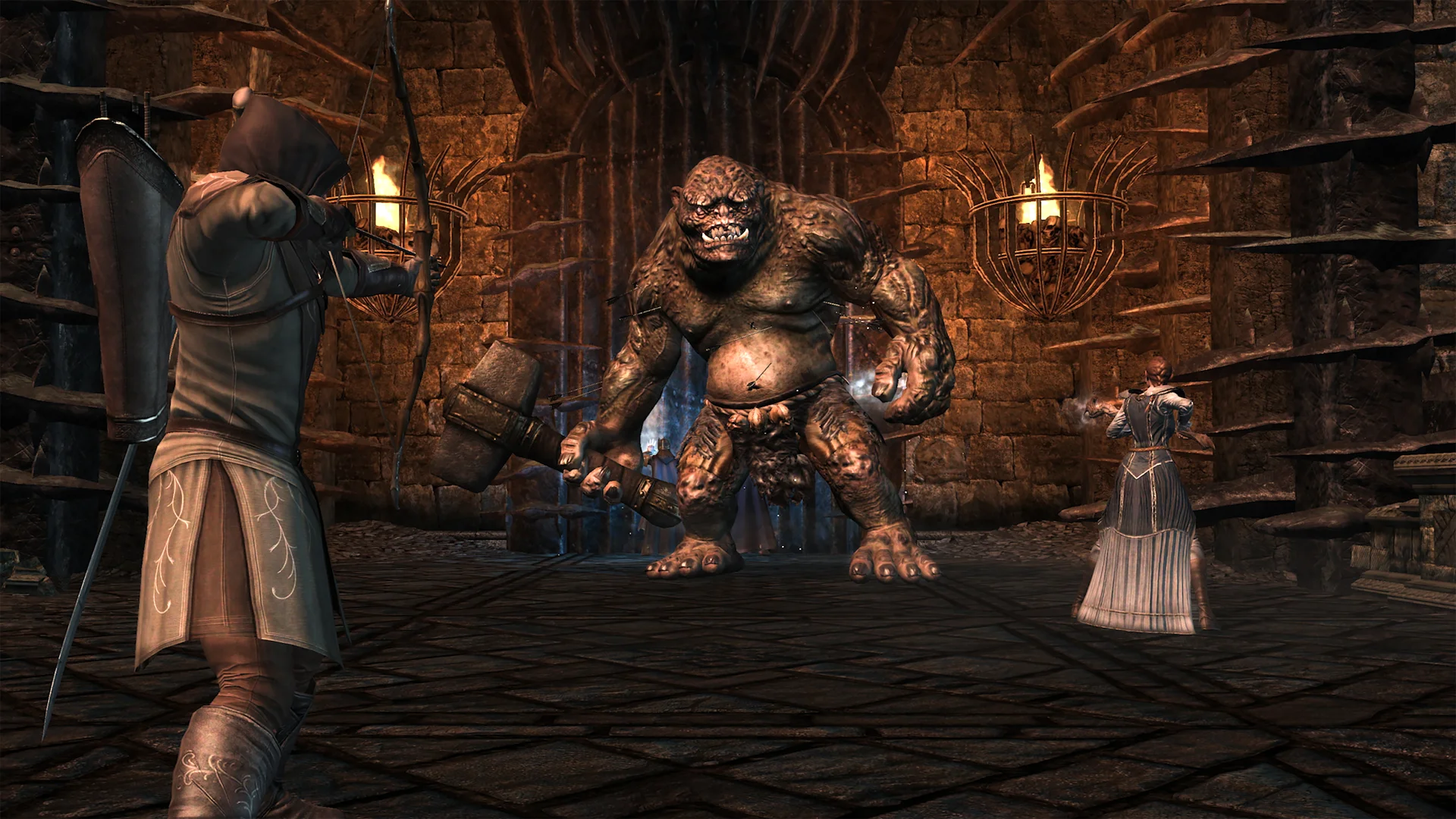
War in the North’s co-op is akin to watching a so-bad-it’s-good movie with friends, something I’d sorely missed for many years of adulthood living abroad. Whether it’s through two-player couch co-op or three-player online, multiplayer is the only way I’d recommend you touch this game. The story is just simple enough to allow your attention to dip in and out as you’re whisked away to the next Tolkieny tunnel of baddies. With the right fellowship, the inane combat becomes plain, dumb fun trussed up in a beloved skin.
I went from wishing War in the North had never come to me, dreading another second of its single-player drudgery, to staying up until three in the morning with my friend on the phone, the two of us laughing and enjoying its co-op. In lieu of a solo five out of ten and a co-op seven out of ten, I’ll score the game something in between. A ten out of ten, of course, goes to my friend. “Mellon!”