
Have you ever seen Gus Van Sant’s Psycho?
In the late ’90s, director Gus Van Sant embarked on a cinematic experiment: He would remake Alfred Hitchcock’s 1960 horror masterpiece Psycho. However, unlike most remakes that reimagine the story, his Psycho would be a shot-for-shot copy, only in colour with new actors playing the main roles. A fascinating experiment, yes, but also a complete disaster. There was something missing from the remake, an undefinable quality that made Psycho so infinitely watchable and timeless.
The Psycho remake kept coming to mind while I was playing Yakuza Kiwami 3. Though it is technically a more polished and modern game than Yakuza 3, I walked away shocked at just how badly Ryu Ga Gotoku Studio fumbled this remake.
The Tojo Clan is in extreme crisis! The Dragon of Dojima, Kazuma Kiryu, has fully retired from the yakuza world to run an orphanage in Okinawa, the southernmost island of Japan. Unfortunately, a billion-yen land deal has put his orphanage in the middle of a Tojo civil war. Fighting to protect the children in his care, Kiryu must return to Kamurocho to save his orphanage and, in doing so, reshape the future of the Tojo Clan forever.
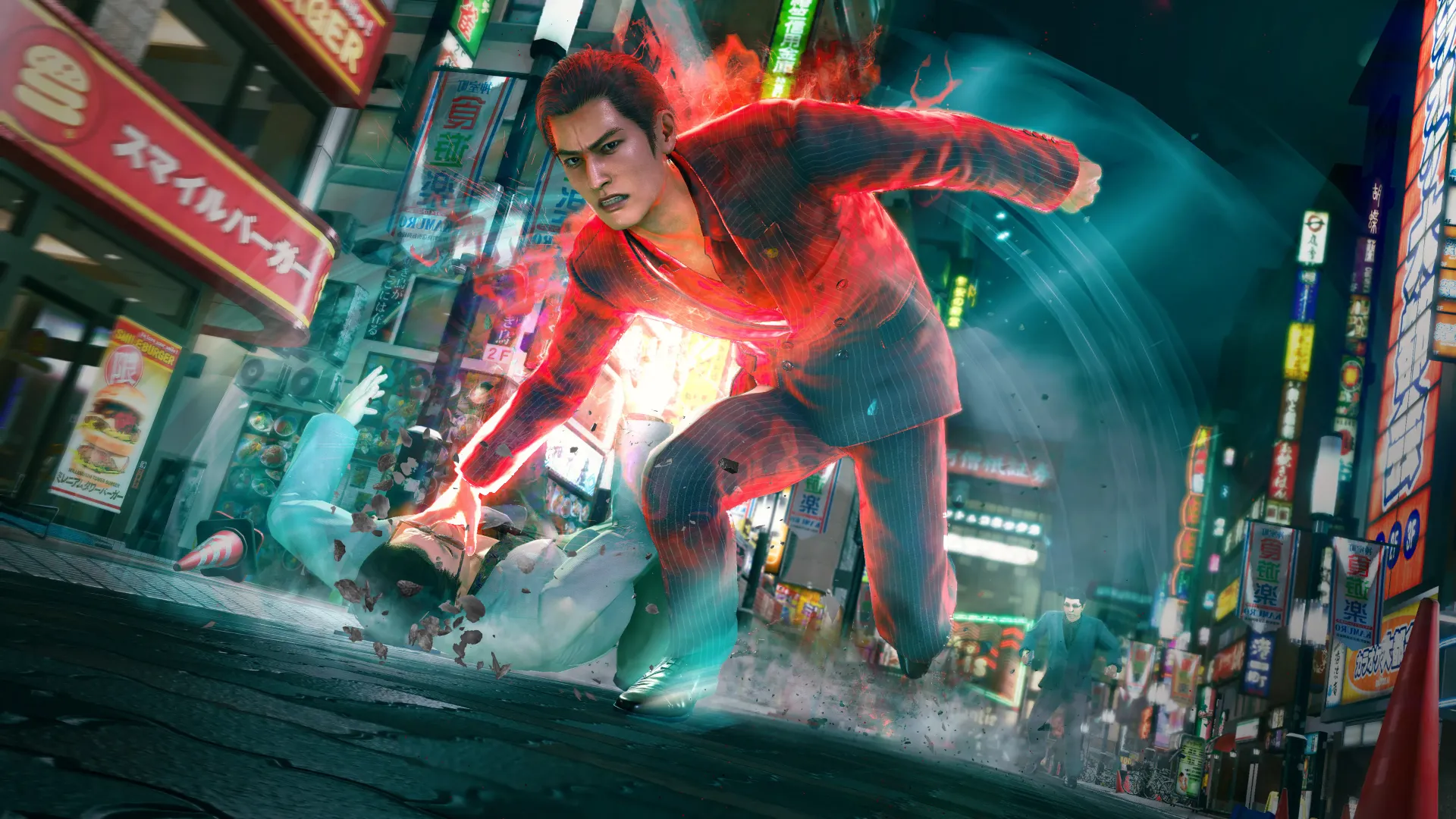
For the most part, Ryu Ga Gotoku Studio kept Yakuza 3‘s story intact. Kiryu is still everyone’s favourite Yakuza Dad, trying his best to raise the orphans in his care. And the Tojo Clan is, as ever, trying their best to pull him back into their yakuza bullshit.
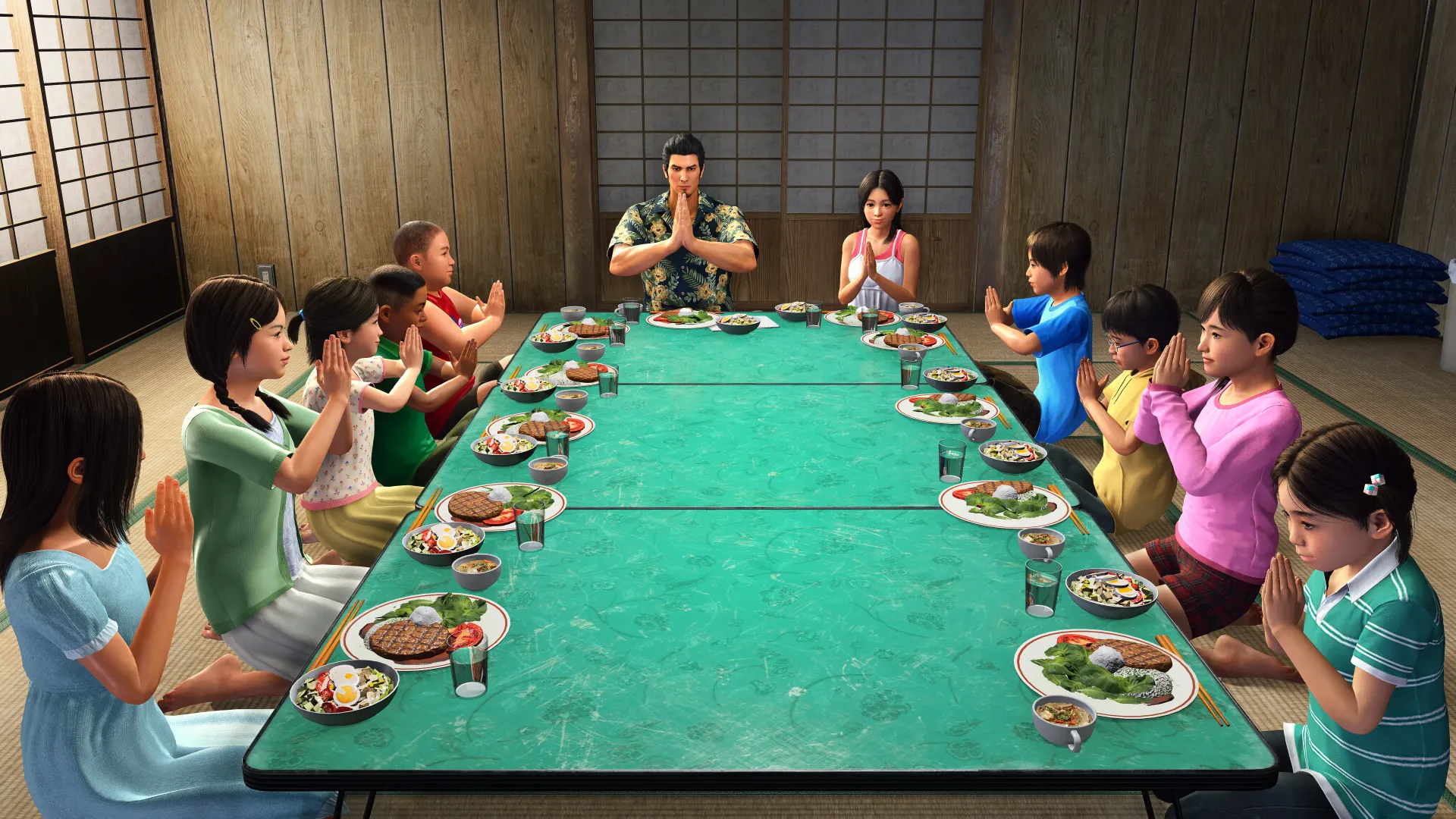
In my Yakuza 3 Remastered review, I singled out the Morning Glory orphanage sections as easily my least favourite part of the game. Although the connection between Kiryu and his orphans was emotionally compelling, the gameplay and side stories featuring them were a massive grind. I wanted to head into Kamurocho and tiger drop some hoodlums, not spend a dozen hours raising children, growing potatoes, and training a low-poly puppy. In Kiwami 3, however, growing potatoes and hanging out with the kids (not to mention the puppy) are actually engaging and fun!
One of the smartest things RGG did was to recycle some of the best minigames from future titles and repackage them in ways that make sense for the story. For example, they reworked the Vocational School exams in Yakuza: Like a Dragon into a minigame where you help your kids with their homework. They also imported the delightful cooking minigame from Pirate Yakuza in Hawaii, so you can learn to make the favourite dishes of all the orphans. Plus, there are some new minigames, including a fun, if super challenging, racing/sewing game and a bug-catching game where you challenge your kids to see who can capture the most insects. On the whole, the revamped gameplay at the orphanage improved the Yakuza Dad sections immeasurably.
Another way RGG significantly improved the overall experience is by removing the mind-numbing cabaret club minigame and replacing it with the much more entertaining management sim Bad Boy Dragon, where Kiryu becomes the chairman of an all-girls biker gang (because of course he does). While this minigame features some new gameplay, specifically riding motorcycles into battle, there really isn’t too much new overall for Yakuza fans. It’s fun and full of interesting characters, but it’s pretty typical Like a Dragon management sim fare.
Unfortunately, that is where most of the big improvements come to an end.
What should be the most obvious place to improve in a remake is the graphics. Though impressive for a PS3 game, Yakuza 3 suffered from many of the limitations of that console generation: low-resolution textures and low polygon counts for characters (especially NPCs’ faces). In Kiwami 3, they’ve rebuilt the game in the Dragon Engine, but something must have gone wrong, because this is easily the worst-looking modern Yakuza game ever made. There are still weird texture issues, blurry filters in the backgrounds, and bafflingly, low-poly NPC facial models, leaving half of the yakuza in Kamurocho looking like they’ve escaped from the PS3 era. Maybe these low-poly faces were an homage to Yakuza 3‘s visuals, but surely there are better ways to honour the source material.
Speaking of honouring, or more accurately dishonouring, what has come before, let’s talk about RGG Studio’s decision to recast some beloved characters with popular Japanese actors. The biggest controversy is recasting the character of Goh Hamazaki as Teruyuki Kagawa. For those who are unaware, Kagawa has admitted to repeated sexual assault and misconduct. And despite the justified outcry from Yakuza fans about the casting, RGG declined to recast the actor, as they did for Judgment when one of the actors was accused of using cocaine. I guess RGG feels that confirmed sexual assault isn’t nearly as serious a crime as alleged drug use.
To those who are understandably angry about a sexual predator being cast in Kiwami 3, let me put your mind at ease: He’s terrible in the role. Ignoring everything else (as difficult as that might be), the actor is horribly miscast. Goh Hamazaki in Yakuza 3 is a six-foot-four, violent brute of a man with a malevolent intelligence and ambition simmering just below the surface. Goh Hamazaki in Kiwami 3 is a five-foot-seven, generic, middle-aged yakuza slimeball who looks and acts more like a downtrodden salaryman than the patriarch of a prominent family in the Tojo Clan. At no point does he feel like a genuine threat to Kiryu, completely undercutting the character’s role in the story.
Hamazaki isn’t the only recast character in Kiwami 3. Beloved wingman Rikiya Shimabukuro and his gruff but affable boss Shigeru Nakahara also have new actors. Ryo Ishibashi takes the role of Nakahara, and while he doesn’t quite look the part of the over-the-hill, overweight, rural yakuza boss (in fact, he looks more like a super-fit yakuza dream daddy), he does a wonderful job in the part, imbuing the new Nakahara with as much heart as his predecessor.
Unfortunately, the same cannot be said for Sho Kasamatsu’s interpretation of Rikiya. Gone is our lovable doofus, only to be replaced with a bland performance that lacks Rikiya’s signature charm and warmth. Everyone who has played Yakuza 3 remembers Rikiya, but I guarantee you’ll forget Kiwami 3’s Rikiya five minutes after his last scene. I wish that RGG Studio would stop with the stunt casting and instead rely on the talented voice actors who have brought these roles to life over the last 20 years.
The updated combat in Yakuza Kiwami 3 is typical of modern games in the series. Unlike the single combat style in Yakuza 3, you now have Kiryu’s Dragon of Dojima style and a weapon-based Ryukyu Style that utilizes a sword and shield to block enemy attacks. Though arguably, the last thing we needed in this game was more blocking. In the original, every enemy, from boss to generic street tough, would block incessantly. Fighting them was such a chore that some called the game Blockuza 3. Thankfully, the remake somewhat mitigates this issue, though enemies still block a lot more than in other Dragon Engine games. It’s better, but if you end up with a group of five block-happy punks on the streets of Kamurocho, you might be in for a tedious fight.

When RGG announced Kiwami 3, they also revealed the brand-new side game Dark Ties starring Yoshitaka Mine, easily one of the most compelling characters in Yakuza history. With his unmatched level of threat, malice, and complexity, it only made sense to give him his own DLC-style game, just like Majima got with the Majima Saga in Yakuza Kiwami 2.
Yoshitaka Mine is in crisis. During a drunken bender in the Champion District, Mine happens to stumble upon a yakuza gang war where he watches several Tojo foot soldiers sacrifice themselves to save the Tojo chairman, Daigo Dojima. Inspired by this sight, Mine sets out to join the Tojo Clan and discover if there is more to life than just earning money. But how? By allying himself with a low-level Tojo grunt and sex offender, Tsuyoshi Kanda. Together, they start to build the Nishikiyama Family into one of the most powerful factions in the Tojo Clan, making countless enemies along the way. The choices he makes and the allies he chooses will reshape his future forever.
Right from the start, Dark Ties instantly put me off by having one of the protagonists be an unapologetic rapist. In fact, Kanda’s very first scene involves him attempting to rape a random woman in an alleyway. Mine stops him, not to save the woman, but to bribe Kanda into letting him into the Nishikiyama Family. And as the game progresses, so does the friendship between Mine and Kanda. He genuinely becomes Kanda’s friend and brother, forming close bonds of affection and loyalty that are tested (and obviously broken) on their way to the events of Kiwami 3. He is the Majima to Mine’s Kiryu; you can even sing karaoke with him. But there is one big difference: Kanda is, and I realize I keep repeating this, a violent rapist!
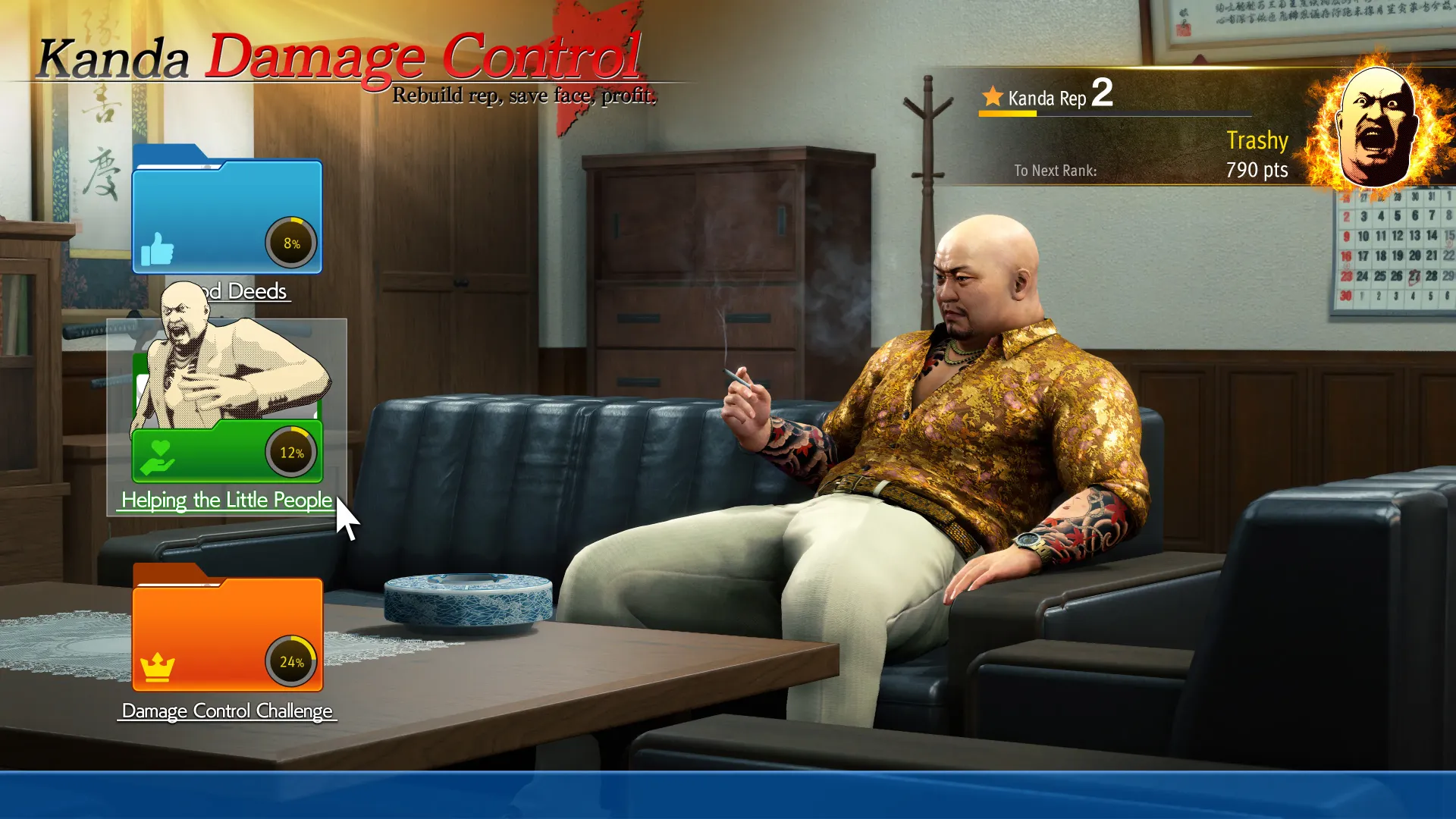
This leads me into Dark Ties’ big management sim, where you set about to rehabilitate a rapist’s image. As Mine, you go out and perform good deeds to boost Kanda’s standing in Kamurocho, eventually raising him to be seen as a paragon of virtue. The second I realized I would spend the majority of my playtime doing public relations work for a sex offender, I stopped playing for a few days. I eventually finished it out of a sense of obligation, but this entire scenario made me feel angry and disgusted. Who at RGG Studio thought that a management minigame where you rehabilitate a rapist’s image would be an engaging and fun activity in 2026? It would have been a spectacularly bad idea at any point in time, but especially now for obvious reasons. Rehabilitating a rapist’s image so he can gain a position of power? No unintentional parallels there, I’m sure.
I suppose the underlying intent of Dark Ties is to make you feel criminally complicit with the yakuza in a way that the main games never have. Kiryu and his friends tend to be yakuza paragons of virtue, while in Dark Ties, you are with the grunts who are in it for money, power, and to inflict as much pain on others as possible. And yes, there can be something fun about playing as the bad guy and engaging in fictional violence, racketeering, and gang warfare. But being complicit in rape? In a game that has already cast a sex offender in a leading role? I left Dark Ties feeling disgusted with the game, with what has been revealed about the character of Mine, and most of all, with RGG Studio.
Yakuza Kiwami 3 and Dark Ties left me deeply concerned about the future direction of the Like a Dragon franchise. Since the very first time I played Yakuza Kiwami, this series held a special place in my heart. But if there is one thing that Kiwami 3 lacks, it’s heart. If you’re craving some modern Yakuza action, play any of the recent Dragon Engine brawlers. But if you really want to play Yakuza 3, my suggestion is to go play Yakuza 3 and leave Yakuza Kiwami 3 alone.
Oh, and remember when I mentioned Psycho off the top? One of the only things Gus Van Sant did right was not mess with one of the most iconic endings in cinema history.
RGG Studio should have taken notes.