
The Ys series has garnered significant critical acclaim, with its hero Adol Christin becoming an RPG icon. Arguably, Ys has had a significant impact on the action RPG genre from early on, with exploration-heavy, puzzle-laden games, featuring challenging fights that require quick-footed strategy to overcome. While The Legend of Heroes: Trails might be my personal favorite Falcom series, I still have a special fondness for Ys. The stories are full of heart, the characters are always quite likable, and the gameplay is formidable yet entertaining. So, naturally, when Ys: Memories of Celceta was localized by XSEED for the PlayStation Vita in 2013, I decided to give it a try. I had a fairly enjoyable and rather memorable (hah!) gaming experience. Flash forward to 2026, and we’ve been given a remaster: Ys Memoire: Revelations in Celceta. Is it still a game worth remembering? That answer leans mostly affirmative, but largely because Adol’s adventures in Celceta were solid beforehand. Newcomers should certainly give this version of Celceta a try, but returning players might pause before spending money on a remaster that boasts only minimal upgrades.
Ys: Memories of Celceta was a remake of the previous Ys games that shared the Ys IV moniker. Falcom took plot points from both of those Ys IV titles, altered them to make a more cohesive plot, then added in several new story points to further flesh out the narrative. Ys Memoire: Revelations in Celceta doesn’t alter or add anything to the original’s storyline, though now that Falcom has confirmed that Ys: Memories of Celceta is set after the events of Ys X: Nordics, it has a clearer place in the series proper.
Summarizing the Ys series, it basically boils down to following Good Samaritan Adol as he wanders from region to region, saving the day before leaving to further explore the world, all the while keeping his experiences written down in a journal to share with others. Along the way, he encounters exciting adventures and meets a ton of intriguing people, though none really know much about Adol himself beyond his being a redheaded swordsman yearning for adventure and exploring the unknown. In earlier games, particularly, Adol seems a blank slate for the player. While he often inspires other characters to take action or helps overcome a great threat, he tends to feel slightly like a bystander in the overall plot.
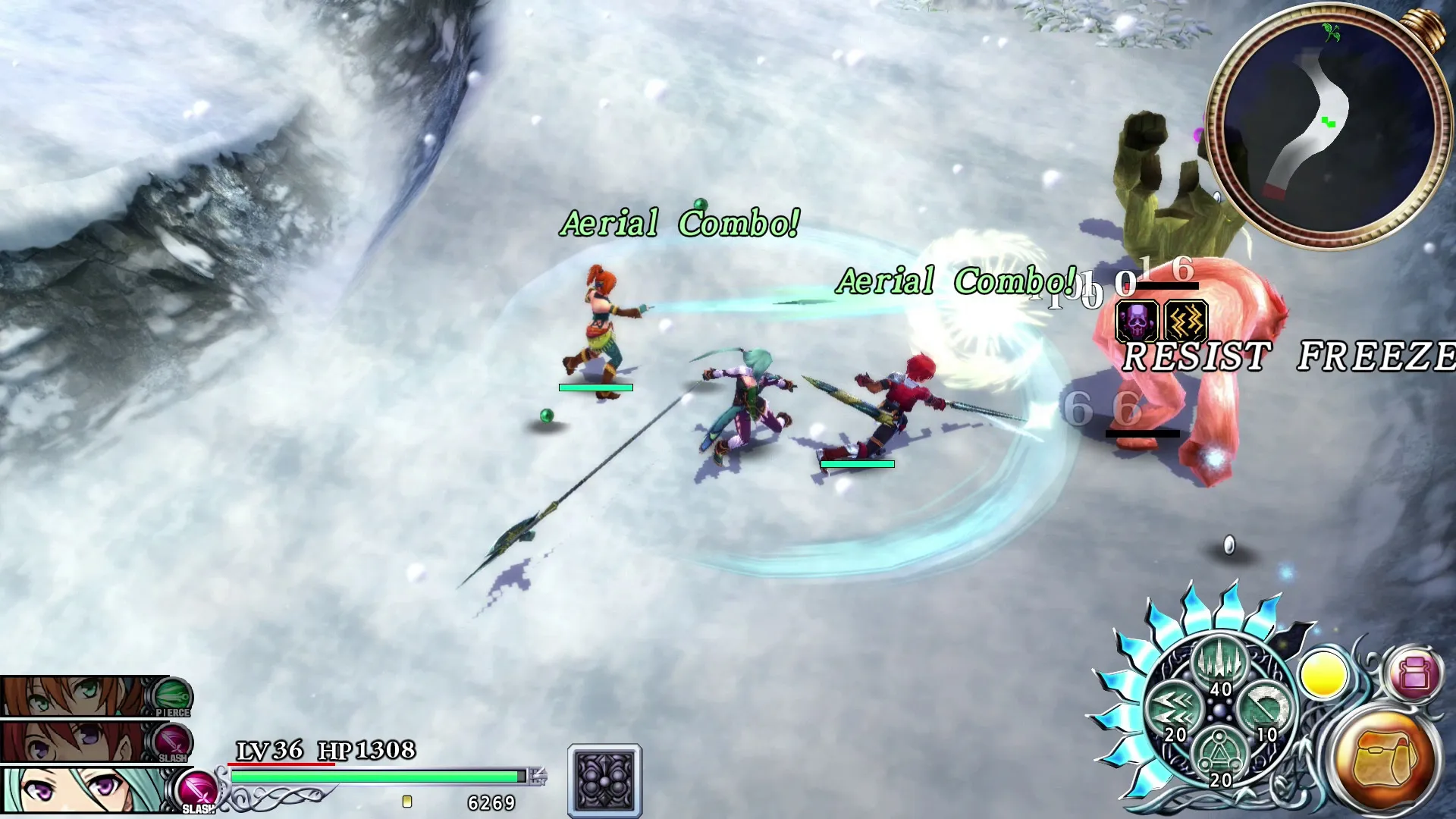
Celceta seems to be Falcom’s attempt at reinventing the series for a newer gaming audience. The gameplay and story are familiar, but have also been tweaked to attract newcomers. The party system from Ys SEVEN returns in full force, and there’s a pretty good level of versatility amongst the various party characters. The game encourages switching between them by having different enemies be susceptible to certain weapon types and the like. While the difficulty is quite present, it isn’t nearly as crushingly difficult as past games in the series. Party members all have specific non-battle skills that play a role in puzzles outside of combat, too: Frieda can seal magic fissures to open up new areas for exploration, Ozma can break apart walls holding back water, Calilica can activate devices causing platforms in dungeons to move, and so on. These dungeon traversing abilities are somewhat reminiscent of the non-combat skills party members often had in the earlier Wild ARMs games.
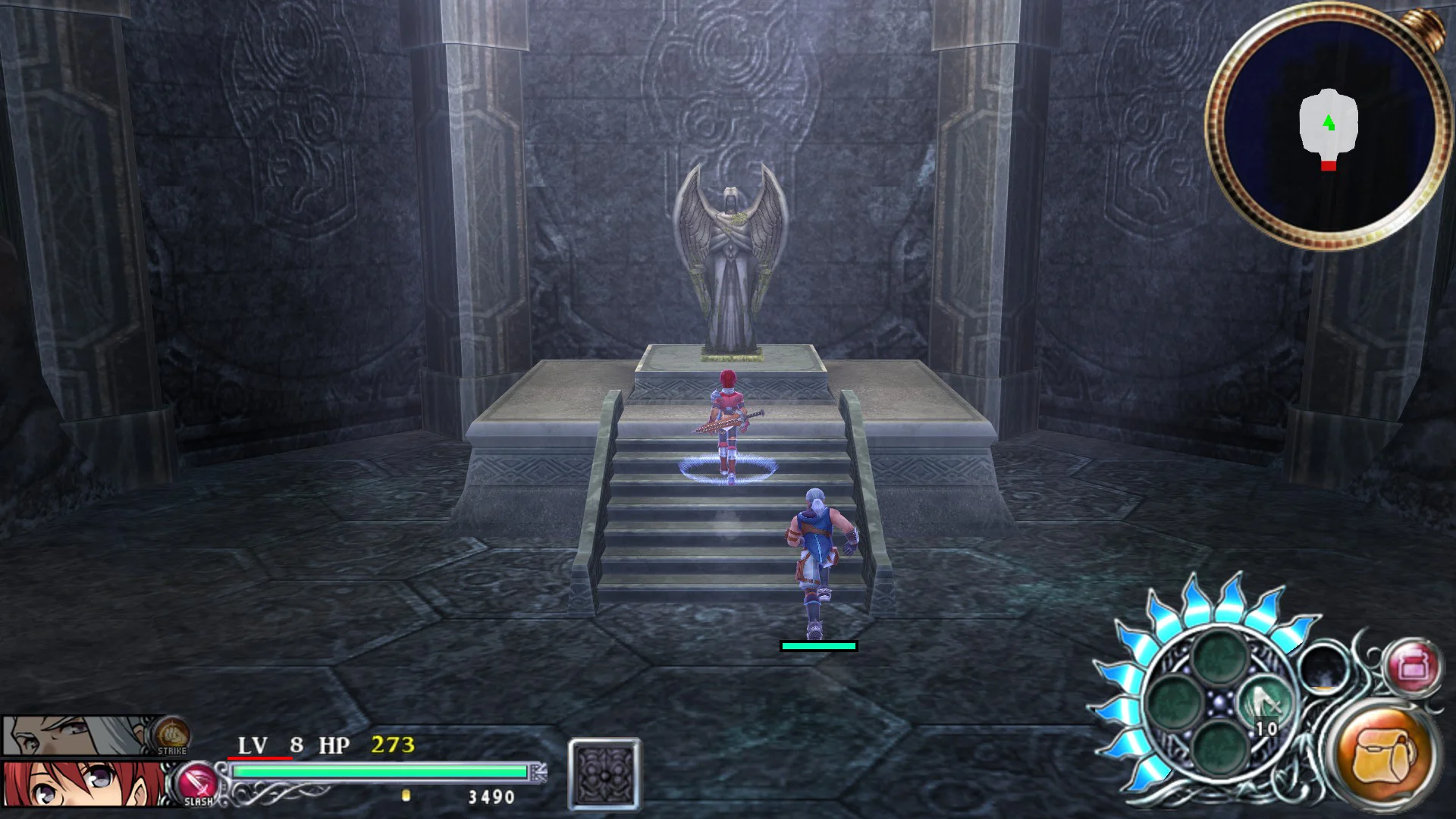
The party can equip special items referred to as “Artifacts,” giving them special abilities to help solve puzzles. For instance, the Dwarf Bracelet shrinks the party so that they can get through small openings, the Hydra Bracelet allows them to access underwater areas, the Gale Shoes allow the party to run so fast that they can actually scale walls, the Sacred Beast Collar lets them turn into a creature called a Roo to talk to monsters, and so forth. The game actually has a very traditional RPG feel with multiple towns bustling with numerous NPCs and shops, complete with community boards updated with side quests you can take on for the townsfolk as you progress, making Celceta feel more like a traditional JRPG that just happens to have an ARPG battle system.
A newcomer-friendly approach is also present in how Celceta handles its story. It might not win awards for being incredibly original, but Celceta’s plot is well-written and highly detailed, chock full of the likability one can expect from Falcom’s more recent narratives. It doesn’t take itself completely seriously, and even playfully mocks plot points of past Ys games in a way that’s more fond and celebratory than actually insulting. Truth be told, Adol really has been arrested under false charges quite a bit in the past, and he’s certainly traversed more than one magical tower filled with monstrous creatures, so series fans will probably get a kick out of those tongue-in-cheek asides. There’s an endearing quality to both the story and cast that’s quite fun to see as you progress.
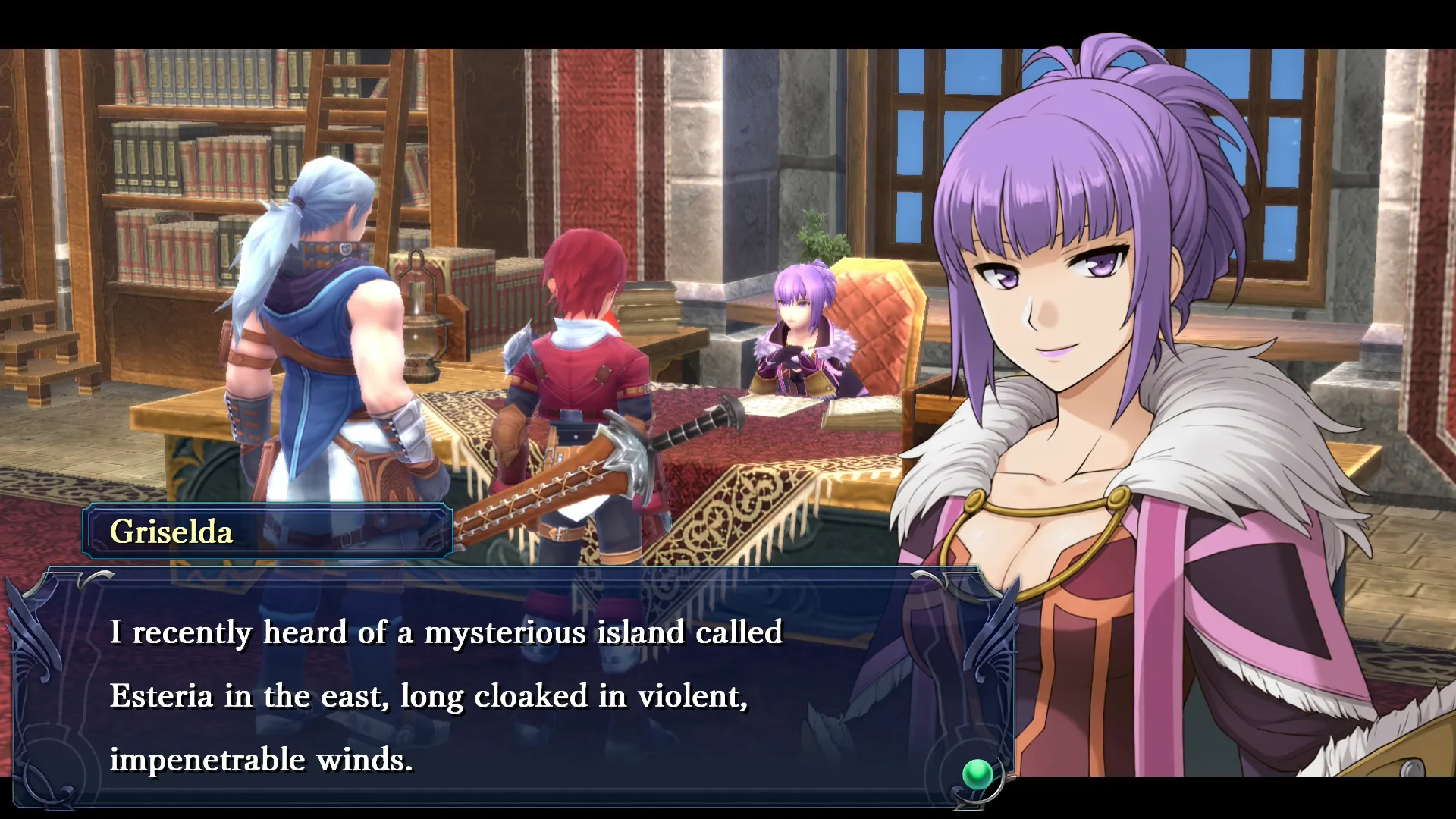
The characters are relatable and quite likable; I grew fond of all of them by the time the game finished. The party characters all have their own interesting backstories, and at times will make you smile or cheer. Non-party characters are memorable: Hopeless rival Leo displays unexpected depth; Remnos plays around with villain tropes; Gruda is great as far as being a snarky manipulative villain goes, and I give the game props for giving him compelling reasons for his actions; Griselda is a strong leader trying to maintain her own beliefs and personal sense of honor despite her people outcasting her, and the Roo can be quite the opposite of what you’d expect cute mascot characters to be. Even the random NPCs in town have their own backstories and amusing personality traits, and their dialogue changes constantly depending on events in the story. Truthfully, the only character I don’t have a strong opinion on is Leeza, and I think that’s because, for as much story importance as she has in the plot, she isn’t present that much.
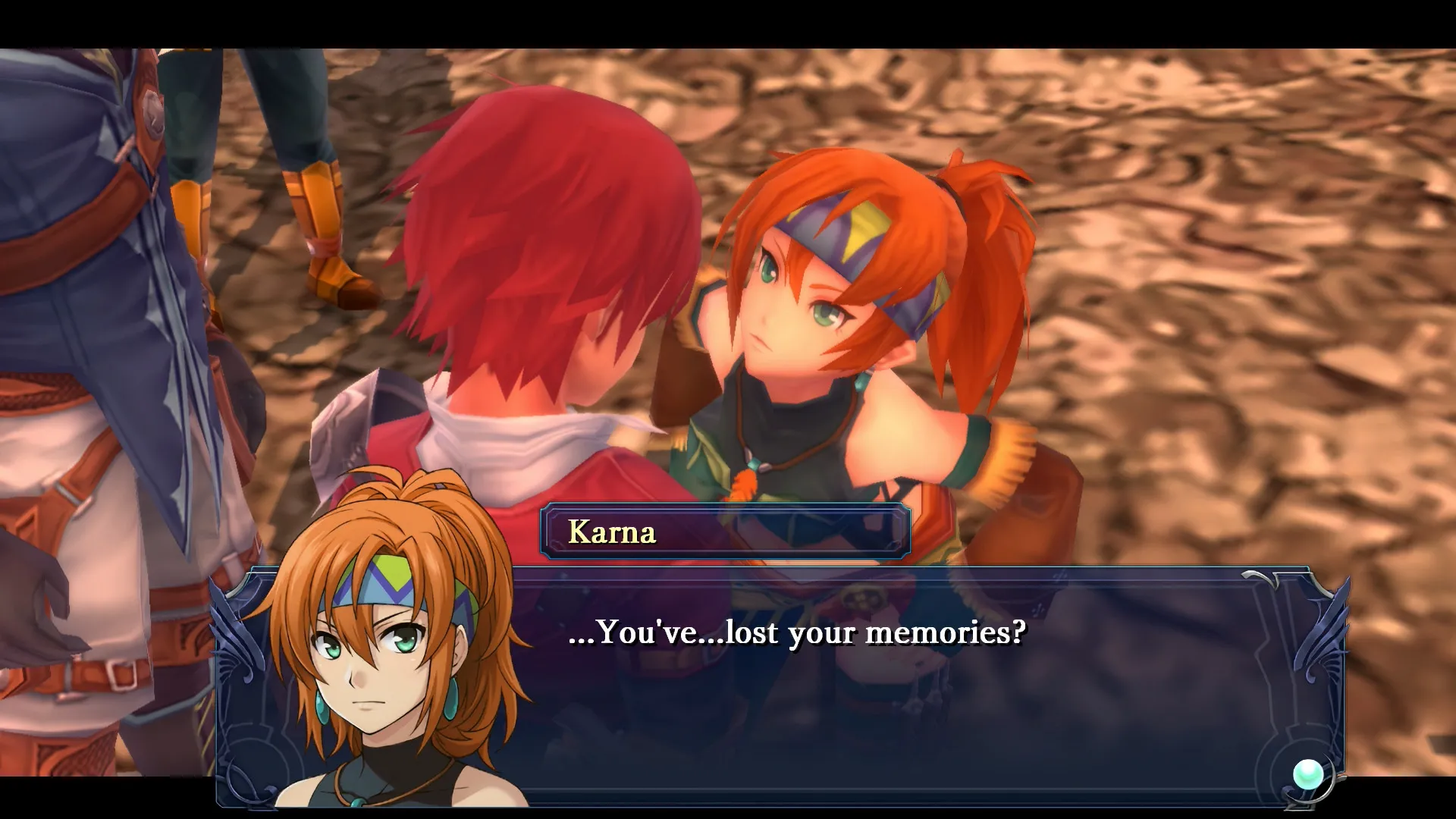
As a fan of Roman history, I quite like the game’s fantasy take on the Roman Empire. Celceta plays around with RPG stereotypes brilliantly. Let’s face it, the amnesia plot-line has been done to death in RPGs, and yet, in true Falcom fashion, Celceta manages to put a fresh spin on a worn-out trope. We get a clearer sense of who Adol is as a character, largely because his amnesia is central to the narrative. It makes sense that losing his memories was the only way to explore his backstory creatively. As mentioned previously, Adol is never a central focus of the other Ys games since he’s always known who he is. Why would he talk about himself when there’s so much else going on around him?
By forcing Adol to retrieve his memories, Celceta also creates a plausible reason why players finally discover his past, too. Adol has to find himself again, and we’re going along with him. The character we see is actually really likable: an intelligent and bright boy from humble beginnings who desires to learn about other cultures and teach others about them. Someone who wasn’t naturally gifted at everything he set out to do, but had to work hard towards his goals and continues to do so. Adol’s personality and backstory seem really fitting, and in a lot of ways, fits how fans have interpreted his character over the years. I also love how you get a sense of his personality and dialogue, yet players feel as though they’re in Adol’s role, even allowing them to choose dialogue options for him during conversations and cutscenes. The dialogue options Celceta gives you let you play the game more seriously or go a little silly, depending on your mood. For example, I love the “Damned straight!” dialogue option they give you at one point. It keeps you feeling involved throughout the poignant story scenes.
Having to find Adol’s missing memories offers insight into his character and further provides an ingenious way to shed light on the story in a unique way. Later on, Adol can actually see the memories of other characters, which moves the plot along without relying on traditional storytelling methods. It makes sense narratively, too, as characters like Griselda or Frieda wouldn’t explain their pasts to people who were relative strangers. The King Lefance plotline happened hundreds of years before the present story timeline, so seeing his memories is the only logical way to know what happened then, since the game explains that historical texts were missing large chunks of data. It’s a clever way to play around with a trope that most people think is incapable of supporting a good story, though trope-playing tends to be one of the things that Falcom does well. I also appreciate that it is the player’s responsibility to discover these memories, tying it into the game design.
Aside from its timeline predecessor, Ys X: Nordics, I feel that Celceta is probably the Ys game I’d most recommend for series newcomers. Established fans, fear not: there’s more than enough here from a plot stance to enjoy. Celceta is a Ys game in both gameplay and plot, and Falcom’s rewriting of the two plotlines for Ys IV helps the fourth game find a true home amidst the series’ established canon. As such, there are a lot of references to plot points for other games in the series, most notably, Ys: The Arc of Napishtim and Ys SEVEN, though there are a few references to Ys II and Ys: The Oath in Felghana as well. Fans of Ernst and Geis in particular should like the deeper look into the brothers’ backstories this game provides, and Adol’s longtime friend and partner, Dogi, also makes a surprising appearance. However, the game’s story is self-contained in a way that the references are not vital to your understanding, so familiarity with the series itself is not necessary. It’s nice if you happen to be a series fan and can tell what they’re doing.
Like Ys Memoire: The Oath in Felghana before it, Ys Memoire: Revelations in Celceta does the bare minimum in terms of remaster additions, relying instead on the title’s inherent strengths. The English translation of the script was already phenomenal, so there was no need to tweak it. Now, the 3D graphics show their age, though the gorgeous character art in important cutscenes helps make up for it. New high-resolution HUD imagery and icons help visuals somewhat, but they’re minimal. That said, Celceta is still a vibrant and colorful land that I couldn’t help but get excited about exploring. Partial voice acting is still implemented, but be warned that it is extremely sparse. Perhaps the biggest change is that this version includes an arranged “Memoire” version of the soundtrack, though you can switch back to the original OST if you prefer. A sample track of one of the new arrangements is available online. Considering how incredible Ys music generally is, you can’t really go wrong either way!
From its engrossing and entertaining plot to the detailed and multifaceted gameplay, I had fun throughout my entire playthrough of the original Ys: Memories of Celceta, and I also had fun picking up this enhanced Switch version years later. Adol’s story has always been about the excitement and sense of adventure one gets when losing themselves in a journey, and Celceta captures that feeling poignantly. Ys Memoire: Revelations in Celceta might not be the most extensive remaster, but the original was such a solid ARPG experience that it still stands strong, despite its more dated graphics. Returning players may or may not be convinced to replay the game, but Ys Memoire: Revelations of Celceta is certainly worth newcomers trying out if they haven’t yet experienced the Celcetan journey!