
Ahh, companions. In many ways, they are the beating hearts of RPGs. Our party members help ground us in the role of protagonist and offer nuanced worldbuilding by relaying their own life experiences and perspectives. There are so many lovable and cool RPG companions across so many series that trying to determine which ones are the “best” is a futile and completely subjective exercise. That’s not what I want to do here, hence why I avoided that B-word in the title.
I use “Compelling” instead because my main criteria aren’t about considering the most likeable or popularly beloved characters. I assure you, there are enough listicles and forum threads about that already. I want to shout out characters that we can appreciate as not only characters but narrative devices that use the RPG party system for novel expressive purposes. These characters aren’t just fun to hang out with or talk to. They are an essential component of their respective games’ storytelling.
So, who counts as a companion? Well, to put it simply, they need to be in your party at one point or another. To be considered a party member, these characters must fulfill at least one of these totally official criteria that were handed down to me by Gamer God: 1) they follow behind your character like a brainwashed dog OR can seamlessly merge into your character’s physical essence; 2) they appear in a menu screen where they can be tinkered with in some way. Once one of these criteria is fulfilled, we’ve got ourselves an RPG party.
Because both the usage and development of the characters are important reasons for their inclusion, there are some SPOILERS in the entries below.
Aerith Gainsborough – Final Fantasy VII
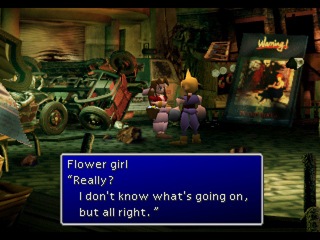
This list is in alphabetical order, which I’m glad allows for Aerith to be the first entry. She’s easily the most popular example of the point I’m trying to make with these selections. If you haven’t heard, Aerith dies in Final Fantasy VII. The moment occupies such a pronounced position in videogame history and pop culture that Square Enix based an entire game on making players wonder if they were going to kill her off again.
Meeting Aerith after Cloud crashes through the roof of a church is surreal, and it’s not just because of the probable brain damage. Final Fantasy VII’s blocky 3D character models may have aged like curdled milk, but the innovative expressiveness that the team got out of them is tangible to this day. Aerith’s playful gestures—hands behind her back and body leaning forward—breathe a remarkable amount of life into the character model. The chain of sequences from the church encounter, to chatting with her in the abandoned playground, and through her dressing Cloud up in Wall Market, paved a new frontier for portraying companions more as people than tools.
Then, deep into the game, Sephiroth kills her in an unforgettable cinematic. And that’s it. Did you level her as a regular party member because you liked her or her magic was effective? Too bad. She’s dead now. Bet you really want to kill that silver-haired freak now, eh? To rub salt in the wound, whenever you browse a store’s inventory from then on, you see an empty spot where Aerith’s character portrait used to be. It makes your party feel incomplete for the rest of the game. Who knew that menu UI could reflect a traumatic loss like that?
Bianca – Dragon Quest V
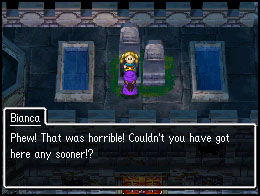
Dragon Quest V’s narrative hook is that the protagonist grows up throughout the game’s three acts—Bildungsroman-style. Characters come and go from the Hero’s party in a way that simulates the ebbs and flows of life. Bianca adds to this experience by being about the same age as our Hero. She originally joins the party as a childhood friend in Act 1 before parting ways, and can become the Hero’s wife and mother of his children in Act 2, only to be captured by the game’s villain in Act 3.
This is years before romancing companions became an RPG expectation, mind you. Bianca is a blueprint for how to make players romantically invested in videogame characters. Of course, Dragon Quest V features another one or two potential love interests (depending on the version of the game) whom the player can wed instead, but c’mon. Bianca is clearly the canon choice and the most narratively rewarding. Face it, Debora stans.
Many stories from videogames or otherwise base the protagonist’s motivation for defeating the villain around having another character (usually a damsel) captured, but few of these situations feel as genuinely developed as Bianca. She’s a layered character the player can grow up alongside and fall in love with, making her eventual captivity feel all the more urgent and real. Bianca’s reoccurring presence and absence from your party gives DQV’s story the personal, emotional weight that makes it revolutionary for its time and a standout to this day.
Boney – Mother 3
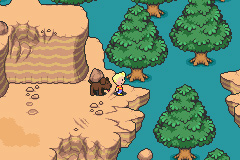
It feels like every game nowadays yells at its prospective audience that it includes a dog to pet. Fair enough. Every warm heart melts at the sight of a good boy or girl. Still, these representations and interactions are but shallow integrations of what it means to actually have a beloved canine companion in your life. Boney, on the other hand, is the real deal.
Mother 3’s opening chapters span several years and swap you between multiple protagonists. Boney is there, accompanying both Flint and his son Lucas, playing the role of their resilient and obedient pet. Flint and Lucas’ lives may be marred by the tragic losses in their family, but in both of their weakest moments Boney is there, either sitting in his doghouse patiently waiting for adventure or fighting by their side. It’s a testament to the stability and healing that a pet can provide in the wake of a family tragedy.
It makes sense that our fluffy sidekick wouldn’t be as offensively capable as his human teammates, but there’s subtly wonderful characterization in making him an essential part of the team nonetheless. Boney has been trained to be the best boy through clutch item usage. He frees the rest of the team to focus more on their unique talents by doing what a dog does best: support and love those who love him. We love you too, Boney.
Ignis Scientia – Final Fantasy XV
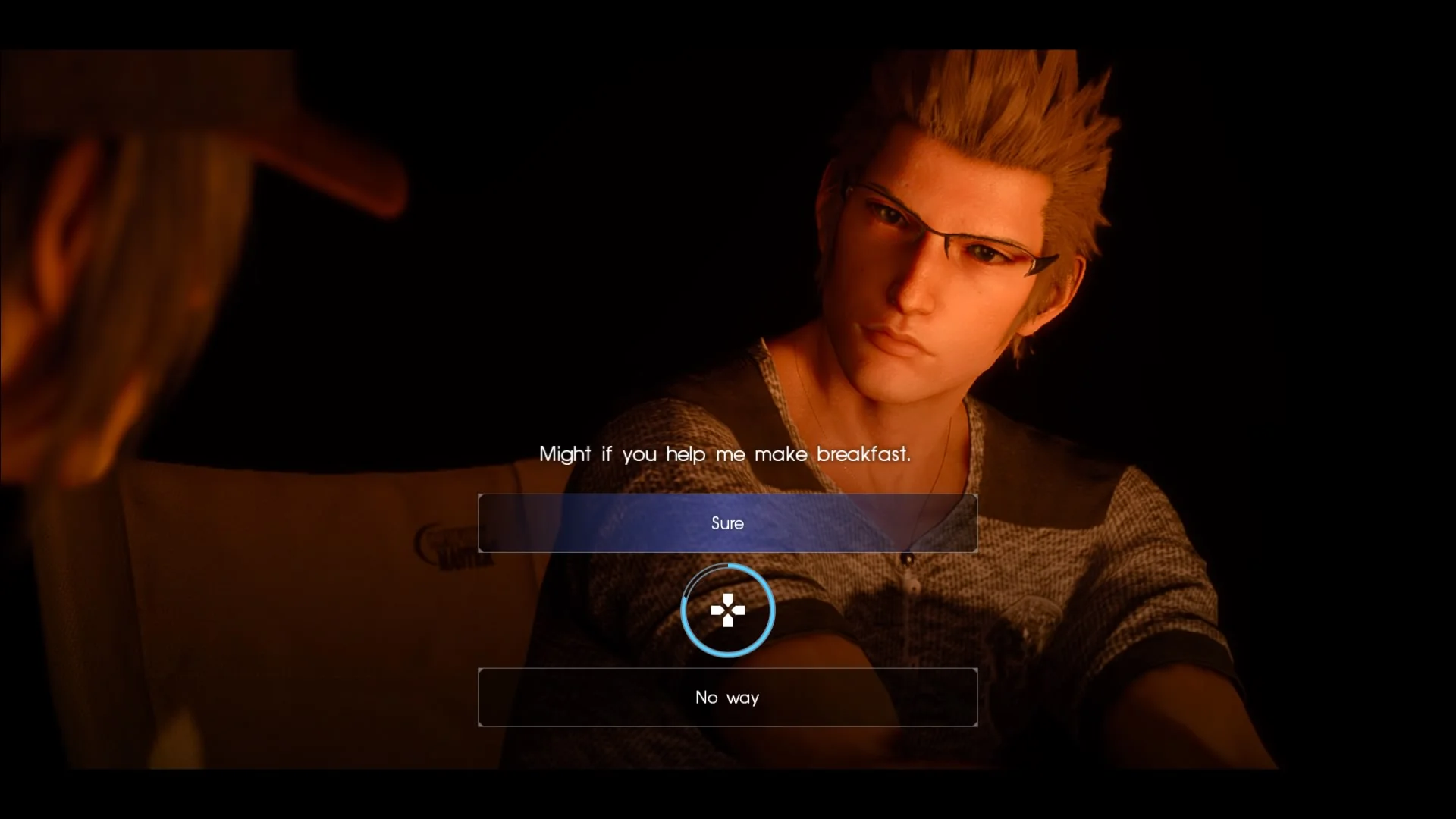
I’ve never felt as well taken care of by a companion as by Ignis. As RPG players, we’re used to things being the other way around. Our companions usually can’t even put on a new hat or pair of shoes without us telling them to. In Final Fantasy XV, the most spoiled character is ours—the precious little crown prince, Noctis. Noctis would be a mess if left on his own. Luckily, we have Ignis to handle all those boring adult responsibilities. Enjoy being a passenger princess blasting classic FF tunes as Ignis chauffeurs you around in your kingly sports car, and he’ll even cook meals of your choosing from a frankly delicious menu of options. Feels good to be royalty.
In case you took everything Ignis does for you for granted, the game makes you feel just how much you depended on him after he becomes blinded towards the final act. The game’s most memorable chapter involves working your way through a level where the injured Ignis can barely keep up with the rest of the party. Any grateful soul will work through the level patiently so he doesn’t fall behind and keep your mouth shut when your only option for dinner is some canned food.
The game brilliantly builds Ignis up to be Noctis’ primary caretaker, only to make you so tangibly feel when that can no longer be the case. The game knows that the best way the player will feel Noctis maturing is when he no longer needs to depend on its brilliantly integrated companions.
Jowy Atreides – Suikoden II

Jowy is far from the only case of the friends-to-rivals plot device showing up in an RPG, but his is perhaps the most emotionally charged. The opening hours of Suikoden II are a perfect exercise in setting up intrigue through careful pacing and characterization. Multiple key scenes with Jowy have embedded themselves into the collective RPG consciousness. Making a promise with him before jumping down a waterfall. Waiting for him at the town gate. And his strategic heel turn when he reveals that he’s allied himself with the rival army.
It all makes those opening hours with Jowy in your party more powerful. A reminiscence on simpler times when the two of you were simpler people. It was bound not to last, though, both because of the complex politics maneuvering the plot and the fact that Jowy is a beast in the early game’s battles. He starts trivializing every encounter to the point where you figure there’s no way the game will let you keep him around the whole way through.
As Riou, you and Jowy proceed through the rest of the game pursuing the same ends through different means. You get to link up with him one more time to annihilate a common foe with your combined power levels. And, depending on some choices you make at the end, the two of you can fulfill your promise to reunite at that same waterfall when all the fighting’s over. It’s a choice as to whether Riou prioritizes an old personal duty over a new political one. Choosing the former leads to a star-crossed duel against your former best friend—one that can end however you want it to.
Kim Kitsuragi – Disco Elysium
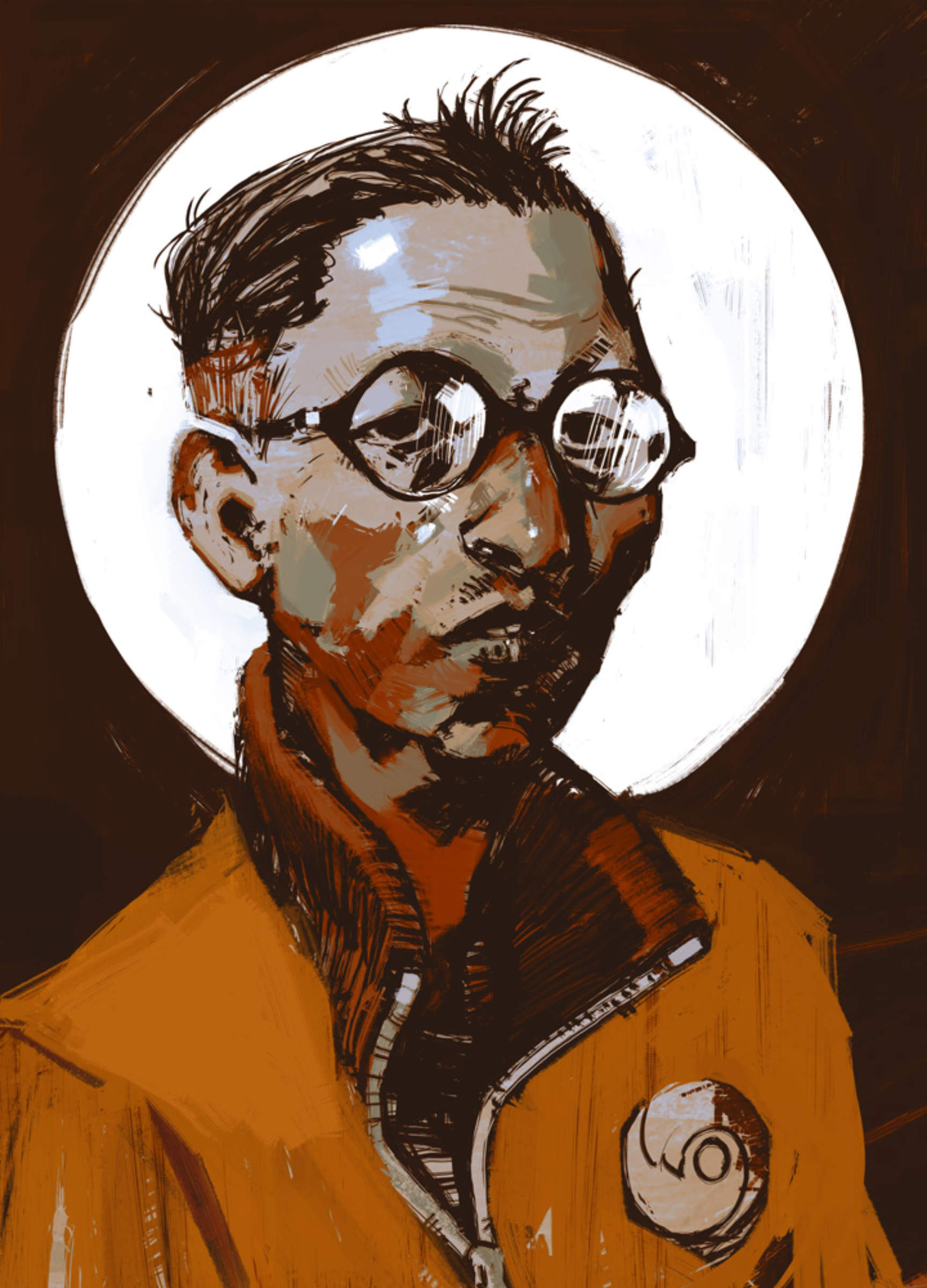
Disco Elysium is a game where you can engage in some truly weird behavior. The lunacy of these choices is well contextualized by the fact that protagonist Harry Du Bois is a psychologically broken man. For the first few minutes of the game, you wonder how the hell this disaster of a detective is going to get through whatever problems he’s supposed to solve. Then you meet Kim, the partner Harry has been assigned.
Depicted in his character portrait with what looks to be a halo behind his head, Kim is Harry’s guardian angel. Watching your every embarrassing moment; nudging you towards getting anything productive accomplished; and sharing his (admittedly limited) humanistic views as a response to any radical political leanings you express. Kim is such a hilariously effective straight man in Disco Elysium’s core buddy cop duo that he has the power to tame even the most insane incarnations of Harry a player can act up.
During one climactic moment late in the game, you are faced with a skill check that can have a positive modifier (“Kim trusts you”) or a negative one (“Kim doesn’t trust you”). I can’t imagine how much my heart would sink if I ever saw the latter because I never let it happen. What kind of monster would? In a game that contains so many intellectually layered ideas about ideology and personhood, Kim serves as a literal constant reminder that we must always keep in mind the flesh-and-blood that unites us all.
Kreia – Star Wars: Knight of the Old Republic II – The Sith Lords
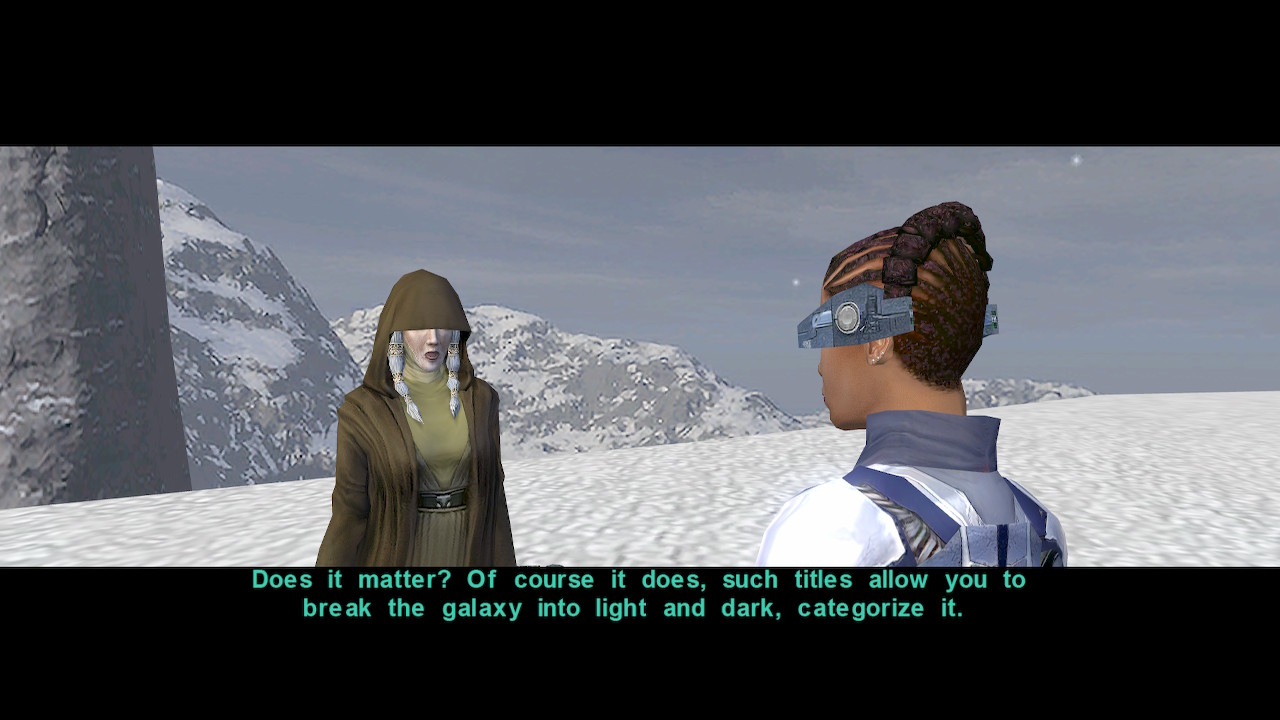
Kreia is an old woman who KOTOR 2’s main character, the Jedi Exile, forms a force bond with at the game’s outset. Her age immediately makes her stand out as an RPG companion, but the intrigue doesn’t end there. She is deliberately mysterious. She is relentlessly judgmental and manipulative. She’s a powerful badass. And she’s a knowledgeable and caring mentor if you allow her to be.
She has been a Jedi. She has been a Sith. She has observed the bureaucratic hypocrisies and frustrations of both elite groups and decided that some sort of Nietzschean Buddhism is the only path that avoids corruption; that individuals must find inner strength of will within themselves before they can serve a collective good. Whether you agree or disagree with her philosophy, she will provide some of the most interesting branching dialogue you will ever have with a party member.
Kreia works as a mirror testing players’ faith in the greater context of the Star Wars universe. Are you acting too selflessly? Kreia will chastise you for depriving others of the opportunity to grow from struggle. Are your choices consistently cruel? Kreia will call you out for being an evil idiot. Kreia is the embodiment of “True Neutral” in a series known for its black-and-white (or blue-and-red) moral binary.
The game’s final showdown is as much against Kreia as it is your own beliefs—and the entire premise of Star Wars’ simplistic moral code. Surely, we will never see anything so creative and subversively audacious done with this IP ever again.
Shinjiro Aragaki – Persona 3 Reload

Shinji’s story development can differ across Persona 3’s multiple versions. I’ll be sticking to Persona 3 Reload as I think it’s the most effectively executed.
When you first start encountering Shinji in Persona 3, he is shrouded in such a thick layer of sketchy angst that it’s initially hard to get a read on him next to the rest of the well-humanized main cast. For most of Persona 3’s story, Shinji lurks in the peripheral shadows. It’s only after half a year (in game time) and dozens of hours (in real time) that he finally joins the SEES squad, moves into the dorm, and becomes a bona fide party member… at least for a bit.
His hesitation to rejoin SEES any earlier ties to a crucial reveal that calls the origin and nature of the teen-exploiting, demon-hunting group into question. You get the sense of Shinji’s experience in his brutal strength as a party member. His relentless physical power is so damn effective that not including him in the party at this point feels like deliberately nerfing yourself.
For the month you have him, you can make use of this power in battle and finally get to properly know him. This is especially true with Reload’s optional Linked Episodes. Turns out Shinji’s a big softy at heart, and you can help him work through his angsty trauma, even encouraging him to try re-entering a normal high school existence. Regardless of how much time you decide to spend with him, his own time comes to a tragic end on October 4th. Persona 3 is the first in the series to introduce the calendar system, and Shinji’s story is one of the best ways that this system has us reflect on time’s relentless movement, how we choose to navigate it, and what it takes from us.
Susie – Deltarune
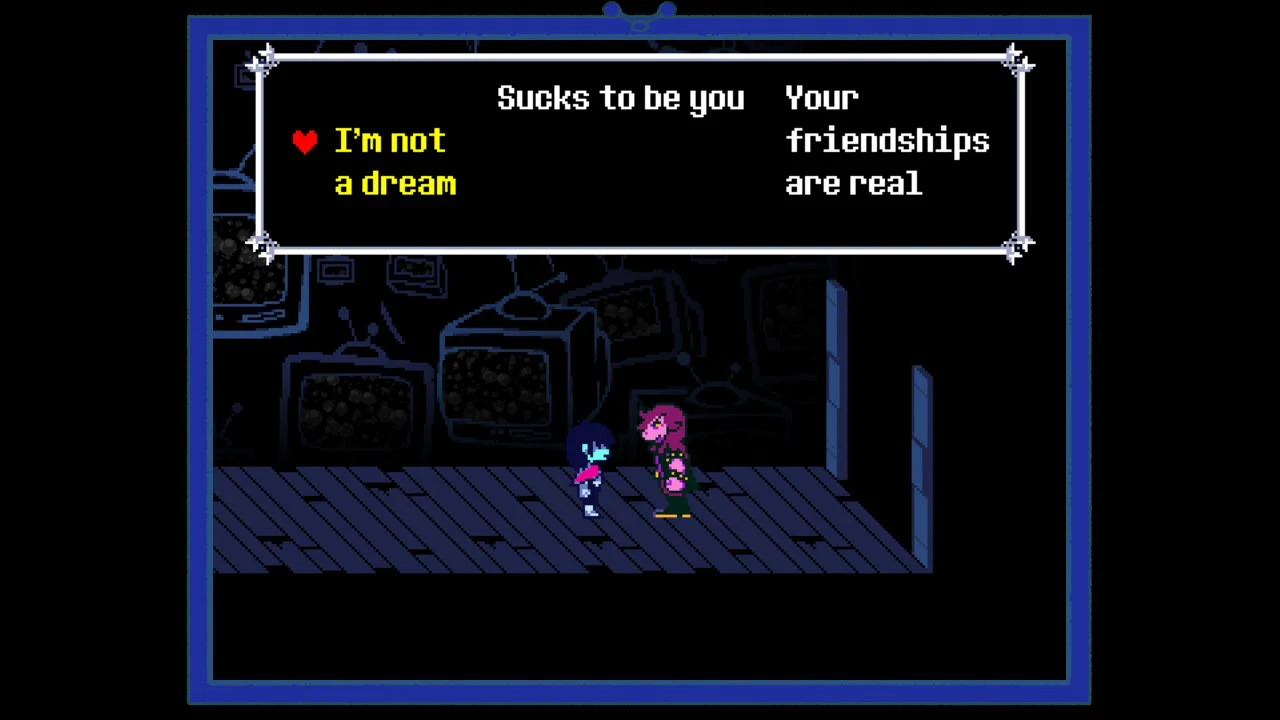
If you don’t think Susie deserves a spot on this list because Deltarune isn’t finished yet, you probably haven’t played the first four chapters. I’m calling it. Susie is already as well-written and cleverly integrated as an RPG companion can be, and I’m sure as Shrek that this selection will only be further validated as the game progresses.
Hell, her integration into Chapter 1 alone could be worthy of a spot. Imagine having a DnD session with a troubled teenager who barely wants to play and only makes the most irrationally violent choices. That’s Susie at first: a party member unwilling to heed the player’s commands. If you want to play the chapter as a pacifist, you must warn enemies that she’s about to try cleaving them if you want to finish the fight without bloodshed. She even joins the enemy side temporarily because she’s used to seeing herself more as a villain than a hero.
Susie’s development in the subsequent chapters is a delight to behold and take part in. Her tough, monstrous veneer is peeling away to reveal a compassionate person willing to do whatever it takes to protect the people she’s allowed herself to grow close to. She’s even trying to learn healing magic! Plus, Chapter 4’s hidden superboss duel as her was perhaps the game’s most epic moment so far. I wouldn’t be surprised if Susie turns out to be the real hero in Deltarune’s tale.
Urdnot Wrex – Mass Effect Trilogy
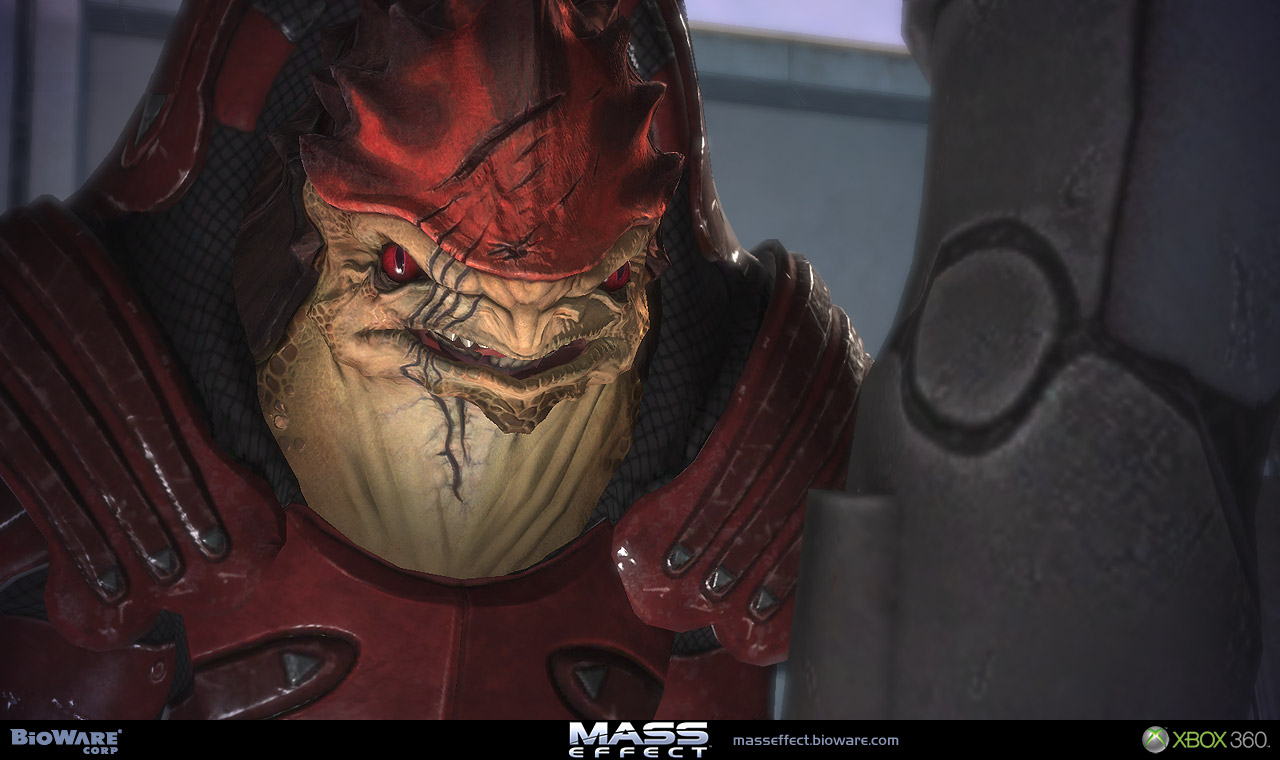
One of the greatest strengths of the Mass Effect trilogy is how well it uses its length across three whole RPGs to develop its cast. The beloved Garrus, Liara, and Tali resonate with so many people and show significant character growth across each game. Wrex is just as well characterized as any of them. The difference is we see him grow from a party member in the first game into an autonomous figure in Mass Effect’s world. He leaves Shepherd’s crew to become a leader among his Krogan people. We meet him again in Mass Effect 2 not as an underling, but as an old friend grown into his own responsibilities.
Of course, this is partly because you can actually put a bullet through Wrex in the first game if you disagree with his desire to support the ostracized Krogans. I don’t particularly want to associate with someone who would make that choice for any reason other than morbid curiosity, but it’s there and its reverberations are felt throughout the rest of the trilogy.
One of the best things Mass Effect 3’s Citadel DLC did as a piece of overt fan service is that, for the only time outside the original game, you can fight with Wrex in the party. I feel like I’m usually immune—or even actively resistant—to this kind of fan pandering, but this was an exception. My heart lifted when I found myself blasting and bantering alongside Wrex for the first time in what felt like such a long time.