
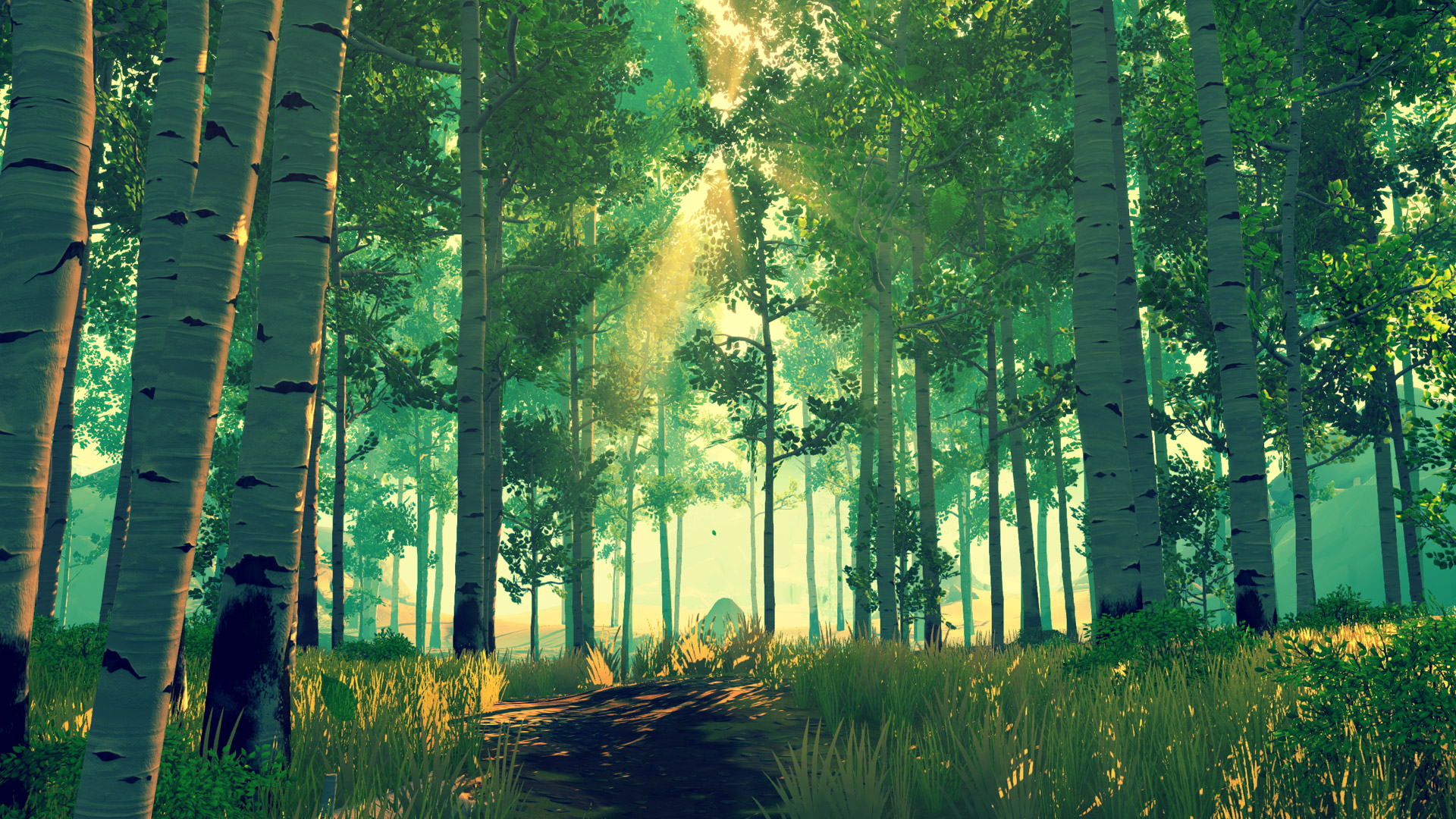
Everyone has something that gives them comfort, for one reason or another. Some people find it in a specific book or movie, others in a particular place or person; it could be anything. I imagine many of you have a collection of comfort games, as do I. Why is it that these games give us this sense of comfort—often a blend of warmth, love, nostalgia, and safety—and what else do we gain from it?
For some, it could just be that gaming provides a mental space away from lived reality, a place without the pressures of life and work where we can just be elsewhere for a while, somewhere carefree. The world has been an increasingly stressful and dark place to be over the last decade or so, and I know I seek solace in gaming regularly.
Perhaps the worlds featured in the games we play for comfort are more idealistic, and versions of a world we wish ours could be. It may be that you live in a place where you cannot be yourself for fear of prejudice, or not being accepted by those closest to you—the worlds in games can help by providing a temporary escape, perhaps one in which society celebrates being yourself.
Others may seek their comfort in gaming for the opposite reason—they want a space where their minds are tested, given challenges to solve, and to seek a sense of achievement. If your day-to-day leaves your mind needing to flex, then gaming can provide a feeling similar to that which others get from going to the gym. Personally, this one is very rare for me as my regular work uses my brain enough, so I usually turn to games as an escape, but both reasons for comfort-seeking are valid.
It doesn’t always have to be about puzzles in the traditional sense either, as I know many people who play games like Dark Souls and find comfort in the satisfaction of completing something difficult.
The third reason I think people go to games for comfort is to feed their imagination and be a part of experiences that there is no way to live in our real lives. When I first got a PlayStation, my mind was blown wide open to the possibilities of fantasy and sci-fi storytelling, and the power that gave my imagination was off the charts.
I can be somewhat of a daydreamer and I’m sure other creative imaginations must also gain so much from immersing themselves in other worlds, environments, beautiful art design, intriguing characters, and emotive music. Similar to my earlier point about games allowing people to flex their puzzle-solving mind, here that flex is with the creative mind, where the possibilities could be endless.
My fourth and final reason we might seek comfort in gaming is to help us process issues which affect our mental health, or to help us get through bad periods. Increasingly, game developers are open to exploring mental health complexities in their games. It’s actually not too difficult now to find a game that, at some point, explores a subject relating to mental health that anyone could identify and empathise with. That experience of being seen, of having the belief that you’re the only person feeling how you’re feeling being challenged, is so important for making progress when working on your mental health—and games can play a key part in that.
I’d like to elaborate on a few ways in which I’ve sought comfort in games, what the games are, and why I turn to them regularly for that emotional safe space or for a mental reset. I hope these thoughts resonate with you and encourage you to think about what games give you comfort, but also to consider turning to them in times when you need for an emotional boost, reassurance, or a reminder that life can be good.
Turning Back Time
The first bunch of games are comforting for me because they take me back to a specific part of my childhood. These are the PS1-era Final Fantasy titles, namely VII, VIII, and IX; and the first two generations of Pokémon—Red/Blue and Gold/Silver.
These games make up some of the first video game experiences of my life. I got a PS1 in my early teens and a Game Boy Color around the same time. My memories of playing these specific games are of being comfortable in my bedroom, immersed in their worlds, and generally living quite a carefree life. I vividly remember lying on my bed, with the radio on, spending hours staring at the tiny screen playing Pokémon, to the point where even now, if I hear some of the songs that were on the radio back then, I associate them with playing Pokémon.
Final Fantasy VII, VIII, and IX pretty much became an obsession. I was so inspired by the worlds, characters, and stories in those games; they captivated me and fuelled so much of my creativity and imagination back then—I’d never experienced anything like them before. That childlike wonder is still something I feel, though to a lesser degree, when I play them now.
Comfort games you played when in your formative years are about more than just nostalgia, though that does play its part. They’re also about reminding yourself of a time when life was easier, adult responsibilities weren’t a thing, the world seemed like a calmer and more stable place to live in, and you were being taken care of. Playing these games as an adult, with many responsibilities, fitting them in around your job and living in a world much less stable and safe is kind of like a warm hug. It certainly makes me feel good.

Connection to those Closest
This second set of comfort games comes attached to feelings not unlike the first, but rather than focusing on a particular place and time, are linked to people. Alongside my solo-game adventures when growing up, I have memories of the fun I had playing games co-operatively with friends or members of my family. With these games, instead of being reminded of a more carefree time of my life, I’m reminded of the love and laughter I had with those around me, and this can be a balm when you’re feeling low or lonely.
Before I had a PS1, we had a small selection of games on our household PC, two of which were Tomb Raider 2 and 3. Forewarning: some of the games in this section are not RPGs! I remember it was me who was the proponent in us getting these two Tomb Raider games—Lara Croft was like a worldwide superstar back then, and I was fully on board. I’d picked up a walkthrough guide magazine for Tomb Raider 3 from a local shop, and we printed a guide from the internet for Tomb Raider 2.
My Mum and I then sat at the PC together and gradually worked our way through both games, taking it in turns to switch between being the player and the guider. My Mum was best at killing stuff, and I took the lead with complicated jumps and platforming. We made a great team and joined forces again in the mid 2000’s to complete Silent Hill 2 and 3, both of which still bring back fond memories, despite being such disturbing games.
Outside of this connection to gaming I have with my Mum, I also spent hours upon hours playing various Dynasty Warriors games with my younger sister, mostly yelling at her because she wasn’t paying attention to the map and machinations of the battle. I enjoyed Legend of Mana and Puchi Carat co-op with a couple of friends I’m still very fortunate to have in my life today, and TimeSplitters 2 with an old group of school friends—this one in particular brought us many hilarious hours in each other’s company.
I often hear that in the modern world we’re facing a loneliness epidemic. People spend far too much time working, often for a salary that barely lets them live outside of work, let alone socialise with other people. Comfort games that can take you back to times spent full of joy, with loved ones around you; laughing, fighting, puzzle solving, and questing can alleviate this feeling. Whilst this might not be the answer to the big problem with today’s society, it certainly helps a little.
Processing Grief
Moving on to some heavier topics now, and also ones that have been more recently present in my life. Grief is different for everyone; people experience and process it in many ways, some healthier than others! For me, grief is something I’ve only had to start dealing with over the last five years, but during this time have lost a handful of people in quite close succession—my adopted Dad being the most recent, just over a year ago.
When I was a teenager, I spotted a copy of Suikoden II in a game shop and was instantly drawn in by the beautifully illustrated cover art. I knew barely anything about the game or its reputation (did it even have one at that point?), but I wanted to play it so badly. That Christmas, my Dad bought a copy of it for me. I was elated, yet had no idea of the incredible journey I was about to embark on playing through the story for the first time.
Suikoden II remains one of my all-time favourite stories in video games, and at the time my mind was blown over and over again by the plot twists, political manoeuvring, and more mature story than I’d previously been accustomed to. I didn’t actually play Suikoden II with my Dad at all, but because he gifted it to me and I had such a great time with it, I always held that small association.
Fast forward to my 30s, the HD Remaster of Suikoden I & II is announced, and despite it seeming for a while that it may have been quietly cancelled, it finally released early in 2025, just a couple of months after my Dad died. His death was sudden. There were no signs that it was coming and it came after a period of him being estranged from most of the family, for reasons I won’t go into. But despite that, I thought of him often, and hearing about his death from my Mum was a shock that brought about many thoughts, what-ifs, and doubts that I battled with for some time.
As I played through the HD remaster of Suikoden II, my Dad was very present on my mind. I often thought back to when I played it for the first time and my initial experiences with the game. As I drew close to completing it, I locked in the fact I’d be getting the True Ending this time round, something I didn’t achieve last time (damn squirrels).
It also serendipitously occurred that I saw this ending on the day that, at the other end of the country, my aunt and cousins were scattering my Dad’s ashes at the top of a cliff, in one of his favourite walking spots, sending him back to nature. Before pushing ahead to that final boss fight, I turned off my PS5, went down to the beach, and spent quiet time remembering him, feeling like going home and finishing the True Ending of Suikoden II was in his memory.
Death is such a hard thing to process at the best of times, and even more so when it comes with circumstances that add complexities to the relationship you had with the person. People handle grief in ways that work best for them, for better or worse, but often it is something we live with to some degree for our whole lives. I feel happy that I’ve been able to create a link between my Dad and a game I love so much, knowing that whenever I play Suikoden II in the future, I’ll feel like he’s just a little bit closer to me.

Mental Health & Self-Discovery
Alongside grief, video games explore other mental health issues much more commonly now than 20-30 years ago, particularly with the onset and popularity of indie games. Also tackled are the causes of poor mental health, with games exploring topics like sexuality, racism, prejudice, and acceptance. I’m no stranger to mental health challenges, having experienced bouts of anxiety throughout my life and depression over the last few years. Alongside that, growing up in a world where LGBTQ+ people were rarely seen in popular media, especially video games, and never in a positive light, means self-acceptance can be difficult. Not seeing yourself represented out in the world makes you question yourself and your validity.
I love that video games are getting braver with exploring these kinds of topics. Not always super effectively or accurately, but at least the intention is there and the change is a positive one. Seeing yourself reflected in culture is so vital, whether you’re identifying with a gay character and the troubles they’re going through that might mirror your own; seeing how a character in a video game is coping with loss, reminding you that you’re not alone in that experience; or watching as someone navigate depression, seeing how it is addressed, what support they have and wondering if similar methods might help you.
I’ve played many games over the years that have contained elements of the above, even in ways as simple as having same-sex romance options and, more recently, explicitly non-binary characters. Persona, Hellblade, Gris, Life is Strange, Disco Elysium, and Firewatch are just a few examples of games or series that prominently grapple with mental health-related themes and could give comfort, support, or moments of reflection to those affected. There’s a whole range of games now that you can turn to for positive representation, including for LGBTQ+ and POC folks. Ensuring subjects like these are talked about openly and not hidden away is so important for helping us be more authentically ourselves and to not only live, but to thrive.
Escaping Modern Life with….Modern Life?
I wanted to end this feature with a more modern, lighthearted game. Not all comfort games that remind you of a particular time and place need to be focused on childhood. Bring in Persona 5! The latest entry in the Persona series was the first one I’d actually played, believe it or not.
Don’t ask me how someone who has been a huge RPG fan their whole life managed to skip Persona 1-4, but I did. P5 also released at a time when I made a big step in my adult life—moving in with a partner for the first time. We moved into our place at the start of spring and Persona 5 released in the UK that April.

I have such fond memories of that time period—settling in to our new home, the weather changing from cold to warm, exploring the new part of town we were living in, and spending lots of time playing Persona 5. I was also basking in the feeling of satisfaction when you feel your life taking a positive step forward. In some ways, P5 is the perfect fit for the situation I was in, occasionally mirroring my actual life—you’re in a new environment, how do you spend your time? Do you see a friend? Do you go out for food? Do you hang out at home and study, or do you go to work?
It’s all about engaging with the places around you and revelling in some of the minutiae of daily life, but also taking comfort from that and the simplicity it offers. When you’re not diving into massive dungeons anyway! I also developed such a love for this cast that by the end of the game I felt part of the group and that I’d been on this wild ride with them.
Sometimes we need to escape modern life because it’s difficult and our minds need space to breathe and be elsewhere for a while. Other times, modern life can be full of joy, finding happiness in smaller things but also feeling connected to a bigger world and community. Maybe we need reminding of this occasionally? Or maybe, when life is already good, we just want more of it, and that is what I get from Persona 5. Saving the world while you’re at it is just an added bonus.