

Fire Emblem is a series that, like for many US Fire Emblem fans, first came to my attention with the 2003 Game Boy Advance release. I’ve played several entries in the series since then, but Fire Emblem: Three Houses continues to be one of my favorite entries, owed in large part to the character of Edelgard von Hresvelg and her Black Eagles. With the release of Fire Emblem: Fortune’s Weave, I’ve found myself thinking about her and her house more.
Edelgard, heir apparent to the Adrestian Empire and class leader for the Black Eagles, is a complex figure, both for players and the cast of Fire Emblem: Three Houses. She is poised but guarded, and for good reason: she has a dark, tragic past that has her on a collision course with revolution.
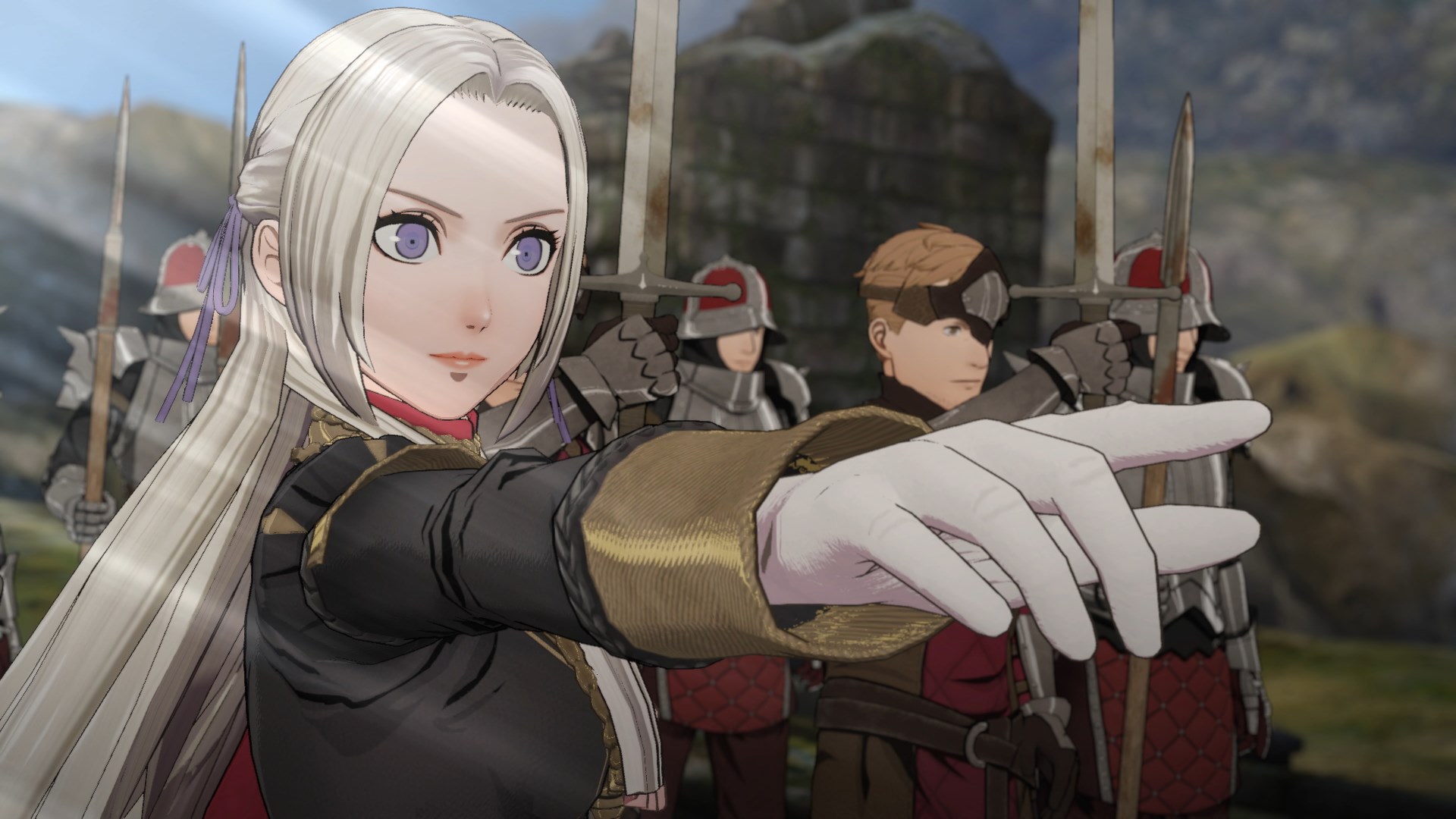
Throughout the game, players encounter an entity known as the Flame Emperor, who we learn is Edelgard herself, seeking to destroy the Church of Seiros and free the nation from the Crest system that affords power based on birth rather than merit. Furthermore, her goal to unify the country under one nation puts her at odds with the Prince of Faerghus, Dimitri Alexandre Blaiddyd, and presumptive heir to House Riegan, Claude von Riegan. No matter your course of action in Fire Emblem: Three Houses, Edelgard will inevitably declare war. It’s just a matter of whose side you’re on…
Before starting Fire Emblem: Three Houses, I knew that there was a war, but not exactly why. I was always settled on Edelgard’s route, but even once I realized that she was the antagonist causing me trouble, I couldn’t bear to take the option to turn against her. If I went through half of what she did, I’d want a revolution myself!
When I beat her route, I eventually started the game up, decided to join Claude and the Golden Deer, and… it just felt too bad, so I abandoned that run in favor of Black Eagles again! Her route, Crimson Flower, may be truncated by comparison, but its story was excellent. The moment Fire Emblem: Three Houses ends with Edelgard hearing Byleth’s heart beating after finally accomplishing her goal of eliminating Crests is one of my all-time favorite moments in the series. It’s a human moment where Edelgard, having sacrificed so much, is given empirical evidence that what she did meant something.
The problem for me with doing any route besides Crimson Flower is that it’s the only route where Edelgard lives, which makes sense. Edelgard is nothing if not devoted to her cause, and thus it can be assumed that if you are ever against her, it’s her or you. And yet, Edelgard desperately wishes that Byleth would walk with her. This yearning is so evident that the game’s main theme, Edge of Dawn, is a ballad from Edelgard’s perspective about her lamentations of having to fight Byleth. It’s telling that Crimson Flower is the only route to feature an orchestral version of the theme.
It’s not just Edelgard and her motivations, mind you, that made me so attached to Crimson Flower. The route is supported by having my favorite cast between the three houses. Where the other houses have two or three characters I find comparatively forgettable, everyone in Black Eagles is someone I would rank highly among Fire Emblem characters. In particular, Bernadetta von Varley, Dorothea Arnault, Hubert von Vestra, and Petra Macneary are characters from Fire Emblem: Three Houses that speak to me.
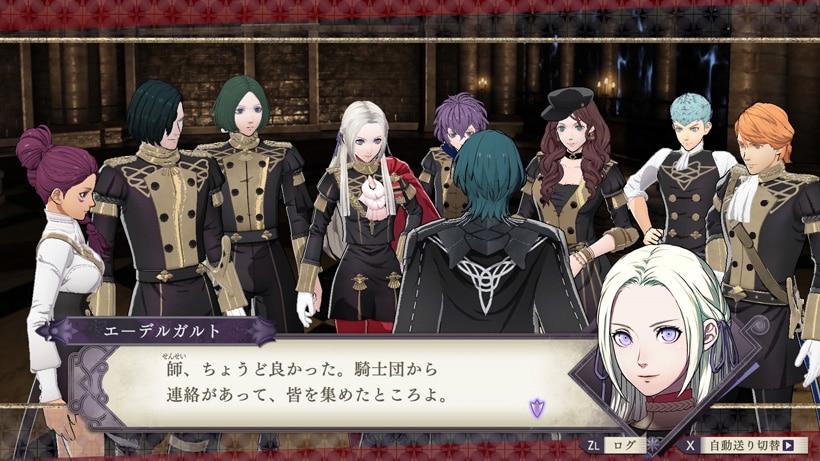
I wouldn’t say they went through as much trauma as Edelgard, but each was plagued with a miserable childhood. Bernadetta had a physically and verbally abusive father who caused her to fear everyone around her; Dorothea was abandoned with her mother for not being born with a Crest and lost her mother to illness; Hubert suffered terrible guilt for failing to protect Edelgard; and Petra was a hostage to keep the nation of Brigid in line. They, along with Edelgard, perfectly match the theme of the Eagles: children suffering the mistakes and malice of adults.
One thing I’ve learned from reading people’s perspectives on the different houses and their leaders is that Fire Emblem: Three Houses is unique in how it unveils information to the player across each path. If you’re like me and played only Crimson Flower, you will likely view Edelgard’s actions differently than someone who played the Azure Moon route, which feels purposeful. War is not inherently a battle of the good guys versus the bad guys, and that’s the case here. Outside of Those Who Slither in the Dark, there’s no one group that can be said to be truly malicious and acting in bad faith.
Even more than that, though, is how Byleth’s presence affects Claude, Dimitri, and Edelgard. It makes perfect sense why some players may see Claude, Dimitri, and Edelgard in black and white; with Dimitri and Edelgard in particular, it’s easy to see why: in Verdant Wind, Dimitri lacks the agency to make clear what’s wrong with him, and Edelgard generally lacks the impetus to open up to a foe. But beyond learning more about the tragedies that befell them, Byleth’s role in Fire Emblem: Three Houses is to be a grounding force that helps each of the house leaders overcome their issues and be a better version of themselves.
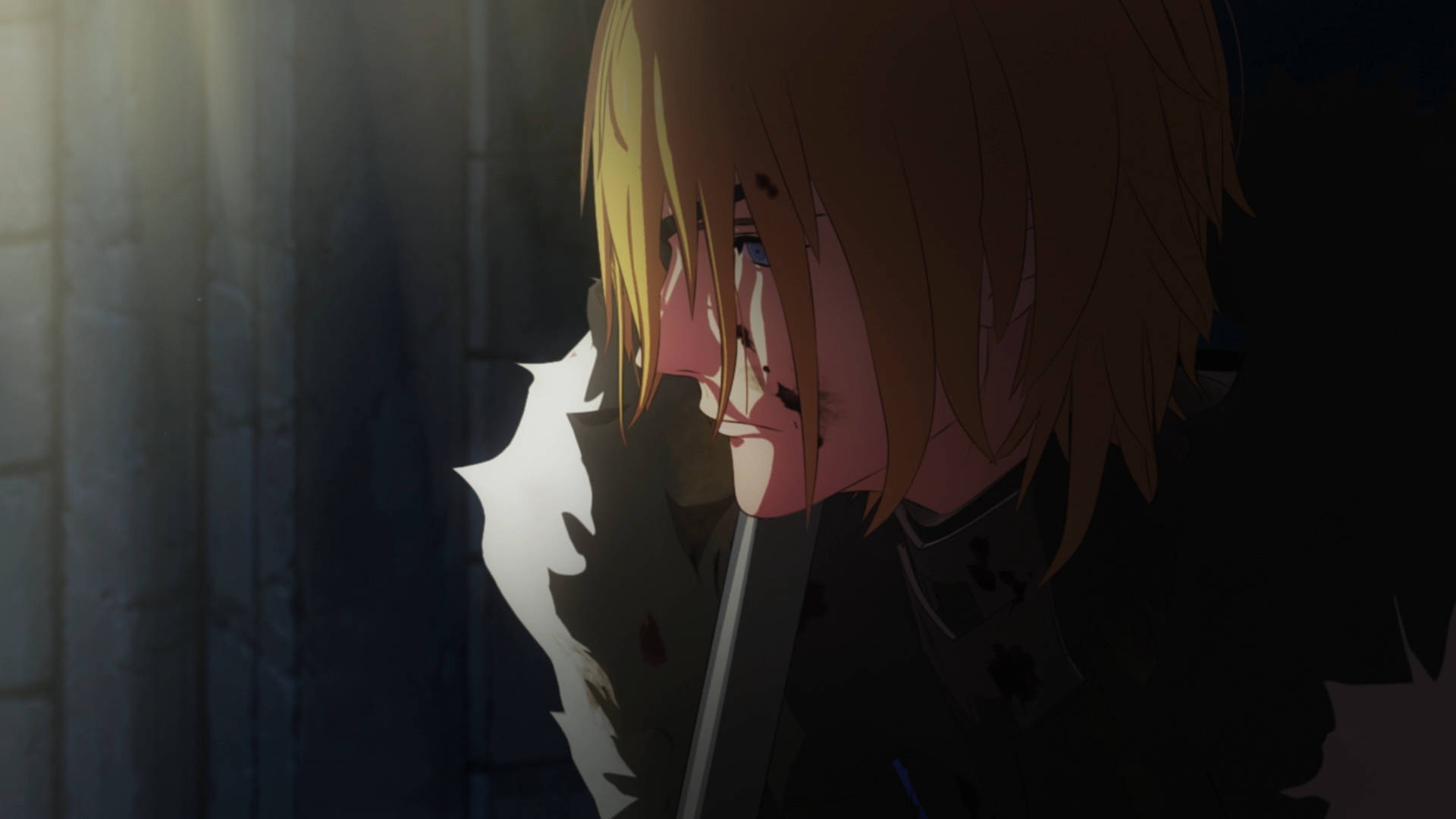
When I looked into the other routes in Fire Emblem: Three Houses, I could understand full well why people viewed Edelgard in such a negative light. Not only do players who opted for other routes lack the information on her that I have, but they have a worse version of her than I was given. Her portrayal in other routes, particularly Azure Moon, has certainly made an impression on people; in particular, one scene where she appears to sacrifice Bernadetta by surrounding her in a wall of fire stands out among her most vocal critics as proof of her wickedness (though it’s arguable whether Bernadetta was at any risk).
Yet, people who recruited Bernadetta in Azure Moon, Verdant Wind, or Silver Snow (the church route) may find it interesting that Crimson Flower is the only route wherein Bernadetta will consistently leave her room. What that conveys to me is that, despite the fact that Edelgard is the kind of person Bernadetta is most prone to fear—a stern, self-serious, powerful authority figure—it’s Edelgard that knows how to help her come out of her shell. It’s a fantastically subtle storytelling technique to convey just how charismatic a leader she is.
I don’t think people should have to do all the routes in Fire Emblem: Three Houses. I certainly won’t be. But if you’re not, I still think you should experience them in some way. All three house leaders have a ton of characterization and backstory that you will miss out on otherwise. For me, Edelgard is the peak of the game’s storytelling. Players can either see her as a villain willing to kill anyone in her way or a hero forced into an unenviable position. It’s easy to look at a character and notice their worst qualities, but it’s much harder to think about what made these qualities manifest.