
The Blue Reflection series is approaching its tenth anniversary, and Gust and Koei Tecmo recently released Blue Reflection Quartet, a collection spanning the entire series. This collection contains an updated version of 2017’s Blue Reflection, an adaptation of the 2021 anime Blue Reflection Ray, an updated and slightly expanded release of 2021’s Blue Reflection: Second Light, and a streamlined and adapted version of the discontinued gacha, Blue Reflection Sun. As a fan of the series, I was excited to see the collection announced after years of silence and the shutdown of Blue Reflection Sun. What we got is far from ideal, but not abysmal either.
As this review covers four games (or, more accurately, two games and two “games”), I’ve sectioned this into four mini-reviews before zooming back out to cover the overall collection. I’ve scored each part of the collection individually, too, since they’re wildly different in quality.
So, let’s start with where it all began.
Blue Reflection (2017)
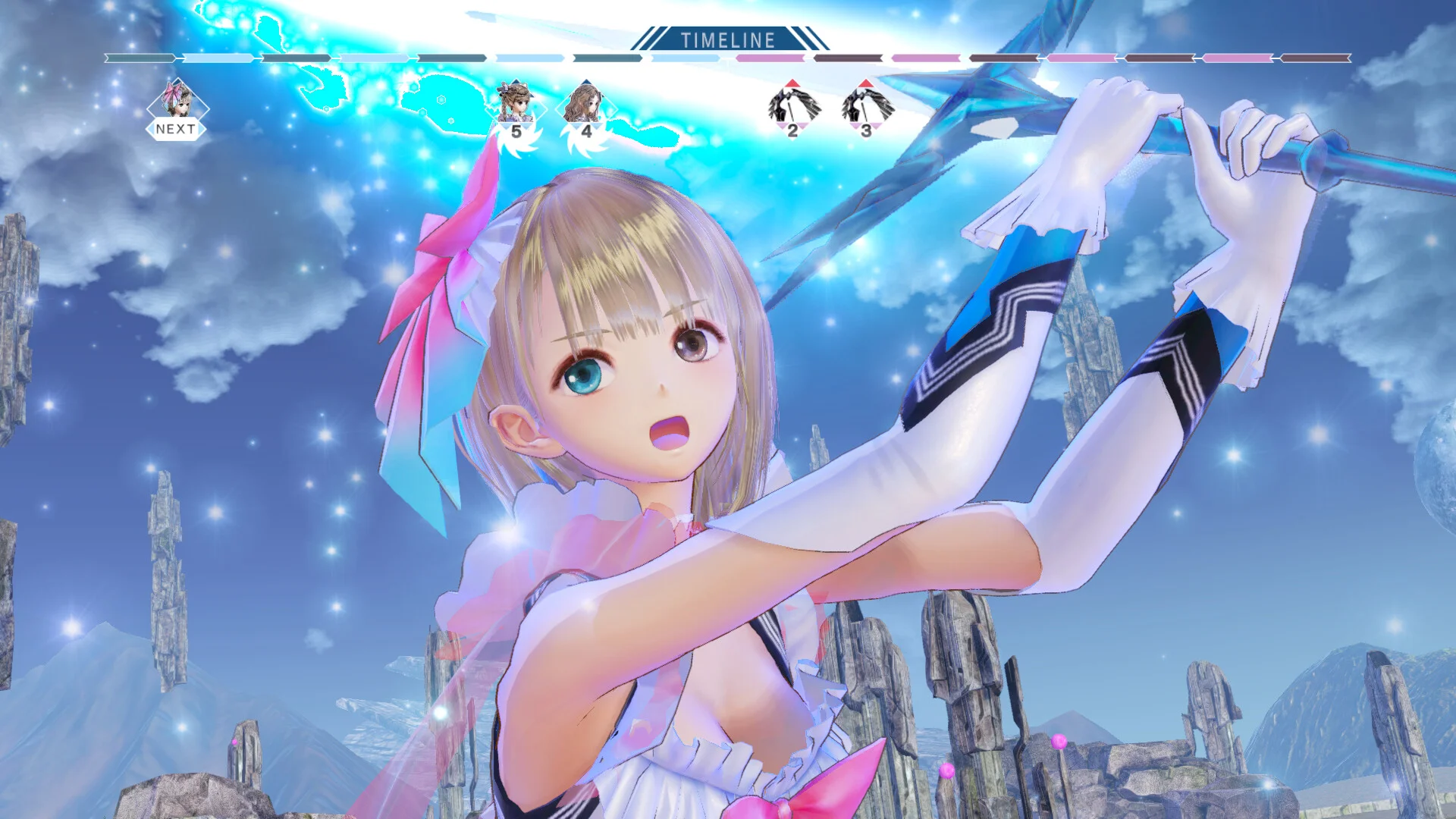
Ten years ago, Gust announced Blue Reflection: a magical girl game focused on emotions, the daily lives of high school girls, and monstrous foes known as the Sephira. The game follows Hinako Shirai, a ballet prodigy who only ever knew how to be a dancer in a world where she was a star. After an injury robs her of her future in the spotlight, Hinako must now live as a mundane, talentless person, better suited to sit in the audience than to put on a stunning display on stage.
On her first day back at school after months of rehabilitation and physical therapy, she meets a pair of mysterious sisters, finds herself transported to another world, and faces off against strange monsters. In this other world known as The Common, Hinako transforms into a magical girl called a Reflector and realizes she can run, jump, and dance freely without pain in this strange land. Before long, she’s told The Common is a physical representation of humanity’s collective unconscious. As Reflectors can access this space freely, the group spends their days retrieving Fragments: physical representations of emotions, hopes, and fears.
Blue Reflection released to middling reviews. Some complaints cited the small budget, poor performance, aimless and experimental nature, and its fair share of uncomfortable fan service elements. Additionally, the devs attempted to create a Persona-like structure in a school setting, but time management was practically non-existent. Despite these drawbacks, Blue Reflection has a lot of heart, with an incredibly emotional story, unique battle mechanics, and one of the greatest soundtracks to ever grace the genre. However, it’s hard to recommend given its awkward, voyeuristic camera angles, see-through wet clothes in the rain, and abundance of locker room and bath shots.
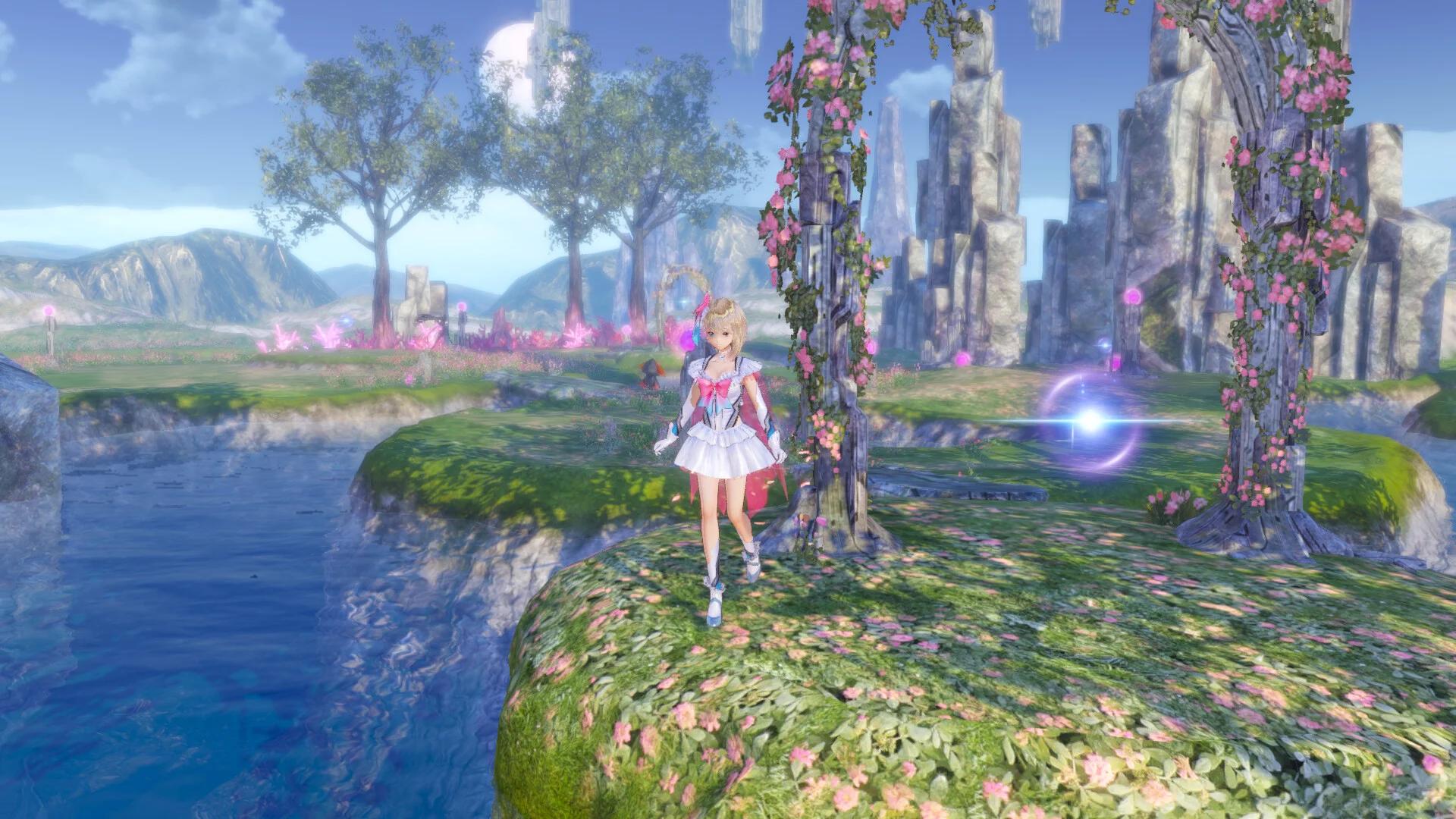
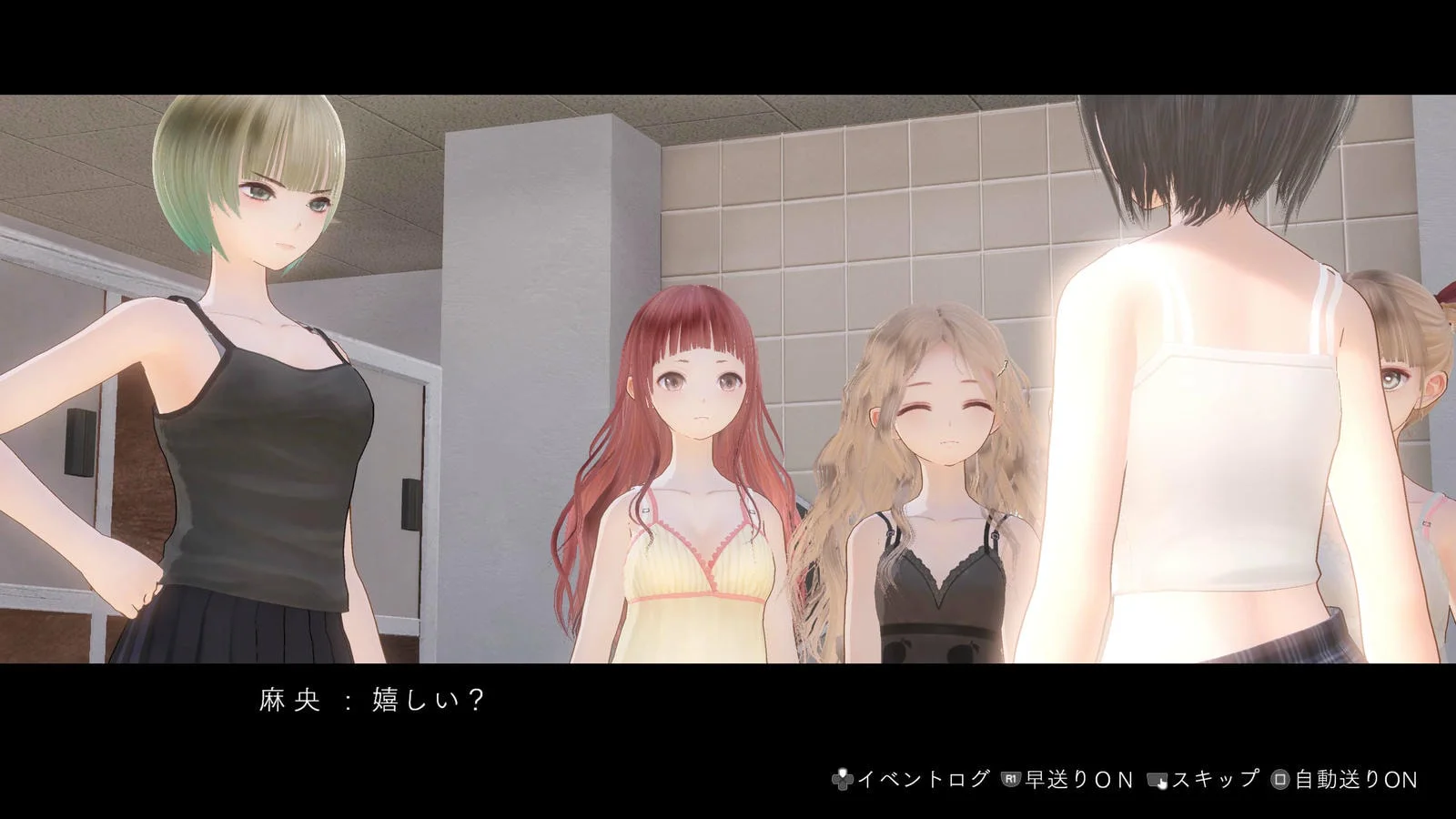
Does the collection fix any of these issues? Sorta. There are no more wet clothing shots revealing characters’ undergarments, towels now cover characters in locker room scenes, and the bath water is both higher and no longer transparent. What remains, however, are the strange camera angles that make the view feel more like a janitor or high school boy hiding in a vent. While this collection smooths out gameplay and performance, I’d have liked the developers to redo a handful of scenes to better match the far tamer, more tasteful anime and game sequels.
That said, this is the best way to play Blue Reflection. The game looks beautiful, especially at higher resolutions, and running at 60fps is a treat. The localization appears edited and updated, reading more naturally, and the added Terminology key lets players get more context whenever a word is highlighted. While the application is clunky, I appreciate the feature. With enhanced performance, an updated script, and a handful of quality-of-life updates, newcomers and fans looking to replay the series should start with the version in Blue Reflection Quartet.
- Graphics: 80
- Sound: 95
- Gameplay: 70
- Control: 70
- Story: 70
- Overall: 75
After Blue Reflection’s release, Gust seemed to fall silent about the series, refocusing on Atelier and finishing out the Mysterious series with Atelier Lydie & Suelle, expanding the Arland series with Atelier Lulua, and finding explosive success with 2019’s Atelier Ryza. Yet soon after, we received a new announcement about the Blue Reflection series: a new multimedia project comprising an anime, a console game, and a mobile game.
So, onto the anime, or in this instance, the bizarre (and spoilers: quite poor) adaptation of an otherwise fantastic anime.
Blue Reflection Ray (2026)
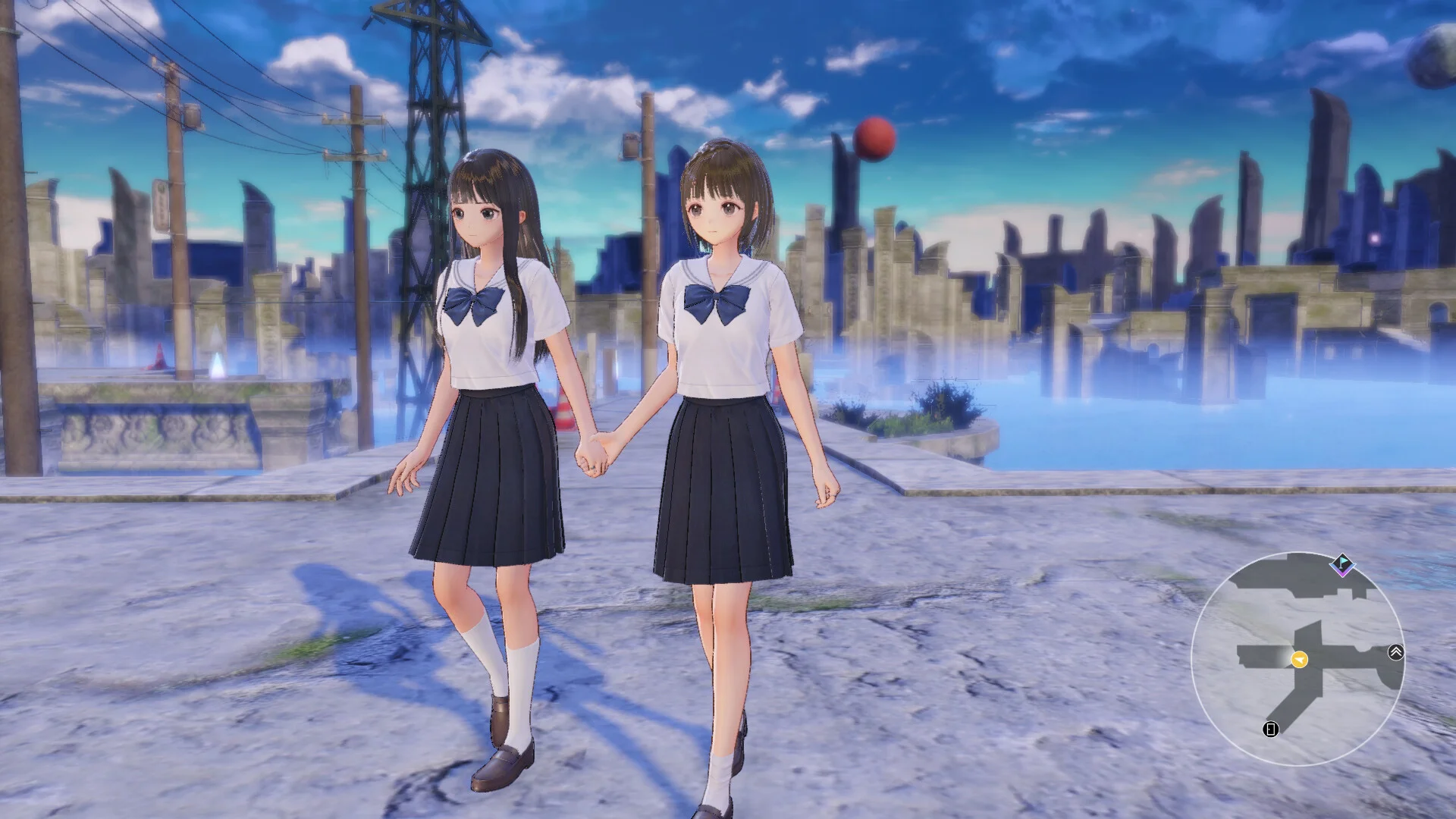
To be clear, 2021’s Blue Reflection Ray anime is a well-written, emotional, and incredibly genuine piece of media. While it’s low-budget with poor animation, it has a hell of a lot of heart. The characters are deep, the writing is nuanced, and the writers aren’t afraid to shift focus away from the primary heroines during a crisis to the broader cast, showing that those without powers aren’t powerless. The anime covers dark and uncomfortable subjects such as child neglect, domestic abuse, child abandonment, mental illness, emotional manipulation, self-harm, murder, and suicide, yet it has a hopeful, positive tone with incredibly rewarding outcomes and resolutions. However, the Blue Reflection Ray“game” barely covers any of this.
This adaptation is a poorly strung-together walking simulator that features the primary anime heroines Hiori and Ruka as they’re on their way to defeat the final boss of the anime. However, they lose their Fragments, fall into despair, and suffer the emotional equivalent of amnesia. Over the course of an hour or two, players control Hiori and Ruka as they recover their Fragments across The Common.
Blue Reflection Ray features very little gameplay, if any. This adaptation is little more than walking through recycled zones from Blue Reflection, listening to the equivalent of audio logs, crossing strangely reused traversal gimmicks from Blue Reflection: Second Light, and watching still frames of the anime while characters comment on what they remember or how they felt. While the additional commentary and context are a nice touch, this is absolutely the worst way to experience Blue Reflection Ray. The story is painfully truncated to a few moments from the anime, and it completely skips the darker subjects. Niina’s history with her abusive mother? Gone. Uta’s exploration of clinical psychopathy and addiction to self-harm? Poof. Shino’s childhood of abuse and manipulation by her cultist mother and the cruel fate forced upon her sibling? Like it never even happened.
This “game” is a pathetic adaptation of a brilliant show. It’s no replacement for watching the anime and feels like a waste of time. However, there is one caveat: at the end of this “experience,” a heartfelt, well-done epilogue bridges Blue Reflection Ray to Blue Reflection Sun. Mercifully, this entry is quite short and took me roughly an hour and a half to finish.
- Graphics: 70
- Sound: 75
- Gameplay: 30
- Control: 30
- Story: 40
- Overall: 40
And now we’ve arrived at the biggest stain upon the series.
Blue Reflection Sun (2023-2024)
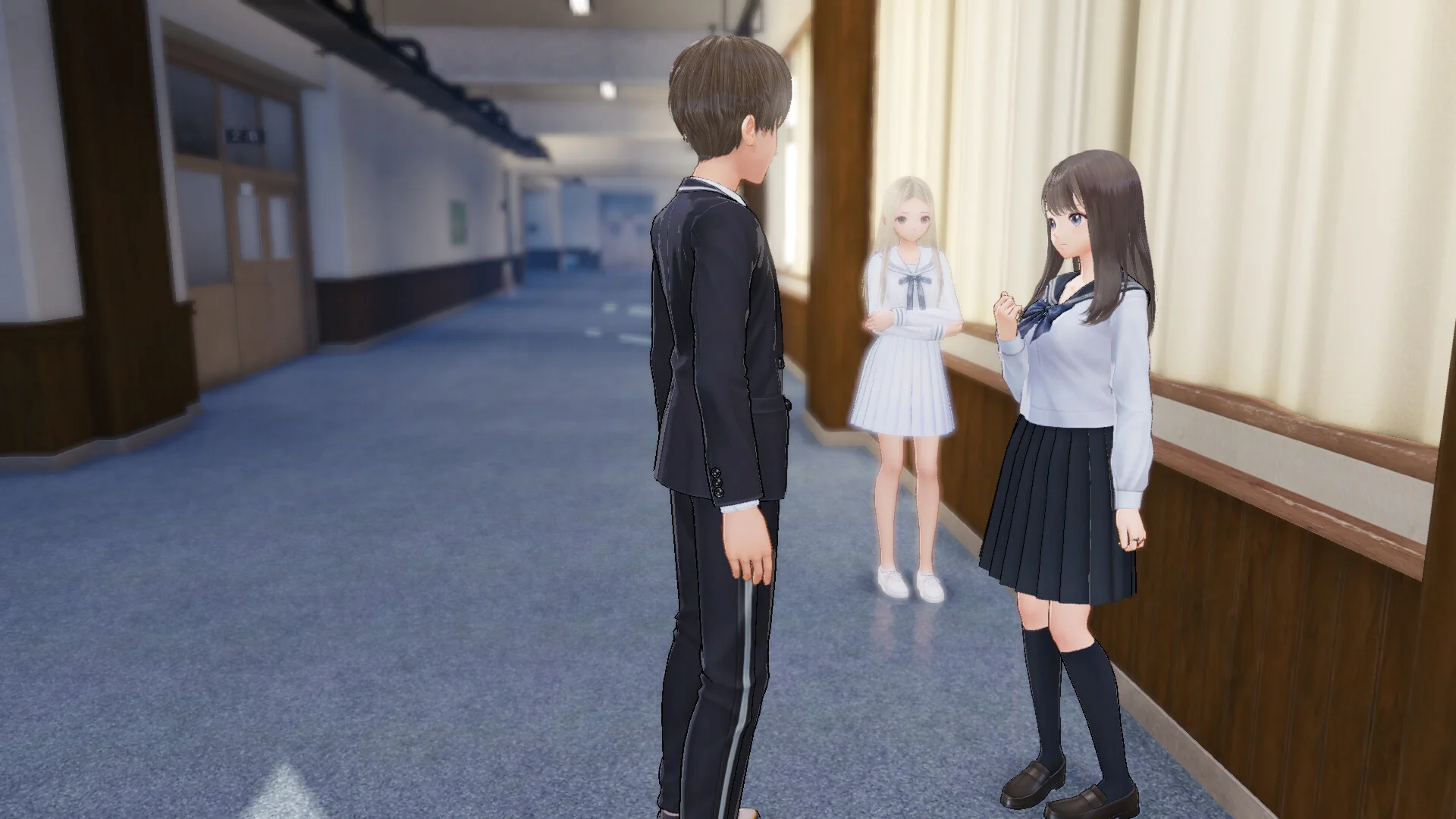
One of Quartet’s main selling points is the Blue Reflection Sun gacha being adapted, retooled, and remade into a streamlined experience using Second Light’s systems and mechanics. On paper, this sounds fantastic. In execution? The result is poor, but that’s because the source material is terrible.
To be blunt, Blue Reflection Sun is one of the worst ideas Koei Tecmo and Gust have ever had. It came out after Blue Reflection: Second Light, and was developed (and I assume written) by DMM Games, and lasted just over a year before being shut down. Sun was meant to serve as a link between Ray and Second Light, and focus on the mysterious Ash that fell following the end of the first game. It was intended to offer a look into the aftermath of what happens when a person must make a choice and defeat a system that governs the world as we know it.
After a very yuri-coded anime and Blue Reflection: Second Light being one of the few Japanese games to have canonical lesbians confess to one another in no uncertain terms, someone thought it would be a good idea to create a gacha that featured a male protagonist who builds a harem in a series about lesbians.
Unsurprisingly, the fandom hated this, myself included.
Blue Reflection Sun was exclusive to Japan, perhaps to spare the worldwide audience the pain of whatever the hell the writers were thinking. While I didn’t play the Japanese release, I read script translations, watched videos of all the scenes, and dug into more forums and Reddit posts than I should’ve. I knew the story and, frankly, found it annoying, but I found the ending to be hilarious, if a much-needed overcorrection.
Players control a special boy with special powers who everyone fawns over. He is unnamed, unvoiced, and has no dialogue choices beyond clicking the one thing he needs to say in each instance. Everyone refers to him as Leader, though he does little beyond putting his hand out and somehow making things happen. His abilities are unexplained beyond a vague “bringing out the potential” in the girls. He reminds me of the Poochie episode from The Simpsons, where a new character is introduced, forced into the dynamic, and fawned over.
Amusingly, players control this character, yet he has no actual substance in the world outside of the few cutscenes he’s in. When on the school map, the player can interact with girls who have ellipses over their heads. Those with an icon of a girl over them instead trigger a cutscene — that do not include the player character. He may as well be a ghost watching two girls interact and chat. In most of these conversations, Sun passes the Bechdel test, focusing on the interpersonal drama between a team of high school magical girls. In others, the girls praise and cheer on the MC, give him credit for things he didn’t do, assure him they would be lost without him, and thank him for saving their lives when they’re the ones fighting monstrosities known as the Testa.
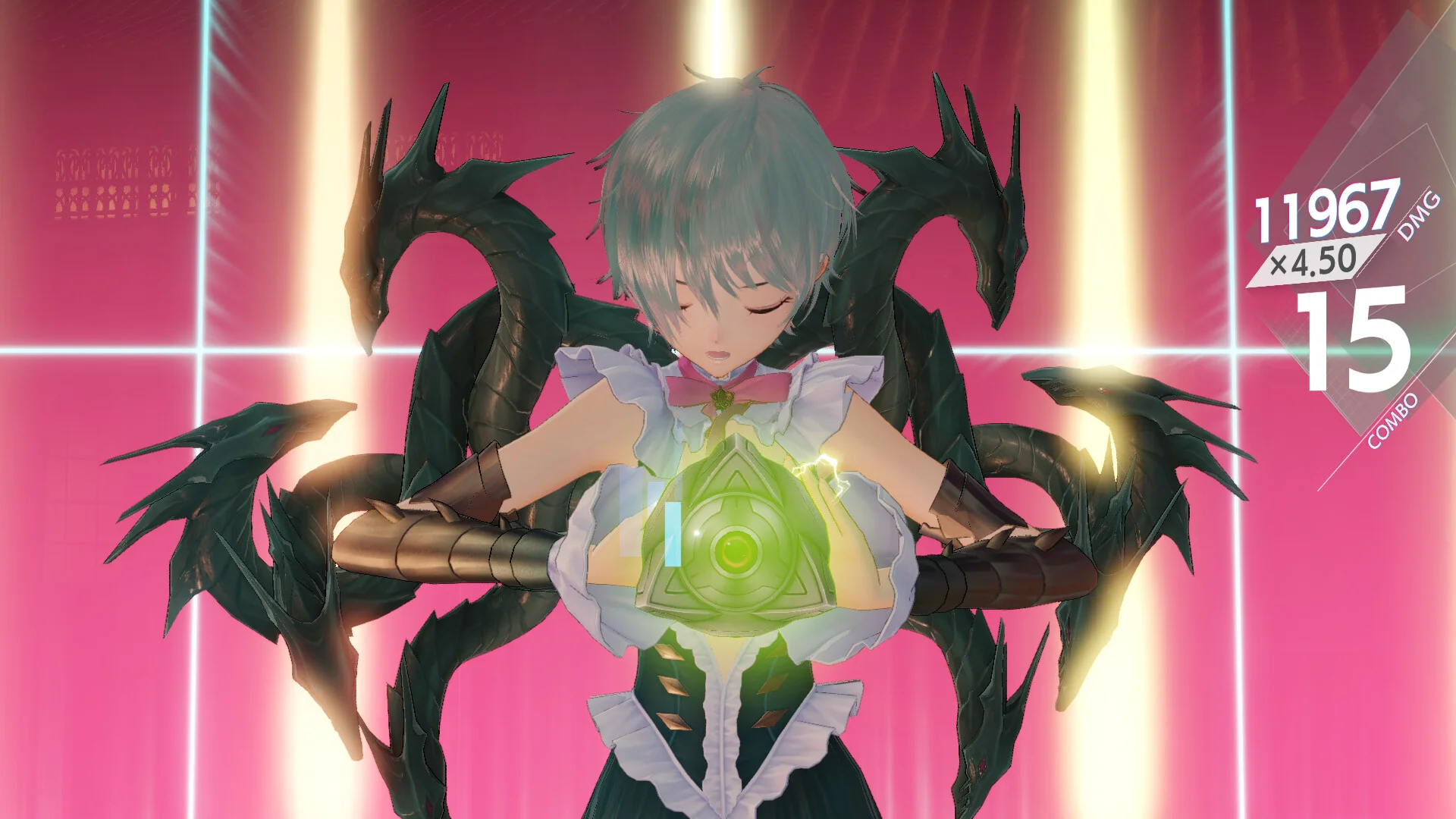
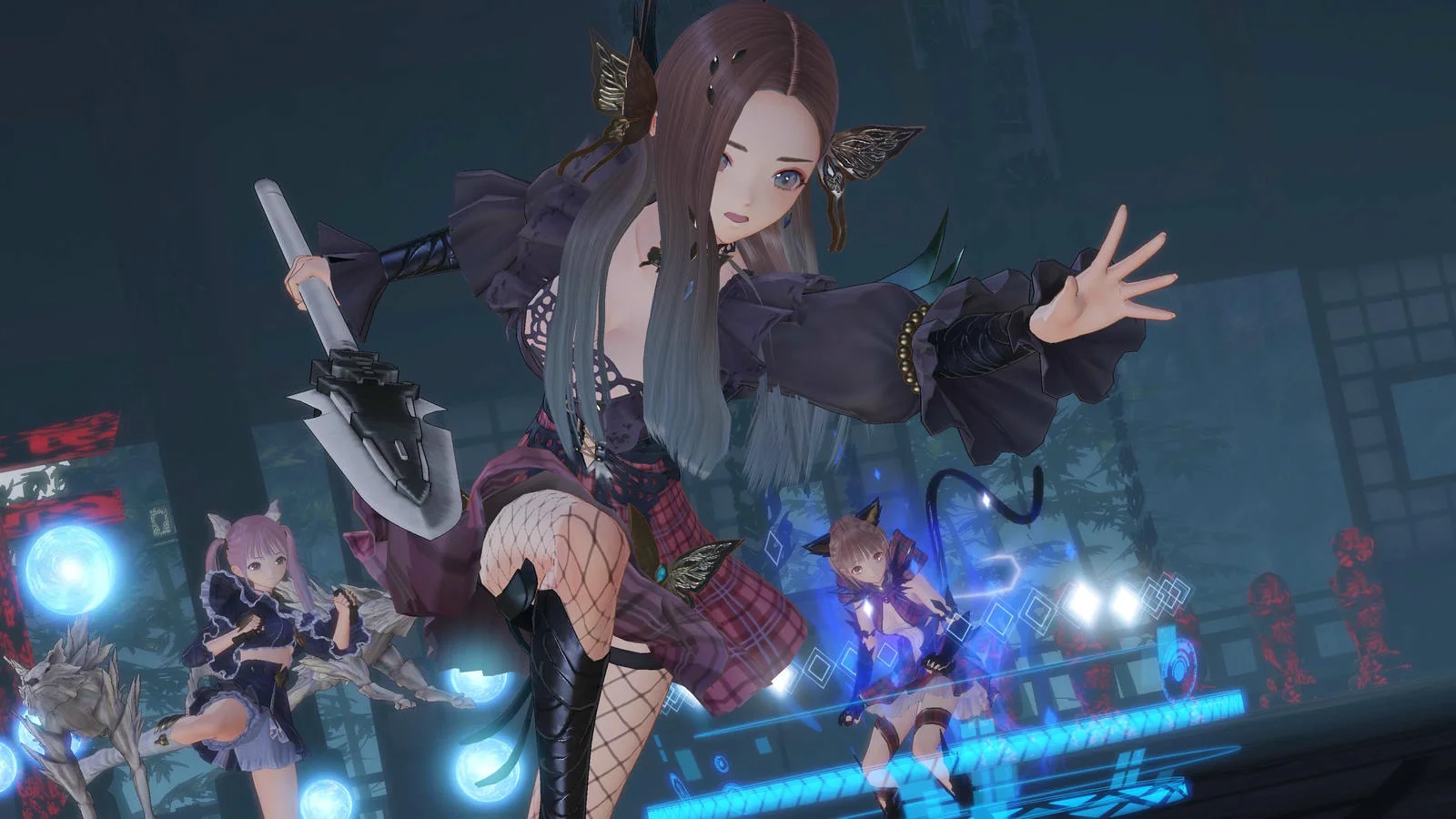
The real main character of Blue Reflection Sun, Shiho, would have served better as the player character. Her ignorance and status as a newbie make her the perfect avatar to interact with the rest of the cast, learn about the state of the world, and show real growth as a person. Her confrontations with the literal textbook psychopath Uta would’ve been far more interesting to witness than the silent musings of a protagonist with the personality of a heavily discounted loaf of bread.
Thankfully, this adaptation of Sun is quite short, topping out at around 5-6 hours depending on how many of the girls the player talks to. There is no dungeon exploration, and the entire game is essentially a visual novel with a few boss battles. The game utilizes Second Light’s battle system, which, while a fantastic choice, feels awkward given the few-and-far-between fights and lack of meaningful progression. Thankfully, the characters (sans Leader / John Bluereflection) are endearing and fun, with their own quirks, drama, and things they’ll throw down and throw punches for.
While this adaptation is disappointing, it is the only way to experience most of Sun’s story. Sure, the player character sucks, the game is a condensed visual novel devoid of content, and most of the music is reused from the first game, but there is a sense of novelty to the experience. The plot, while largely junk, comes together at the end, perhaps because of intervention on Gust’s part to connect Sun to the post-apocalyptic Second Light. Although Ray’s adaptation is not a sufficient replacement, Sun’s adaptation is all we have, given the mobile game was shut down in 2024. I’d say this version is a serviceable replacement for the trash-tier gacha, as it cuts out as much worthless rot as it can while bookending it with updated scenes that make the story flow better.
- Graphics: 70
- Sound: 70
- Gameplay: 50
- Control: 50
- Story: 50
- Overall: 50
Now, back to the good part.
Blue Reflection: Second Light (2021)
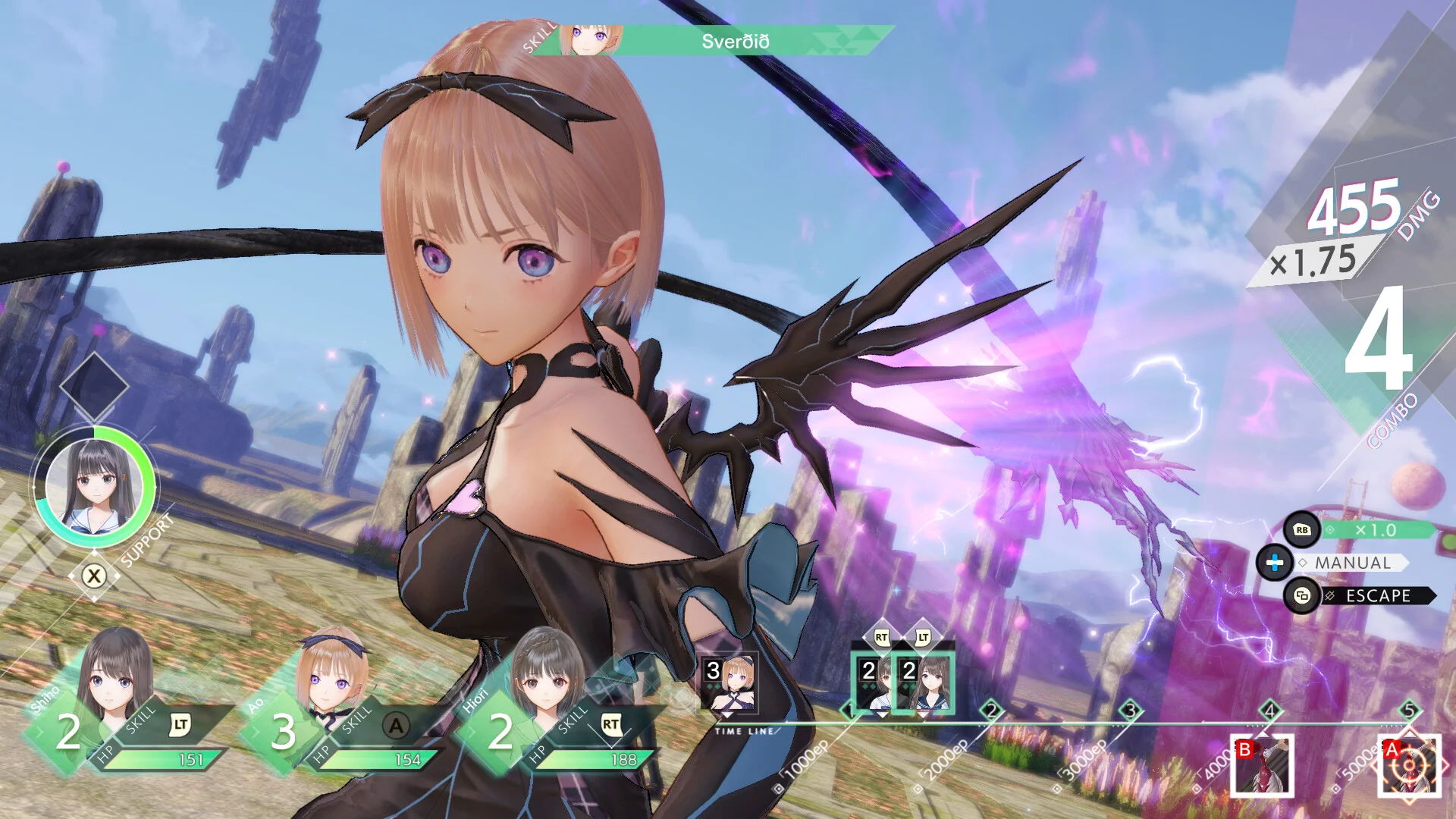
Blue Reflection: Second Light sits at the end of the current Blue Reflection timeline. The protagonist, Ao, awakens in a post-apocalyptic oasis, only to find she isn’t alone in a school that floats in the void. She quickly makes friends, offers her help, and does everything she can to support the girls who were there before her and welcome newcomers. Over the course of the game, Ao earns her status as the group’s leader by facing off against monsters, listening to people’s problems, and being a wellspring of empathy to a group of traumatized, lost, and confused girls.
The exploration throughout the school is charming, giving off the vibe of wandering the campus on the last day before summer break. While the crafting and building mechanics are incredibly basic, there’s a great sense of progression and customization in building new facilities to grant bonuses and buffs that suit the player’s playstyle. Second Light’s Fragment system, an updated and expanded version of the original game’s system, allows players to equip thoughts and feelings that provide buffs and benefits to characters while adding further customization to the party.
This version of Second Light runs smoother, looks cleaner, and feels like the definitive version, with adjustments that fix my complaints about the original. Second Light’s combat system, which I’ve adored since the original release, is at its best in this collection. I appreciate the speed-up options, extra characters in battle (and support buffs outside), higher difficulties, and additional options to customize the party and experience throughout the game. All I could ask for would be some defensive options (such as parrying and evading) outside one-on-one battles, but that would be better suited for a sequel.
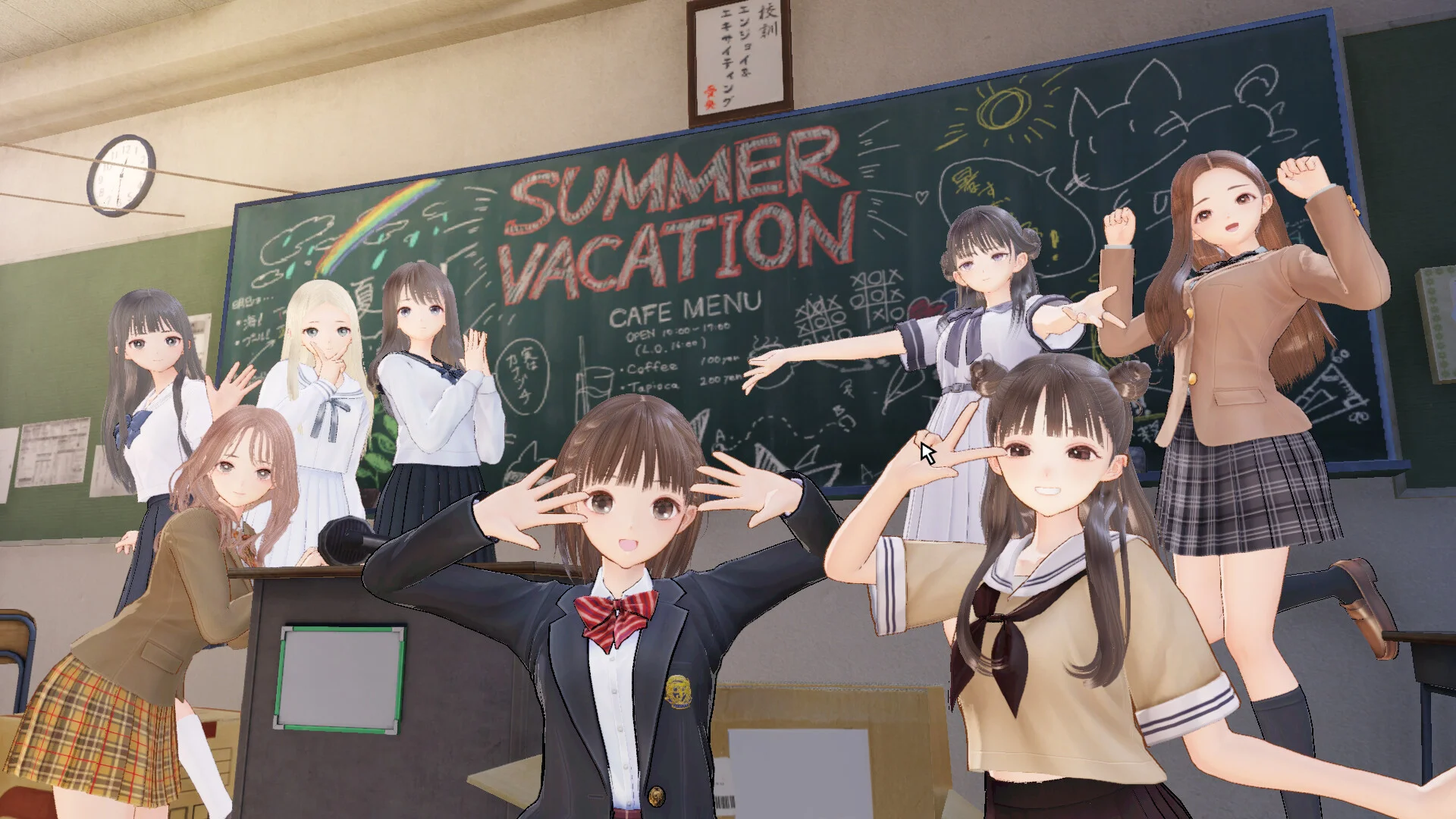
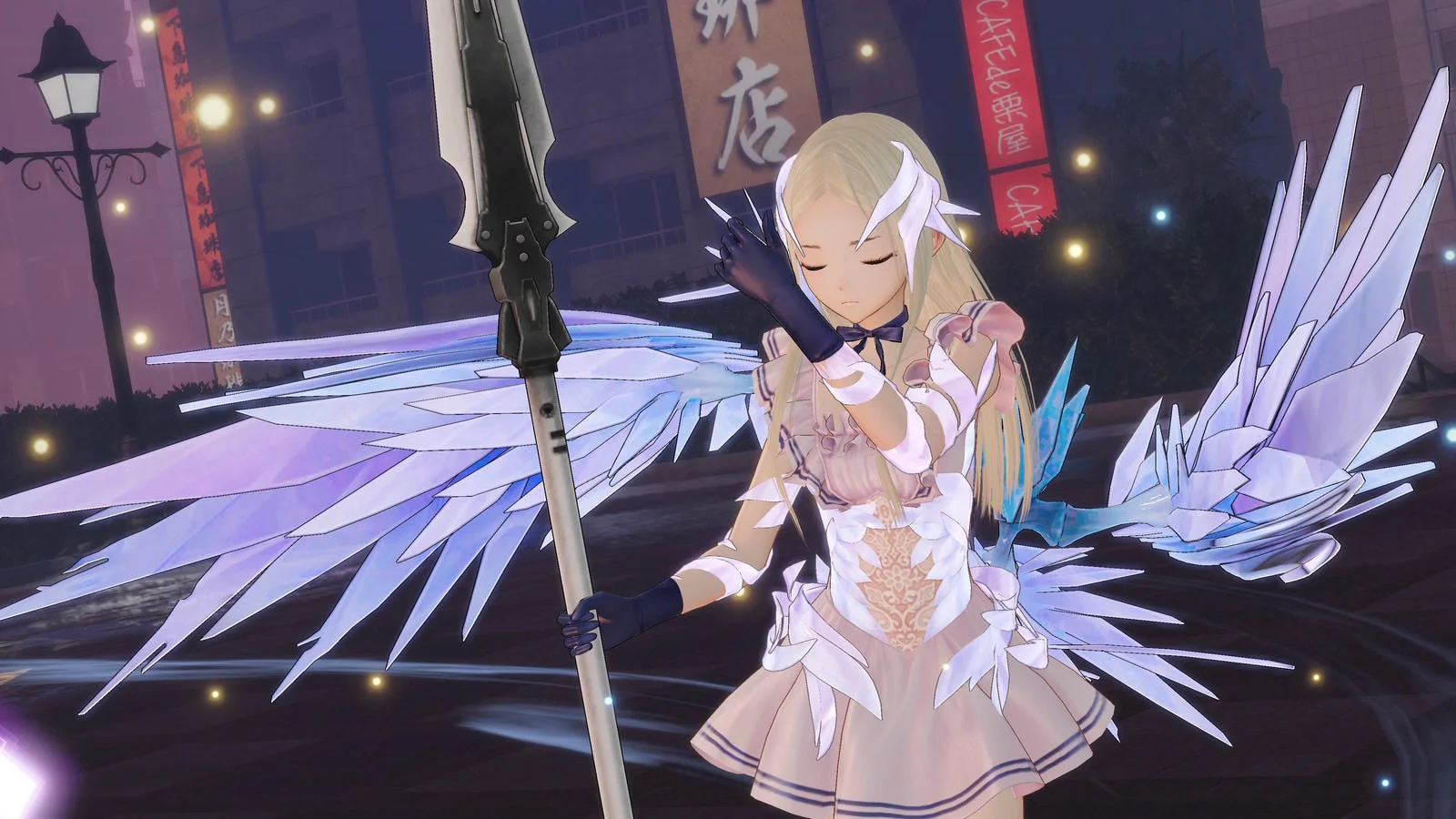
Put simply, Blue Reflection: Second Light is fantastic, and remains fantastic. In 2021, I rated it highly, but over time I’ve become even fonder of the game. The added characters from Ray and Sun are a welcome addition, though they’re only usable in combat. That said, it’s nice that they’re in a game that puts up a fight (on higher difficulties) and allows their abilities to have a more natural sense of progression. Everything in this version feels like a plus, and while the additions don’t make it a must-have for fans who have already played or own the original, this is simply the best way to play one of Gust’s best games. Like the Ray anime, it’s charming, heartfelt, and genuine, and one of the best parts of the Blue Reflection series.
- Graphics: 90
- Sound: 95
- Gameplay: 90
- Control: 90
- Story: 90
- Overall: 92
Now, back to the collection as a whole.
Blue Reflection Quartet
I appreciate that Gust has given the Blue Reflection series a much-needed breath of life; being a fan of the franchise feels like being on an emotional rollercoaster. It’s great that the original game finally runs well and feels less awkward and creepy, but the bastardized anime adaptation feels like a slap in the face. The adaptation of the poorly conceived and received Blue Reflection Sun feels like a panic-ridden salvage job, but it does what it needs to. It conveys the main story points while minimizing the playtime as John Bluereflection, the special boy with a special harem. Finally, this collection contains the best version of the Blue Reflection series’ highest point: Second Light.
It’s difficult to score the collection as a whole, as it’s a wildly mixed bag that contains a shining gem, a pretty stone, a piece of charcoal, and a sharp and weirdly slimy rock. I’ve scored them individually and knocked points off sound for the lazy reuse of songs from the first game for events in Sun and Ray. These songs are highly emotional pieces tied to Blue Reflection and simply lose their impact when used haphazardly in other entries. It’s the equivalent of re-using Final Fantasy VII‘s motorcycle chase music in Dirge of Cerberus: Final Fantasy VII. It’s fine, it just sounds out of place. That said, the collection is great overall thanks to the timeline, relationship charts, terminology codex, and all-in-one presentation.
Blue Reflection Quartet contains the best version of three games and the absolute worst version of the anime. Were the episodes of the show included, I’d be less irritated at the decision to truncate a deep and emotional story into a two-hour recap that skips all the best parts and completely misses the point. However, this collection is a great starting point for new fans and offers an enlightening alternative to the abysmal gacha that series veterans never got to experience in the West. If you have any interest in magical girls whatsoever, give Blue Reflection Quartet a look. Just make sure to watch the anime instead of “playing” it.