
As I’ve grown older, I’ve learned how funny grief can be. You can be sitting at your desk, watching a show, and a thought enters your head: “I’ll never watch this with my dad again.” It doesn’t matter how long it’s been; the passage of time may help grief not dominate your life, but grief has a funny way of appearing when you least expect it. Fishbowl is a game that depicts trauma, grief, and regret, and it’s one of the best to do it.
Fishbowl follows a young Indian woman named Alo, living away from home and grieving the recent death of her grandmother, Jaja. This has caused her significant strife, and combined with feeling like an impostor at her job and struggling to create the poetry she used to love, getting out of bed each day proves to be a struggle in itself.
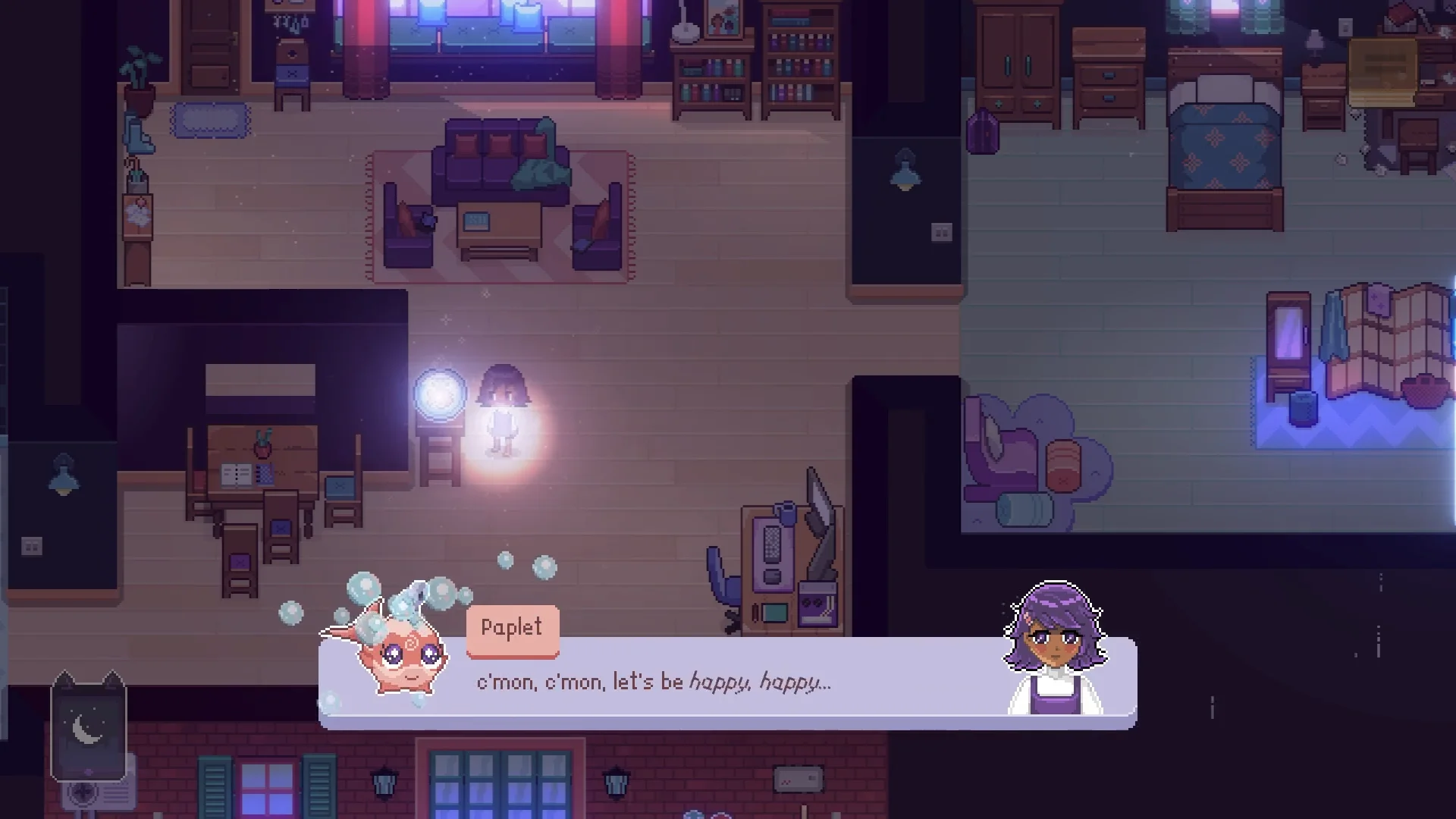
While settling into her new home, Alo spends the next month slowly but surely unpacking her grandmother’s possessions. With each box, the player solves a simple slide puzzle game to uncover everything, journaling about each item. One such item is a toy fish in a bowl that inexplicably speaks to Alo, trying to help her remember happy memories and avoid sad ones—although as anyone who has gone through loss can tell you, happy memories can also be the saddest.
Though her grandmother’s death is the main focus of Alo’s grief, there are many other struggles she has that make it worse, including her fears that she is not good enough for her job and the ongoing COVID-19 pandemic in the game’s story that has everyone self-distancing. Like Alo, a lot of my hardest moments happened during the peak of the COVID-19 lockdown. There’s no worse company when you’re grieving than your invasive thoughts.
The lockdown also manifests in ways outside of Alo’s grief, with one character struggling with the fact that many kids in her town lack the technology to do remote learning, a very real problem in India during the lockdowns. COVID-19 is a subject I so rarely see depicted in video games, so it’s nice to see it executed so well here.
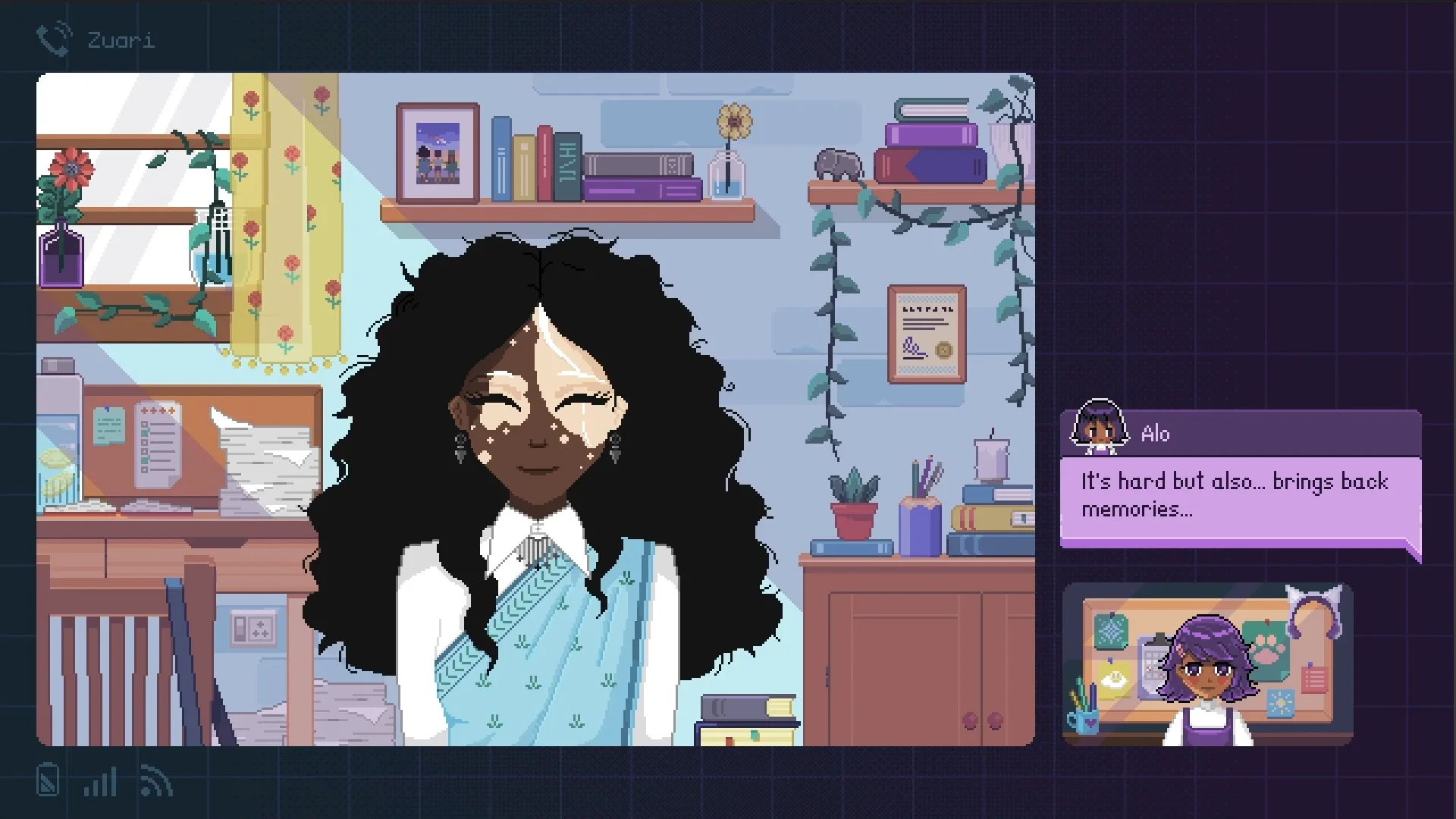
I appreciate a lot about Fishbowl, but in particular, it’s nice to see more diverse content and creators in the industry. It feels so rare to see a video game focus on Indian people and their culture, and so accurately to boot! Not limiting itself to just the representation of Indian culture, the game features a character with vitiligo. As someone with a similar condition, I do enjoy seeing it normalized in media.
Fishbowl relies on good dialogue, characters, and storytelling to create its intriguing experience, but the two-person development team has done a good job of making an interactive experience out of it. Many actions are accompanied by quick-time events; for example, when Alo is brushing her teeth, you have to hold a button to apply toothpaste, move the toothbrush in a left-right-left-right motion, and then in an up-down-up-down motion. Others have a more complex series of inputs.
Each day, Alo does different tasks to attempt to improve her mood, including brushing her teeth, taking a shower, drinking water, and eating. You can also have her binge-watch television or doomscroll on her phone, though these seem to only have a negative impact, and I’m frankly unsure if there is any reason to do these unless you want her to feel worse! Then again, I still try to have Alo write every day despite knowing it will only hurt her mood more; even if she never got the good feelings from writing again, I would be remiss if I didn’t try my best to give the spark back to her.
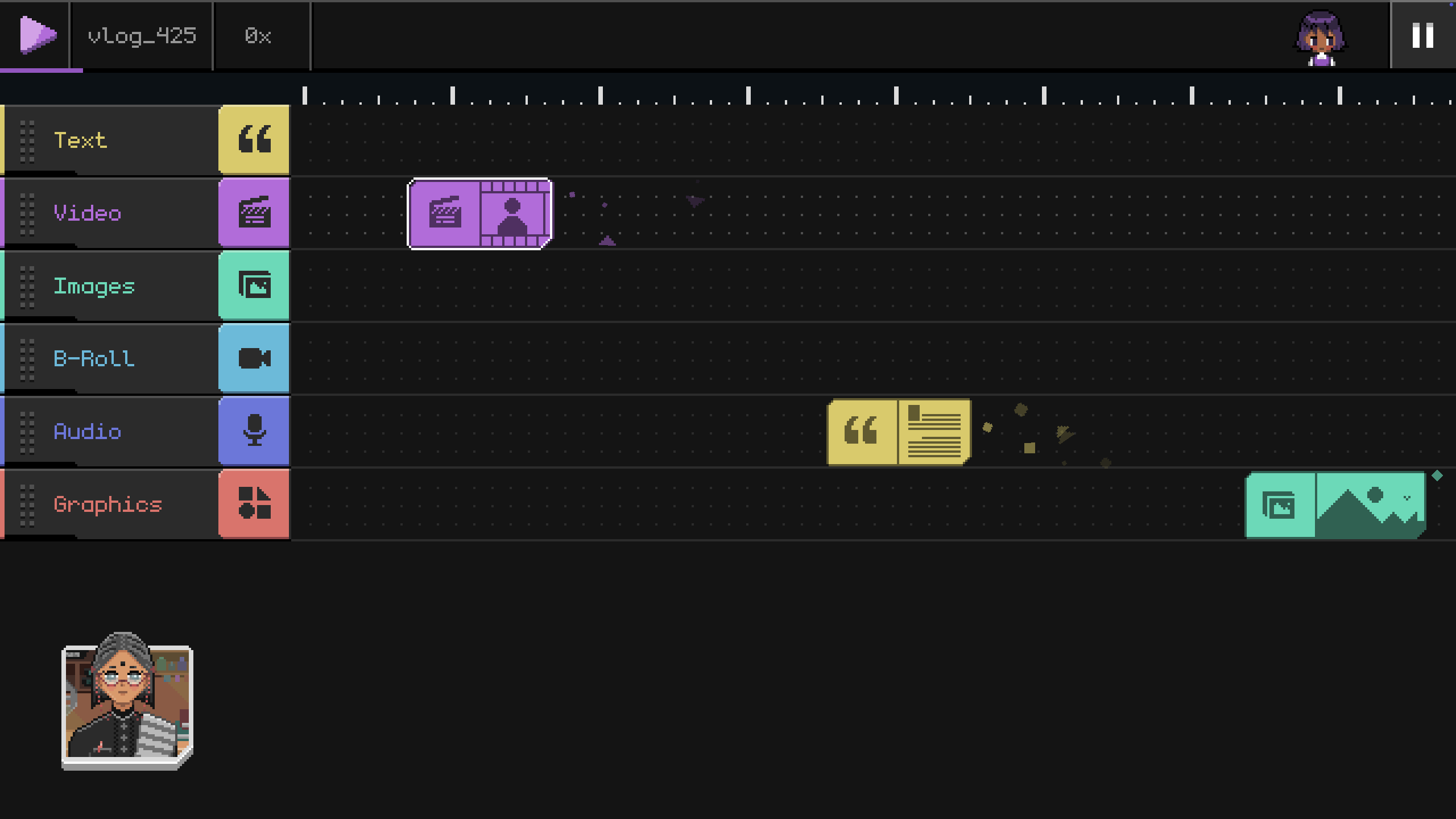
In addition to her self-care, Alo has a job to do: video editing. Each day she works, Alo has at least one vlog that she has to edit. This is done through a cute little mini-game that involves sorting elements into their proper categories as they approach them. It’s nothing incredibly exciting mechanically, but it does well enough to make me feel involved in Alo’s job. The only sticking point I experienced with it is that the somewhat stiff controls can lead to frustrating mistakes, even if the narrative does not treat one or two mistakes too harshly.
Alo has several people she can speak to over video chat, including her mother, childhood friends, and co-workers. These calls can improve Alo’s mood, but may also worsen it. I really enjoyed watching these calls, as it was nice to see how she interacted with different people in her life. Her relationship with her mother was particularly sweet, as their love for each other was evident.
Despite my enjoyment of the game, Fishbowl feels too long. While I never felt weary of its story or characters, Alo’s routine becomes tedious, perhaps intentionally. Early on, I questioned what the challenge was, as the tasks never took long and were simple. Yet, just like in real life, the struggle is motivation, not the difficulty of the task. The fact that more tasks are introduced as the game progresses certainly doesn’t help. There’s no actual punishment if Alo skips showering when her mood is already high, so perhaps it speaks to my attachment to Alo that I had her do them anyway.
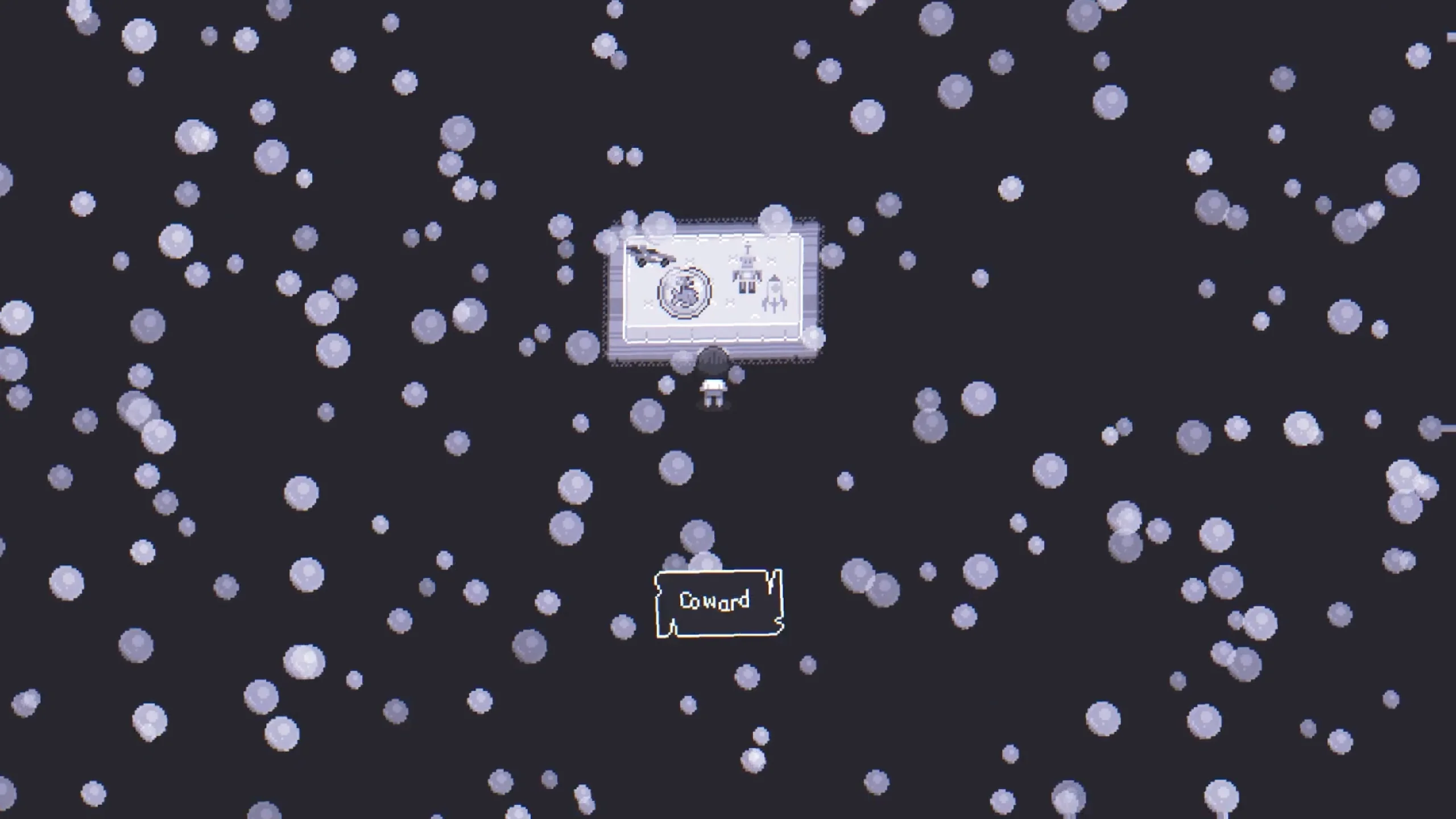
In terms of presentation, Fishbowl‘s environment is cozy and colorful. This aesthetic feels like a visual representation of masking, a coping mechanism to blend into the world around you. Alo’s depression manifests either in grayscale nightmares or darkness creeping into the environment, expressing the contrast between between her mask and her true feelings. The music also reflects Alo’s state of mind, its low-key beat and soft melody evoking a sense of melancholy.
Playing Fishbowl caused a lot of uncomfortable memories to emerge, though by the end, I felt thankful to have played it. The game feels like a response to the excellent visual novel To the Moon, an emotionally brutal story exploring themes of struggling to cope with loss and regret. Fishbowl is also an exploration of regret, but instead of Alo fighting it, the game emphasizes the importance of her living with the truth of her regret.
Where To the Moon spoke to me when I struggled with the looming risk of my father’s death, Fishbowl speaks to me as I struggle to come to terms with it. I’m thoroughly impressed that two first-time designers made such a good game, especially during a pandemic, and I hope to see more in the future.