
Ever since playing Phoenix Wright: Ace Attorney in 2005, I’ve been hooked on adventure games and visual novels. Whether it’s Ace Attorney, Monkey Island, or Broken Sword, I can never get enough of them. The best way to make me fall in love with one of these games is by combining a strong cast of characters, a fascinating setting, and a gameplay gimmick that sets your game apart from the rest. Which is why, to this day, Gnosia is my all-time favorite game. So, when I saw the announcement of a mobile port, I stopped everything I was doing and bought it.
For those unfamiliar, Gnosia, set in the far future, puts players in control of a gender-determinate character in a seemingly unending time loop alongside fellow main character Setsu, a nonbinary character. In each loop, the cast has one goal: to identify who among them is the Gnosia, an infested imposter entity, and put them into cold sleep to protect the rest of the crew. Yet, for you and Setsu, the goal is to fill up an object called a Silver Key with knowledge, at which point they will be free.
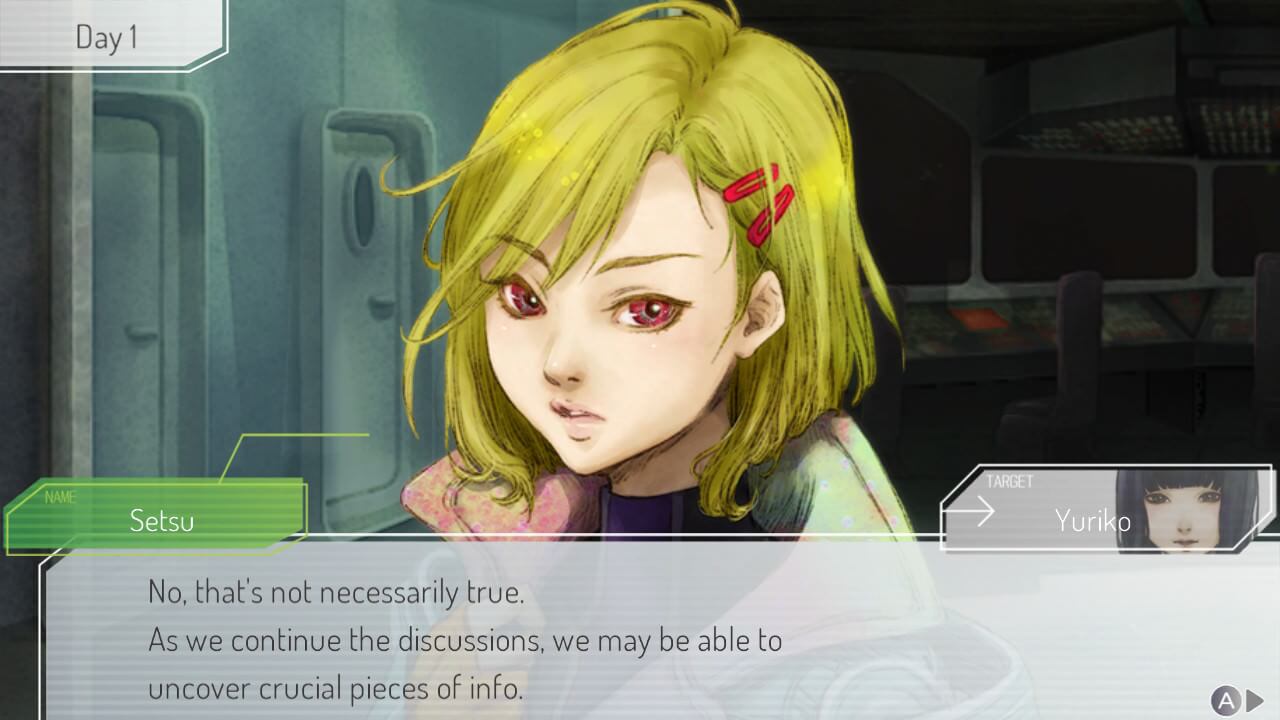
Each time you loop, various details change, most notably who the Gnosia are. Essentially, Gnosia is Among Us in visual novel form, both games sharing the social deduction game Werewolf as inspiration. Like Among Us, you can also sometimes be the Gnosia, aiming to deceive the others and be among the final survivors. The gameplay loop of lying and killing without drawing suspicion is a ton of fun, although just like with Among Us, I couldn’t help but stress out about being caught!
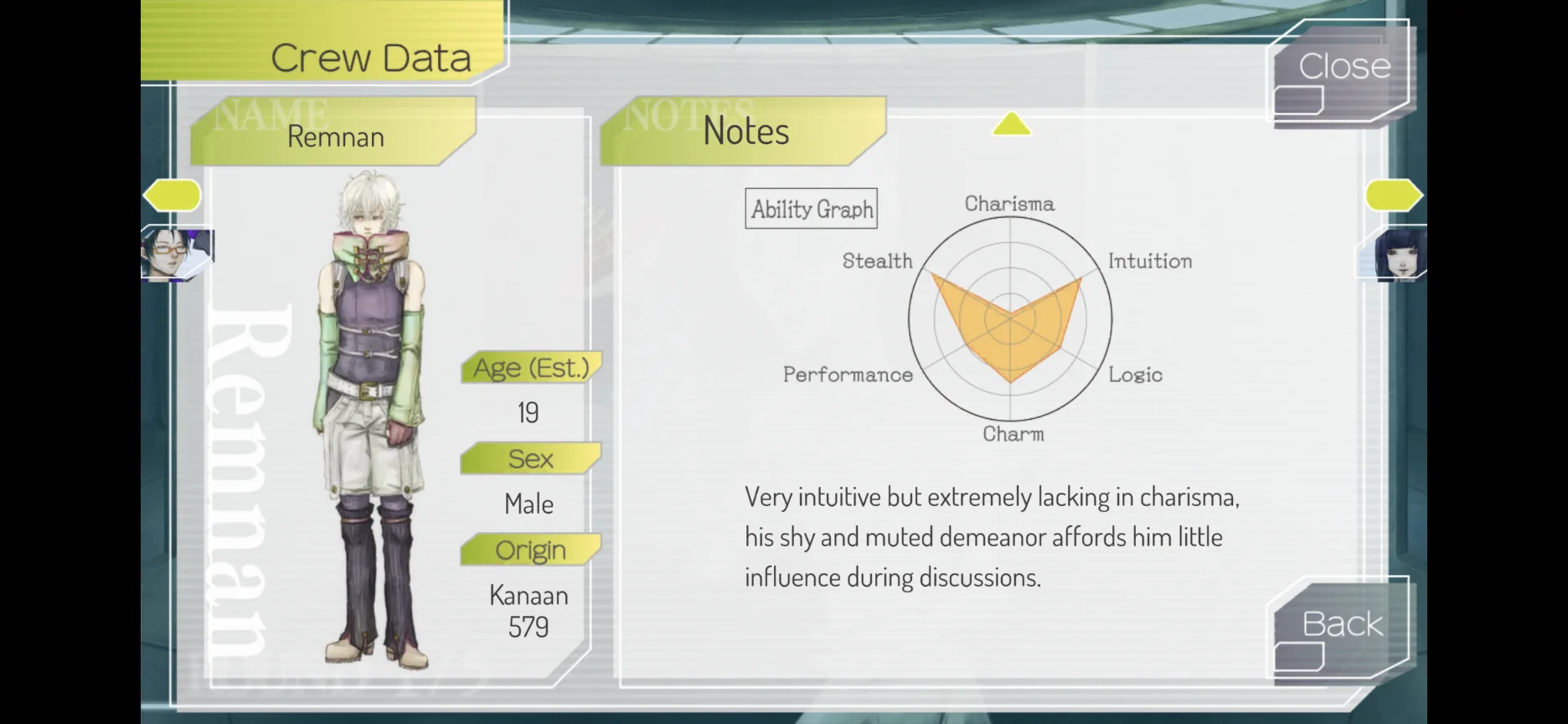
The game starts simply enough, with people working to figure out the identity of the Gnosia by asking questions to one another. The player has six different stats:
- Charisma: Makes you more convincing
- Intuition: Helps you detect lies
- Logic: Makes your statements more believable
- Charm: Makes people more willing to ally with you
- Performance: Makes you a better liar
- Stealth: Makes you more able to avoid suspicion of being a Gnosia and being killed
Each character has a certain value in these stats as well; for example, Setsu has strong charisma, logic, charm, and performance but struggles with intuition and stealth and thus may trust the wrong people and be targeted more often. Your own stats can be upgraded over time, and becoming more adept at identifying liars and deceiving people feels so awesome. The first time I detected a lie was really energizing, though it wasn’t as simple as telling they were lying.
While the early game has you relying on hard evidence and the process of elimination, being able to eventually intuit who you can and cannot trust by catching people in lies adds a lot more depth to discussions. Of course, just because you can tell who is lying doesn’t mean you bested that person; there’s even a part of the game where a character tells you they’re the Gnosia and challenges you to get them put into cold sleep, which proves difficult, as pushing too hard on this character without strong evidence backfires very easily.
Gnosia becomes more complex as more roles are added. In most cases, special roles function between rounds. While the Gnosia picks a person to eliminate before the next discussion round, the humans have their own tasks, such as the Engineer, who checks the identity of another player, and the Doctor, who checks the identity of the last person put in cold sleep.
These roles add depth and fun for the human side, and playing the Engineer is particularly enjoyable, as your intel helps you know who to trust and who to accuse. There is also a role called Bug, which belongs to neither Gnosia nor human and whose goal is to avoid being killed or put into cold sleep—failure to do so results in the destruction of the universe. I find this role particularly stressful, as going against the humans and Gnosia makes everything so much more chaotic for me, but it’s fun nonetheless.
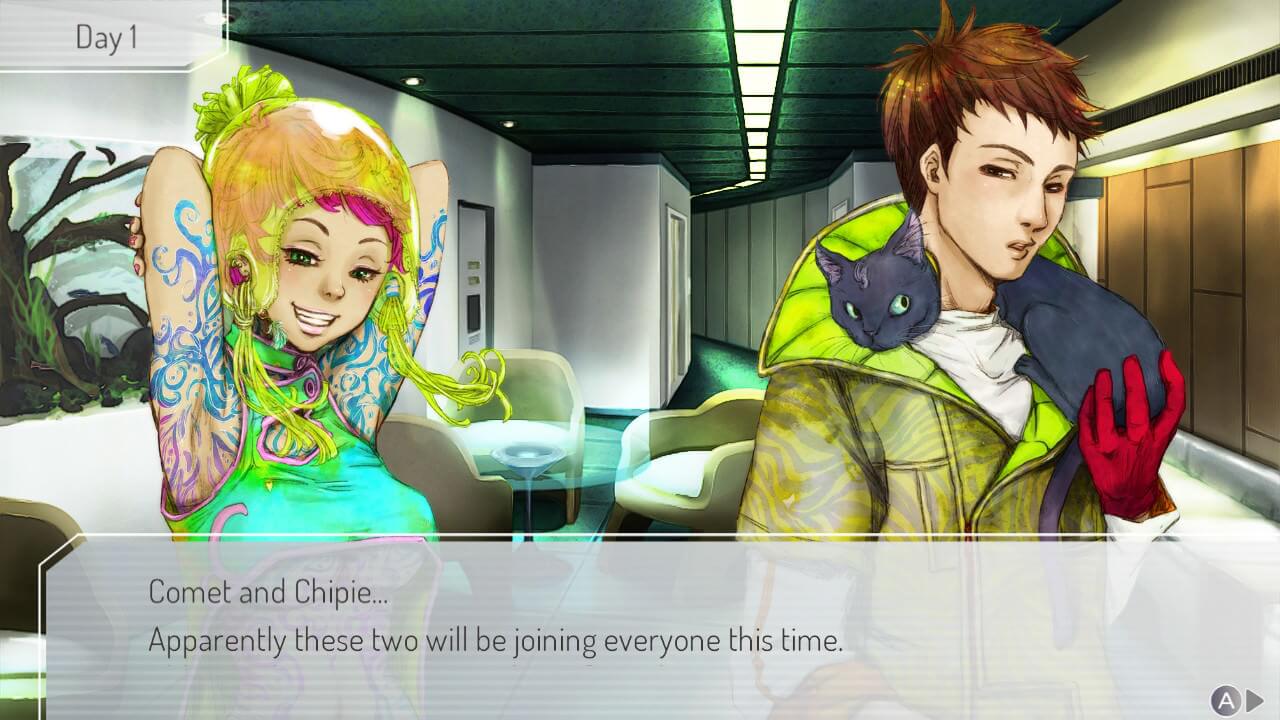
One thing I appreciated about Gnosia was its diversity. Not just in terms of having multiple LGBTQIA+ characters (including two nonbinary characters on top of being able to be nonbinary yourself), but also character concepts, ranging from an android to an alien-like human to an intelligent beluga whale. Every character is compelling, well written, and enjoyable in their own unique way. I’m especially fond of Chipie, a man who has a cat built into his neck as part of a procedure to let him inhabit the body of a cat by acclimating his brain to the cat’s.
Gnosia continually surprises by revealing greater character depth, inspiring strong feelings, be they positive or negative, towards the whole cast. For example, Raqio, the haughty elitist, proves themself to be far more than that, particularly in how they treat Remnan, a traumatized young man. We get to see different aspects of people’s personalities play out when they are the Gnosia, notably in one instance where a character proves unable to fulfill their instincts as a Gnosia because they retained their dislike for lying. Interactions like these are among the most fascinating and profound moments I’ve ever experienced in a video game.
As much as I love Gnosia, it’s not all peaches and gravy. One quibble I had, especially around the middle of the game, was just how much of a grind it can be. The gameplay, while enjoyable, can get repetitive, especially when you’re nearing the end of the game and struggling to get all the information needed to break the time loop.
The discussion rounds could also stand to have more depth, as characters between loops have a somewhat limited selection of things they can say, meaning the gameplay becomes less surprising the longer you play. The gameplay also suffers from loops ending prematurely due to the Gnosia targeting you or getting doubted by others for seemingly arbitrary reasons. That being said, every time I replay this game, I find a scene I’d never experienced before, so at least it’s not fully devoid of excitement!
On a technical front, I’m in love with the art style. All the characters have fantastically unique designs, and the execution is perfect, courtesy of Gnosia’s artist, Cotori (who still does a ton of fan art for Gnosia‘s characters, which makes me very happy). The music did not quite live up to the quality of the visuals, but I still enjoyed many of the songs.
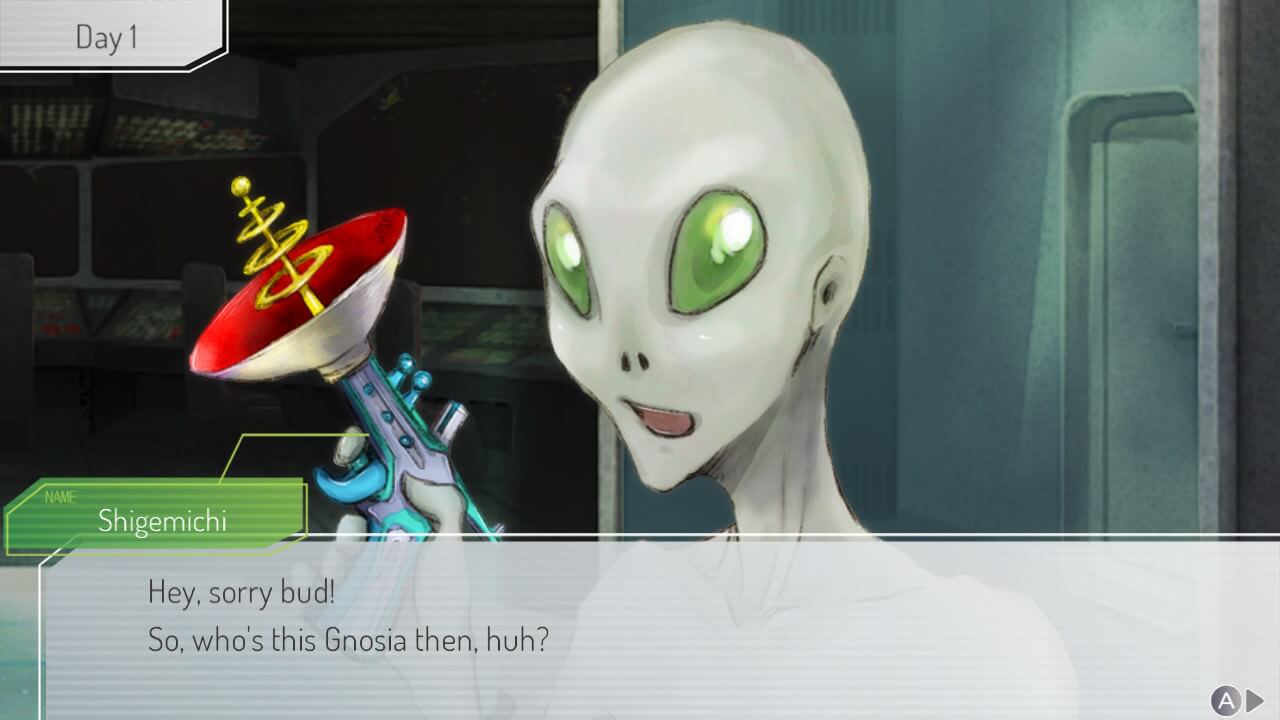
Being a visual novel, Gnosia is a great fit for mobile platforms, circumventing the complicated controls that often malign mobile ports. The gameplay involves selecting menu icons with your phone’s touchscreen for the most part, with the only exception being two-finger swipe gestures to navigate menus. Its visual quality remains as strong as on other platforms, with the only limitations depending on the quality of your phone.
If you’re someone who has already experienced Gnosia elsewhere, the mobile port may not be worth it unless you’re looking for an excuse to replay it. $24.99 USD to double dip (or in my case, triple dip) is a steep price for certain, though I was more than happy to pay the price, as being on mobile hasn’t reduced its quality in any way.
For anyone looking to try a visual novel with a unique premise, cast, and gameplay, Gnosia is a great choice. It does require a fair bit of patience to make it to the end, as even if you know how to make progress, actually fulfilling the requirements can be quite difficult. But in my opinion, the highs are much higher than the lows are low.