
Kingdom Hearts 358/2 Days is something of an odd duck in the Kingdom Hearts series. Taking place directly after Kingdom Hearts and running parallel to Chain of Memories, 358/2 Days instead focuses on Roxas, the briefly encountered protagonist of Kingdom Hearts II’s opening hours. 358/2 Days stands out in part because the full game remains exclusive to the Nintendo DS, releasing in 2009 and never receiving a complete rerelease beyond its cutscene compilation in Kingdom Hearts HD 1.5 Remix.
Today, it remains sort of a forgotten relic, despite its importance to the series’ overarching narrative. That alone makes it worth revisiting, particularly for those who may have skipped it the first time around. From the jump, Roxas awakens in Twilight Town, where Xemnas, the main antagonist of Kingdom Hearts II and leader of the shadowy Organization XIII, takes notice of him. Taken in by Xemnas, Roxas becomes the Organization’s 13th member and is tasked with collecting “hearts” from the various Disney worlds’ Heartless enemies.
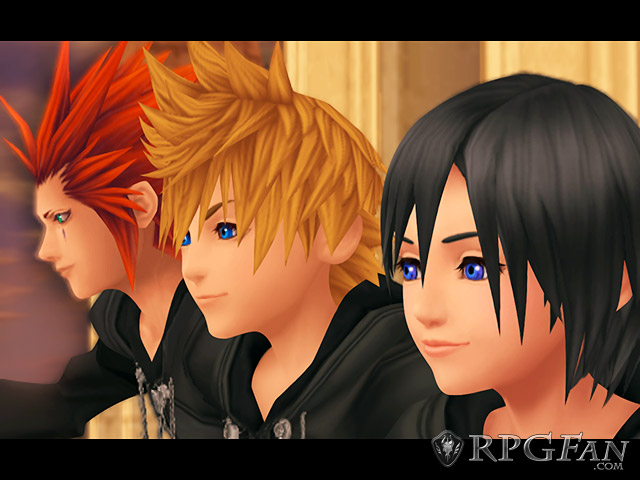
Much of the game revolves around Roxas’s growing identity crisis and a pervasive existential monotony, and there is a prevailing sense of isolation as Roxas struggles to find meaning and answers about his life and memories. During these tasks, Roxas befriends the Organization’s eighth member, Axel, and another girl taken in by the Organization, Xion, who is the semi-official 14th member. While I found these overarching themes quite compelling, pacing issues undermine 358/2 Days‘ story, and many of the game’s quieter, more introspective moments are ultimately too few and far between.
358/2 Days also suffers from having one of the series’ least accessible plots. While Kingdom Hearts II benefits from contextual information from the other games, I found myself more frequently questioning whether any of 358/2 Days‘ more esoteric plot beats would make sense without the backstory. Beyond understanding the plot, the worlds themselves are also sadly not interesting, mostly rehashing locations from prior games. This contrast is especially stark in 358/2 Days, as the Disney villains largely take a backseat to the shenanigans of the Organization, making the Disney world backdrops for each mission less cohesive than ever.
The game’s mission-based structure isn’t going to work for everybody, and it can definitely become repetitive, yet the droll monotony of the missions firmly establishes the game’s tone and Roxas’s personal plight, even if the missions themselves aren’t particularly engaging. This is truer for the missions where you collect “heart emblems,” with combat-based missions representing the stronger half of the gameplay.
Combat-wise, 358/2 Days is fairly standard Kingdom Hearts action RPG fare, with Roxas able to attack, sling spells, and utilize a powerful Limit Break attack. What differentiates 358/2 Days from other entries in the series, however, is its Panel system of character building and progression. In essence, Roxas starts out with a preset, empty grid, upon which he can customize levels, abilities, equipment, and even items. Panels are Tetris-like pieces, which you place on the grid and combine; for example, linking the “Fire” spell to Quadcast grants four extra casts, while linking it to Magic LV2 increases its potency.
Not only does the Panel system work wonders in establishing Roxas’s characterization as a blank slate, given his obscure origins, but it highlights the importance of strategically preparing for the particulars of each mission. As you progress through the game, you gain access to Slot Releasers that expand your grid, and gradually fitting as many abilities as possible into it feels immensely satisfying.
The availability, variety, and mechanical design of the Panel system are quite interesting as well. For example, Weapon Panels directly alter Roxas’s Keyblade and its available combos and attacks, rather than allowing you to equip Keyblades separately. Spell tiers, instead of being linearly powerful upgrades of the same basic mechanic, have unique properties: Fire is a homing fireball, Fira is a penetrative, exploding straight-shot, and Firaga is an arcing, homing artillery-like attack. I found experimenting with all of these particularly compelling, and it adds variety to Roxas’s skillset.
On the other hand, the actual implementation of mechanics in combat often leaves more to be desired. Many have criticized the Nintendo DS’s lack of a joystick and the controls in 358/2 Days, but I found them serviceable, with the camera operating just fine. Even better, the game never forces the use of the touchscreen or stylus. The bigger limitation of the DS shows in enemy behavior, with the AI often demonstrating odd lapses in aggression, especially when multiple enemies are on screen.
Despite being on the Nintendo DS, 358/2 Days looks remarkably good for its time. The worlds from Kingdom Hearts and its sequel are adapted quite well, and the 3D graphics are solid and charming. It won’t win any awards for originality or for being particularly impressive, even relative to contemporary competition on other systems, but it’s a great utilization of the hardware and one of the game’s most impressive technical accomplishments. That said, the DS is at its absolute limit, and there are numerous areas, especially in Neverland, where the frame rate absolutely craters when facing large groups of enemies.
358/2 Days struggles quite a bit more with its audio, though it again utilizes the hardware of the system about as well as possible. A handful of cutscenes feature voice acting, which is competently done and effectively raises the stakes of moments when Roxas, Xion, and Axel are all together. The game reuses much of the music from previous entries, and like those games, it is solid to excellent, albeit lower fidelity and noticeably bit-crushed.
Of note, however, is the original final boss theme, Vector to the Heavens, a mournful piano piece with powerful arpeggios, tempo variations, and striking melodic incorporation of several character themes. This theme elevates the game’s finale and its impact into something truly special and is once again a testament to Yoko Shimomura’s compositional prowess.
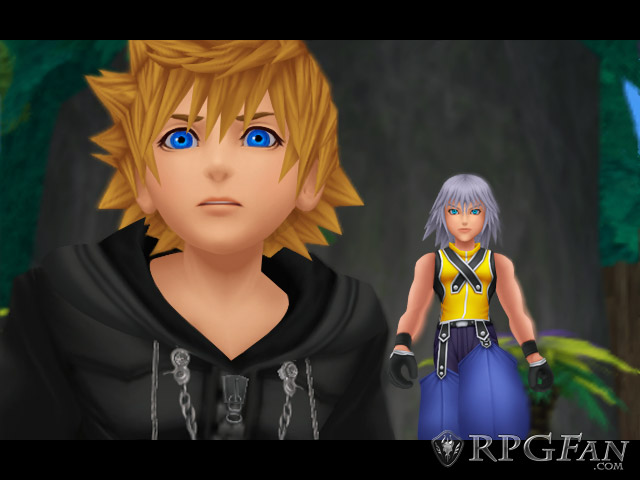
All in all, 358/2 Days is a solid entry in the Kingdom Hearts series, with some neat, if sparse, character and plot moments, even if their inclusion and the focus on the Organization alongside the Disney backdrops are more dissonant and jarring than ever. The pacing is less than ideal, and the mission structure won’t be for everybody, but if you care about the series’ overarching story, 358/2 Days is still worth revisiting for the way it fills in the gaps.