
From Baldur’s Gate 3 to Critical Role to Stranger Things, the resurgence of fantasy-horror rooted in the 1980s Dungeons & Dragons zeitgeist continues to deliver a mix of standout hits and inevitable misfires. Drawing inspiration from the Duffer Brothers’ Netflix phenomenon, Kingdom of Night blends a touch of cosmic horror with a heavy dose of Hawkins-style storytelling, wrapped around an action RPG core that demands precise dodging, stamina management, and frequent reliance on random consumables. Kingdom of Night proudly embraces its retro ARPG identity. It doesn’t shy away from the visceral gore that defines the genre’s grimmer entries, nor from their occasional rough edges. It’s dark out on the edges of this town—exactly where the game wants you to be.
The narrative takes place across one night in 1987, when the quiet town of Miami, Arizona erupts into chaos, including the abduction of your neighbour. As John, you plunge into the night, carving your way through demons, hunting down cult members, and racing to save your friends before the darkness consumes the town. Kingdom of Night signals its televisual inspirations right from the splash screen, and the setting quickly confirms the parallels. High-school-adjacent character tropes? A mysterious cosmic evil possibly tied to a shady corporation? Shadow-soaked environments, thick mist, and copious shredded viscera? They’re all here.
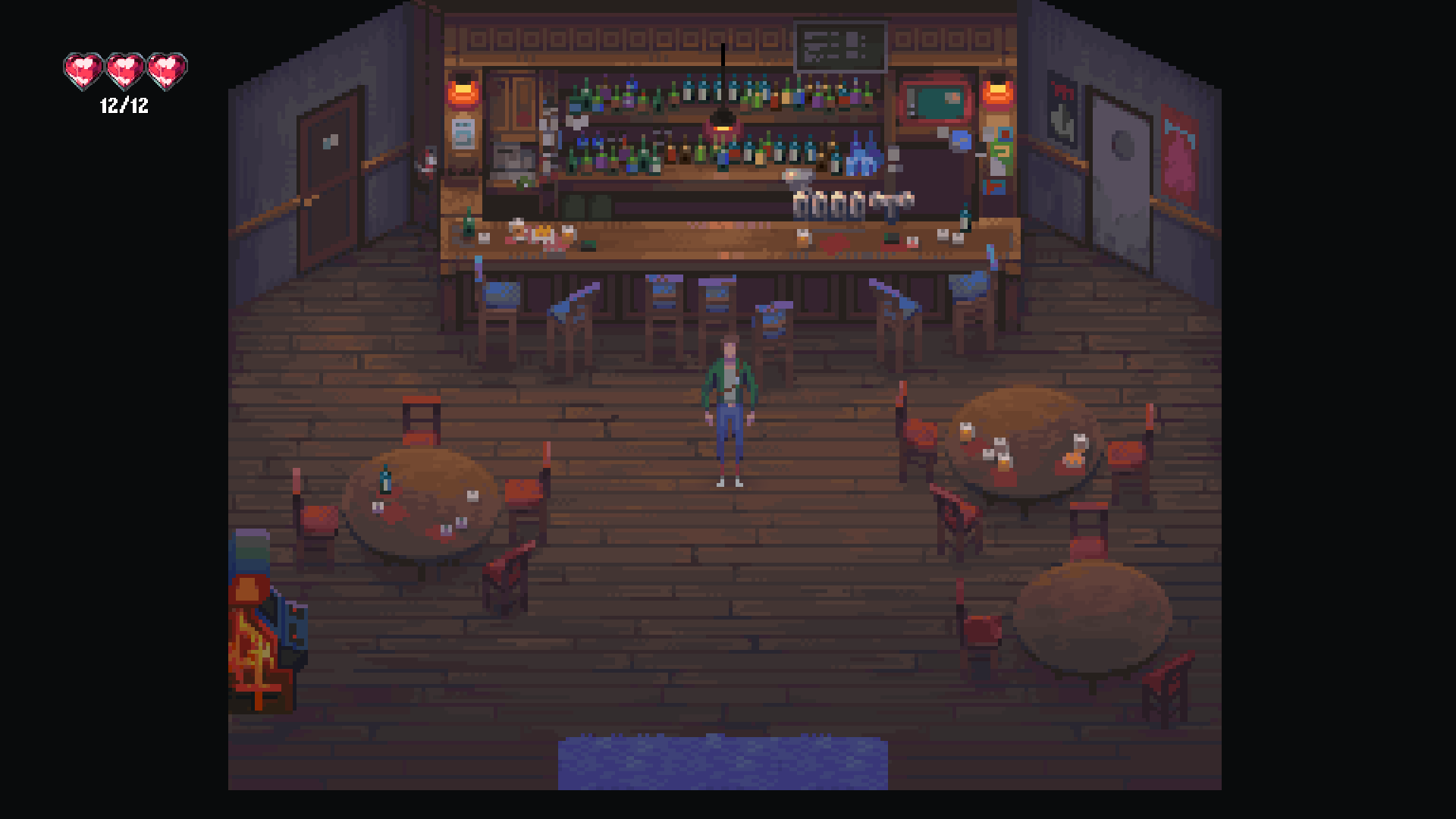
To its credit, Kingdom of Night maintains this tone consistently, but unlike stronger entries in the genre, its characters and story rarely develop beyond what’s needed to move you to the next plot beat or boss fight. Most characters feel like quick sketches—a foul-mouthed bartender, a scatterbrained old woman, stock jocks and nerds—and their interactions unfold exactly as you’d expect. The dialogue reflects this simplicity, and several typos and a few dated situations don’t help matters, sometimes making the writing feel stuck in a bygone era rather than cleverly riffing on it.
Kingdom of Night’s art design is evocative, and its vibrant pixel art feels right at home alongside other Dangen-published titles. Wandering through dark streets lit by magenta ground fires or navigating neon green fungal blooms in the sewers creates a surreal atmosphere, even though the game is very darkly lit throughout. Character portraits take the form of simple 16-bit-style headshots—there are plenty of them, though few are memorable. Lonely stretches of plains and rocky scree gain tension from the minimal soundscape, where only footsteps, ambient effects, or the occasional thunderclap break the silence. A brooding musical layer ties everything together, leaning into synths, slow orchestral swells, and gentle plucks common to the genre, with a few standout exceptions.
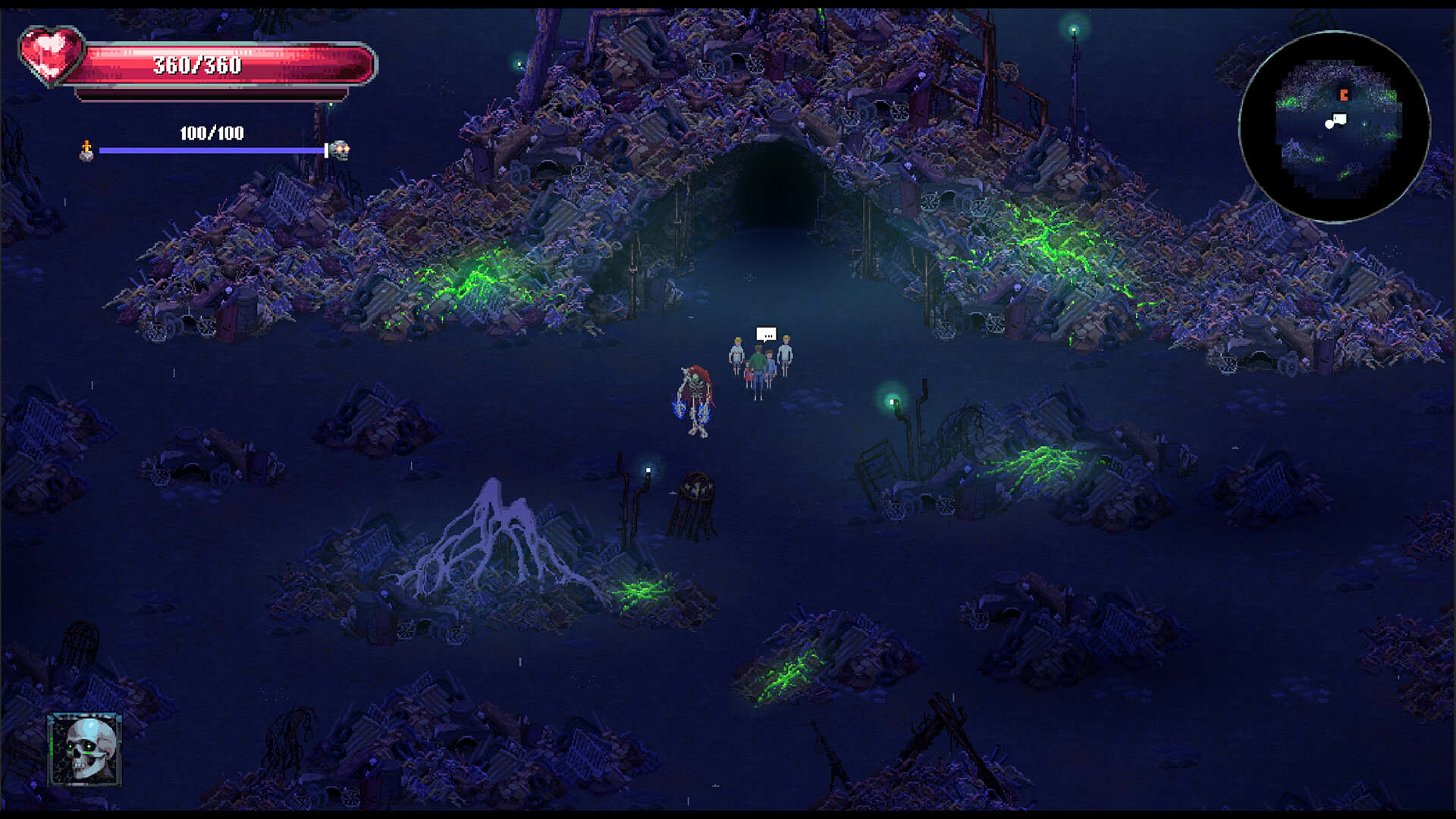
You’ll spend most of your time in Kingdom of Night roaming the bleak, shadow-drenched streets of Miami, moving between abandoned supermarkets, small town libraries, and everything in between. The sense of carnage and supernatural dread seeps through environmental details, character encounters, and quick sketches scattered across the world. Many of these moments lead to quests—some push the central mystery forward, while others send you hunting for item sets or tracking down missing high school friends. The quest structure feels genuinely open. After the initial setup, you’re free to explore wherever you like and tackle whatever catches your interest, limited only by your character’s level, abilities, and the strength of the enemies occupying each area. The overworld map and area mini-maps do a solid job of showing your location and highlighting enemies or points of interest. Before long, you unlock a fast travel system, which is a huge relief given the size of some zones and how slowly your character moves at the start.
Real-time combat in Kingdom of Night revolves around locking onto the nearest enemy with the left gamepad trigger (frankly, playing with a keyboard and mouse isn’t pleasant). From there, you rely on melee attacks, dodges, and parries with the other face buttons. Stamina management becomes essential—dodging and using abilities drain it—so strafing, retreating strategically, and kiting enemies around terrain features all become core tactics. Magic users gain additional area attack options that demand careful positioning and an awareness of cast times. You select spells through different combinations of the face buttons, and combat will pause if you need to review them. These classes take more practice to play precisely, but their ability to damage large groups of enemies offers a satisfying payoff. Overall, combat in Kingdom of Night feels enjoyable, and the controls are tight, even if your character moves painfully slowly at first, and selecting spells is not immediately intuitive. Once you get comfortable with lock-on targeting, spell selection, and well-timed parries, most frustrations fade away.
Enemies usually attack in swarming mobs, starting with slow-moving zombies and introducing variants with new attack patterns. These shifts force you to adapt your strategy—projectile-firing shades demand sharp dodges, while poisonous fungi can split on death and quickly overwhelm you with sheer numbers and lingering damage. The combat design leans into these synergies: shambling zombies aren’t hard to corral on their own, but they become far more dangerous when you’re also trying to stay clear of a shadow’s homing, missile-like attack. In the more chaotic encounters, the screen practically turns into a bullet hell. Flaming projectiles fill your view while you dodge charging mastiffs and hordes of zombies all at once.
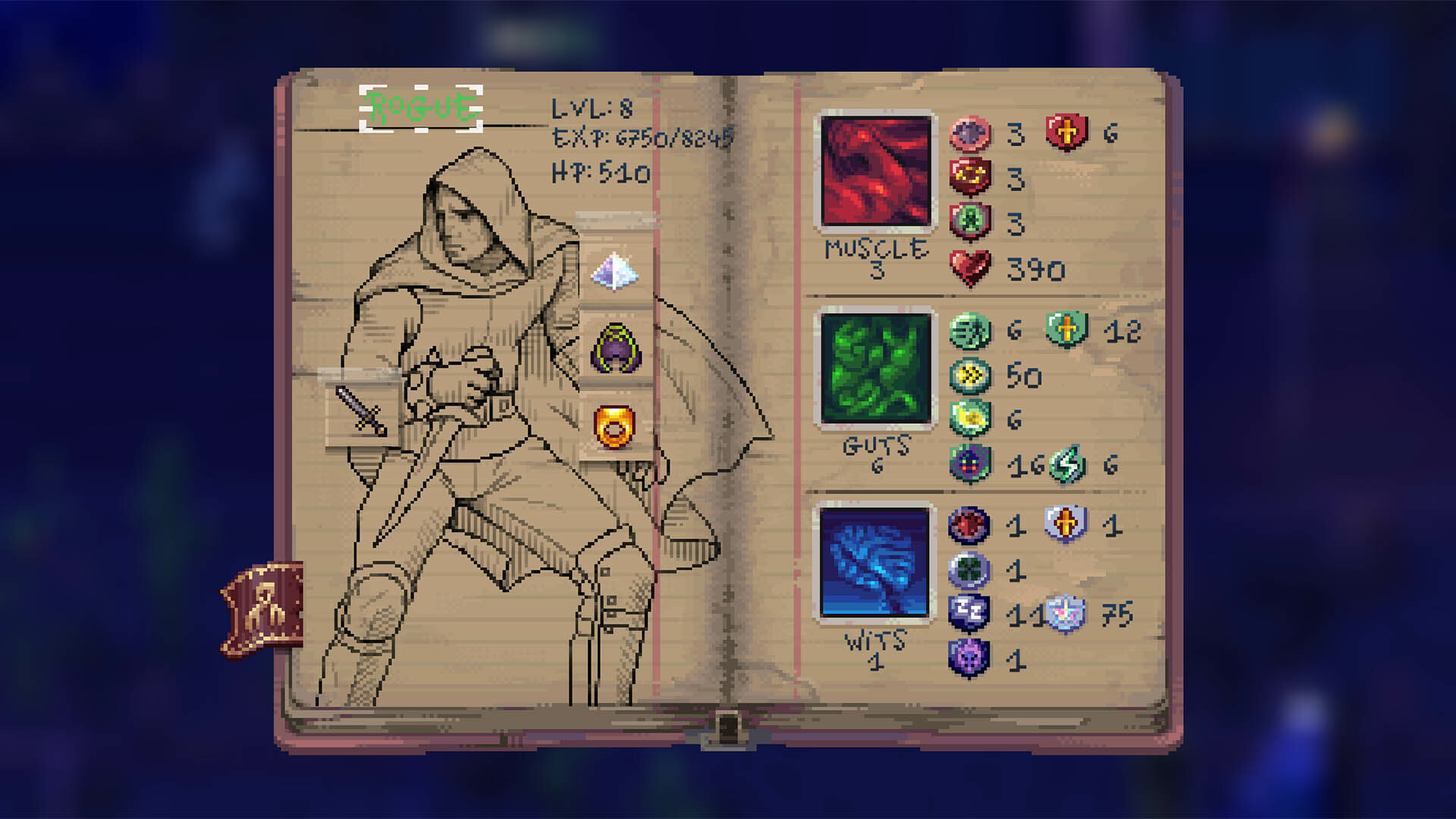
Most of Kingdom of Night’s drawbacks come from its inventory and equipment interfaces. The Notebook tracks your basic stats and is where you equip a weapon and up to three accessories, but with no way to sort the flood of loot you collect—especially accessories—it quickly becomes tedious to stay organized. It’s easy to overlook items that could actually help you. Quest tracking poses similar issues. Kingdom of Night displays quests as a horizontally scrolling strip of reminders, each tied to an NPC portrait. If you’re juggling a dozen quests, you’ll have to cycle through all of them to recall their requirements—there’s no prioritization system or quest markers.
This leads to a broader issue. Although the main thrust of Kingdom of Night is simple—and the “save the damsel” premise is classic—the sheer number of quests constantly distracts you from it. The game leans heavily into its sandbox structure, encouraging you to fight, loot, and explore without much narrative funneling. With combat so frequent, Kingdom of Night may work best when played in smaller sessions, where you complete quests days after you pick them up, thanks to stumbling across the right NPC or item on the far side of the map. If that’s your style, you’ll feel right at home. If not, you may find yourself less inclined to plod on through the dark streets.
Early in Kingdom of Night, your main character selects a class that shapes their ability list and influences how their Muscle, Guts, and Willpower grow. You first choose between melee and magic, then pick a more specific subclass. Class abilities link to a “keychain,” a visual system to represent how skills strengthen and evolve; as a result, progression stays fairly linear until the later levels. Each character level boosts your core stats and grants new abilities. You can raise health, increase critical hit chance and damage, or improve defensive resistances. These stats interact closely with the equipment and accessories scattered across the world, and it’s satisfying to steer your build toward heavy crit damage or stack Fear resistance in areas where enemies—and bosses—can panic you into wandering helplessly. Your primary stats also determine bonus damage for different weapon types and critical chance. Because lighter weapons attack faster, you’ll need to consider how to balance speed, damage, and your preferred playstyle to get the most out of your journey.
Individual abilities reinforce these stat synergies. For example, one melee class can reflect damage back at an enemy after a successful parry, and the reflected amount scales with your Guts stat—making Guts a crucial attribute to monitor. A later ability in the same skill tree negates all damage from the first hit you take (with a lengthy cooldown), which created moments where I could charge in, parry confidently, deal damage through the reflection effect, and rely on the passive damage negation to keep me somewhat safe in crowded encounters.
Kingdom of Night supports both local and remote co-op. While I couldn’t test the remote option, local co-op significantly expands your strategic choices. With a second player, a mage can focus entirely on crowd control and ranged spells while a melee partner draws aggro. Having another set of hands also softens the game’s difficulty curve—Normal mode is challenging enough that you’ll burn through consumable food items regularly, and even then, some bosses are tough without precise mastery of each class’s core mechanics. Enemies respawn in most areas, and because zones often feel level-gated, you can farm them for XP if you’re willing to put in the time during the fairly lengthy campaign. Alongside the large maps and various collectibles, Kingdom of Night also hides a surprising amount of lore in scattered books and documents found in houses and other buildings. These articles go a long way toward fleshing out the world and reinforcing the game’s themes.
Kingdom of Night is a dark tale, steeped in nostalgia for its setting and story inspirations, as well as its action-oriented combat. While it won’t earn accolades for originality or deep character stories, the combat remains satisfying, capturing that “git gud” feeling of progress and mastery—especially when you combine abilities or play a class in ways its progression encourages. Kingdom of Night can be frustrating at times, particularly with inventory management and quest tracking, as the UI struggles to keep up with growing loot piles and multiple active quests. If you enjoy wandering through nightmare-infested small-town Americana at night, this is a realm worth visiting. If not, there are certainly stranger things to explore elsewhere.