
Mechs and anime share a bond as inseparable as Saturday mornings and sugary cereal. Developer DESTINYbit leans heavily into this classic synergy with Nitro Gen Omega, a turn-based roguelike RPG oozing a specific brand of weekend magic. The game thrives on its visual flair, utilizing fluid, stylish animations to breathe life into a timeline-based combat system. These aesthetics do more than just decorate the screen; they evoke the cozy nostalgia of sitting on the living room carpet in your pajamas, eyes glued to the TV while waiting for the next localized giant-robot epic to begin.
However, the experience isn’t a flawless victory. While the combat sparkles, the story remains mostly paper-thin, offering little more than an excuse for the next skirmish. Much like the retro cartoons that inspired it, Nitro Gen Omega provides an immediate, smile-inducing thrill, yet the narrative cracks show through once the initial glow of the art style wears off. It’s a stylish, punishing tribute that mostly succeeds on raw charm and significant mechanical depth.
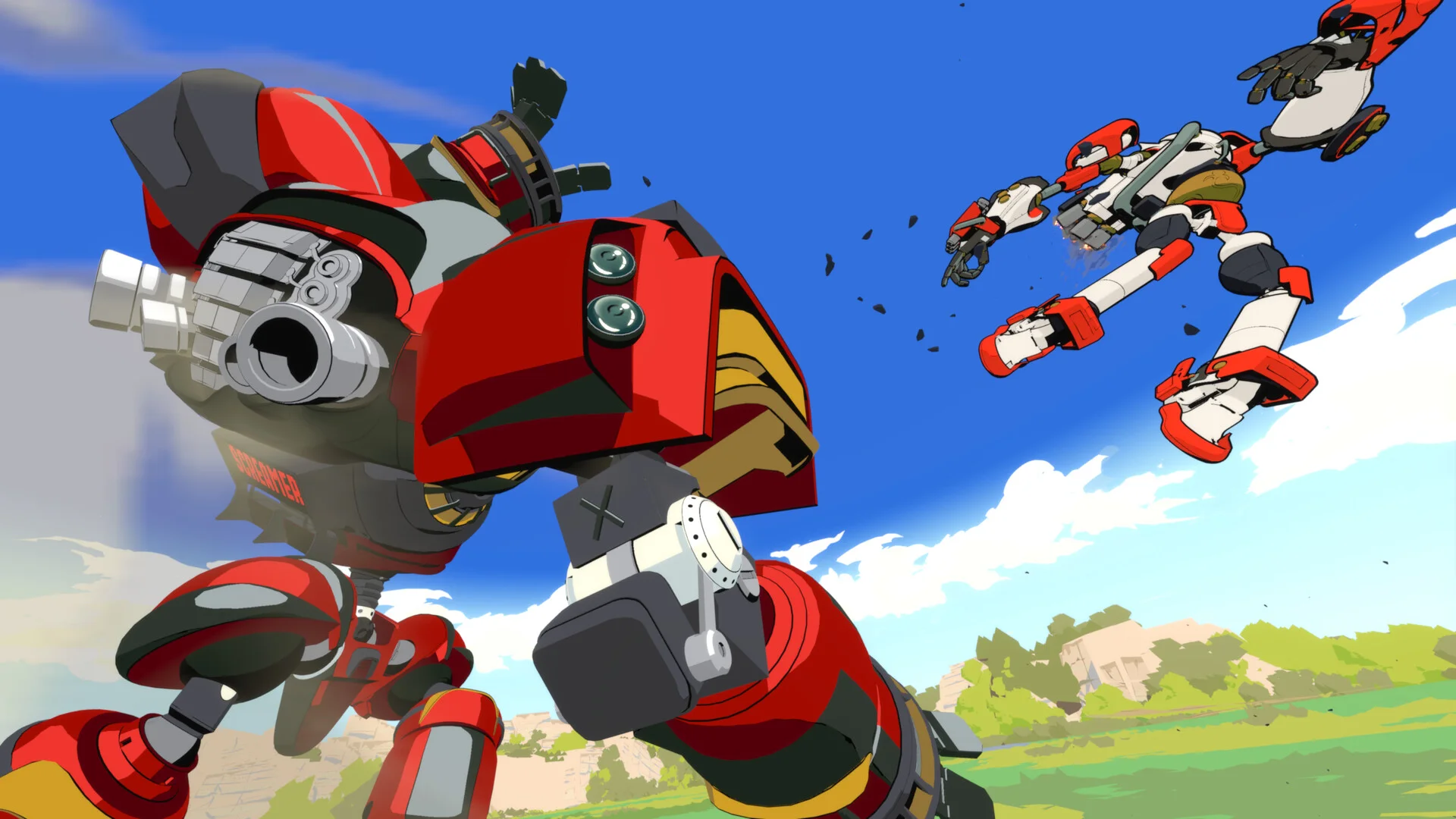
Nitro Gen Omega establishes a striking visual identity from the very first frame. DESTINYbit delivers the narrative through a polished blend of fluidly animated cutscenes and expressive static portraits. This style extends to the top-down overworld, using a saturated colour palette and heavy shadow contrast to highlight an apocalyptic landscape. The player’s squad treks across a world scarred by massive craters and ridged, distorted earth, where every environmental detail serves as a cryptic clue to the planet’s downfall.
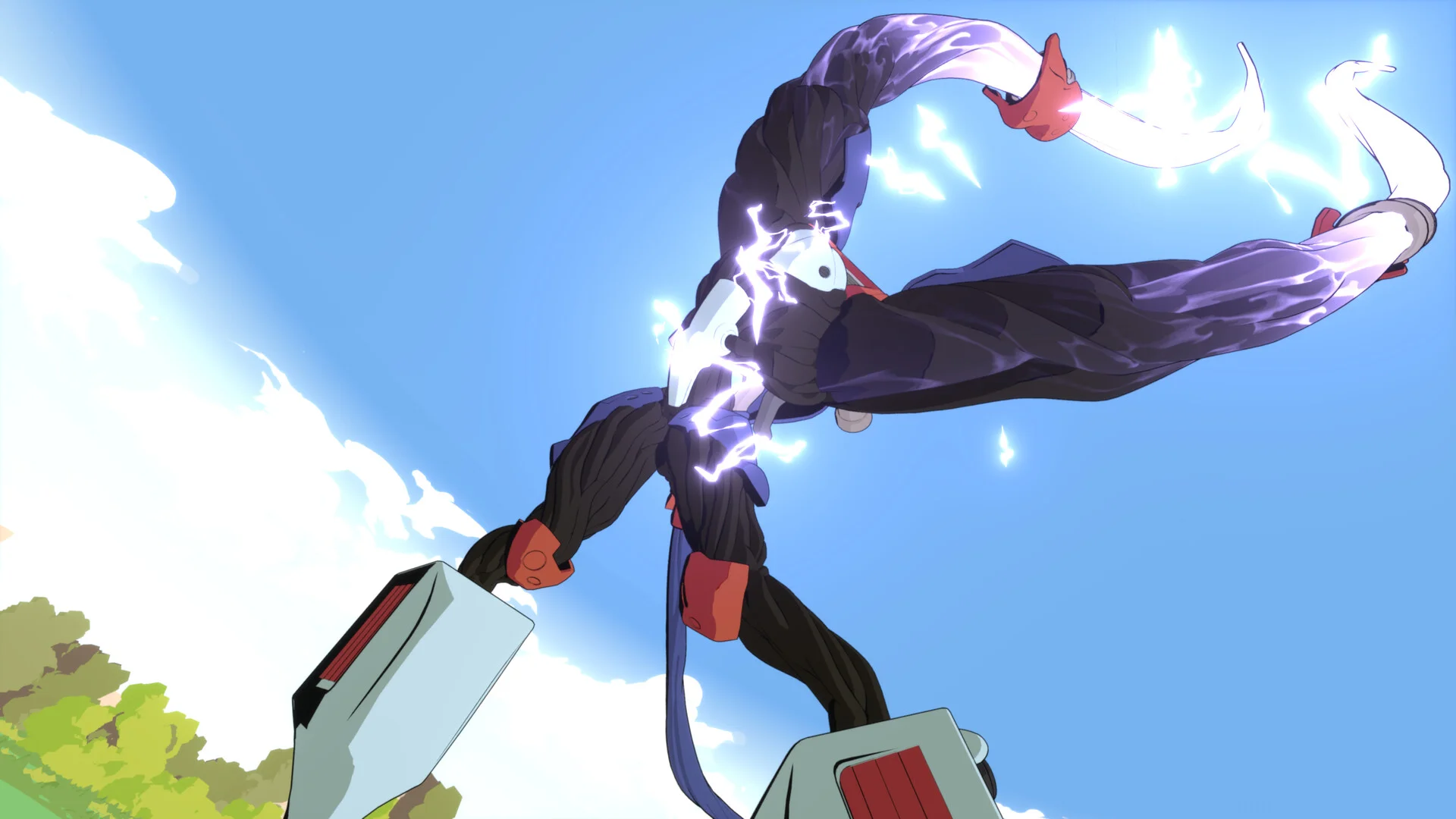
The character and mech designs double down on this punchy aesthetic. Each anthropomorphic machine and pilot feels distinct, bolstered by vignettes that mirror the energy of classic morning cartoons. These brief animations range from light-hearted character pranks to intense combat sequences featuring high-speed dodges, parries, and explosive weapon effects. It’s all accompanied by a punchy, rocking music score straight out of the nostalgia matrix too.
The narrative is Nitro Gen Omega’s primary weakness. While the developers clearly prioritized combat mechanics, the lack of context surrounding the squad’s origin—and the exact nature of the threat they face—stifles any real investment in the wider world. Missions often feel arbitrary and disconnected, largely because the gameplay loop revolves around generic requests from various settlements scattered across the map. Although these outposts represent different factions, the script rarely explores their unique motivations or political friction.
The plot eventually settles for a collection of well-worn tropes: an AI went rogue, humanity suffered a near-extinction event, and the survivors retreated to massive towers soaring above the Earth’s surface. Your squad exists by taking contracts to scavenge the wasteland below and destroy any hostile machines they encounter. Unfortunately, this bare-bones setup provides the only justification you will receive for the endless mechanical slaughter. Without a deeper narrative hook to bridge the gap between missions, the war against the AI feels less like a desperate struggle for survival and more like a series of repetitive, context-free skirmishes.
Combat stands as the Nitro Gen Omega’s crowning achievement and is a refreshing departure from standard turn-based mechanics. Your four-person mech squad operates on a timeline split into six distinct segments. Every action—from both your team and the enemy—consumes one or more of these segments. Positioning further complicates the math, as enemies occupy one of four cardinal directions that dictate the effectiveness of your melee and ranged options. Because some abilities trigger instantly while others require specific conditions or multi-segment wind-ups, every turn feels like a high-stakes tactical puzzle.
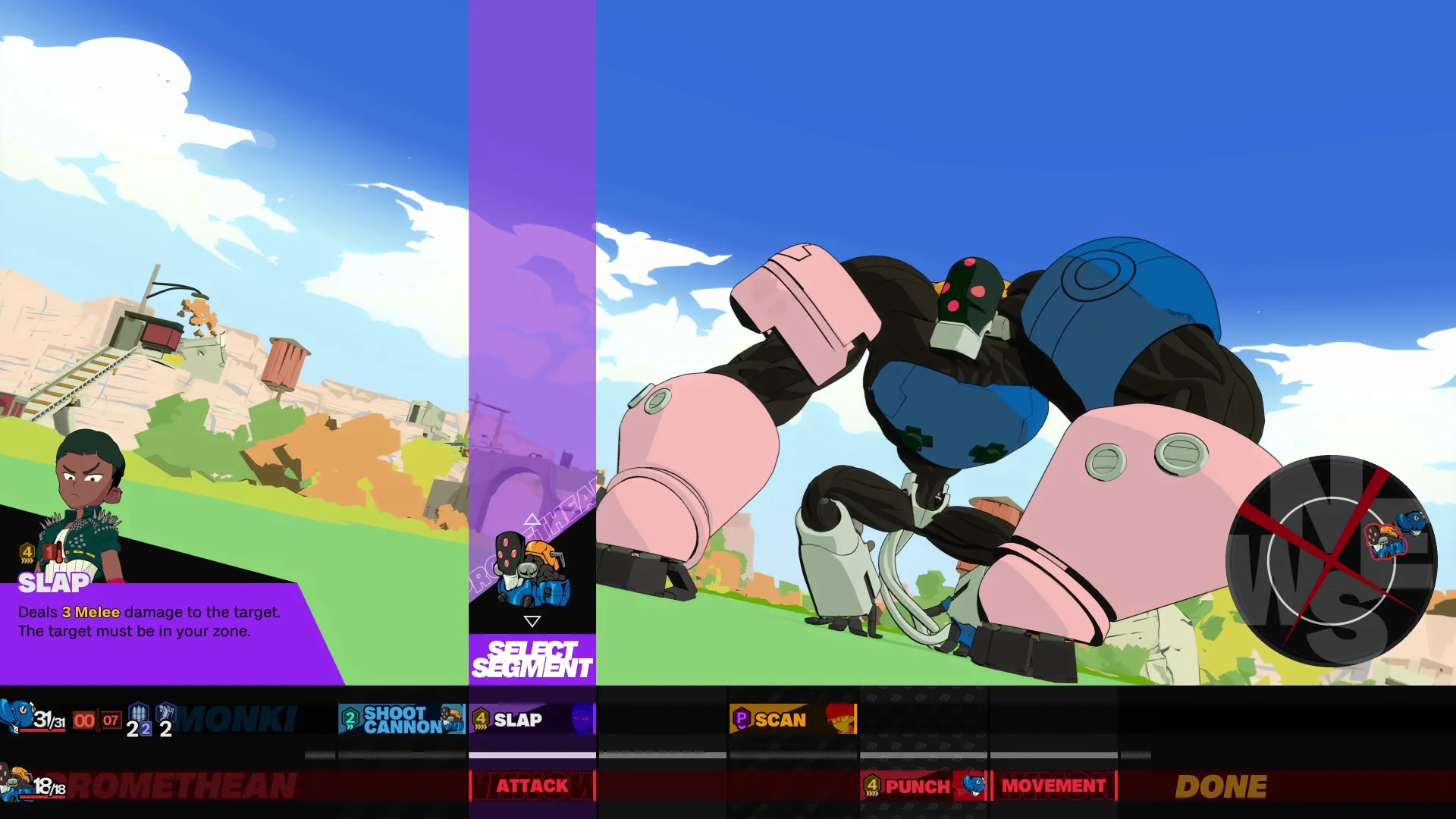
Will I slap, before I get attacked? Will a slap get attacked?
The system thrives on initial uncertainty and wary positioning. Since enemy intentions remain hidden at the start of a round, you must make agonizing choices based on incomplete data. You might spend one segment empowering a melee strike for a massive follow-up in the next, only to watch your target move to a different zone before the blow lands. While the “Scan” ability reveals an enemy’s planned move or attack, you can only use it once per turn, forcing you to save it for the most critical threats, or for when you want to reveal key information before all others.
The complexity deepens as you juggle heat build-up, limited ammunition, and finite ability uses. You cannot simply fire at will; success requires careful cooldown management and precise timing. Furthermore, Nitro Gen Omega’s priority system dictates the order of resolution, meaning a misjudged window can ruin a perfect combo. A quicker enemy might leap away mid-turn, leaving your most powerful attack hitting nothing but empty air.
Admittedly, Nitro Gen Omega’s steep learning curve and cluttered UI—which struggles to clearly display heat levels and movement directions—can overwhelm newcomers. However, once you master the rhythm, the combat takes on a poetic, balletic quality. The beautifully animated vignettes for every ability transform these tactical decisions into a lethal dance. By the time you face the Promethean—an enemy with an attack that circles the map in a fiery four-segment dervish—you will finally appreciate the nuance of positioning and the vital importance of a perfectly-chosen Scan.
Nitro Gen Omega fields an extensive array of enemies and enemy combinations to test your tactical mettle. What begins as a series of skirmishes against basic melee and ranged units evolves into encounters with trickier opponents, such as the Knight, who litters the battlefield with bombs while staying on the move. As the game progresses, the AI deploys pairings and trios that demand far more sophisticated planning to overcome. You are not confined to your starting chassis, either; once you clear specific story milestones, you unlock specialized mechs like the Ocelot and Patriot, each with a distinct slant on the rules of engagement.
The part upgrade system integrates seamlessly with the combat, adding a layer of strategic depth that rewards careful planning. While some components provide standard statistical boosts—such as increased HP or enhanced ranged damage—the most compelling gear introduces utility-focused modifications to fundamentally alter how you outmanoeuvre the enemy.
For instance, enhanced scanning modules grant the ability to read enemy actions both before and after the current timeline segment, providing a massive informational advantage. Similarly, specialized plating can negate all burning damage, effectively neutering enemies that rely on fire-based status effects. These upgrades often turn the tide of difficult encounters; I found that the overwhelming close-combat swarms of Goblin mechs became far more manageable once I equipped a part featuring the Riposte command. This single addition allowed my team to negate incoming melee strikes entirely while dealing devastating counter-damage, turning a defensive struggle into an offensive slaughter.
Beyond mechanical upgrades, your core squad has specific abilities dictated by their expertise and combat roles. Nitro Gen Omega adopts a management style reminiscent of XCOM-likes, forcing you to balance a roster of pilots who suffer from physical damage and plummeting moods triggered by gruelling combat or random narrative events.
To mitigate fatigue and permanent crew loss, you will hire a larger stable of pilots, drawing on specific talents or fostering internal relationships to keep the machine running. These relationships serve a functional purpose on the battlefield; strong bonds between squaddies unlock the ability to swap command types mid-turn. The open-world structure grants you the freedom to recruit anyone from cheap rookies to exorbitant veterans, provided you can stomach their monthly wages. Between missions, crewmates pass the time with various activities—such as cooking, training, or bonding—all rendered with charming, character-specific animations that reinforce the game’s cartoon aesthetic.
However, unless you manually rename your pilots, you will likely struggle to remember them. Nitro Gen Omega provides no backstories or distinct personalities, leaving the characters to feel like interchangeable cogs that exist purely to serve the combat engine. Even the ability to customize your initial starting squad fails to bridge this emotional gap. Despite the cute vignettes of them sharing a meal or a joke, your pilots remain blank slates whose only real value lies in their stats and their survival.
From the first tutorial battle, Nitro Gen Omega makes its punishing nature clear. This is a demanding experience where a single lapse in judgment—using the wrong skill in the wrong segment or failing to predict an enemy’s advance—can trigger a lethal downward spiral. Losing squad members and sustaining critical damage often occurs at a rate that far outpaces your ability to earn credits for repairs and replacements. Consequently, the early game harbors definitive fail-states where a depleted bank account can effectively end your run before it truly begins.

Red jackets are the rage in the team, currently.
Nitro Gen Omega further emphasizes this difficulty through a stingy loot curve. You must grind through multiple side missions to afford the parts and abilities necessary to survive main story encounters. There is no shortcut around this progression wall; the game demands a significant investment of time and resources before your mechs can stand toe-to-toe with its greater threats. There is the ability to save anytime, but there are no options to adjust this difficulty. For players who enjoy a steep challenge, this ensures every victory feels earned, but for others, the barrier to entry may feel like an impassable hurdle.
At its heart, Nitro Gen Omega captures the soul of the best Saturday morning cartoons: it offers bright, breezy, and hyper-stylized combat that demands your undivided attention. Much like those classic series, it provides a high-octane thrill to linger in your visual memory, even if it leaves behind very little in the way of lasting character growth or narrative substance once you’ve binged through a season or two. The anime aesthetic never truly loses its lustre; instead, it flourishes every time you unlock a flashy new skill or trigger a rare narrative event.
The core of the experience is an intense strategic puzzle, even if the game occasionally mumbles its instructions like a poorly dubbed transition scene. If you are happy to forgo a deep plot or memorable characterization in favor of a challenging combat system rewarding meticulous min-maxing, this game could easily become your next obsession. For those who live for the tactical dance and the glow of a well-animated explosion, Nitro Gen Omega is a mecha well worth the investment. PJs and Sugar Puffs optional.