
Remember Maya, from Shell 2? All of twenty-five years ago?! Starbites wears its lineage on its sleeve, drawing direct inspiration from cult classics like Septerra Core while navigating two decades of JRPG evolution. It delivers a distilled concentrate of everything that makes the genre beloved and occasionally frustrating. Turn-based skills, with a dedicated ‘limit break’ system? Upgradeable and craftable parts? Mechs? Characters demonstrating most tropes you’ve come across in the genre? All present and correct. Starbites rewards curiosity as you traverse the treacherous, expansive wastelands of Bitter, and it mostly succeeds in forging a genuine connection with the team and systems as they fight to escape the drudgery of their lives. There’s nothing new under the sun here, but it’s warm, comforting, and not a little challenging.
The straightforward narrative in Starbites heavily riffs on familiar sci-fi tropes from the outset. You follow Lukida, a down-on-her-luck scavenger desperately seeking a way off the planet Bitter. The dusty, broken terrain is a graveyard of smashed spacecraft and ruined buildings from an orbital battle decades prior, which dragged every ship in orbit down to the surface. Alongside her companions, Gwendoll and Badger, Lukida searches for an escape route while slowly uncovering the secret machinations of the planet’s rival factions.
While the concept of exploring decades-old wreckage for hidden secrets sounds tantalizing, the execution falls short due to some thin characterization. The cast relies entirely on predictable stereotypes. Badger plays the classic role of the big, slow brute who turns out to be calm and gentle, while Gwendoll’s personality begins and ends with revealing outfits and a constant craving for alcohol. Antagonists like the dastardly Ebony—who primarily communicates by shouting in anger—receive the same one-dimensional treatment. Despite a more nuanced narrative shift in Act 3, the uninspired writing inhibits Starbites’ story from landing anything deeper.
Fortunately, the voice acting and soundtrack fare better. There’s a wide range of voice options, and nothing is overtly wooden, even if characters sound exactly as you’d expect. The soundtrack is full of genre staples, from the moody, isolated synth of the mech Library to the typical bombastic percussion of the battle tracks.
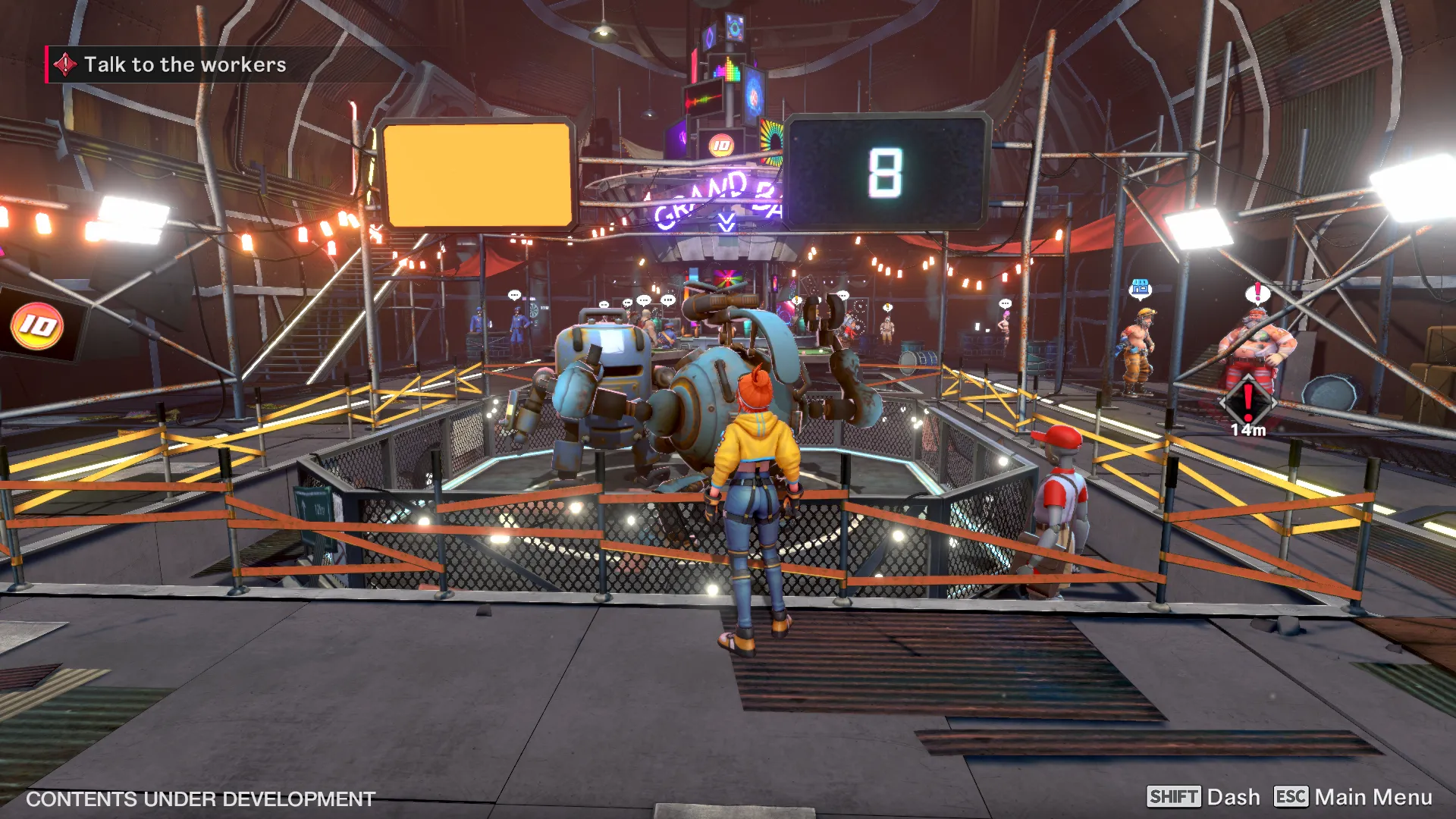
Visually, Starbites feels like a nostalgic time capsule trapped between eras, bearing influences of a high-fidelity PS2 or early 3D-era JRPG. The game manages to establish a distinct, charming identity through its colorful 2D character portraits and detailed, miniature mech designs, but its overland and dungeon locations are more drab and uninspired, with few memorable parts and an overuse of assets. The dusty wastes of Collapsed Sierra don’t look too different from the frigid Corpse’s Cradle. To be fair to the small development team, the few cinematic cutscenes are reasonably well-directed, though a lack of high-resolution textures and occlusion leaves them with an overly simple, flat look when compared to the portraits. Yet, despite this visual simplicity, glitches frequently disrupt the immersion. Local NPCs regularly wander straight through dramatic conversations, clip into the scenery, or vanish entirely due to broken camera angles—technical hiccups that occur most frequently within the central hub city of Delight.
Rather than a seamless open world, the map is split into interconnected zones. Fortunately, a fast-travel system links the major settlements, sparing you from the tedious chore of navigating from one side of the world to the other. World exploration occurs in real-time, requiring you to pilot Lukida’s mech around the locations to solve environmental puzzles, scavenge loot, and navigate around patrolling foes.
Every enemy demonstrates a zone of awareness and will immediately pivot to intercept your mech the moment you breach their perimeter. Unfortunately, the mechanics don’t allow for sneaking up on your targets; even striking an enemy directly from behind yields no stealth bonuses, leaving the resulting combat timeline and damage unaffected.
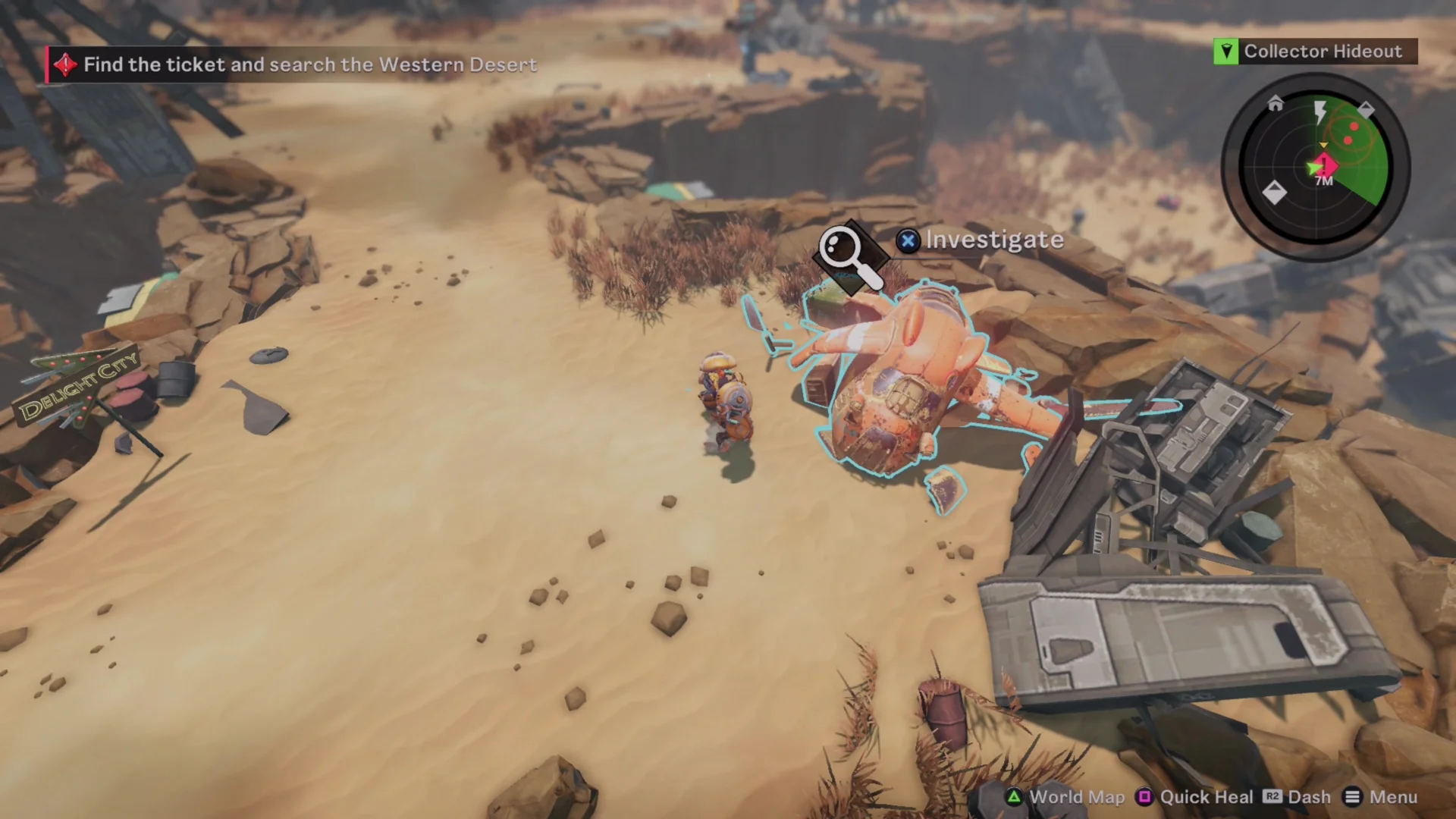
Aside from the environmental puzzles, your primary overworld activity is a built-in scanner that highlights nearby hidden secrets and points the way to your active objective, provided the selected mission or subquest has a defined destination.
When Lukida collides with wandering enemies on the overworld, the game transitions into a familiar combat system. Everything from the turn order to the game’s version of “limit breaks” feels comfortably intuitive, even if the design itself breaks little new ground. Your combat options split into standard attacks and specialized skills that consume SP. Because you draw from a limited SP pool, you must weave weaker basic attacks into your rotation. This is the main way to restore these points, or you can replenish them with items.
Every offensive action carries an elemental property, which plays a critical role in triggering the Break mechanic. To break an enemy, you target its specific elemental weakness to chip away a set number of shield points. Shattering these defenses immediately shunts the enemy to the back of the turn order and leaves them vulnerable to massive damage. This shield-breaking loop essentially lifts its blueprint straight from the Octopath Traveler series, simply swapping out traditional fantasy elements for sci-fi energy types.
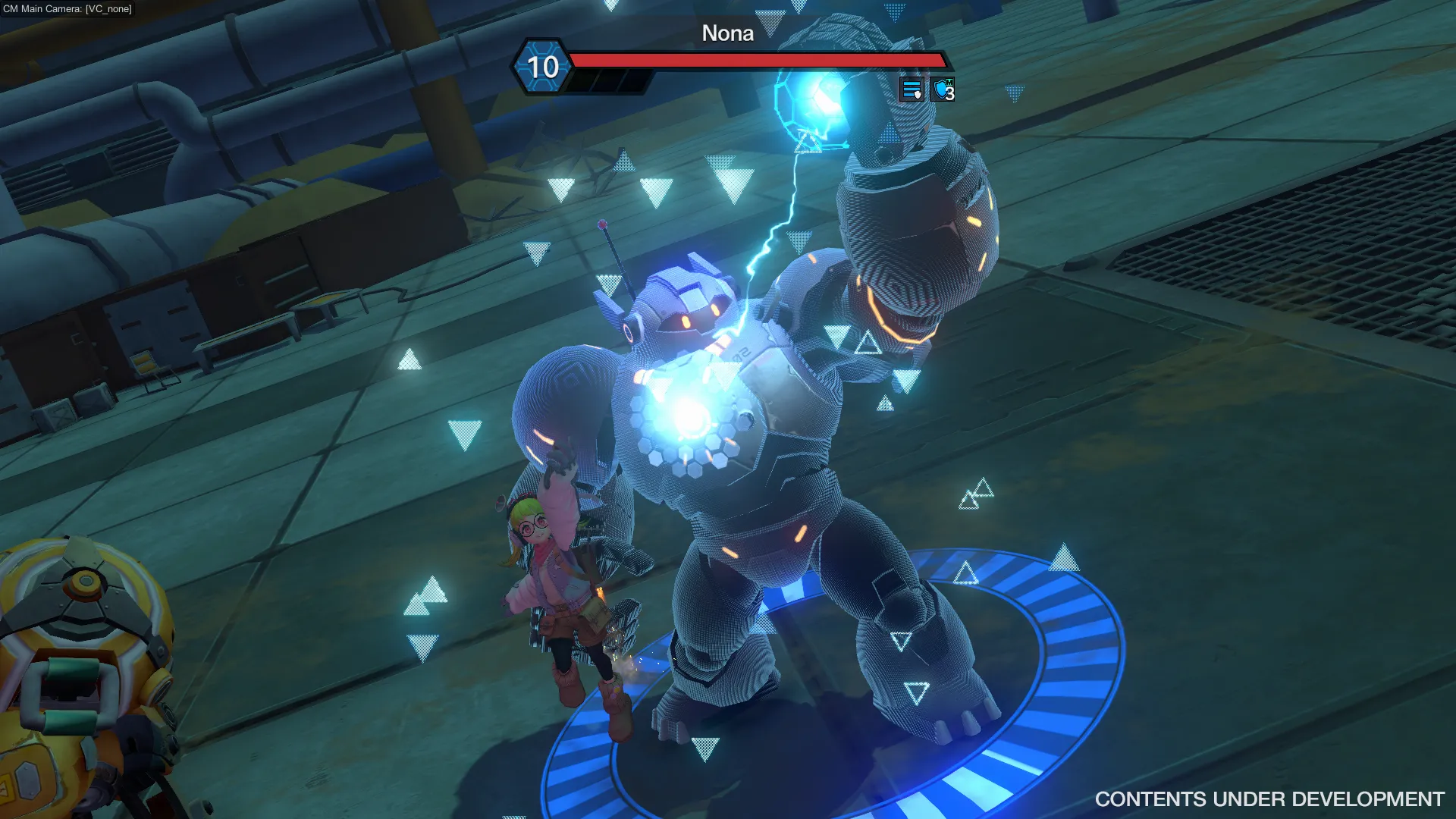
As the squad fights, they each build up a Driver’s High gauge. Once filled, you can activate the gauge any time for a character to interrupt the current turn order and use an empowered skill. There are a few other combat wrinkles as the story develops and new characters are added to the core team, but everything builds from these core tenets.
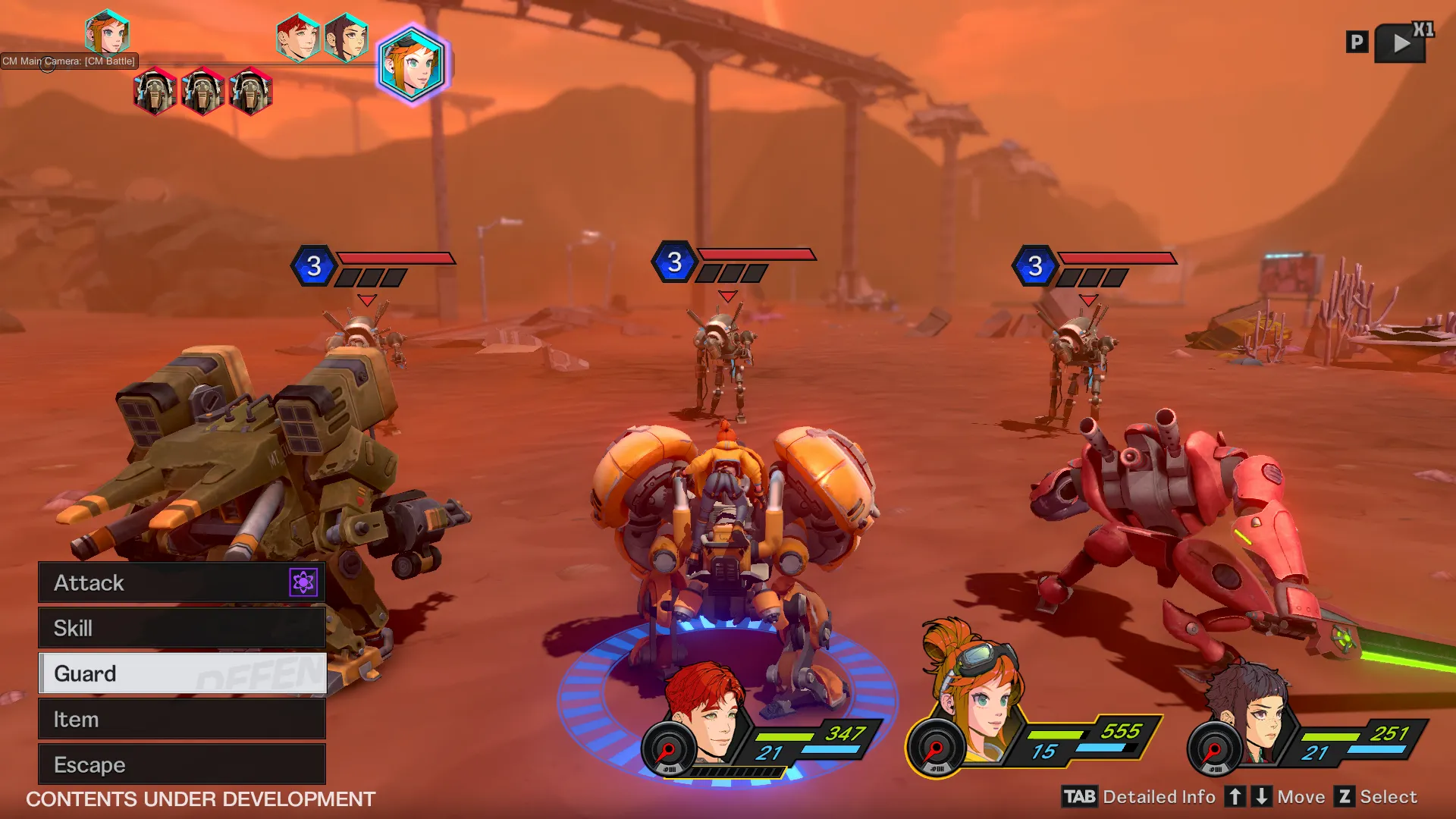
The strength of all these mechanics is in how they lock together. Success hinges on a delicate balance: weaving basic hits between SP-heavy skills and timing them to either trigger a Break or exploit a defenceless target. Because your party has a small health pool and enemies hit hard, defensive buffs are vital. Deciding when to trigger a Driver’s High injects constant tension—do you burn it to force a Break, or hold it to unleash maximum damage on a vulnerable foe?
Collectible Mech Cores deepen these tactics by adding powerful passive perks, like restoring SP on a kill or boosting defense at critical health levels. The game’s bosses serve as strict exams for all of these mechanics, occasionally flipping the script entirely by punishing break states. Ultimately, while these systems are deeply familiar, their tight interplay creates a steady stream of engaging choices—just don’t expect anything revolutionary.
True to its classic inspirations, the game demands a level of grind and preparation. Bosses are brutal, wielding area-of-effect attacks that can easily slash your entire party’s health in half with a single blow—and early-game healing does little to offset the damage. Playing on normal difficulty, I found at least one squad member was permanently locked into healing or buffing duties, turning boss battles into long, gruelling wars of attrition. While levelling up does raise your core stats, the power curve is quite flat; you won’t feel a tangible difference in combat unless you spend a couple of hours grinding out five or more levels.
A grid of interlocking Talents is how you manage your character development. Most of these nodes boil down to enhancing specific character skills or optimizing how efficiently your pilots gain and deploy Driver’s High. These nodes are locked behind ascending tiers that mirror the skills you unlock in the mid-to-late game, and the grid serves as your primary method for permanently raising core attributes.
Talents can be respecced, which is great, as the game rarely makes it clear which talents become vital later on. For instance, I didn’t realize how essential Lukida’s Reconstruct healing ability would be, so I foolishly pumped my early points into her offensive skills. Resetting and making Reconstruct cheaper and more potent helped alleviate some of the need to grind. Similarly, Mokobo’s party barrier buff is an absolute necessity, one you should prioritize upgrading almost to the exclusion of others.
Beyond leveling and Talent allocations, crafting and equipping new weapons, limbs, and frames is a means to improve your mechs. While basic gear is readily available for purchase, superior parts are tucked away in hidden exploration chests or rewarded for completing sidequests. Unfortunately, these side missions are even thinner than the main story, largely consisting of uninspired item hunts. They do skew toward the eclectic and daft—perfectly matching Starbites’ cartoonish tone—but they offer little meaningful narrative weight or world-building.
Ultimately, exploring party combinations and uncovering powerful synergy loops drives the bulk of the engagement. The fun lies in figuring out the best tactical approach as you recruit new characters, unlock fresh skills, and experiment with different Driver’s High and party buffs. While some scattered lore drops in Act 3 attempt to flesh out the universe, they do little to move the needle. If you need a break from the loop, the developers did include a fully playable version of their 2023 game, The Ramsey, tucked away inside the game world as a surprisingly delightful, clever diversion.
Throughout my time with the game, I couldn’t help but think I’d played a better, similar game somewhere, and sometime else. Its systems are solid and there’s a decent challenge inherent in the action economy, with plenty of interlocking combos depending on the makeup of the party. Starbites’ overall world is easy enough to explore; its characters easy enough to get on with and its themes easy enough to place. And maybe that’s the whole problem.
Starbites is derivative, almost to a fault. Much like its protagonists’ scavenged mechs, it finds a way to bolt on different parts from established systems and influences to create a close approximation to many of the original inspirations. But it’s only an approximation, and while imitation is the sincerest form of flattery, Starbites might have had its time in the sun. You might feel the need to explore a fresher experience. But for those who’ve never had the pleasure of bathing in a JRPG light, they could do a lot worse than take Lukida and the gang for a spin.