With the scary season upon us, Stupid Never Dies leans fully into a bonkers, punk-zombie aesthetic, wrapped up with frenetic third-person action—minus the pumpkins and trick-or-treating. With a developer lineage tracing back to the seminal Devil May Cry and Dragon’s Dogma, this roguelike wraps its colourful cast in stylishly wild combat and a bouncing pop-punk soundtrack. Between its generous spread of distinct skill sets, body-part upgrades, and endless collectibles, you won’t run short on treats this Halloween, even if the sheer volume leaves you feeling a bit sick.
Stupid Never Dies wastes no time on an intricate setup. Davy, a zombie wandering a post-apocalyptic world overrun by monsters, discovers the frozen body of a girl named Julia inside a mall kitchen. As he mopes over her—as only a zombie can—he finds and promptly eats a mysterious egg. The meal unlocks a critical ability: Davy can now absorb and harness the powers of other monsters. This catches the attention of Dr. Frank, who sees Davy as humanity’s last hope for restoration. Before long, Davy descends into the underworld to challenge the King of Monsters (KOM), driven by the promise that victory will grant him the power to bring Julia back.
It’s batshit, and the little insert vignettes, complete with bouncing pop-punk tunes and blink-and-you-miss-it visual gags, only add to the intensity. The fully-voiced cast, including a shape-changing pup and an amnesiac stone gargoyle in a mall trolley, are equally earnest and full-on in delivery. It’s one part Monty Python and one part jackass, with a third-person fantasy action setting plastered over the top of it. It’s a lot early on, but once the dungeon dives and the wild reveals even out, the cadence of the game settles and the general progression path—in combat, upgrades, and story—steadies. The unhinged feeling never fully subsides, though. Not when you head down the mall shitter to enter the fight against KOM every time.

The setup bleeds into the world and character design. Stupid Never Dies’ art style is big and brash, blending plenty of gore and toilet humour with subtle details scattered across the fallen mall that serves as Davy’s base. Dungeon runs span six distinct biomes, though the relentless combat pace leaves little time to absorb the scenery. Even so, environments like the molten lava hills of Rome and the frozen peaks of the Viking north feature vibrant colour palettes and distinct environmental hazards. Character designs are equally fun, sticking mostly to traditional monster tropes but with clever twists and plenty of tongue-in-cheek callbacks. Fluid animations and evocative mo-cap work bring Davy and his crew to life, while combat stays buttery smooth throughout, even if the camera occasionally struggles to track flying enemies.
Slow and cumbersome in the human world, Davy comes to (un)life in the dungeon layers thanks to his newfound powers. Down here, the combat is fast and frenetic, letting him jump, chain basic attacks, and execute Stupid Parries and Bite Attacks.
These two mechanics drive the core push-and-pull of combat in Stupid Never Dies. Davy’s health is finite, but landing a Bite Attack restores a portion of recently lost health. Because Bite Attacks recharge only as standard attacks hit, you’re locked in a constant risk-reward loop: losing a big chunk of health can end a run instantly, while a mistimed Bite Attack wastes precious healing potential. Stupid Parries help balance the odds, allowing Davy to deal bonus damage by parrying during brief enemy attack windows. However, unparryable attacks still require a quick dodge or environmental cover. On top of these basic tools, Davy wields special attack skills and an empowered state that massively boosts his combat effectiveness.
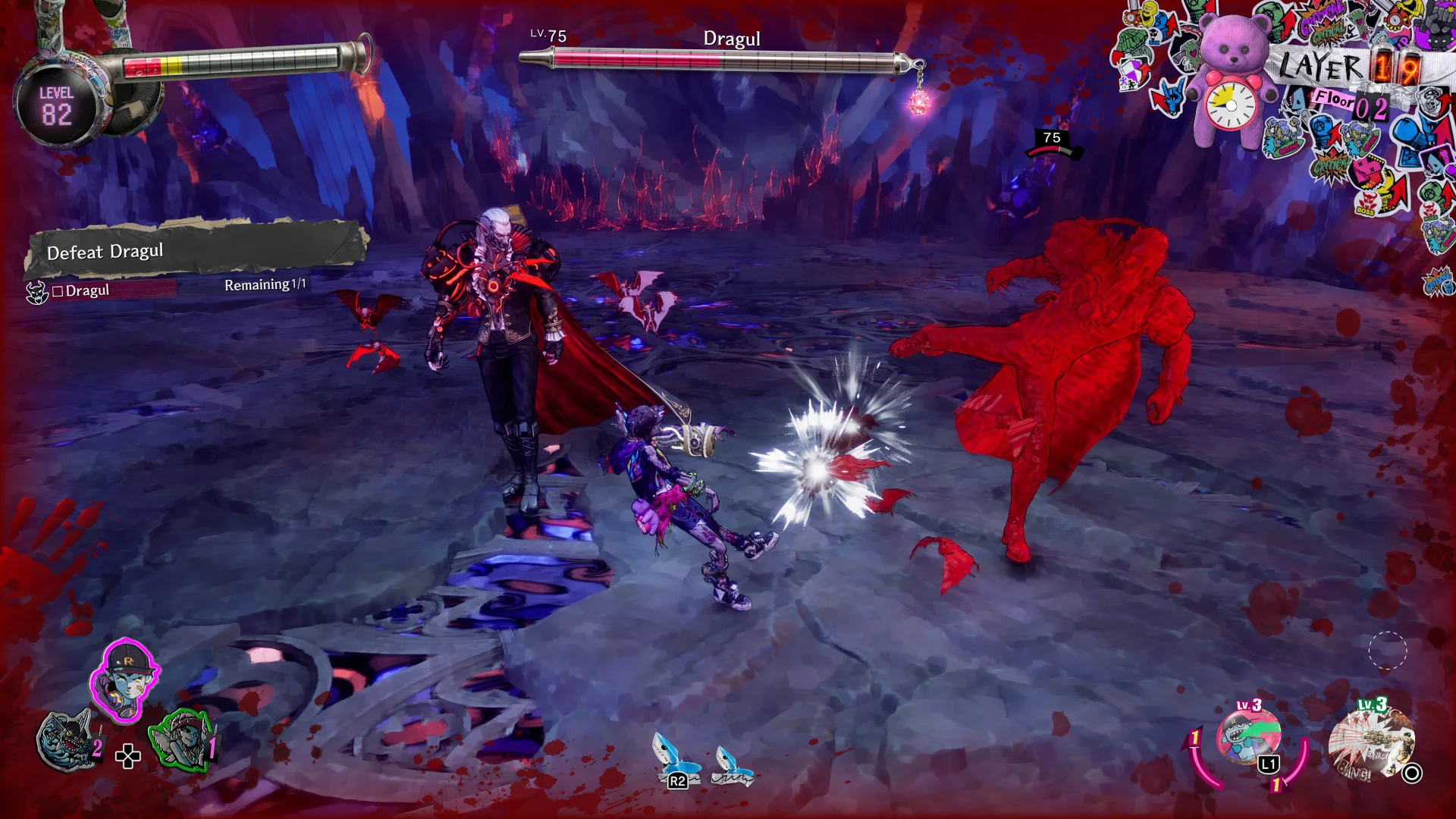
As a zombie, the fun doesn’t stop there. Devouring specific enemy Cores through a Style Eat attack lets Davy absorb their powers and transform into them. You can acquire eleven different forms—spanning everything from a flailing Harpy to a skeleton-summoning Lich—each with different playstyles. Managing or swapping these forms on the fly is essential during a run. Most forms won’t last for every layer you explore, but you can slot newly collected Cores to adjust your skills and forms in real time. Ranged creatures proved tricky, plagued by finicky targeting and enemy prioritization, but the balanced Snow Fairy and the hulking Cyclops were favourites and looked awesome to boot.
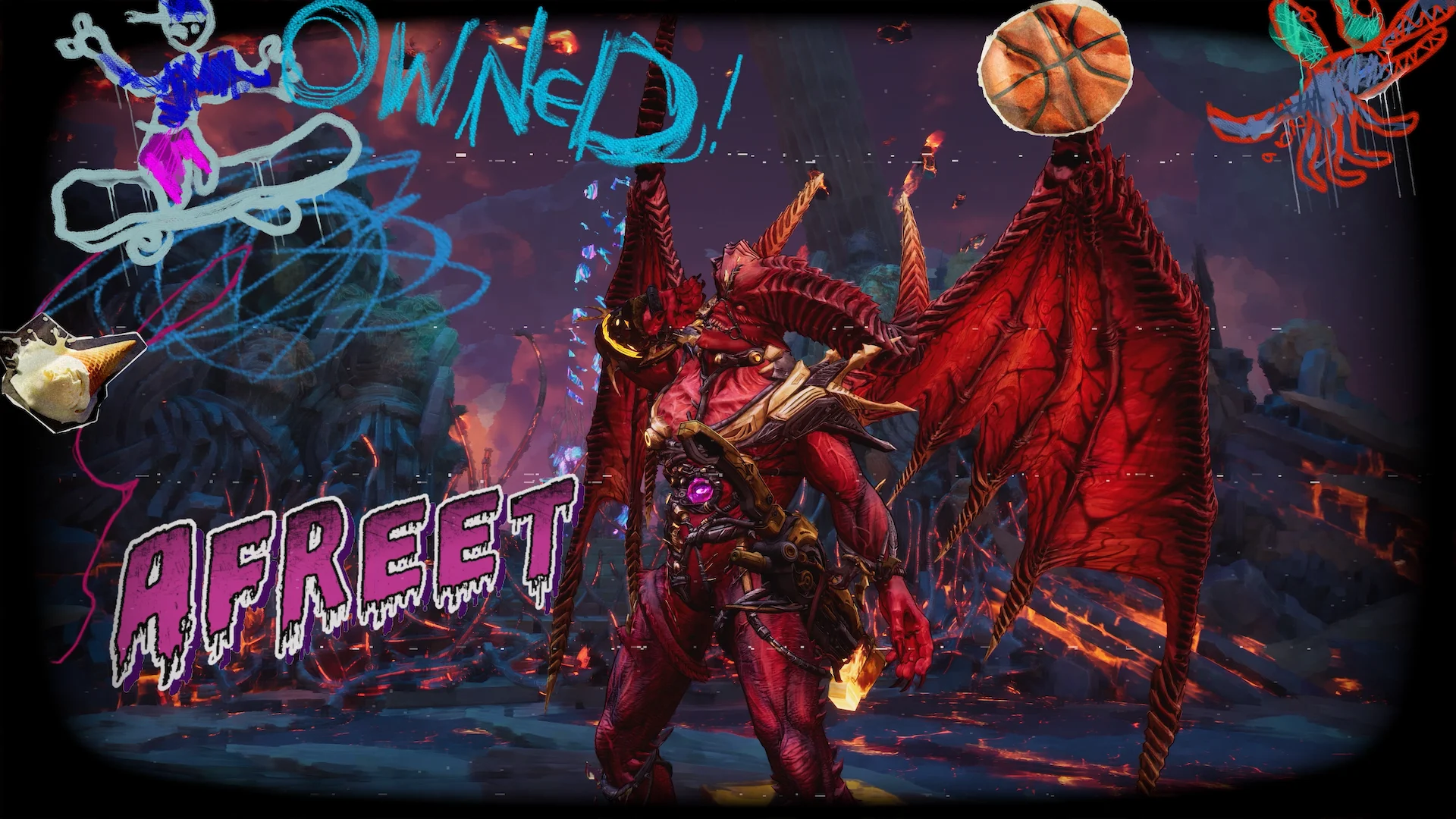
Most layers wrap up in a matter of minutes across a half-dozen encounters, pitching you against mobs of weaker enemies before capping off with a strong gatekeeper or a final layer boss. Positioning is crucial: weaker enemies that deal area-of-effect damage or create hazardous terrain can quickly ruin your chances to recover health, especially if your current form is vulnerable to them. Boss fights are tests of these mechanics, where arena platforms and environmental hazards add another layer of tactical depth. However, the quick runs and repetitive nature of the levels and designs blurs into the memory over several hours of play. Stupid Never Dies‘ combat, while tight, doesn’t really shift significantly across the whole game, even with multiple monster styles.
Alongside the creature morphing element, Davy collects Overtechnology points to unlock further skills back at base. He can unlock Body Hack attachments quickly, which one of his base acquaintances can use to modify his stats, such as increasing his crit rate or adding a new active or passive skill. Like any good roguelike, these all come in various flavours of rarity.
Dungeon runs end the moment Davy loses his health, at which point a friendly zombie on a motorcycle whisks him back to the mall to recover. Any items not banked at a landing checkpoint (found between dungeon layers) are lost, and he restarts the next run from Level 1 without any starting creature forms. A timer also ticks down on every run, hitting Davy with severe stat penalties if he dawdles.
The flip side is that every run boosts Davy’s experience multiplier, making successive attempts progressively easier as you kill mobs faster and take less damage. Once my XP modifier hit around 1000%, stomping through the early layers became a cakewalk, making me thankful for the layer skip option. You can jump straight to layers that match your upgraded power level, or simply continue smashing and grinding to your heart’s content. There’s even a “Go Nuts” mode that overpowers Davy for a more casual experience.
Taken as a whole, the progression loop in Stupid Never Dies works well. Having to re-Bite Cores to reclaim creatures and powers felt like a chore, especially right after losing a fantastic build, but that random, blank-slate design is central to the experience, although it does reinforce the feeling of repetition. Outside of Davy’s persistent upgrades, every run starts fresh, a core roguelike loop that has the potential to charm or alienate, but is likely to charm those open to it.
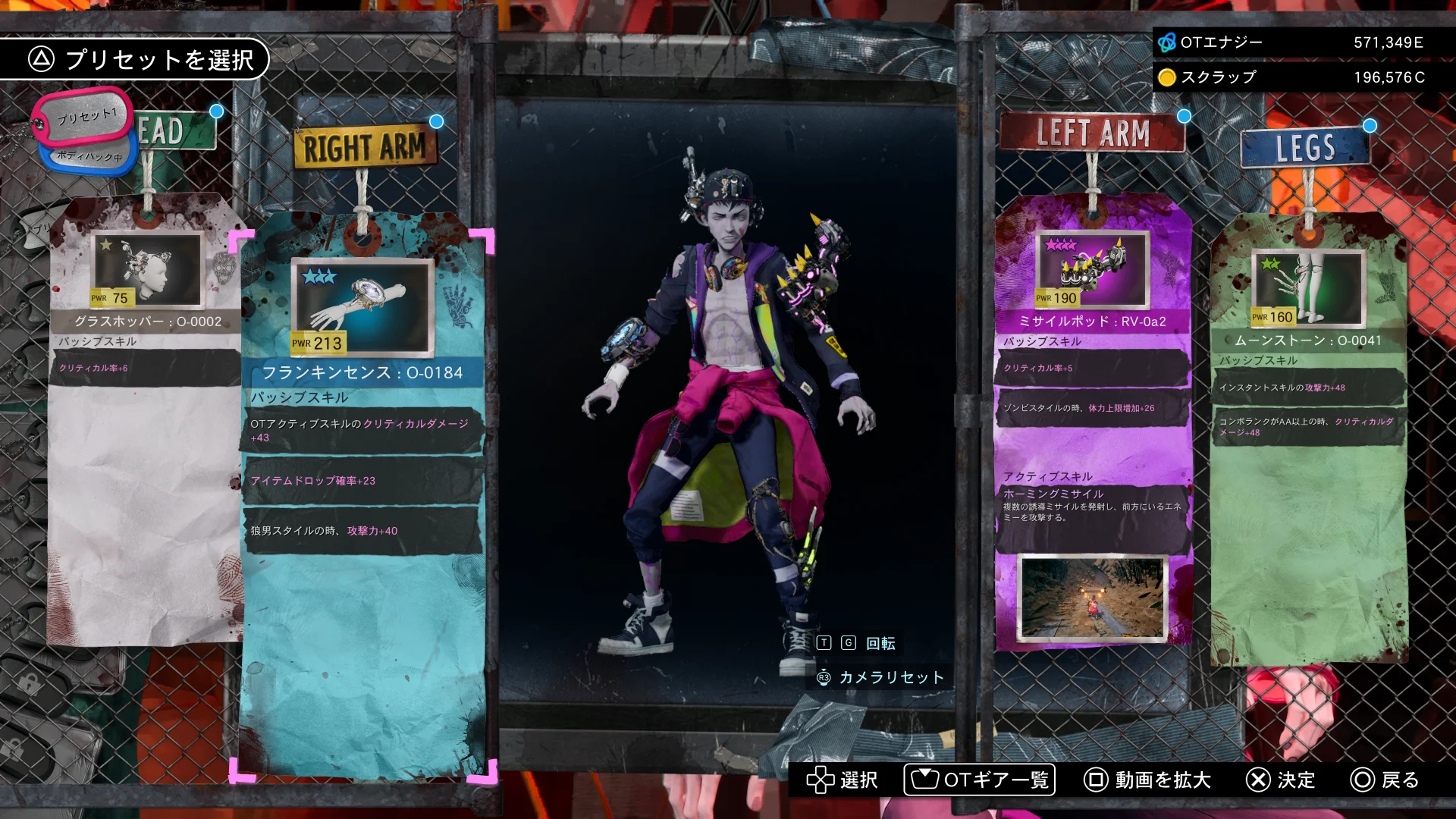
The key downside is that Stupid Never Dies doesn’t do a great job of explaining the complexities of combat or Davy-building, and even the Practice mode doesn’t slow things down or walk through concepts. The UI, while it looks cool and edgy, doesn’t make key elements clear, and most of my skill choices and understanding of stat increases and Overtechnology skills were guesswork. For a game where combat preparation and understanding how to flatten the difficulty curve is so important, I found this lessened my enjoyment significantly, and it became more about button-mashing than thoughtful approaches.
This is compounded by the amount of additional fluff that starts to clog the experience with further activities and collectibles. Alongside a music track collector/mixer, you can unlock Julia’s phone and explore her human life, or maybe complete wishlist tasks for an appreciative clown zombie to unlock gifts for Julia. There’s a lot. I’d just reached a point where I felt I could manage when a store making different-flavoured ice creams from boss giblets became available, all to provide permanent (rarity-coloured!) bonuses for our Davy. In all honesty, I’d tapped out long before then and left this Treat pot well behind.
Stupid Never Dies surprised me in its blend of hokum presentation, tight combat, and stat crafting while the pop-punk aesthetic blares out with some decent tunes. There are even genuinely touching moments where the world before, and Julia’s past, break through the madness. Personally, the sheer number of additional systems (and the lack of progression loop beyond an XP modifier) dulled the momentum, and the underwhelming explanation of combat and craft building made this worse. Davy and company thrust the whole treat bowl in your face and force you to eat it all, regardless of how sick you might feel as you eat the same thing over and over. But for some of you, when has doing the daftest thing ever been a problem? As the great man sang: come and dare to be stupid. It’s so easy to do. And they’re all waiting for you. (Editor’s note: LET’S GO!)