
Square Enix created a minor revolution back in 2018 with the release of Octopath Traveler and the consequent introduction of the graphical style they dubbed “HD-2D,” the distinctive blending of pixel art onto 3D backgrounds. The Adventures of Elliot is the latest in a long line of projects that follow in Octopath’s footsteps. This time, we’re walking a very different road, as the new game discards the turn-based trappings of its predecessor in favour of the immediacy of action-based combat, as found in the Zelda games. This title is more than a Zelda clone wrapped in a pixelated package.
The Adventures of Elliot starts in the Kingdom of Huther where King Hichard, Huther’s benevolent ruler, sends our hero, Elliot, on a mission beyond the city’s gates. This is more dangerous than one might think. The outside world is filled with peril, with hostile beast tribes roaming the wilds, making it virtually impossible for all but the most battle-hardened to survive out there for any length of time.
Within the walls, the citizens are protected by a safekeeping spell cast by Princess Heuria. She alone shoulders the burden of maintaining the Kingdom’s protective ward and can never leave, so Elliot agrees to stay in magical communication with the princess, giving her a taste of a life she has never been able to experience.
It’s fortunate the plot starts as relatively straightforward, because it’s easy to spend the first hour of the game constantly astounded by the beautiful art design in The Adventures of Elliot. Just like Octopath, the sprites are wonderfully realised, rivalling the best work from the 16-bit era in expressiveness. Elliot has something of the musketeer about him, with his scarlet cloak and wide-brimmed hat, and the charming way he doffs it at any opportunity provides a pleasing punctuation to the conversations you have with the people of the realm.
Team Asano uses such gestures effectively in The Adventures of Elliot, making the most of the limitations of the 2D elements. Large, full-body portraits of the characters complement the sprites and are almost universally appealing. Elliot himself is quite dashing, and Heuria exudes a youthful goodness and innocence. Something about the portraits reminded me of the Studio Ghibli films of the 90s, which increased the sense of nostalgia that generates appeal for titles like this.
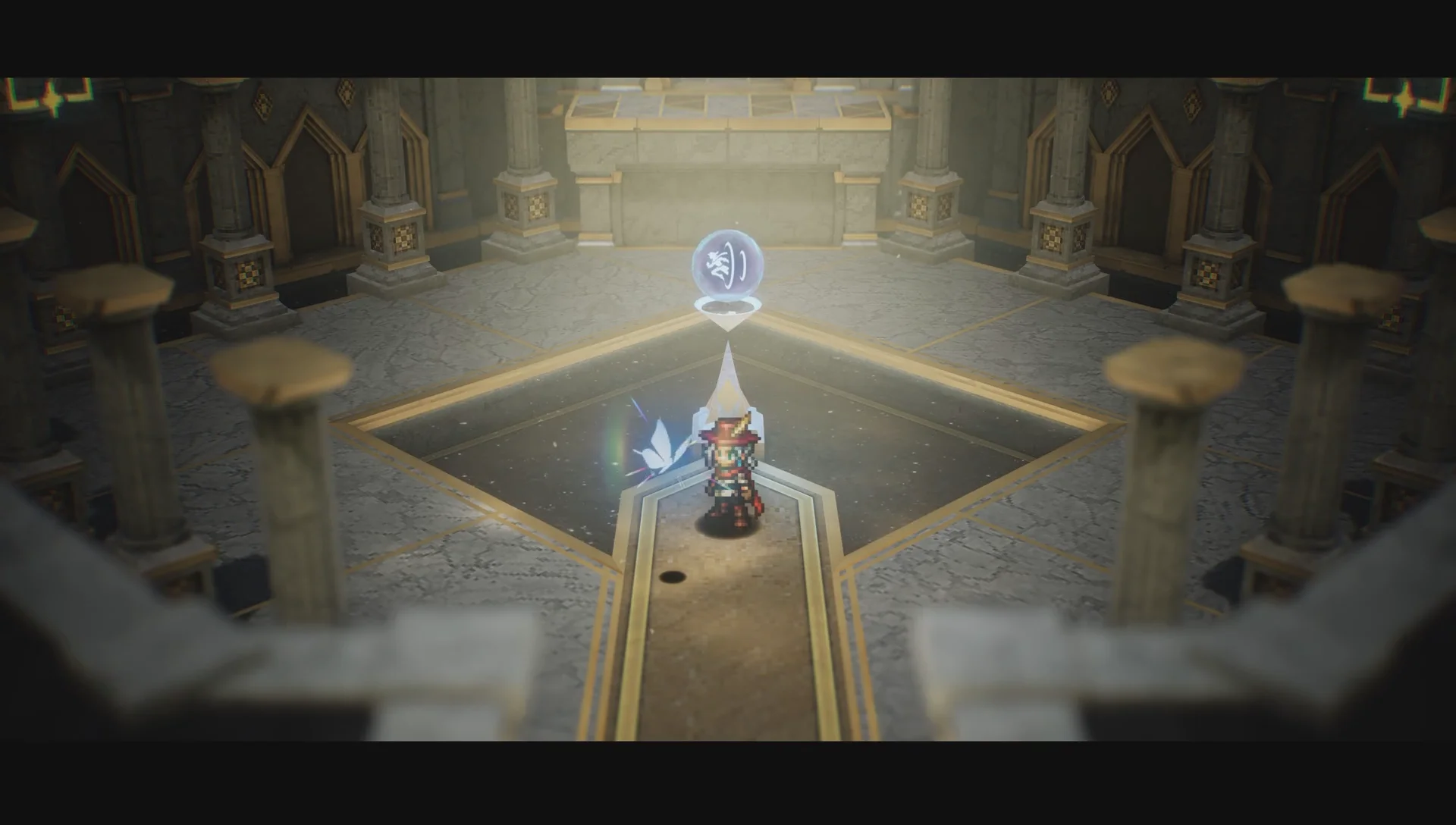
Then we have the background elements of The Adventures of Elliot, which elevate the sprite-work magnificently. For example, early in the game, the camera sweeps past a watercourse set at eye level, its glittering water depicted in exquisite detail, entrancing the viewer.
It’s no more than we would expect by now from Team Asano, the Square Enix team behind these graphical marvels. Despite the initial familiarity, The Adventures of Elliot deviates so much from what has come before that you have to admire the bravery of this veteran group.
As you embark, you soon encounter hordes of enemies intent on ending your travels at the earliest opportunity. These creatures are humanoid animals: chicken-men with bows and two-legged elephants filled with enmity for the crimson hero. As Elliot, you use an arsenal of weaponry to dispatch them, starting with a simple sword, but progressing into an assortment of implements. You can map two weapons to your controller at once, experimenting with different combinations as they suit you. This is where the comparisons to Zelda start to emerge, and they’re not entirely unfair.
I found the combat frantic, surrounding you with enemies and encouraging you with attack bonuses to keep the action going, similar to Ys Origins. Combat is tactile and satisfying; Team Asano have clearly worked hard to ensure that these systems translate well into the HD-2D realm. Each weapon has its own strengths and weaknesses and suits different playstyles. This can be detrimental, as I found myself gravitating to the chain and sickle accompanied by a ranged weapon, switching only infrequently or when the game forced it.
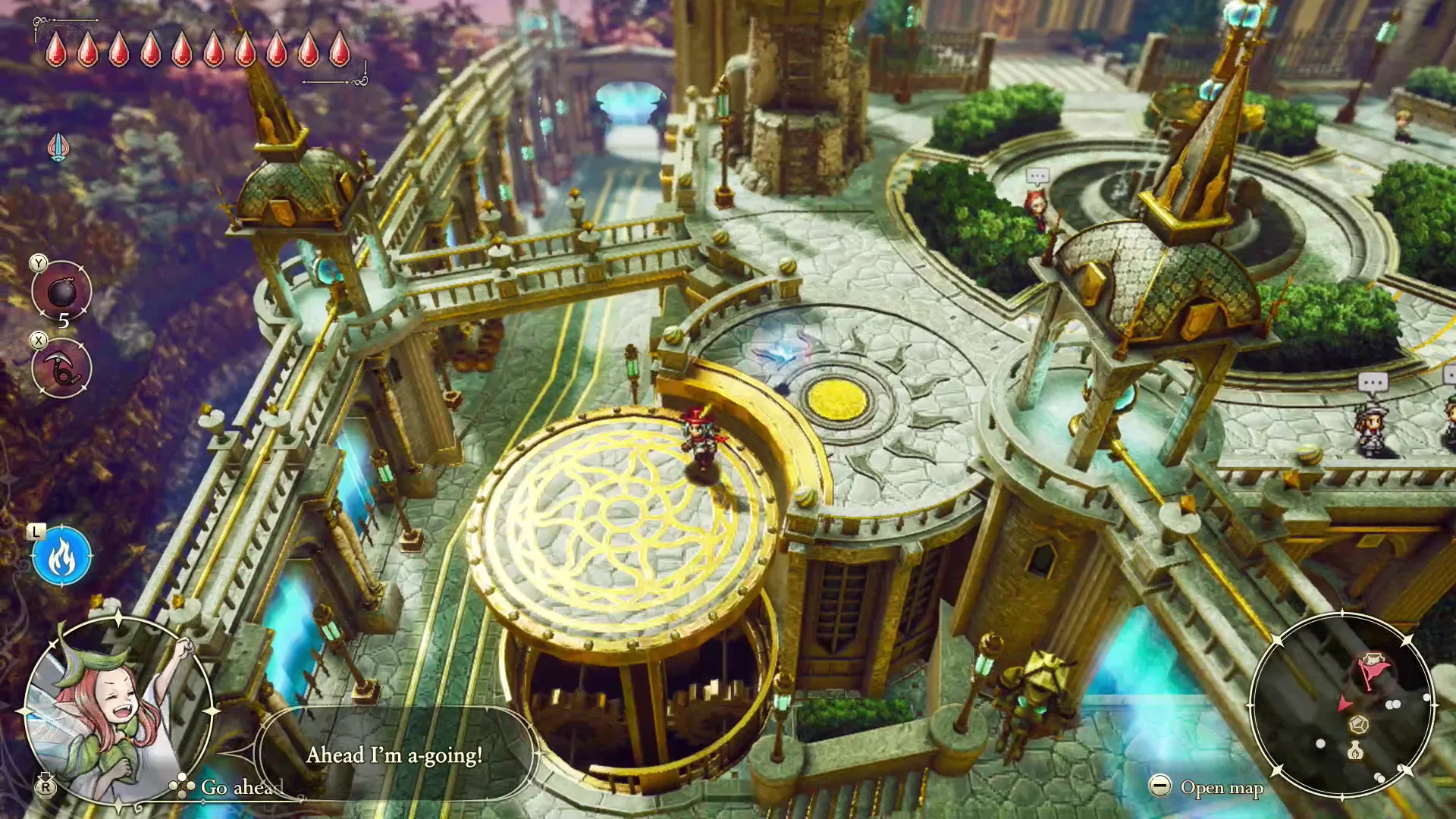
Heuria, your disembodied companion depicted in a subtly different graphical style within an onscreen circular cutout, has the power to heal you at any point, which is a cooldown ability activated with the tap of a button. Heuria actually serves as a placeholder for your true companion, a childlike fairy descriptively named Faie. This kind of nominative determinism is rife in The Adventures of Elliot, but I found it endearing and similar in tone to the world-building of old fables.
Both Heuria and Faie converse frequently with Elliot, and occasionally offer hints, which could prove grating for some. The Adventures of Elliot thoughtfully offers you the option of making them less talkative. I kept my Faie bubbling over with commentary, as I’m fond of the little sprite’s banter. Faie’s presence adds to the experience during narrative scenes, as she reacts expressively to the situations Elliot encounters, although, as only Elliot can see her, she rarely gets to interact with anyone else directly.
You control Faie with the right stick, moving her around the screen, which damages enemies when you touch them. You soon unlock other abilities for her, which you can use to set opponents and other objects on fire, move Elliot into a swift run, warp him to Faie’s location, or even create duplicates, doubling your potential firepower.
All of these abilities are available in combat, easily utilized if you have the reflexes of a seasoned swordfighter like Elliot. Unfortunately, I am more akin to the villager who sells Elliot items; I found it difficult to concentrate on using my weaponry and piloting Faie around the screen at the same time, vainly hoping she might ignite something. I tended to put her on the back burner, so to speak. There is the option to have a second player take over fairy duties, and I suspect this might be a more effective way to play.
Like Chrono Trigger and Dragon Quest VII before it, The Adventures of Elliot takes you on a time-twisting journey, backwards from the Age of Safekeeping through three other periods. Closest to Elliot’s era is the Age of Reconstruction, where humans struggle to recover from a cataclysm that has left them on the brink of destruction. Further back is the Age of Magic, a sparkling utopia of arcane invention, and earliest of all is the Age of Budding.
Each time you travel in The Adventures of Elliot, it is exciting to see the changes to the settlement that eventually becomes the Kingdom of Huther, and it’s especially poignant to see the advanced technology of one period left ruined and abandoned in another. The changes to the rest of the world are less obvious, and to a certain extent, the time-travel gimmick serves essentially as a way to reuse assets and have you go through the same dungeons several times over. This also applies to the beast tribe enemies, who, become repetitive after a while even though they sport a variety of forms.
Nevertheless, the dungeon design in The Adventures of Elliot is classically good, offering well-paced experiences that challenge, but never so severely as to slow the sense of progression prevalent throughout. I might have wished for more opportunities to fully use Faie’s range of abilities, but the game always made me want to keep going, to grab a few more chests, or seek another shard of life in the hope of increasing my health points.
Furthermore, the boss encounters (admittedly also subject to reuse) are entertaining set pieces that test your reflexes and pattern recognition, forcing you to dodge waves of projectiles and melee attacks as you search for your chance to return the favour. How you do this is highly customisable: you collect sorcerous gems called magicite, which alter the properties of your weapons in significant ways, such as making them hit harder, or even spit fireballs. It’s a system you can engage with as you prefer.
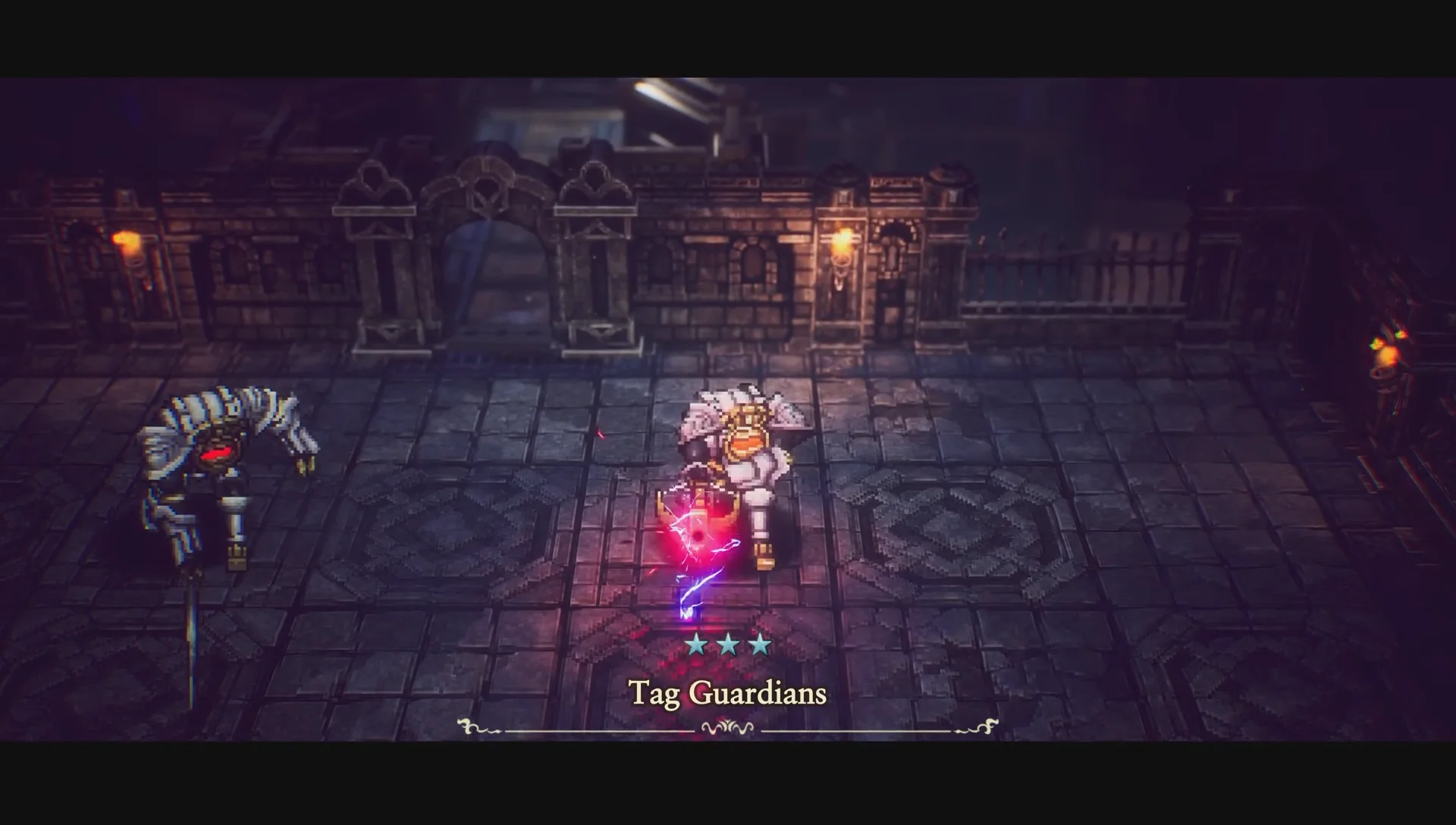
So, magically endowed bludgeon in hand, you make your way to the end of the game, and here I found something of an issue. The Adventures of Elliot has multiple endings, but in truth, I found the first two unsatisfying. The “True Ending” locks huge amounts of the game’s content behind its requirements, which isn’t necessary. I would prefer to have a single ending, and I worry that some will give up after the first credits roll. I wouldn’t want anyone to miss the real resolution, which features the majority of the big reveals and, while being mildly predictable, provides the kind of emotional sendoff most of us crave.
The soundtrack deserves a special mention, as composers Tomohiro Nakamachi and Yuto Moritani deliver a score that captures the soul of each time period magnificently, from the despair of the Age of Reconstruction to the wonder of the Age of Magic, and most importantly, the heroic grandeur of Elliot’s travels overall.
While a few flaws make The Adventures of Elliot fall slightly short of a perfect experience for me, it’s still a bold experiment. It is filled with characters that, although sometimes lacking in complexity, win you over with sheer heart, especially Casper and his companion Mao, a troubled woman from a feline beast tribe. It’s never less than a good time, and it doesn’t outstay its welcome.
Plus, there are cats. So, so many cats.