
Traysia is a little-known 1992 Sega Genesis/Mega Drive RPG that I did not expect to be revived in 2026. I knew about Phantasy Star, Shining Force, and even Shining in the Darkness growing up, but I never even heard of Traysia. I don’t even remember seeing Traysia’s cover art (with the cool dragon) on the shelves at video game rental places. Ergo, I went into Traysia as blind as could be.
Would this be a hidden gem worth uncovering, a piece of junk that should have stayed buried in the past, or something in between? After enduring Traysia’s 5-chapter saga, I’m sorry to say that if not for the cheats and exploits made available via Ratalaika’s porting, I would have shelved this poorly designed game before the first chapter ended.
The one and only positive note is that within Traysia’s soundtrack exist three good pieces of music: the lovely title theme, the evocative end credits’ theme, and chapter 5’s stirring field theme. The rest of the music, be it town, dungeon, battle, boss, shop, etc. themes, is decent if forgettable 16-bit chiptune RPG music. Considering the Genesis/Mega Drive’s sound chip was less powerful than the SNES’s, the music lacks the clarity, fullness, and dynamics of many stronger SNES RPG soundtracks.
I like that a scan of the old instruction manual is included, but its pictures are too small and impossibly blurry to read. Too bad, because that manual explains what happens between the introductory cutscene (where Roy bids his girlfriend Traysia goodbye to travel with his merchant uncle) and when you take control of Roy, lost and alone in a wooded village. What happened between these two points? Well, according to the manual, Roy’s uncle ditched him during their travels.
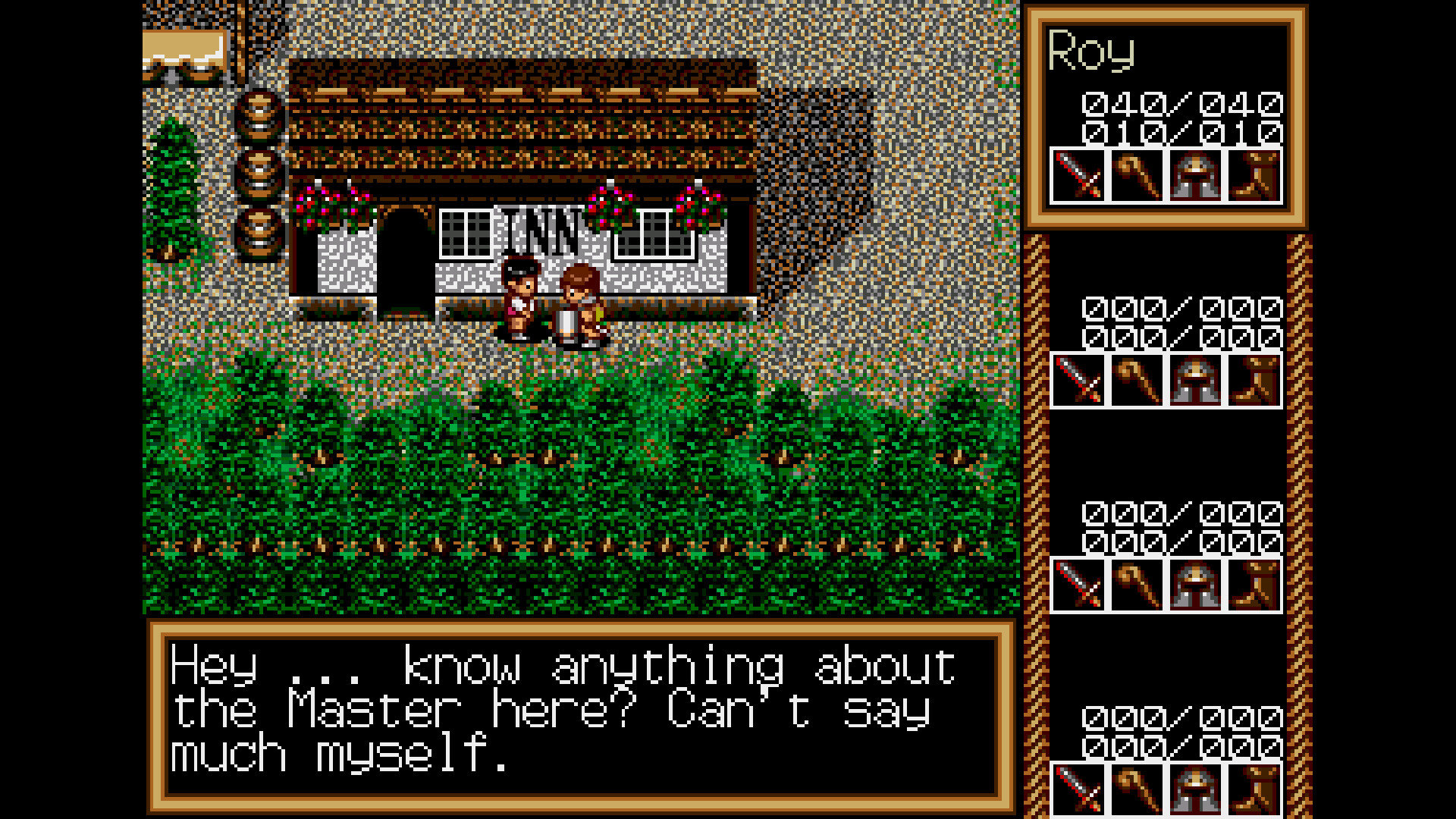
With little but his sword, Roy joins an expedition of able-bodied fighters to hunt the monsters terrorizing merchant caravans on a forest path. During that hunt, one of Roy’s companions (a wizard named Floyd) double-crosses the party in the name of a mysterious Master aiming to usurp rule. Now, Roy and his remaining companions have to stop Floyd before he grows from a nuisance to a real threat. The story is far from original, but it does feature a couple of late-game plot twists.
Each chapter starts with a time skip and zero context of what happened between the prior chapter ending and the current one beginning. Dialogue is minimal as well, making storytelling as barebones as can be. The majority of the game occurs in lengthy, labyrinthine dungeons or wide-open spaces with no landmarks; these could have been cut in half to make more room for much-needed exposition and storytelling. Plot direction is vague as well, and often left me wandering around, not knowing where to go or what to do. And did I mention how fiddly it is to perfectly line up with NPCs, treasure chests, signs, and so on to interact with them?
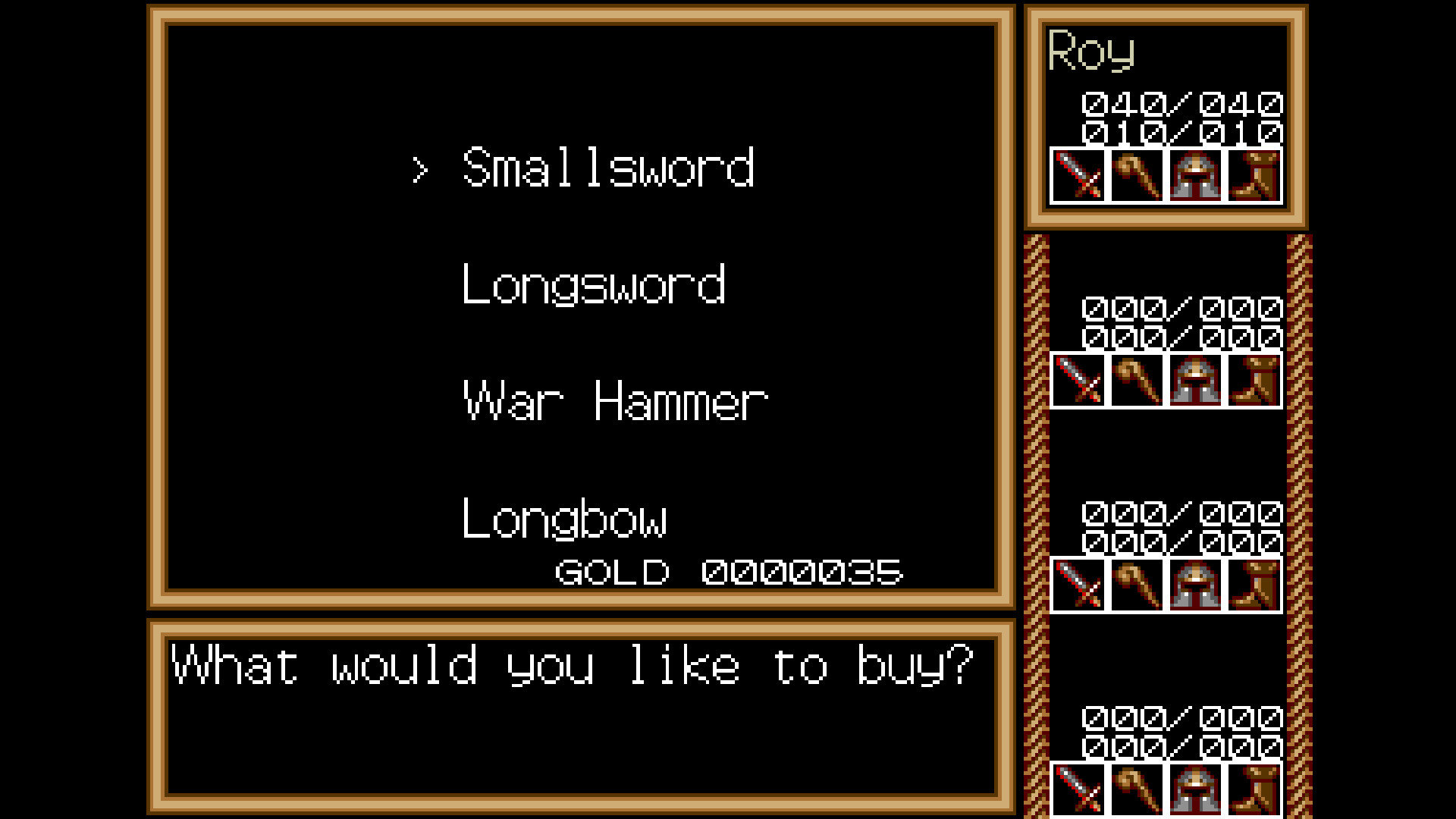
A higher-quality scan of the manual would also help with gameplay. Controls are unintuitive, the icon-based UI is not self-explanatory, and even simple tasks like shopping for equipment and equipping said items are twiddly processes through menus that offer no information. What do the gemstones I can buy do? What restorative properties do different food items have? Who can equip what? I had to look for online guides to tell me things that should be in shop menus. Not helping matters is that each party member has their own inventory with limited space. This makes buying, selling, equipping, and simply managing items a disorganized mess.
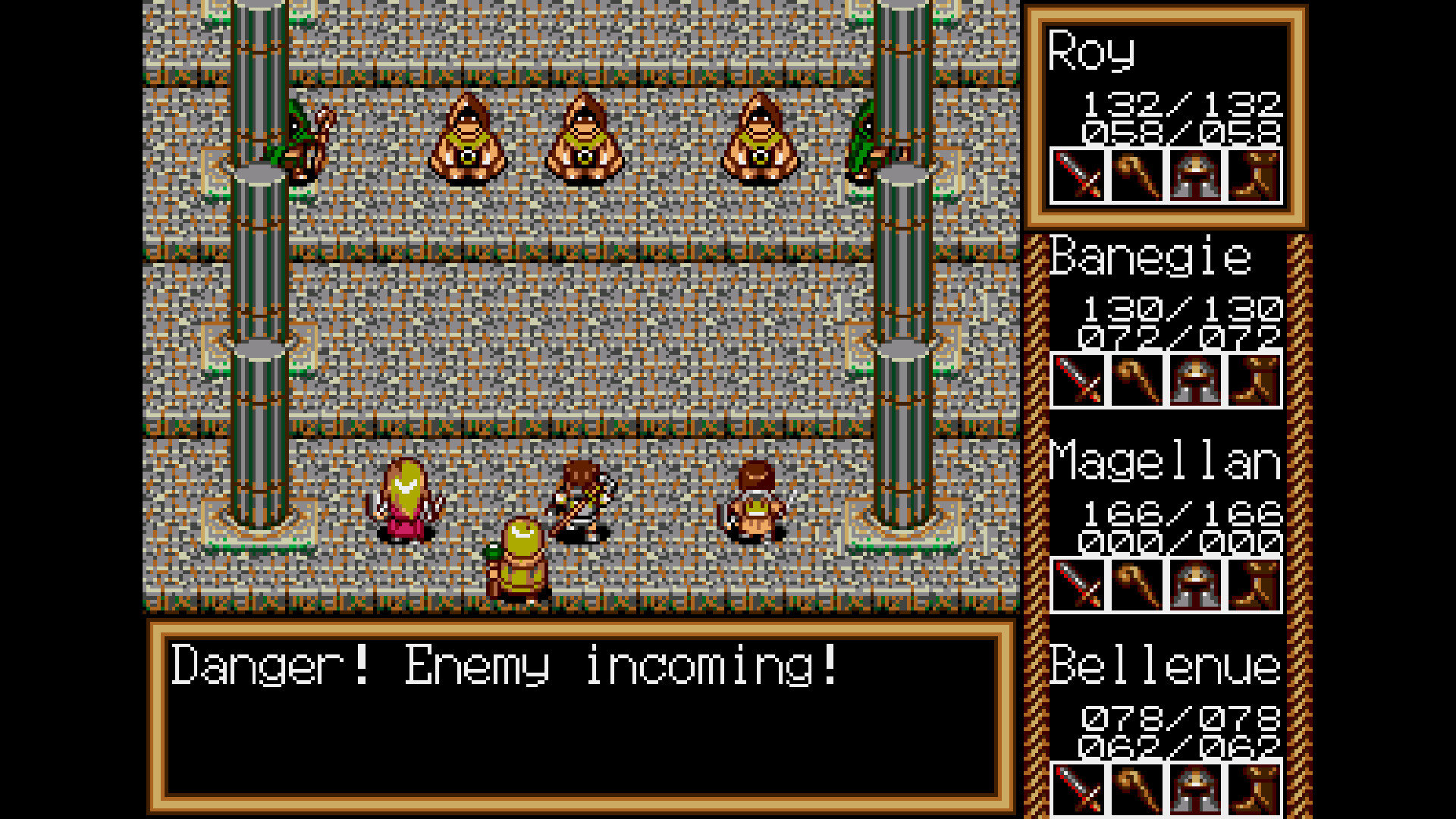
The turn-based battle system seems simple enough, but characters’ positions change after each action and get in each other’s way, sometimes preventing them from taking action against foes. It’s basically small-scale SRPG-style skirmishes (similar to Rhapsody’s battles) shoehorned into a basic turn-based interface.
The mismatch between available commands and the nature of battlefields makes battles clumsy and overly lengthy affairs. For example, I only discovered by accident that the defend icon (a helmet) is what can move my character around the battlefield, while the foot icon is to escape. I eventually figured out how to somewhat work the battle system, but I would have preferred a more streamlined turn-based battle system to keep Traysia moving along at a smoother and faster pace. The one consolation is that the random encounter rate is fairly low. That being said, Traysia is still grindy.
Other unnecessary additions to the traditional RPG formula include delegating healing duties to the medics’ offices and saving to the inns, when one-stop shopping is the more convenient norm. Both facilities charge for their services, so it feels like the game nickel-and-dimes Roy’s party to save and heal.
Making things even worse is that some towns don’t even have medics! After traipsing through multiple overlong dungeons and finally getting to a town for reprieve, I expect there to be a full-healing facility! It’s a good thing this version has save states, because inns in the sparsely located towns would typically be the only places to save. Even in the early going, dying during a random encounter can really set back progress since the prior save in town was eons ago.
The opening and ending cutscenes have decent visuals, but the rest of the game is not appealing to look at. Graphics have that grainy quality with washed-out colors typical of many Genesis/ Mega Drive games. Some of the floor textures are quite busy and actually caused me mild eyestrain. Dungeons and field areas have little textural variation and few, if any, useful landmarks. I made full use of the turbo speed exploit to get through dungeons and fields. Traysia’s dungeon and field areas are not as agonizing as Phantasy Star II’s, but at least Phantasy Star II was appealing to look at.
Traysia is no Phantasy Star or even Vay. It is an absolute slog that’s only playable if various cheats and exploits are used. A few good pieces of music are not enough to save Traysia from itself. Even if you have morbid curiosity about obscure 16-bit RPGs and/or poorly reviewed games, there are far better games to spend your time and money on than Traysia.