

Can one’s ideals and convictions stand tall even in the face of a devastating battle for control of a nonrenewable yet vital resource? Such is the main narrative conceit of the Square Enix turn-based SRPG Triangle Strategy, a game set in a fantasy realm where three different countries are at constant odds with one another over control of its vital resource, salt.
A tentative peace lingers over the land as the kingdom of Glenbrook’s young lord Serenoa of the noble region House Wolffort prepares to meet Lady Frederica, his politically arranged betrothed. As Lady Frederica begins to feel at ease in her new surroundings, war once again plunges the realm into chaos. Can House Wolffort survive the coming conflicts unscathed, or is it doomed to fall as the flames of conflict burn?
To say that Triangle Strategy sets up an intriguing story is something of an understatement, as the game’s lore and world-building are among its largest strengths. It spends a great amount of time fleshing out the minutiae of narrative events that make up the plot, both in the past and present. Characters are fully realized, with believable strengths and all-too-human flaws that come into play during Triangle Strategy’s many different branching story points.
You not only see how the main party reacts to their situations, but you can also deep dive into the machinations of the NPCs around them. Those characters who join the party who aren’t officially part of the Wolffort entourage are also given their own character stories for players to potentially explore at certain points, too.
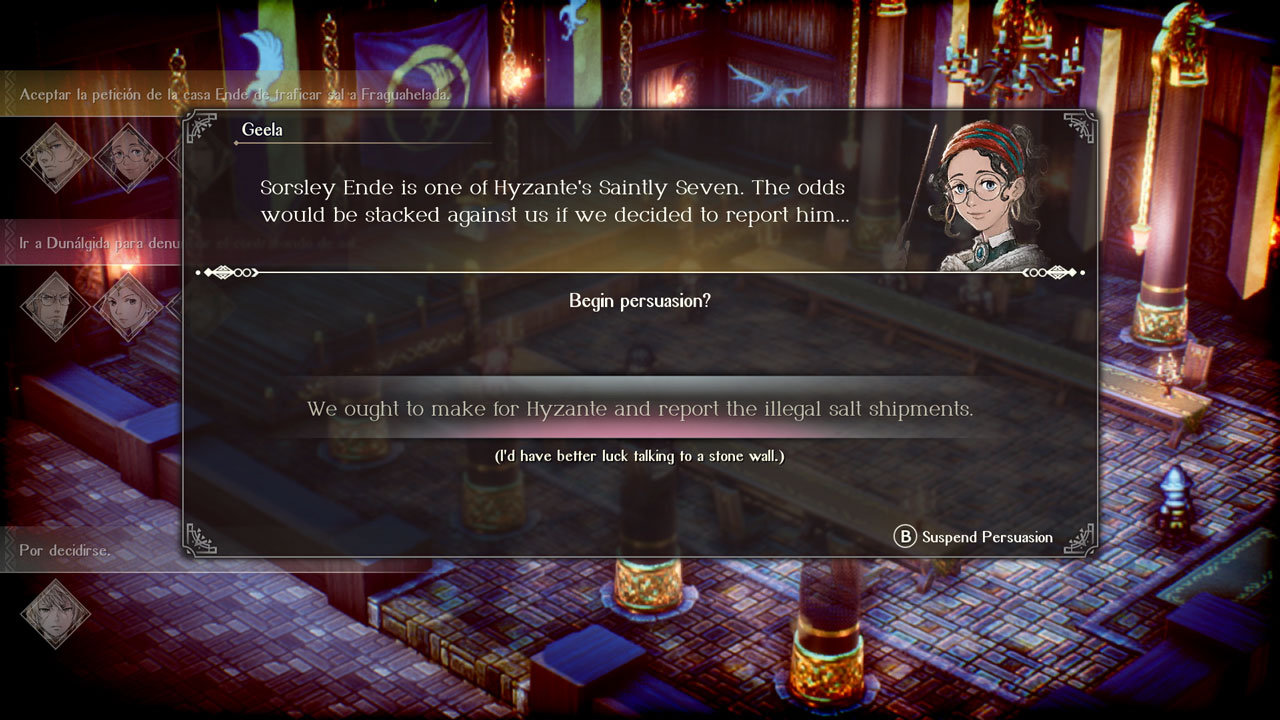
The “strength of one’s ideals and convictions” is a theme throughout Triangle Strategy‘s story campaign. Serenoa exists as something of a blank slate in the narrative’s earlier portions, with the player largely responsible for shaping his viewpoints. The actions taken during battle or while exploring during investigation phases, or even what optional story scenes you choose to view or how you respond in a dialogue choice, all have lasting effects on Serenoa’s convictions. Those, in turn, often affect the outcome of when House Wolffort has a group vote to determine their next important course of action.
Depending on how strong Serenoa’s convictions are and the dialogue options unlocked, he can potentially influence the way some of his entourage votes, though it isn’t always guaranteed that things will go the way you want them to during a vote, particularly during your first playthrough. It becomes easier to gauge thanks to the added information in New Game Plus.
Your actions have both direct and indirect influence on the paths the story takes, and the narrative evolution is rather believable regardless of those paths. As a result, replayability is high given the different branching points throughout a playthrough. While three endings are easier to ultimately uncover, the path to the “golden” ending will likely require a guide of some sort, given how you must make specific decisions happen at certain points to achieve it. I should note that I missed the mark by just one decision on my first playthrough, though I ultimately landed on a very satisfying and bittersweetly hopeful result all the same.
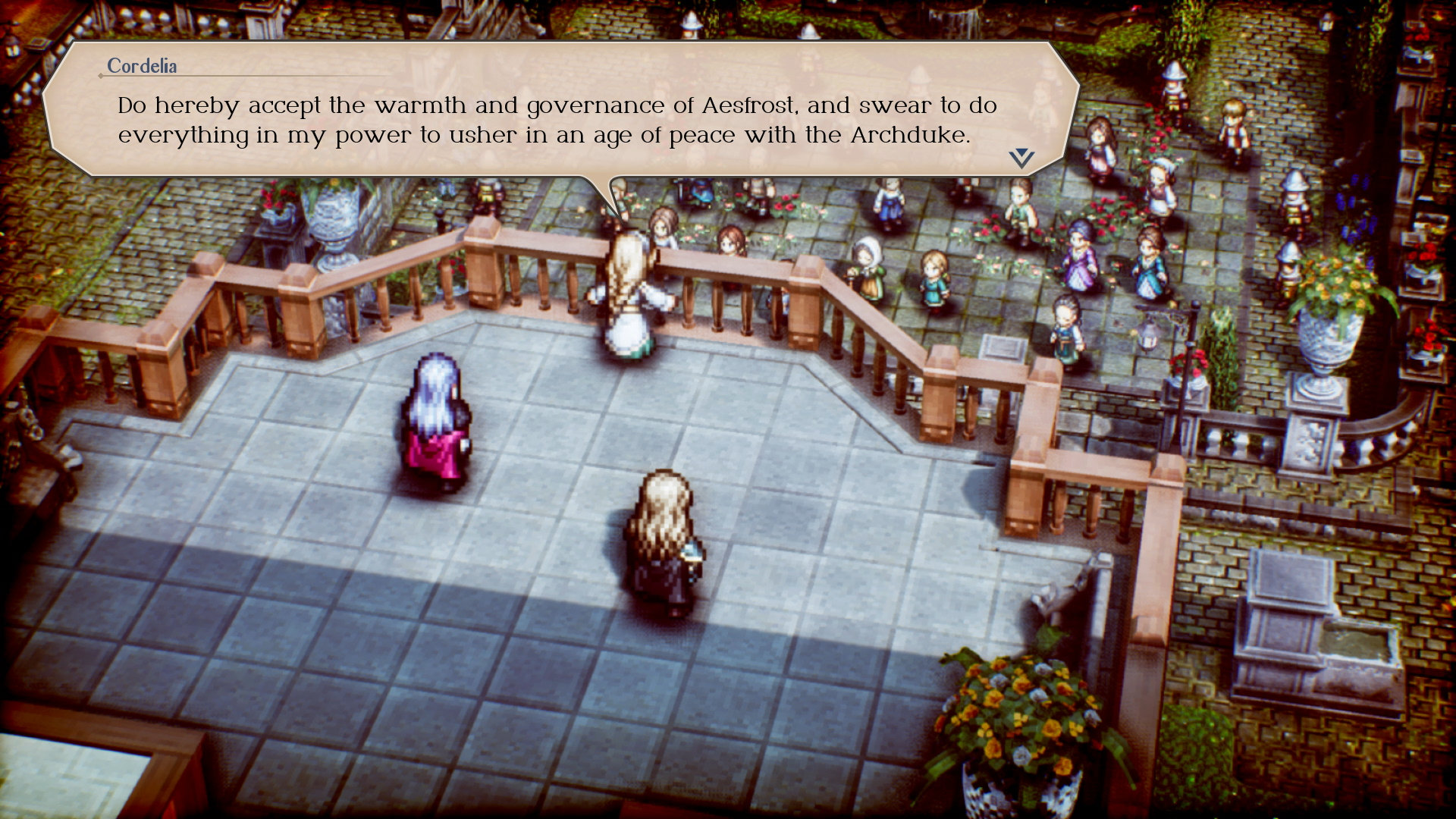
The very obvious narrative strengths that lie at the core of Triangle Strategy also help to belie what is perhaps its biggest weakness: a decidedly poor balancing act between gameplay and story. I’ll never begrudge a game for spinning a thoroughly compelling yarn: indeed, RPGs remain my favorite video game genre because of how strong their storytelling and character writing can be. The plot for Triangle Strategy is detailed and incredibly nuanced. I enjoyed uncovering its many twists and turns and becoming emotionally invested in the plights of several characters as I played. Yet Triangle Strategy is an SRPG, and strategic gameplay is expected under that moniker.
The gameplay in Triangle Strategy is by no means broken or terrible. Far from it, actually. It’s a solid SRPG where you move your party over tiled squares towards enemy units or other objectives during their turn. It can be fun setting up tactical situations where two characters can simultaneously attack an enemy target, or deciding whether an AoE move would be helpful for dealing with multiple enemies or affecting swaths of terrain.
Some job classes are rather ingenious to experiment with, such as the shaman who can alter the map’s weather conditions to either get rid of hazardous effects like fire or make it harder for archers to target accurately, or the medic who can throw items over long distances and use two of them at a time, or the tactician swordsman who can supply allies with more TP to use on their special attacks or limit how much the enemy has.
Certain battle objectives, like riding mine carts through an underground map to reach bombs and defuse them before they go off, are inspired. I genuinely enjoyed both the story battles and the mock mental battles you could unlock to further level up characters and strengthen convictions.
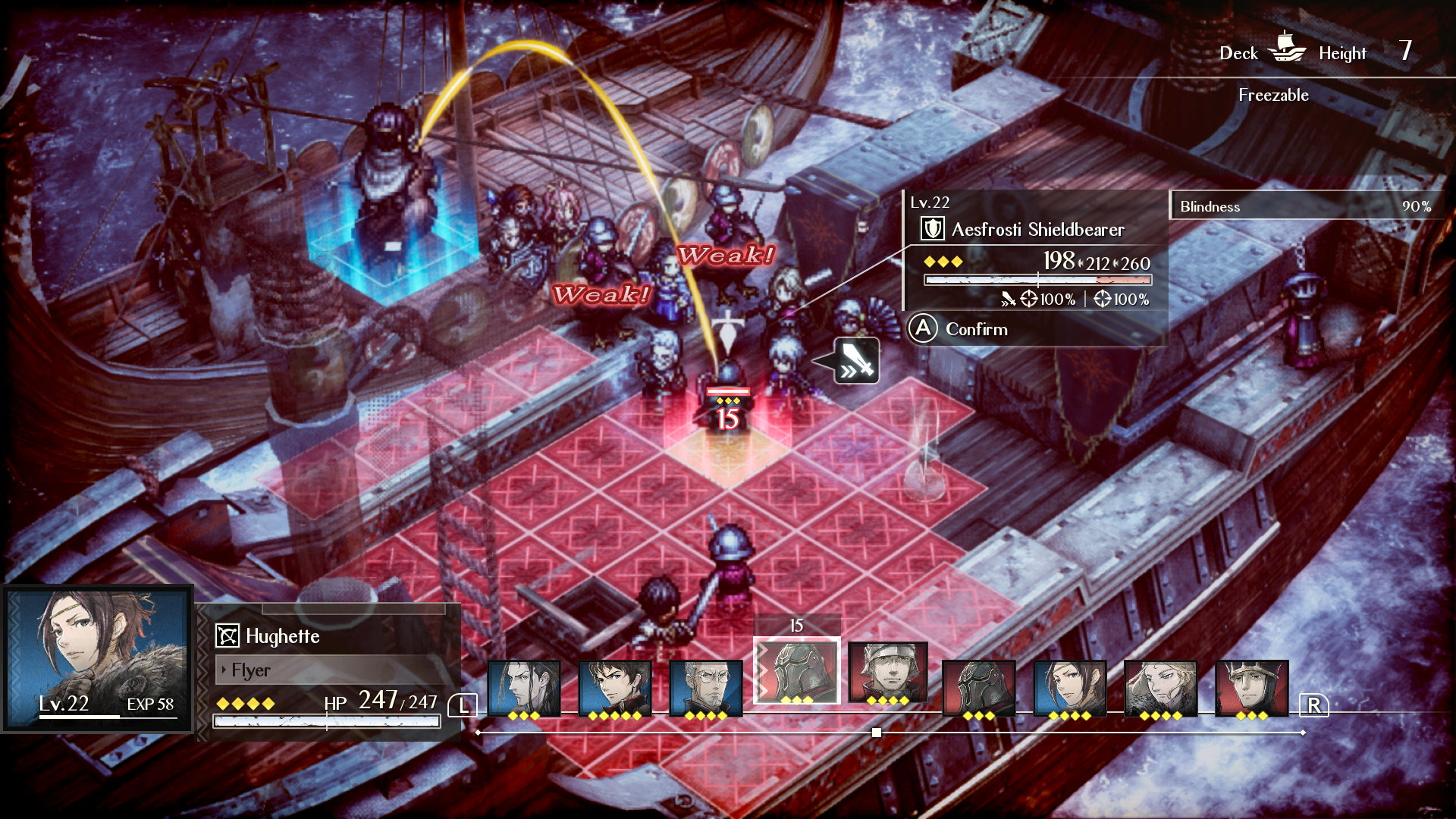
No, the worst part about the SRPG mechanics in Triangle Strategy is simply that the game doesn’t provide as much time to really experiment and delve into them as one might expect. Instead, you’ll see extremely lengthy dialogue and story scenes before being able to play one or two battles per chapter. I feel the game would’ve been all the stronger as an SRPG had the gameplay and plot been better balanced.
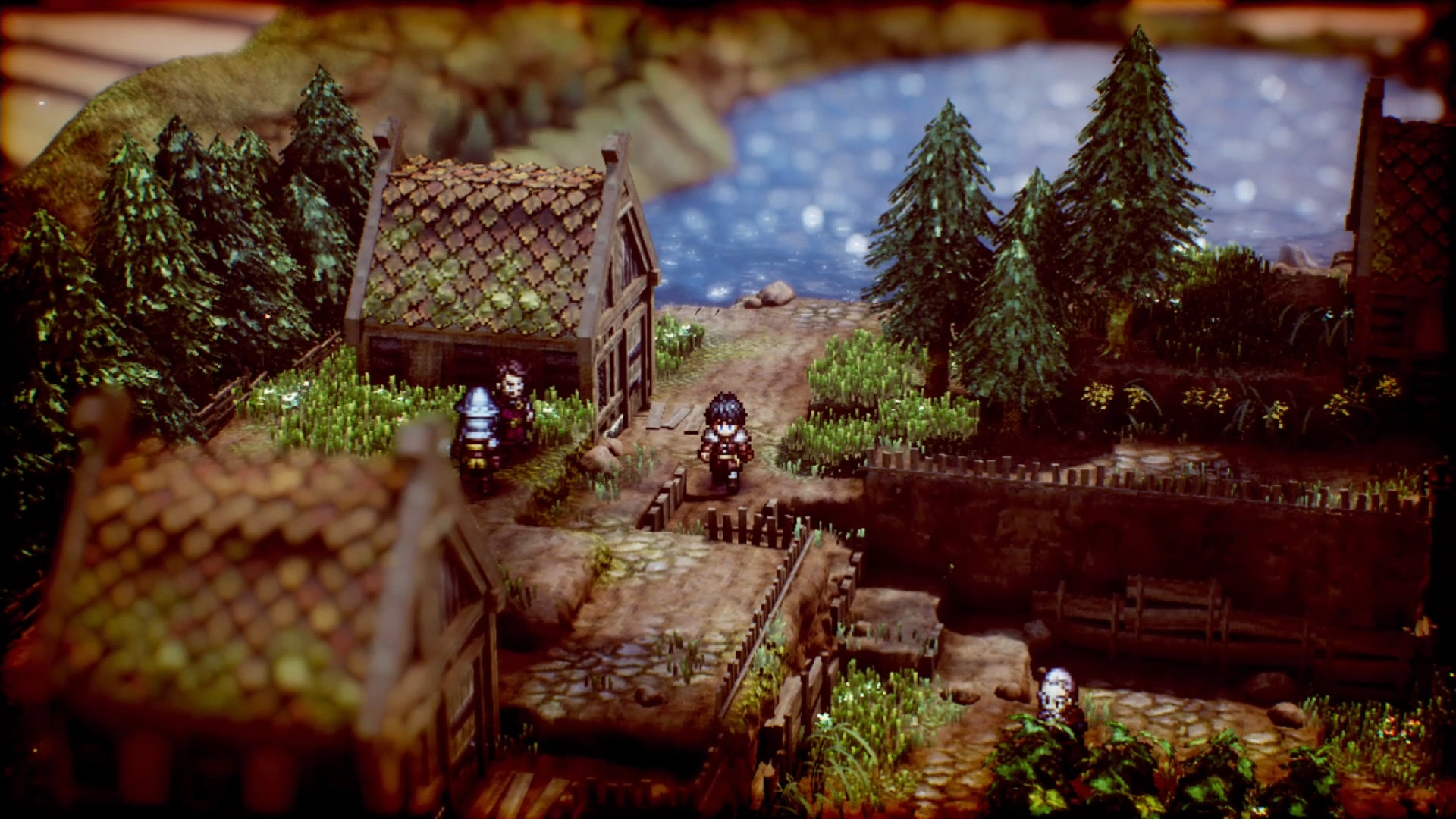
Visually, Triangle Strategy has a distinct visual style with a simplistic UI that brings to mind SRPG classics like Final Fantasy Tactics or Tactics Ogre: Let Us Cling Together. The pixel sprite work and HD-2D graphics are extremely detailed and expressive. I adore the artwork used for character portraits and visuals during important narrative scenes, though I wish it’d been incorporated into the dialogue scenes as well.
The game’s PS5 version runs smoothly from a graphical performance stance and has quick loading times, though I still noticed a bit of “buffering” when it came to certain higher-tier AoE spells and effects on battle maps where there were a lot of units and activity. During battle, you can freely swivel the camera angles around as you see fit, which can be both helpful and somewhat frustrating if getting to a good spot for one character’s turn in particular takes some finagling.
Triangle Strategy’s soundtrack is impressive throughout, with several tracks that perfectly capture the intense moments of a fight or the emotional range of story scenes. I played the game with the serviceable English dub, with special kudos to Frederica’s English voice actor, Emma Ballantine, for her powerful delivery. However, I did find it odd that the script retained more fantasy/medieval vernacular at times, which made some lines read awkwardly. The English script localization is top-notch and error-free, which is especially impressive given the various permutations the story can take.
Overall, I enjoyed playing Triangle Strategy. It’s a game that homages the classics of the SRPG genre while bringing a strong, standout narrative and some interesting gameplay mechanics to the table. It isn’t so much a reinvention of the subgenre as it is another entertaining installment. The care and quality put into the game are plain to see, even if its more story-forward approach might be off-putting to those wanting more strategic turn-based battles or a more equal narrative/gameplay balance overall.
Team Asano is definitely a development team to keep an eye on, and I hope to see them continue Triangle Strategy in some form one day. Convictions and ideals weave an SRPG tale in Triangle Strategy that’s definitely worth a look at on any platform, especially if a strong, choice-heavy, and morally complex narrative lying at a game’s heart is something that appeals to you.