Get your grid-shuffling boots on, and your auto-mapping ready, because Underkeep is ready for you to delve into its classic, misty fantasy of abandoned crypts and strange rituals, along with a side helping of environmental puzzles and customised party creation. Although the influence and loving tribute to the roleplaying, dungeon-crawling classics of the 90s is apparent from the off, the hand-drawn, pixel graphics and modern controls make the journey pleasant to look at and travel through, for the most part. This dungeon isn’t one experienced DRPGers won’t have delved many times before, but Underkeep might just have enough treasure to tempt you for another deep dive.
Underkeep strikes a visual balance between nostalgic reverence and crisp, hand-crafted detail with pixel characters and backgrounds. Channelling the spirit of 90s grid-based DRPGs like Eye of the Beholder and Lands of Lore, developer Rake in Grass eschews 3D constructs in favour of expressive art that feels like an era-appropriate love letter. Corridors and damp stone walls are painted with vibrant colours and rich textures, while monster designs carry characterful grit and charm.
The shrieks and mournful nature of The Faded contrast nicely with the more earthly, fleshy mass of Scourge of the Tunnels. Combined with step-by-step movement transitions and dynamic atmospheric touches like lighting and weather effects, the presentation manages to feel familiar to classic dungeon crawler fans while looking modern. Background and distant details are clearer, which does help to orient the party during the large number of forests and outdoor grasslands. The style makes identifying the large amount of loot equally smooth: most everything can be hacked at or shaken to release some berries or a few items or such, and what might seem like something unimportant could be an ingredient or useful object later in the journey.
Underkeep‘s sound design is understated, but shuffling monsters and combat damage shrieks do enough to set the tension, as does the soft music score, which puts the emphasis on dreading silence and the gentle patter of raindrops or crack of lightning.
As for the journey, like its inspirations, Underkeep‘s plot is simple and familiar. Rather than overwhelming players with dense, modern lore dumps or moral ambiguity, the game leans into time-tested tropes: a party of brave adventurers venturing into perilous, trap-laden environments to unravel ancient evils and claim rich spoils.
Apart from the core quest to search for a party of missing dwarves, side quests in Underkeep are just as traditional, such as working out the mystery behind a series of statues, or unveiling the machinations of a blood cult. Most crop up during exploration, though others are granted by the mayor and merchants from the local village, which is a central hub and resupply area to the early game. Don’t expect much character development besides a few alternate approaches and information depending on the background of your party; however, the descriptions and narrative events are written well enough.
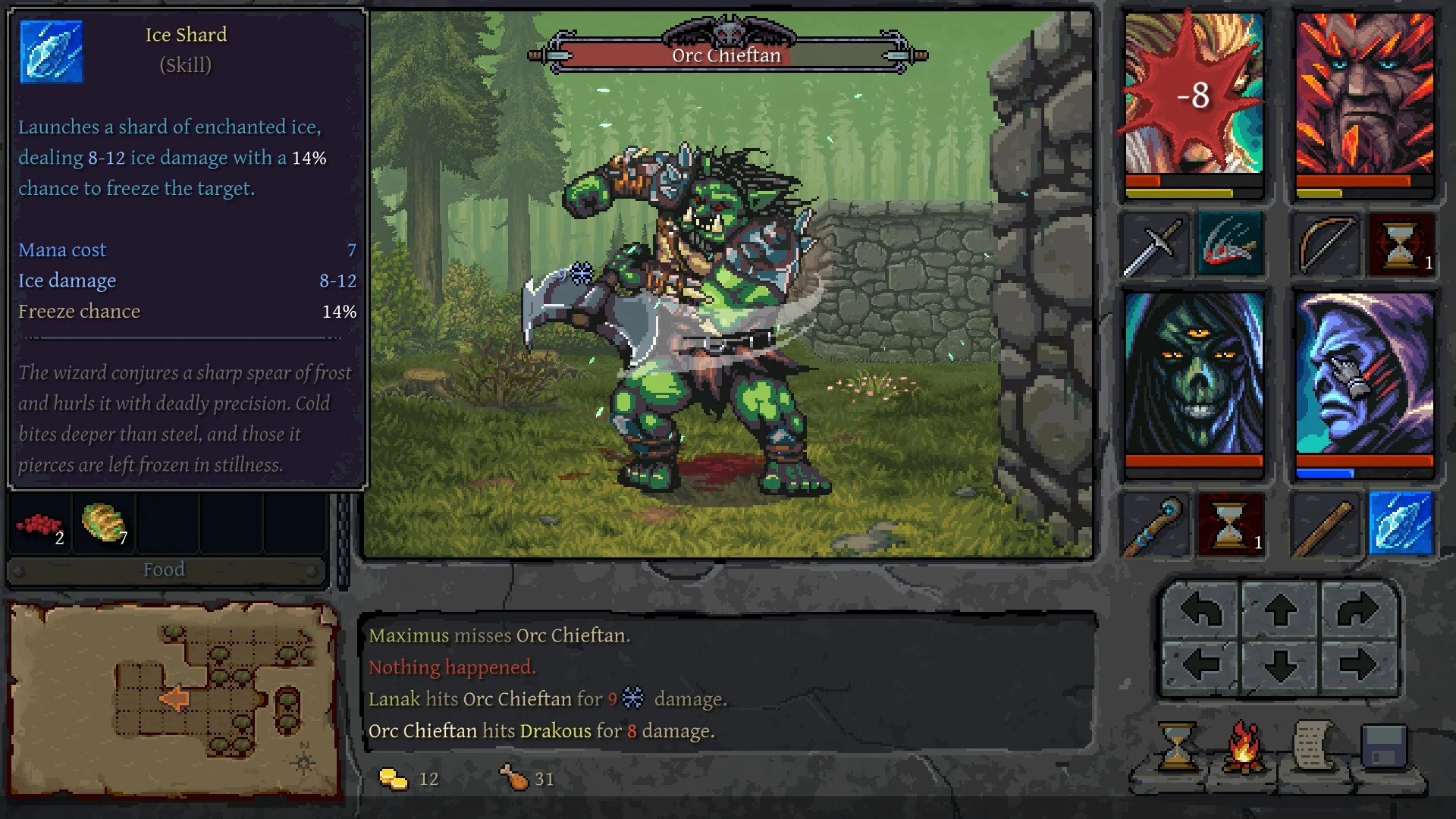
Underkeep lets you build a four-adventurer party from a broad selection of races and classes. Classic pairings like versatile Humans, stout Dwarves, Paladins, and Warriors sit alongside more inventive options. Voidcallers, for instance, specialize in support magic: they strengthen allies or weaken foes, cast protective shields, and project passive auras to boost damage. Blood Mages mark targets for bonus damage, siphon health for themselves, and sacrifice their own health to patch up allies.
The racial options prove equally varied, incorporating several monster types. My Slugman Blood Mage was no looker, but high innate Endurance and solid Wisdom allowed him to absorb massive damage whenever he took hits for the team, and meant he could swap into the front row if I found a nice melee weapon for him.
Every race and class pairing establishes baseline stats that define a character’s role. Right from character creation, you can gauge a hero’s magic resistance or evasion chances, amongst other modifiers. Rather than drowning players in dozens of skills, Underkeep limits each class to roughly six active abilities and a handful of passives. Abilities cost mana or class-specific resources (such as the Paladin’s Zeal) and can usually be upgraded. The skill lists lean on familiar staples, like the Warrior’s Riposte or the Wizard’s crowd-clearing Fireball, without adding anything radical. While I was slightly disappointed that class abilities don’t interact more directly with racial traits, the concise action list keeps tactical choices tight and focused.
Combat moves at a brisk pace, requiring you to balance front-line survival with targeted attacks on a single enemy at a time. As with any classic DRPG, manipulating the map by bottlenecking swarms in narrow corridors or keeping enemies at range is essential. Underkeep regularly hurls dozens of foes at your party, and enemies will relentlessly stalk you across the map; knowing which corridors are clear prevents you from retreating into an even messier encounter. The bestiary sticks to genre comfort zones: a familiar mix of undead, monstrous beasts, cowled cultists, and the occasional terrifyingly large boss.
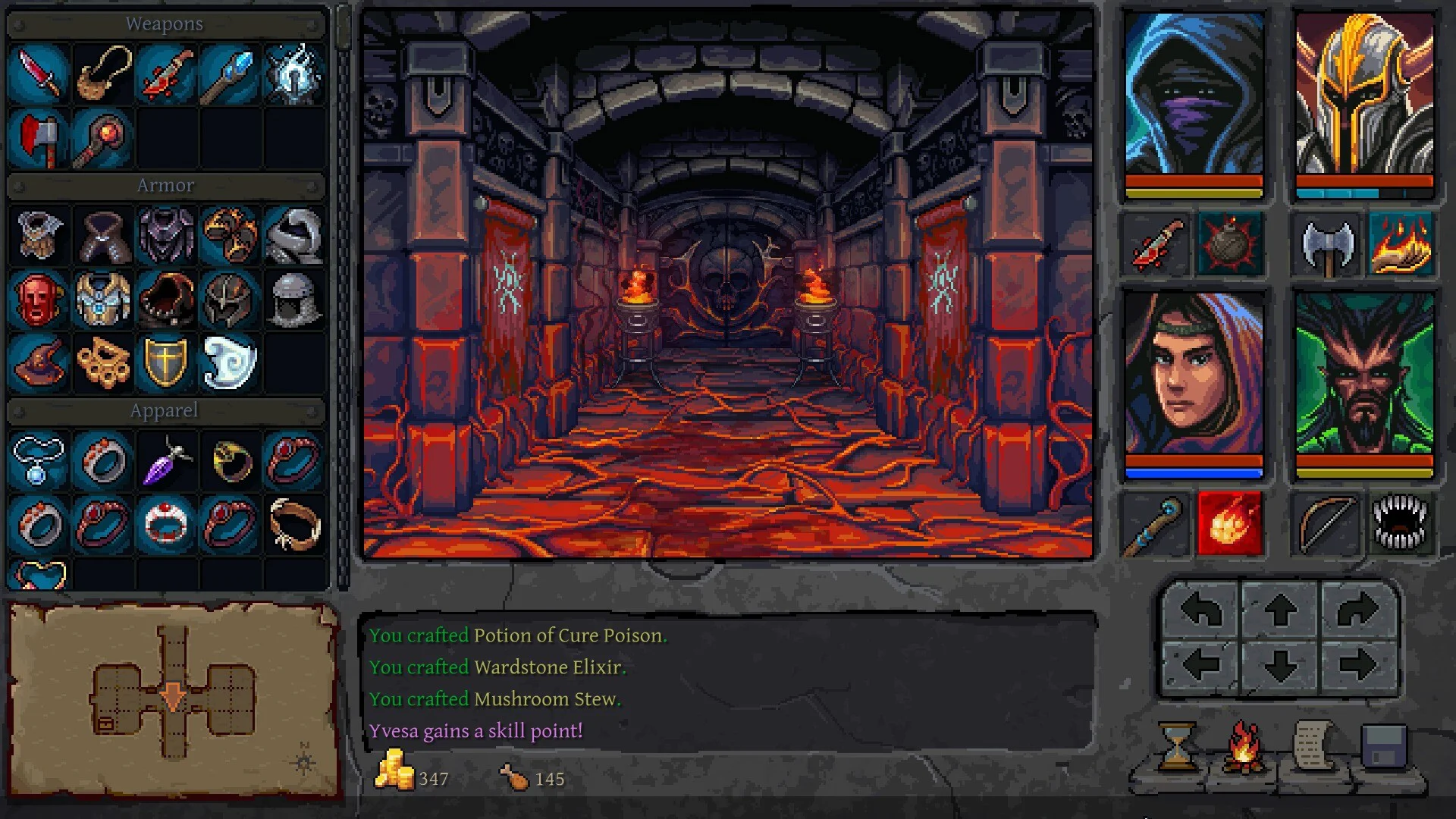
Classes synergize well within their focused roles, making party composition and tactical planning genuinely satisfying. The systems and encounters rarely surprise, but as a deliberate homage to genre classics, it feels intentional. What truly elevates the tension is the strict attrition economy. Health and mana do not auto-recover; you must pay gold to rest at an inn or consume food to camp in the wild. Thankfully, you can save anywhere across dozens of slots—a feature I grew deeply grateful for whenever a dungeon delve spiralled into a resource-draining nightmare after triggering back-to-back enemy swarms.
As you delve into the graveyards, forests, and dungeons of Underkeep, you’ll uncover a massive amount of loot. Food items fuel your camp rests, gathered ingredients let you brew potions, and loose weapons and armor boost your characters’ combat stats and abilities. With multiple slots dedicated to armor and trinkets, loadout variety is high and magic users and rogues can be just as effective from the frontline as from the back, depending on the weapons they wield. Sweeping each grid tile with the loot hotkey quickly became second nature after smashing crates or felling a tough enemy.
Certain items also feed directly into Underkeep’s environmental puzzles. Staying true to traditional DRPG design, these brainteasers are familiar: pushing heavy statues onto glowing glyphs based on crypt-side riddles, or following a lost adventurer’s journal on a scenery treasure hunt.
Puzzles don’t pull their punches, either. I found the movement-based spatial puzzles somewhat frustrating due to the game’s retro pixel aesthetics and the lack of a true 3D perspective doesn’t always help in this regard. The game provides no built-in hint system, but it does allow you to place custom map markers and notes directly on the mini-map. While purists can toggle these navigational aids off, they are useful in navigating sprawling, multi-level dungeons filled with locked doors and hidden switches.
At first, the sheer amount of space taken up by Underkeep‘s UI over the main first-person view (just like its forebears) seemed overbearing, but as it allows such quick access to items and combat information on one screen, it actually proved a blessing. Just like in the 90s, I soon forgot about the fact the action is contained to about 30% of the screen.
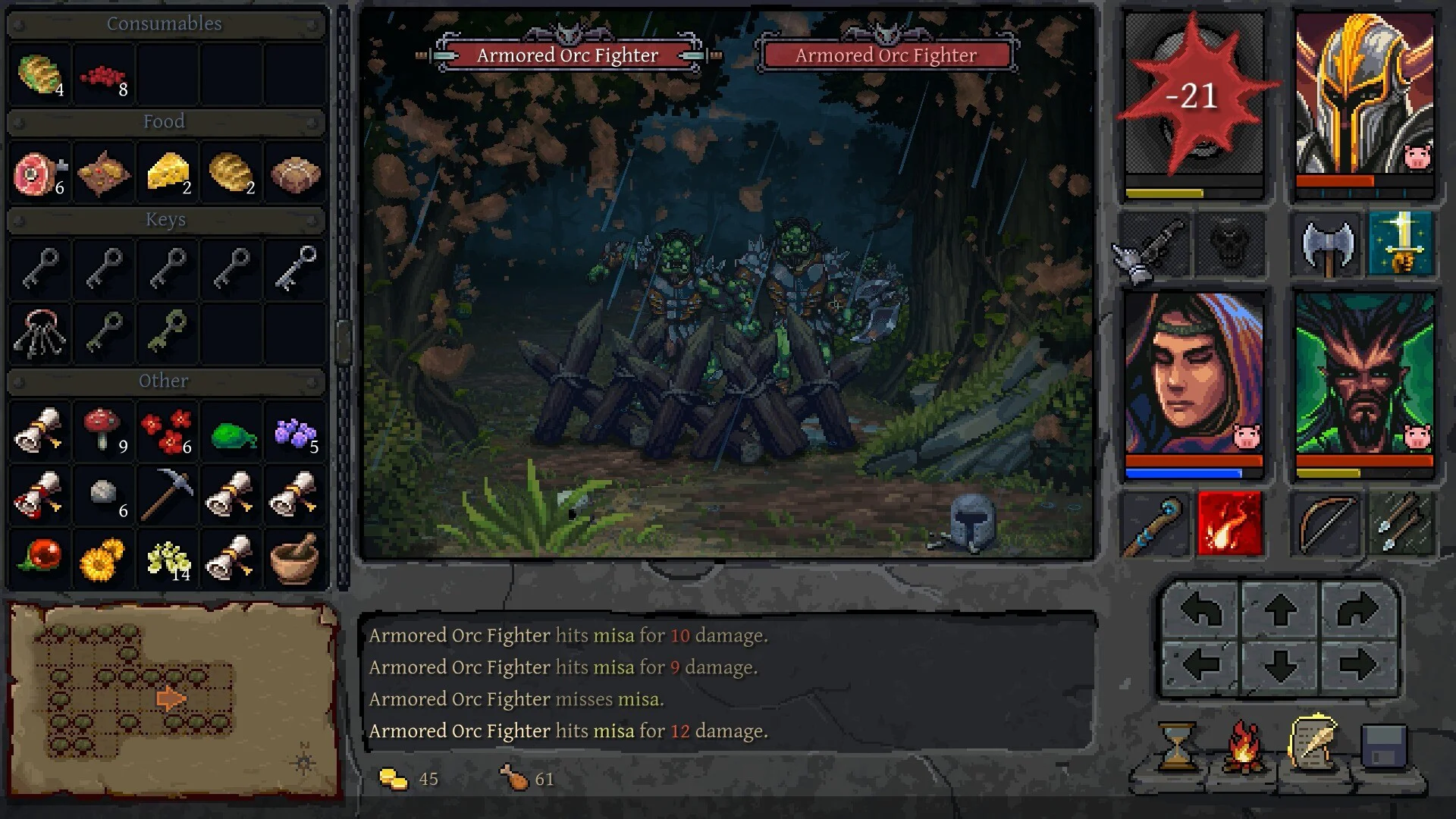
Thanks to customizable difficulty aids and the ability to save anywhere, Underkeep works brilliantly as a bite-sized experience, perfect for picking up to map out a few new grid tiles or clear another dungeon floor. It carries a Steam Deck “Playable” rating, and I can easily see it smoothing out a long commute. Its pick-up-and-play structure drops you straight into the action without needing to recall complex plot points or convoluted control schemes. Gamepad support makes it easily the smoothest control scheme I’ve experienced in a DRPG for a long time. Button prompts and context-sensitive glyphs are clear and logically mapped, making swapping character abilities mid-exploration a breeze.
Underkeep accomplishes precisely what it sets out to do. It stands as a genuine homage to a classic era of RPGs. While it rarely delivers big surprises or twists on the formula, its bite-sized structure and tight mechanics make it effortless to pick up for quick dungeon runs. If you harbour a nostalgic itch for scanning map grids for hidden loot and bottlenecking monster swarms into tight corridors, a delve into Underkeep is well worth the excursion.