
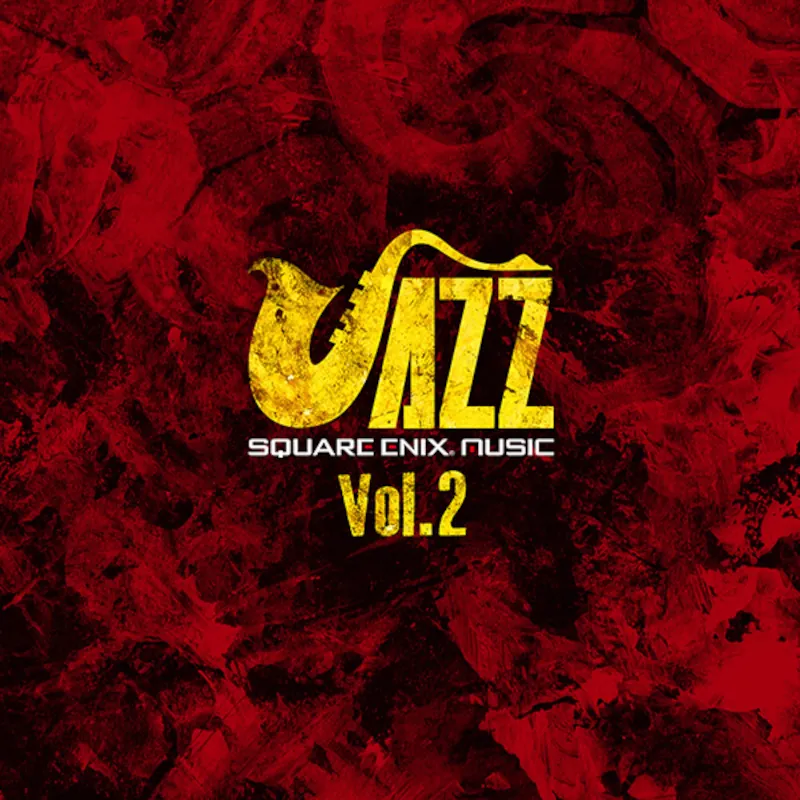


After Square Enix introduced their first jazz album, Square Enix Jazz -Final Fantasy-, the team decided that their second album would not focus on any particular game or franchise. This is the only album in the six-part series to do this. It is the unceremoniously named Square Enix Jazz Vol.2.
(As an aside, the album’s name reminds me of an old John Mulaney bit about split math classes in elementary school where the superior math students were “The Blue Angels,” and the second group named themselves “Group Two.”)
Despite the forgettable name, Vol.2 is actually a great album. Arguably my favorite of the bunch. Why? Because, by allowing arrangers Eijiro Nakagawa and Ryu Kawamura full access to the Square Enix music catalog, things get awesome, fast. It’s not just Final Fantasy, no. We get SaGa, Mana, Chrono Trigger, even NieR! And given the first volume (all FF series) skipped out on Final Fantasy XII and XV, their inclusion on this album makes things extra sweet.
This album opens with a sweet, gentle piano lick and a statement of the melody for “The Legend Begins” (SaGa 2 aka Final Fantasy Legend II). The evolving arrangement takes us into a heavy groove with drum and bass holding things together and guitar trading melody with the horn section. What impresses me most about this arrangement is that the tempo never really changes, but the energy and the added syncopation from the bass make it feel like a wholly new experience. Great intro track, great elaboration of a classic SaGa melody.
Next up? An absolute monster of an arrangement for Final Fantasy VI‘s iconic boss theme “Dancing Mad.” Granted, this is only an arrangement of the song’s final portion, for the actual encounter with Kefka. The arrangement still runs a solid five minutes’ length even with the high tempo, thanks to some fantastic improv sections. (Jazz flute? Yes, please!) The stated melody up-front is already wild enough, with drummer Ken Higeshiro bringing that legendary floor tom, big band sound (think Benny Goodman) to the music, except now we’re playing in 15/8 instead of 4/4. The whole ensemble does great work on this one, moving from moments of real terror to other moments of playful mischief. Of course, you know they couldn’t do it without pulling in the classic Kefka-laugh sound effect at the end!
Two tracks in, and this album is top-shelf material already. Can it hold that status? Maybe not. It’s very rare to come across a perfect album. And this might get me in trouble, but I’m a little disappointed in this album’s arrangement of a classic NieR piece, “Song of the Ancients.” Frankly, I found the use of a swing syncopation unappealing here, and I also think the horns are a poor substitute for Emi Evans’ vocals. Granted, nothing can substitute for those iconic vocals, but maybe use piano and flute instead of sax and trombone to carry the dual melody? One thing I can put in this track’s favor is that Ryu Kawamura makes some fun reharmonization choices in the second half of the arrangement. It worked far better than I would have guessed.
I’m going to hop around a bit in the tracklist order from here. I want to take a close look at the Final Fantasy games that weren’t represented on the first jazz album. For Final Fantasy XII, we have Hitoshi Sakimoto’s Williams-esque brisk orchestral battle theme, “Flash of Steel.” Except, with the help of arranger Eijiro Nakagawa, it sounds more like something from Final Fantasy X-2. (Speaking of, what a shame that X-2 isn’t found on this album!). The intricate guitar work draws the listener in during the first minute, then the horn section goes from the fun filler to the dominant carrier of the melody. This switch-up feels so good. I also have to praise Ken Higeshiro’s drumming on this track!
Later in the album, Nakagawa offers his take on the intense theme “Apocalypsis Noctis,” music used during the dramatic semi-scripted battles with the game’s Astrals (summons). In its original form, this was a monstrously large orchestra-plus-choir piece from the venerable Yoko Shimomura, making impeccable use of a 3/4 and 6/8 mix. Nakagawa’s jazz version starts soft and brooding, with bass and piano carrying the energy and basic musical motion, now in a common tempo (4/4) swing. In this version, the star of the show is definitely Ryoji Ihara on flute, though Takana Miyamoto shows off some complex reharmonizing throughout and later trades solos with flute in the improv section. This whole track is more like a fun dance than a grand display, but I gotta say: it works!
Perhaps the most avant-garde track on this album, Ryu Kawamura’s arrangement of “Swivel” from Seiken Densetsu 3 (Trials of Mana) attempts to maintain the folksy feel of the original with the whirling 12/8 tempo and Yu Manabe’s fiddle-esque violin work. Kawamura’s choice to let the ending build to cacophony before collapsing fits the spirit of this musical theme well. I also liked the use of vibraphone, though I think technically this was just synth keyboard from Takana Miyamoto, since no vibraphone or other mallet work was listed in the album credits.
Those individual tracks I haven’t touched on? They range in quality between the highs of “Dancing Mad” and the lows of “Song of the Ancients.” Generally, though, these are all great tracks, and they demonstrate the power of the Nakagawa/Kawamura arranging duo.
After this album’s release, Square Enix went on to publish individual jazz albums for Final Fantasy VII, the SaGa series, and Chrono Trigger. While I’ve enjoyed all of these albums plenty, I can’t deny my continued devotion to the buffet-style selection of Square Enix Jazz Vol.2. If you’re going to collect music from the Square Enix Jazz series, I dare say this is the best place to start!