

For many of our readers, it’s summer time! That often means vacations near or far, whether that’s a trip to the local beach or a more exotic locale. But why limit vacation planning to only real-world spots? We’re RPG fans, and we’ve all seen countless picturesque landscapes, coastal villages, floating islands, hot springs, and so much more. In the spirit of the summer, we came up with several great RPG locations we’d want to visit or vacation in.
A huge thanks to the 18 team members that came together to share their diverse vacation spots, making this one of the highest-author-count features ever! I always encourage as many of the team to contribute as possible to give us the widest reach and range on group features, and everyone certainly achieved that here! I hope you enjoy reading everyone’s selections, whether it inspires warm nostalgic feelings, or encourages you to pick up one of these games that you have yet to play. Let us know your thoughts, and some of your own RPG locations you’d want to visit or vacation in via Facebook, Bluesky, Instagram, Threads, or our Discord server!
Lastly, for our readers who are still in winter, feel free to return here later in the year or just use your imagination and pretend you’re in the often-warmer climate that some of these locations are best visited in.
Intro by Mike Salbato
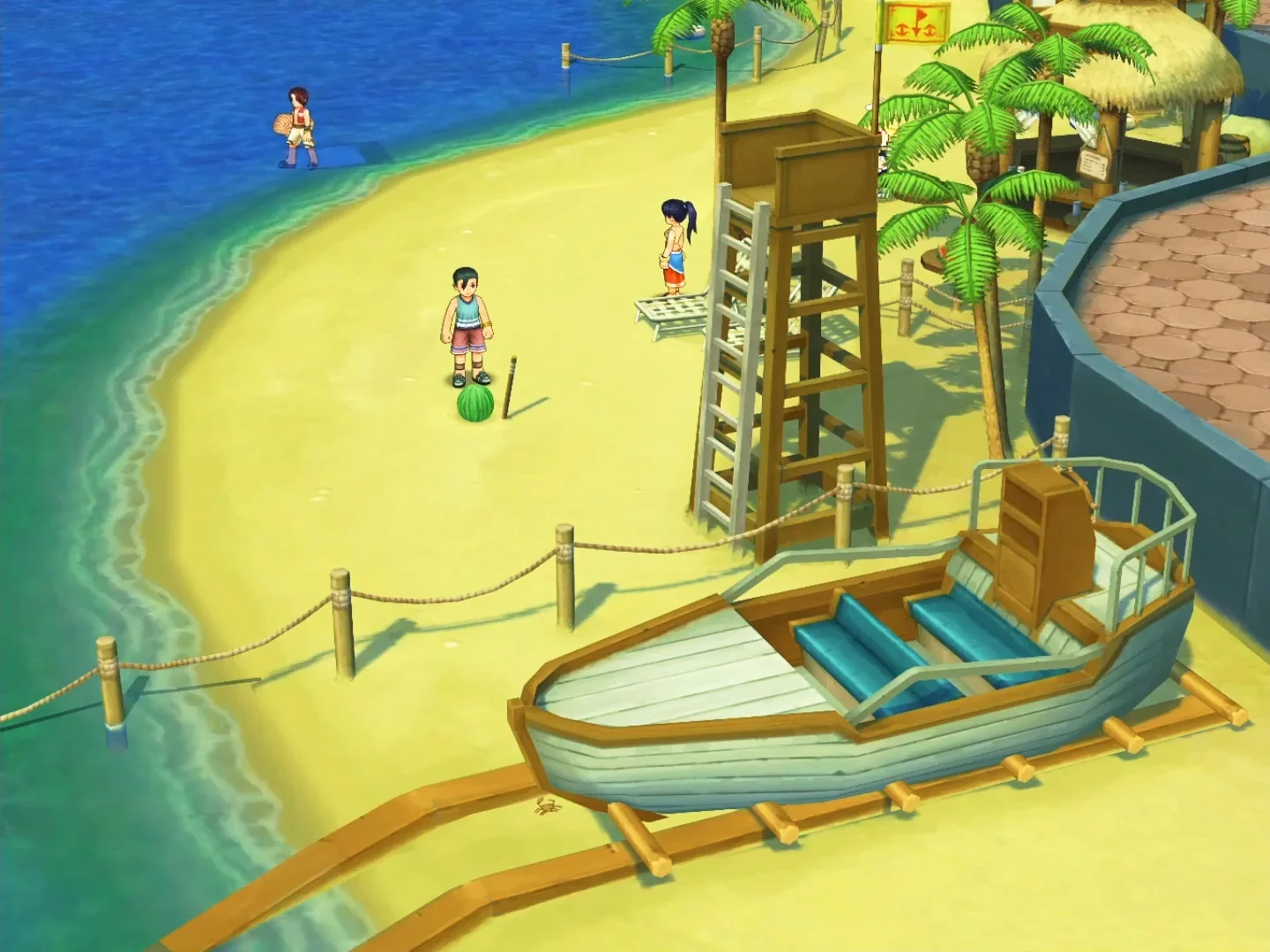
Altamira – Tales of Symphonia
by Neal Chandran
Altamira is a seaside resort town in Tales of Symphonia that strongly reminds me of summers spent in Wildwood and other New Jersey Shore towns. Like Wildwood, Altamira’s vibe is too gaudy, touristy, noisy, and crowded for some, but that’s part of its Jersey Shore charm. Altamira’s elemental rail system that transports people from the main beach hub to the amusement park made me think of Wildwood’s tram cars that pretty much do the same thing. Seeing the Ferris wheel in Altamira’s amusement park was like seeing the Ferris wheel in Wildwood’s Morey’s Piers amusement park.
Altamira is not my vibe nowadays. I prefer more relaxed Jersey Shore towns (like Avalon) and would not want to live in a seaside town year-round. But simply owning a shore house as a vacation home is the New Jersey dream. In a perfect world, I would buy an Altamira-area home at a low price, enjoy the heck out of it for decades with family and friends, then sell it at a higher price in my older years (because shore houses and beach town property are always hot commodities) to a younger person to enjoy as much as I did.
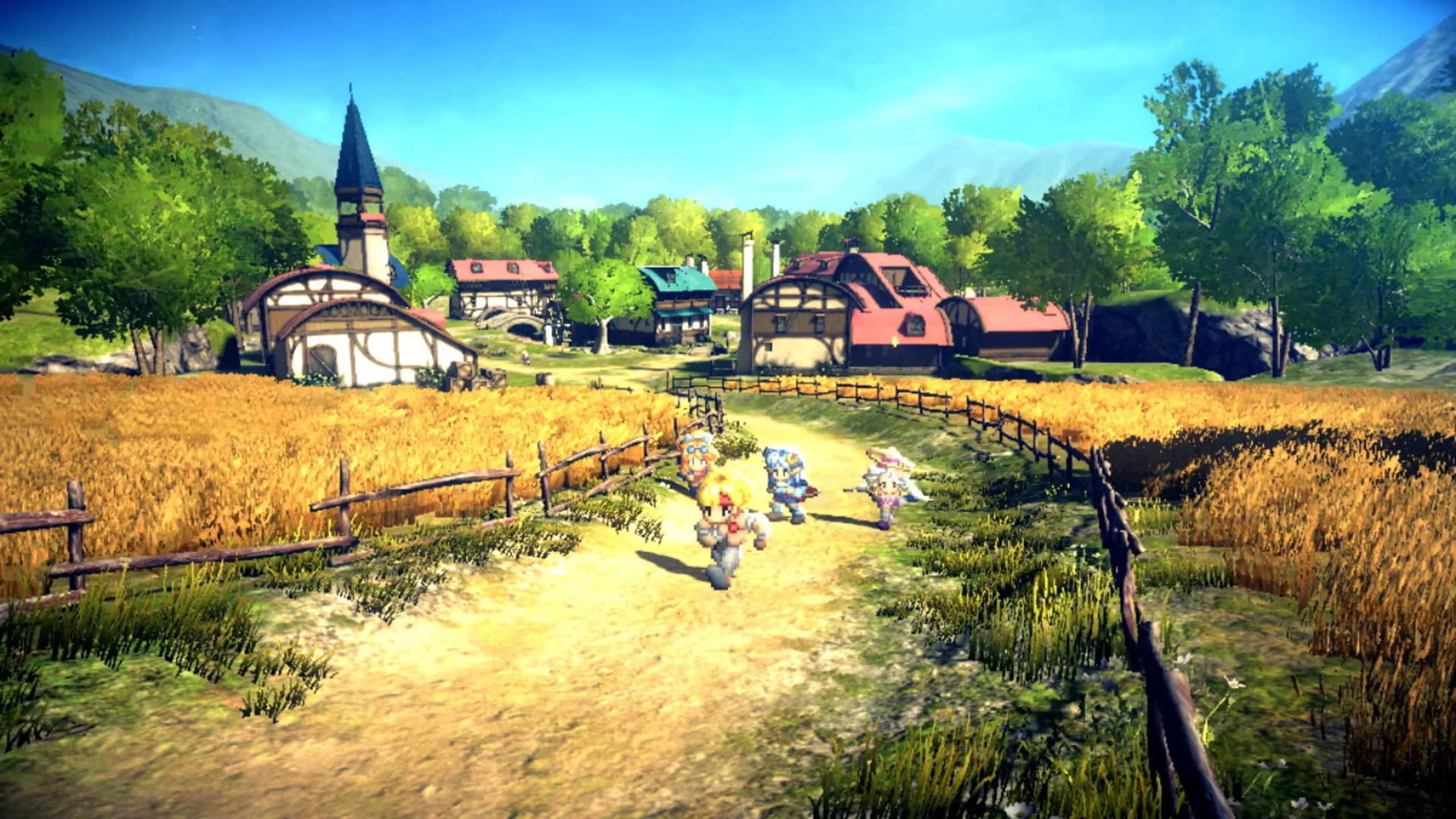
Arlia – Star Ocean: The Second Story
by Stephanie Sybydlo
I’m a city girl. I’ve lived next to malls with whatever I want and places open late, hearing more noise (constant noise) well into the AM hours. More cars and people mean more smoke and pollution, and—wait, is that the North Star? Nope, just a satellite.
You get where I’m going here… As great as city life is, it can also feel suffocating and isolating. Claude C. Kenny’s story in Star Ocean: The Second Story felt somewhat familiar. He was once an Ensign, exploring a technologically advanced but ruined world, till a mishap sees him isekai’d to the planet Expel—a magical and Medieval-styled world that hasn’t developed or adopted technology like we have. But life ain’t so bad. Claude saves a local lady and gets invited to the town of Arlia as thanks. And Arlia is a picturesque village: overgrown trees, generous neighbours, and only birds up in the sky. One of Claude’s first remarks is how “clean” the air is, which has Arlians wondering what “dirty air” is like (and inviting him to breathe as much as he’d like!). Arlia, to me, is the retreat to nature after living cityside for so long. A feeling I still indulge in on nature trails to melt away my anxieties.
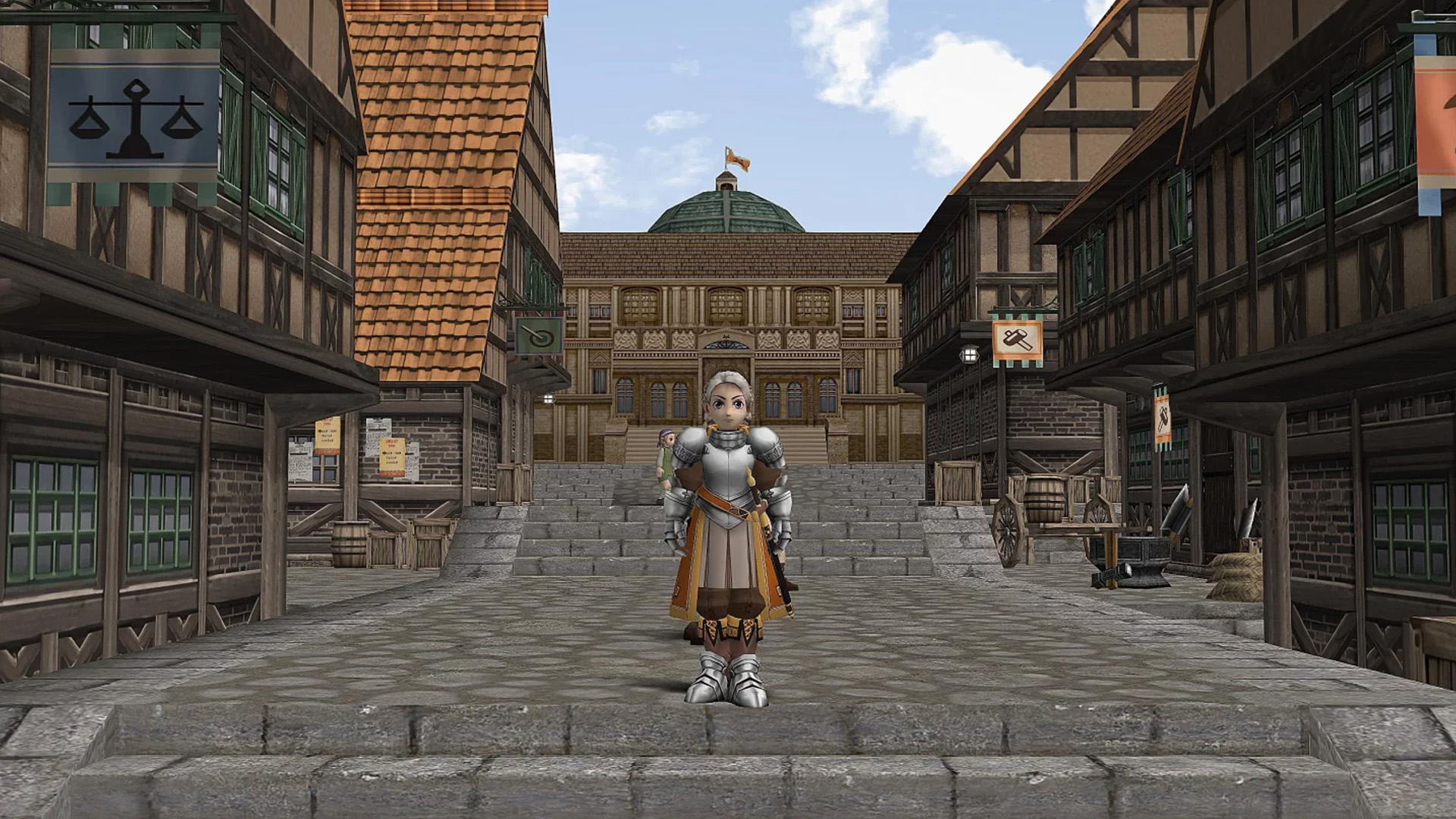
Budehuc Castle – Suikoden III
by Audra Bowling
A central theme of the Suikoden series involves people of differing cultural and societal backgrounds coming together to stave off a larger threat or conflict. No Suikoden headquarters so succinctly captures that narrative component more than the varied and colorful grounds of Budehuc Castle in Suikoden III. Initially created by young Lord Thomas as an aspiring free trade zone, the castle town becomes the bustling headquarters of an army comprised of civilians and soldiers from all over the six tribes of the Grasslands, the Zexen Federation, and even farther locales such as the Holy Kingdom of Harmonia, bringing together peoples who were once even hostile adversaries. It essentially exists as a neutral state where people unite against mutual destruction. Throughout the sprawling grounds, there’s a ton of interesting locales to visit, as well as an assortment of memorable characters who can potentially take up residence there. You can even explore the area as a dog to see things from a wholly new perspective if you wish! Budehuc Castle is a phenomenal hub of commerce and culture for gamers to engage with, and it symbolically represents one of the key narrative tenets that define the Suikoden series.
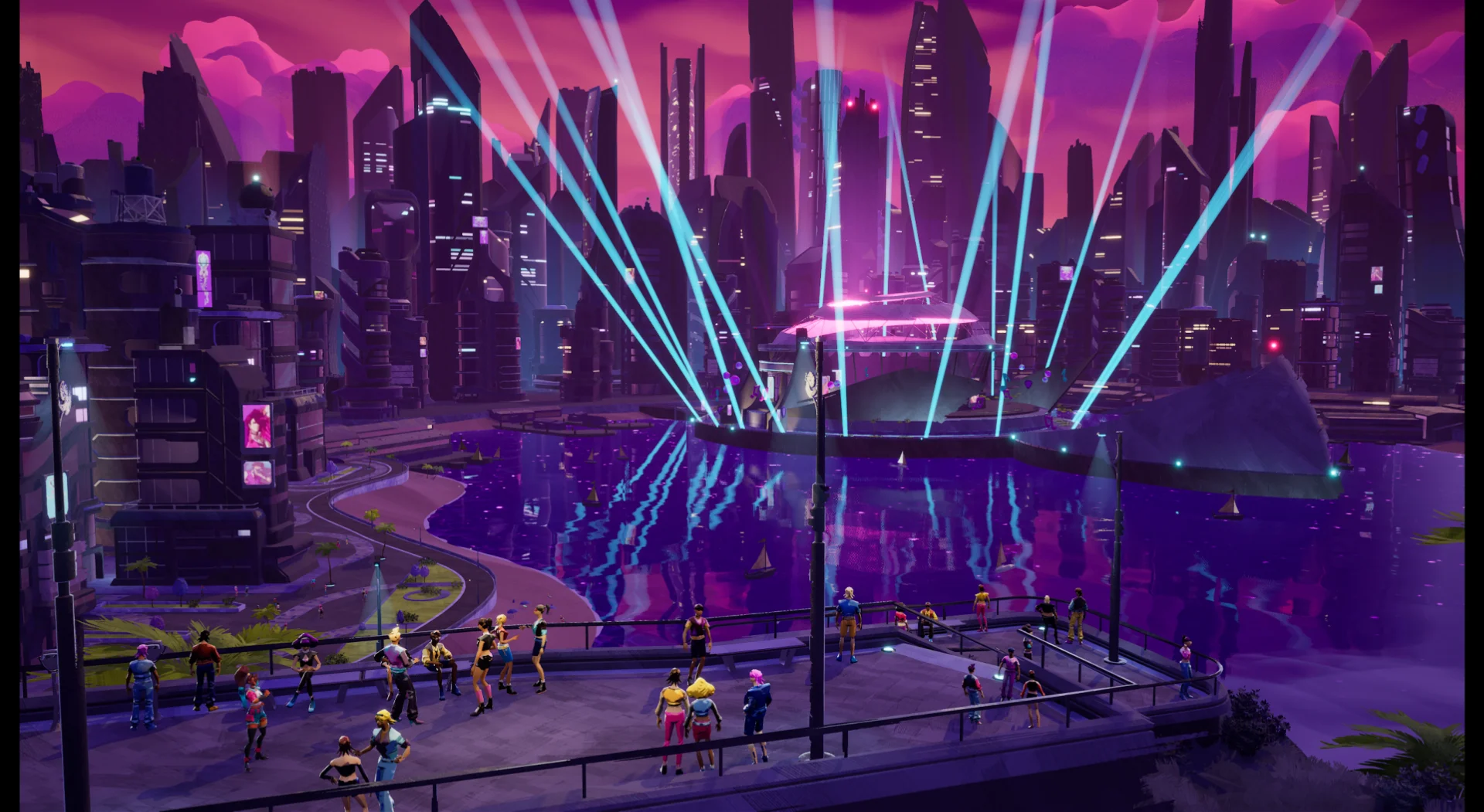
Chordia – People of Note
by Matt Wardell
Every town and biome in People of Note‘s painterly world of Note is aesthetically based on a supergenre of music, with smaller neighbourhoods within those areas dedicated to subgenres. But as much as I like Rock or Hip-hop, it’s the Pop metropolis of Chordia from the game’s opening hours that really sings to me. Chordia feels like a bustling modern city where everyone’s biggest and only concern is getting a good spot for one of the constant concerts in the central stadium; it’s like a perpetual weekend in a world that’s attained peace, and not the tranquil, sleepy kind.
Piano keys and bars of musical notation motifs wind through the vibrant, neon architecture, at once bright but never blindingly so. Peruse streets devoted to ‘90s boy bands and ‘80s synthpop avenues, or take the “bass line” monorail Downtone to the flashy bars of the K-pop district. If there’s an afterlife, I want it filled with catchy earworms and musical puns.
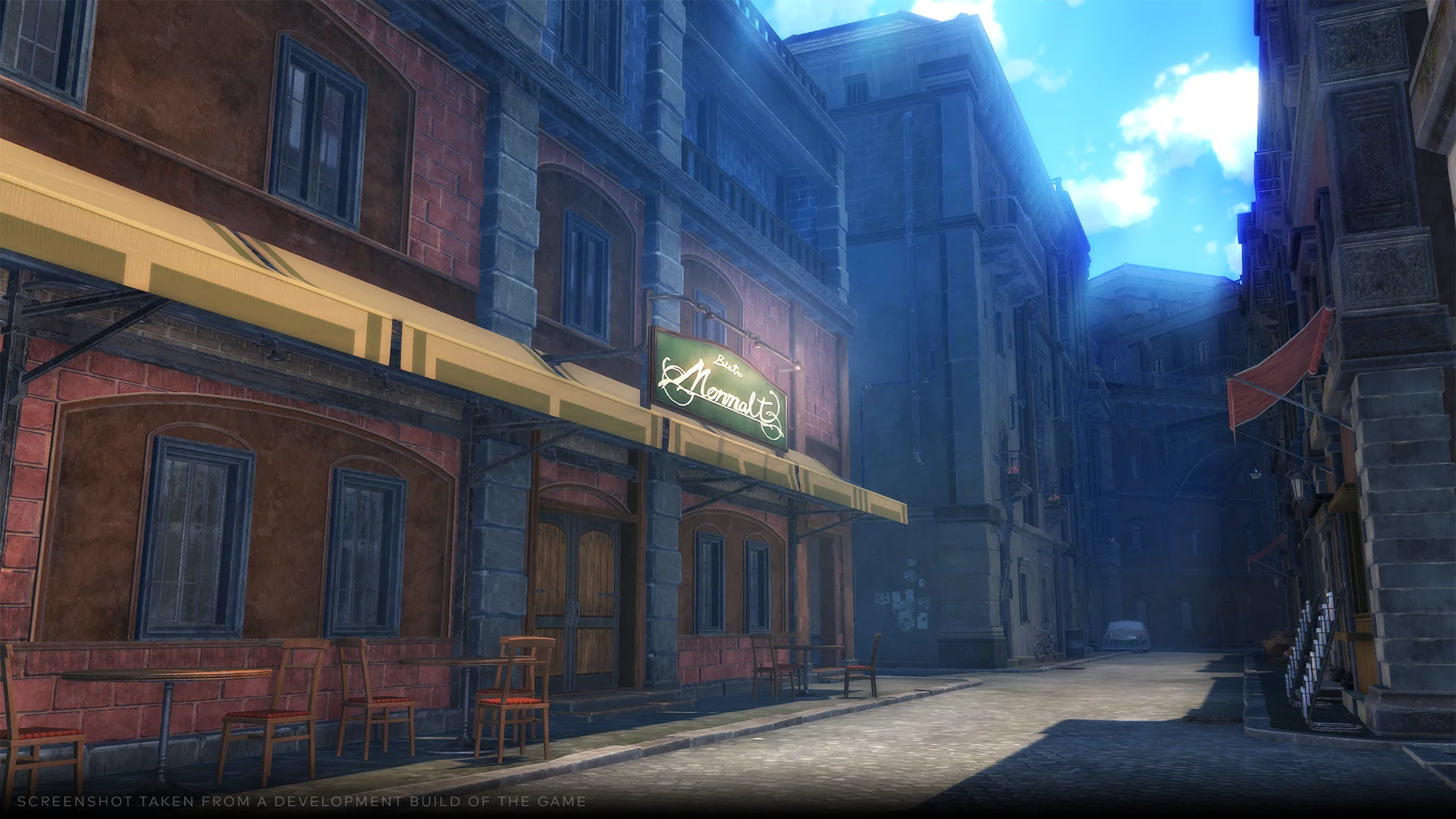
Edith – The Legend of Heroes: Trails through Daybreak & Trails beyond the Horizon
by Audra Bowling
Edith is the capital city of the Republic of Calvard, a nation located in The Legend of Heroes: Trails series’ Zemuria continent. It still retains a unique fantasy feel, but also has some modern conveniences that make it seem like a fun place. The city’s various sectors vary greatly in function and architecture, providing places like bookstores or theaters to leisurely spend time in during the day or spots to enjoy the rather energetic nightlife. There’s even something of a black market beneath the city proper, should one feel particularly daring. Edith is sort of a melting pot for the many different cultures and people of Zemuria, so traversing its streets means you’ll encounter all sorts of people from various walks of life, even including an all-important cat hierarchy to pay attention to! Edith feels a lot like a more fantastical home away from home, as it were. After all, who wouldn’t want to grab a latte with a friend while discussing the latest mobile orbal tech developments and receiving local Bracer Guild news? Zemuria in general would certainly be a fun place to visit, with Edith in particular having a lot going for it both in terms of relaxation and adventure.
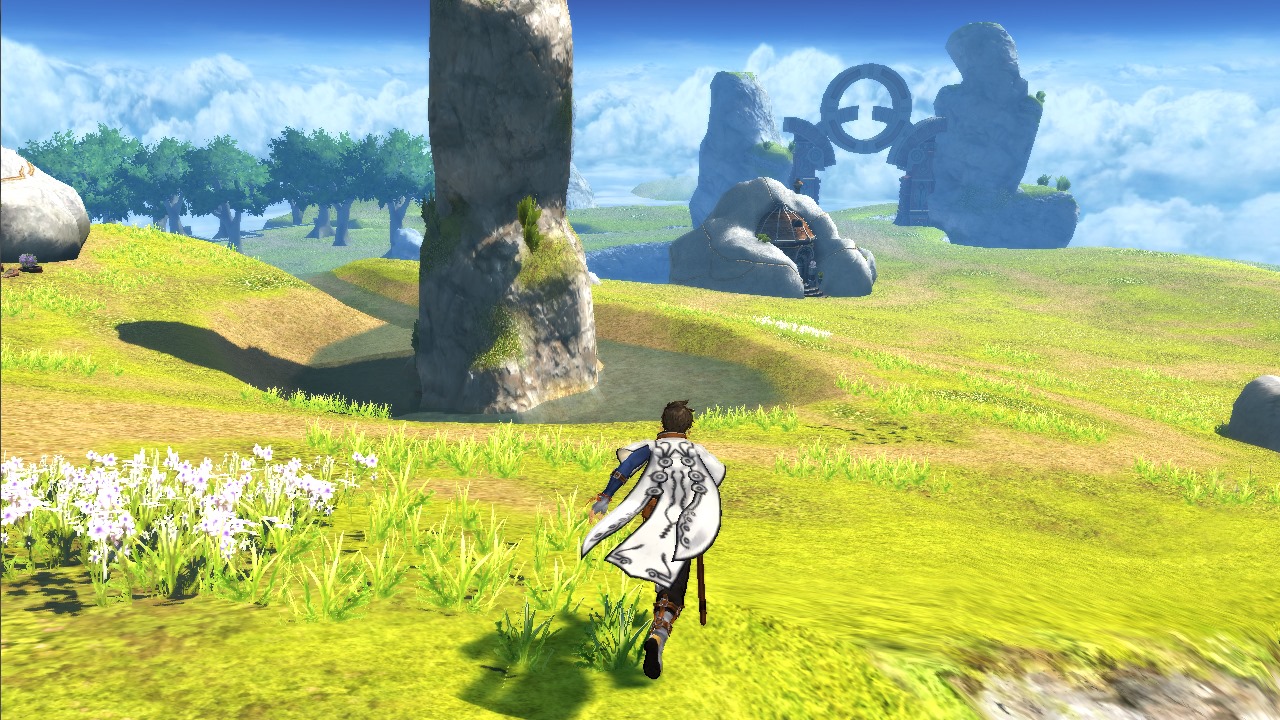
Elysia – Tales of Zestiria
by Rob White
Elysia is the area you start in upon beginning a new game in Tales of Zestiria, and my reaction to seeing it for the first time was something like “wow, this place looks beautiful.” The aesthetic is minimal, and the atmosphere is peaceful, light, and breezy—fitting for the home of the seraphim. The small village is located high up in the sky, and that beautiful blue is so pleasing against the verdant green of the rolling grassy fields and the bright white small houses. I always find solace in nature and in the sense of awe it can inspire—mountains, forests, epic views. It calms me and makes me feel part of something so much bigger than myself. I can imagine living life at a gentle pace in Elysia, surrounded by and finding joy in nature, away from the noise and chaos of the outside world.
Excess Express – Paper Mario: The Thousand-Year Door
by Mario Garcia
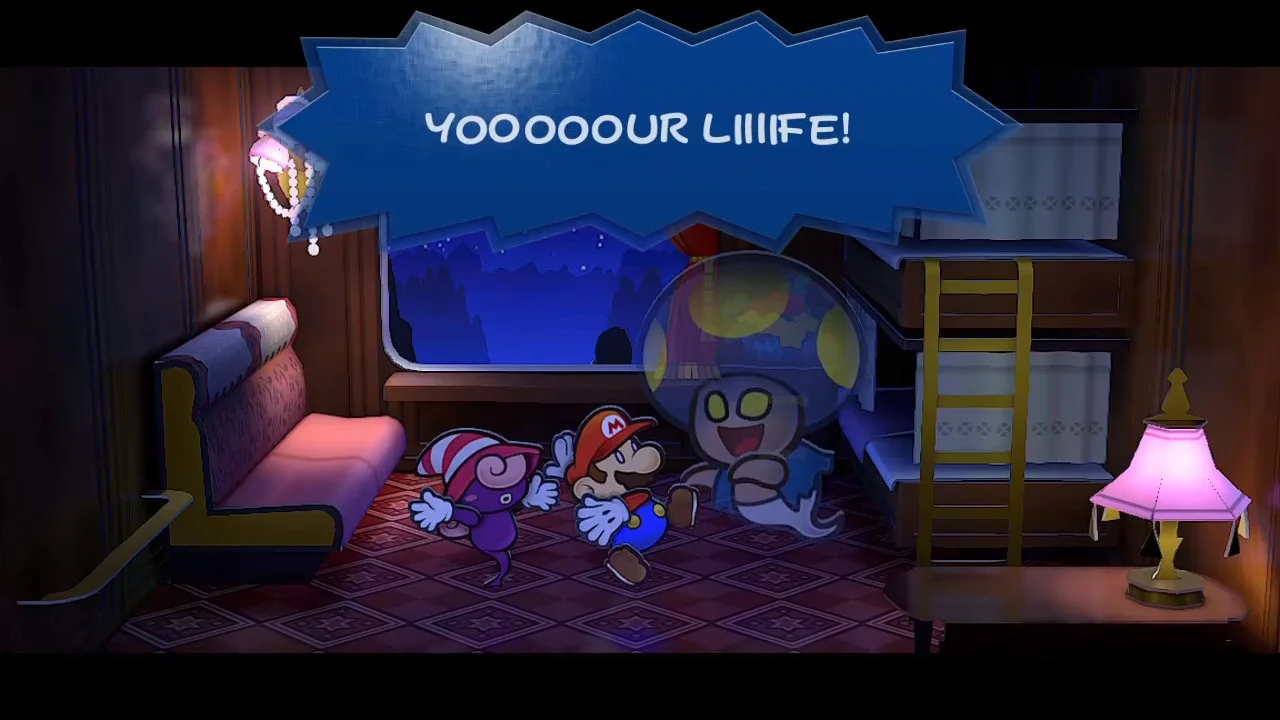
Bomb threat mystery aside, life on the Excess Express wouldn’t be too bad! This luxurious train is the main setting of Paper Mario: The Thousand-Year Door’s Chapter 6, serving as a particularly glamorous means of transportation to Poshley Heights.
There’s just something so appealing about traveling in a spacious, cutely decorated cabin, unwinding in comfort as a beautiful landscape passes by. For a change of scenery, you can enjoy a delicious meal in the dining car, with a picturesque view of the journey as your backdrop. Or you can stop by the shop for a nice souvenir or two!
I also feel like this would make for a fun setting to meet fellow travelers and make some friends while you’re at it. Sure, one of the cabins is haunted, but the ghost seems open to some warm conversation, too!
Guldove (Another World) – Chrono Cross
by Aubrey Bryn
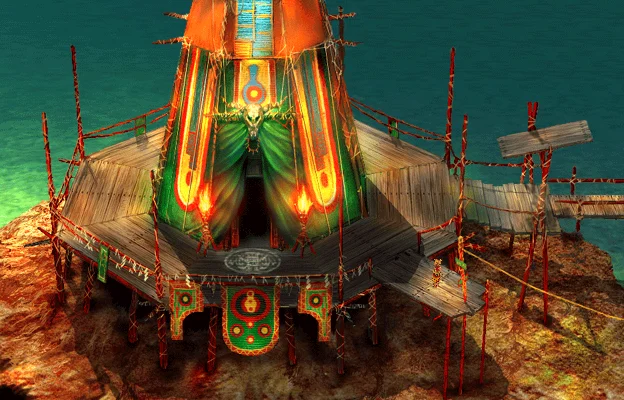
The world of Chrono Cross is an embarrassment of riches when it comes to its setting. I had to narrow it down from several options, including the fishing village of Arni, the sprawling city of Termina, and the Demi-human village of Marbule (at least in the Home world). But the location that spoke most strongly is Guldove, a village rich in history, tradition, and generally good vibes.
I went with the Another World dimension because, while Home World still has some of what made me fall in love with it, there is no denying that the village’s immaculate vibes were eroded by the kingdom of Porre’s invasion during a power vacuum. Perhaps even worse, Guldove’s culture and traditions have continued eroding thanks to tourism by people who are more interested in the aesthetics of different cultures than they are in these cultures existing.
Harlech Village – Xanadu Next
by Ben Love
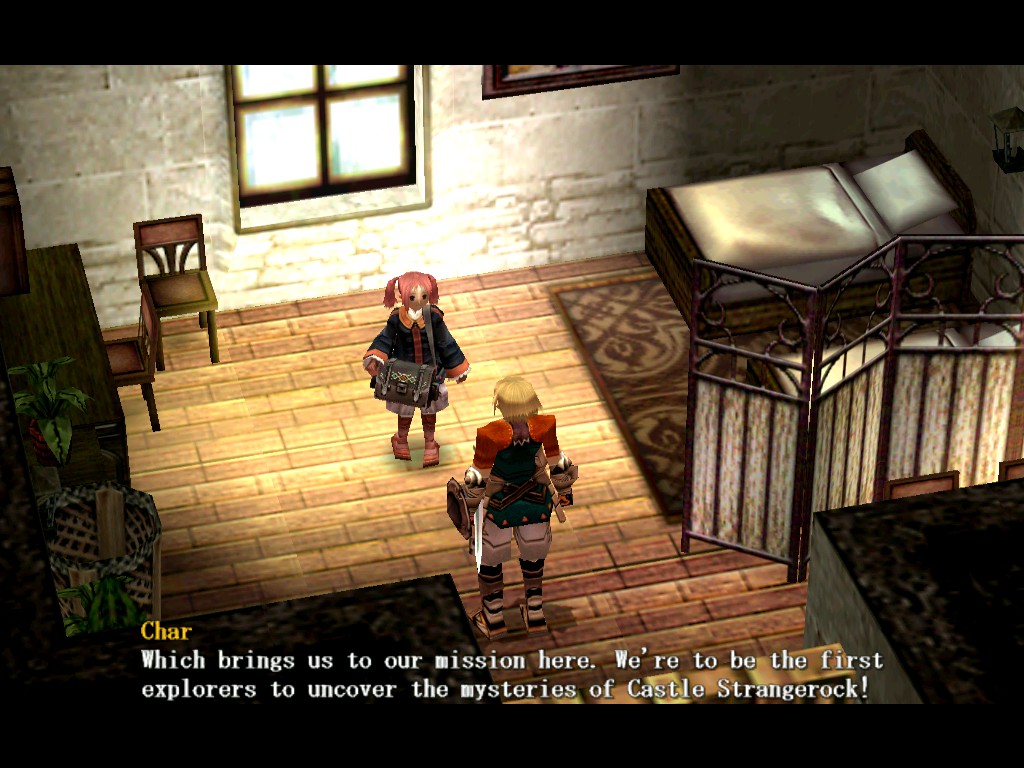
An island shrouded in fog, sitting upon the vast Lake Orwell, dotted with mysterious ruins and haunted by the curse of an ancient civilization long since passed. A great setting for an adventure, to be sure, but perhaps not the most welcoming place to spend your time at first glance. However, what makes Harlech Island a must-visit RPG location is the small, close-knit community that calls it home.
The rough but jovial Fisherman Ned ferries travelers across the lake, regaling them with tales of Ancient Xanadu and pointing out Castle Strangerock when it peeks out from the mist. The priestess Liese welcomes all weary travelers and provides guidance and solace from the long journey. Innkeeper Alcott and the waitress Frieda ensure your stay is comfortable, while the songstress Sandra sings songs of old heroes. Armorer Baggins and the old warrior Lazarus keep prospective treasure hunters prepared for the trials ahead and turn a blind eye when the authorities come knocking. Shopkeeper Spence doles out sage wisdom and breadcrumbs of the island’s secrets, so long as you don’t pry too hard into his family’s past. Zoe and Dana, a pair of dancers traveling the world, entertain the local children (and any travelers that stop to watch). If you are lucky, you may cross paths with the treasure hunter Agnes, a woman on a closely kept mission who may nonetheless point you in the right direction.
Xanadu Next‘s Harlech Village is a reminder that no matter how fantastical or forgotten a place is, it’s the people who truly make it special.
Hotto – Dragon Quest XI: Echoes of an Elusive Age
by Aleks Franiczek
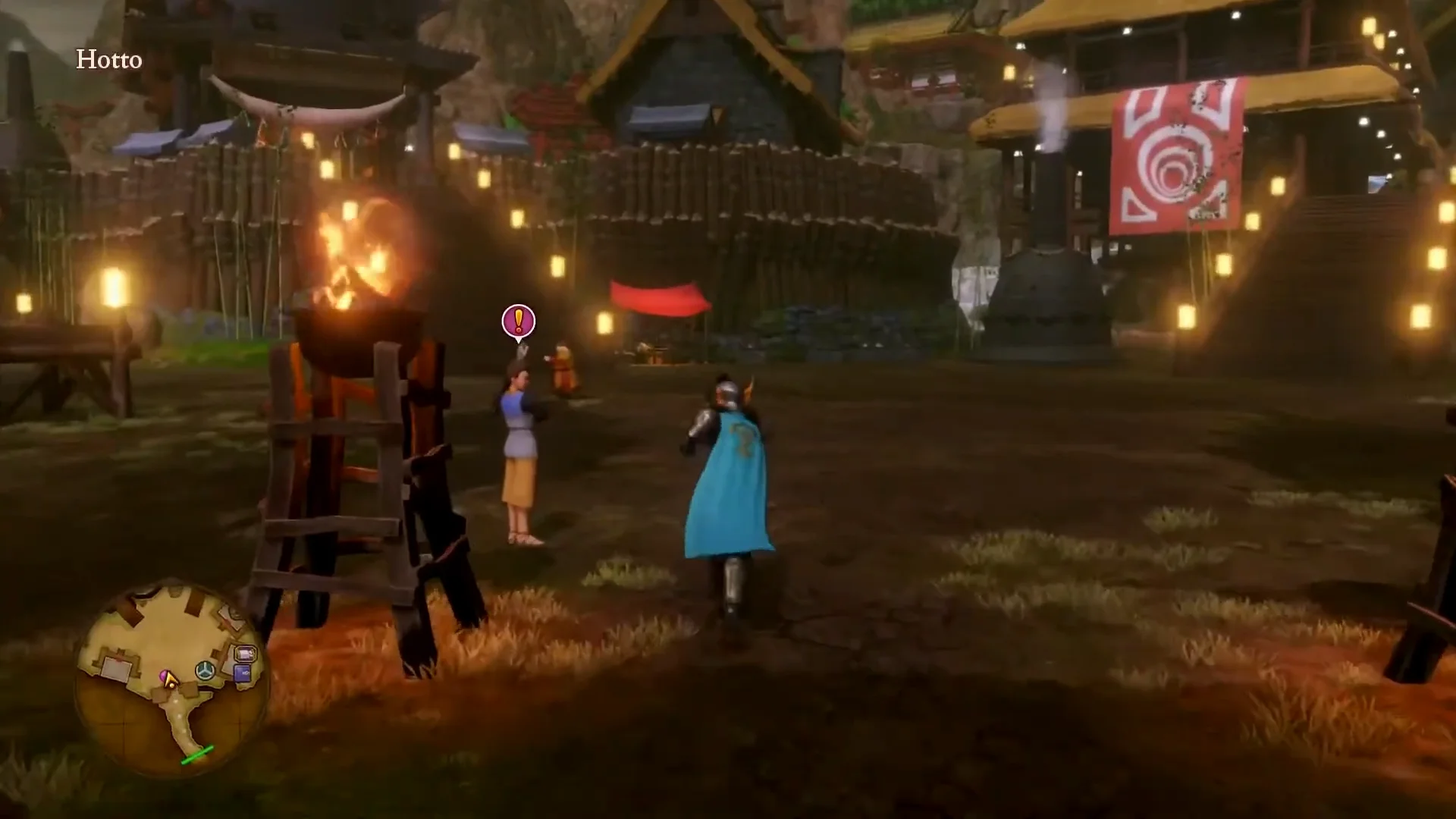
Dragon Quest XI’s town designs are so good and support each location’s distinct feel so well that any of them would be great candidates for this feature. I’ve already travelled to Japan a few times, but a fantasy feudal Japan decorated with charming Toriyama aesthetics? I can’t say I’ve yet had the pleasure, so Hotto easily makes my RPG vacation bucket list. Here we come mountain vistas, inspiring architecture, and traditional onsen baths! Ideally, I wouldn’t visit while there’s a high risk of dragon attacks.
One of the worthiest challenges of travelling to new places is adapting to their customs. In Hotto, every citizen speaks through haiku. What a fun little creative constraint on everyday communication that would be—and it doesn’t even require all the painstaking work that goes into learning a new language! Time to practice:
R-P-G locales
There are many I could pick
Hotto sounds like fun
Hey, don’t judge me. I’m just starting out here.
Inaba – Persona 4
by Lucy Gray
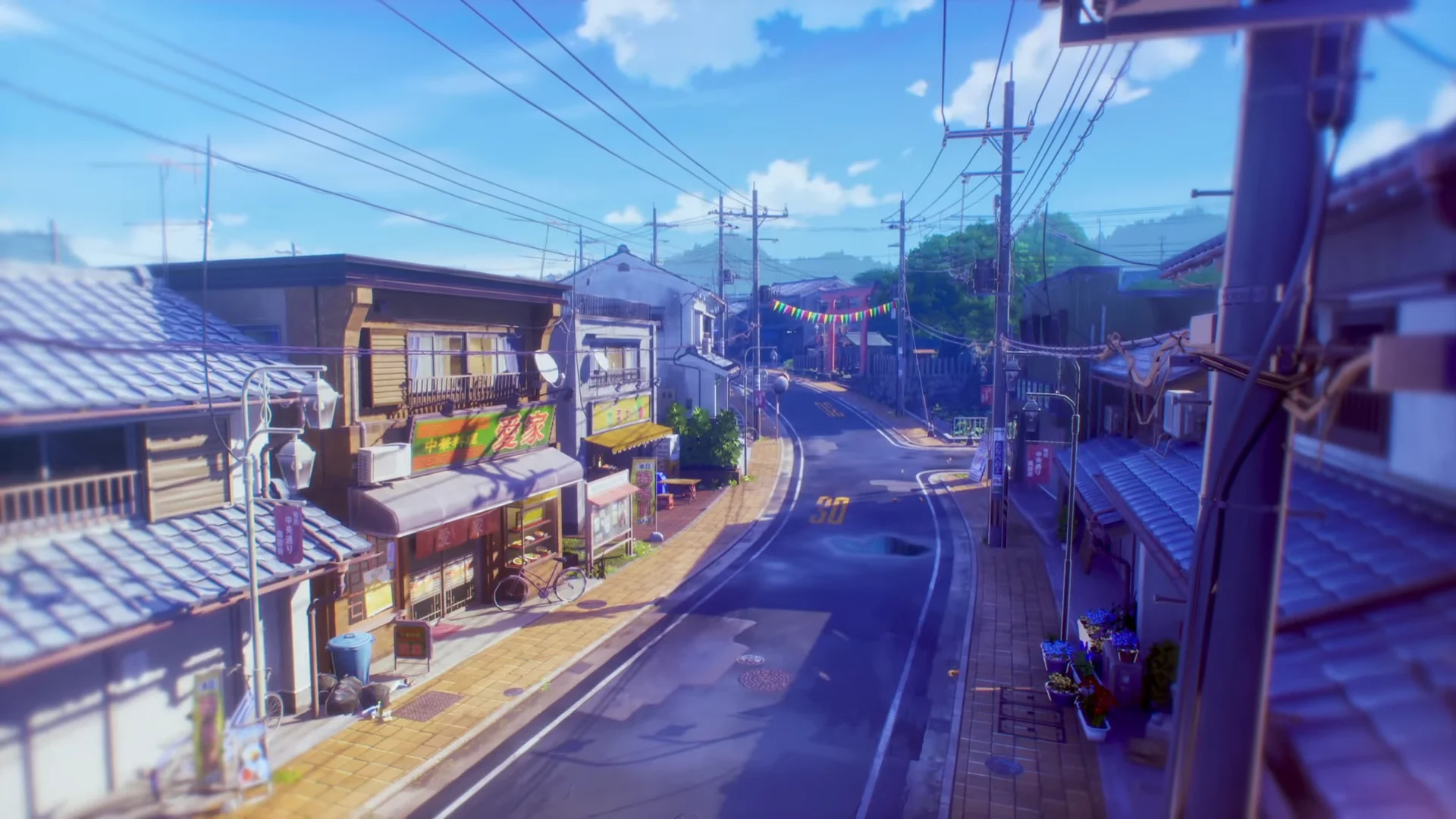
Persona is always a series with interesting locales, but for many, Persona 4‘s Inaba wouldn’t be the first place they would think of as a standout place. A town with one main street, a superstore, a school and a hospital feels hopelessly limiting for a game player… just as the protagonist probably feels coming out to the countryside from the city. What makes Inaba a fantastic RPG location is not just the moodiness of the fog-filled town that rivals the English moors in a Bronte novel, but also how Inaba’s limitations as a town feel natural, rather than weird and jarring as they might with a game set in a bigger city. You expect not to be able to walk into every door or shop when half the stores are on the verge of closing, and even the need to take a bus or moped to anything interesting feels perfectly natural. The town ends up a character right alongside the members of the investigation team: from a dying podunk town at odds with anything new, to a terrified town on edge in the fog, to finally a revitalized area working together to embrace the new. Inaba itself is set up as the perfect mirror to the protagonist’s journey by the end, rather than a simple location name on the map screen.

Ivalice – Final Fantasy Tactics Advance
by Ben Love
Although I’ve written at length about the dark undercurrent bubbling beneath the surface of Final Fantasy Tactics Advance’s bright, colorful Ivalice, the fact remains that the initial hours are a true delight. Ivalice is (quite literally) the stuff of childhood fantasy: a bustling world full of many different races coexisting, a vast network of rival clans competing for glory, with powerful judges to mediate disputes and ensure that the threat of death is but a distant memory. When Marche arrives, his outsider status is quickly forgotten once he’s taken in by a rookie clan, offering young players the appealing fantasy of fast friendship and immediate adventure. Such a system in which conflict is commonplace, yet battle carries the trivial consequences of a friendly sporting match, is something only the naivety and innocence of a child could conjure. A vast play space to test one’s courage without threat of serious injury or death, and an endless world of camaraderie and adventure… is it any wonder Marche’s friends don’t want to leave?
Kamura Village – Monster Hunter Rise
by Michael Sollosi
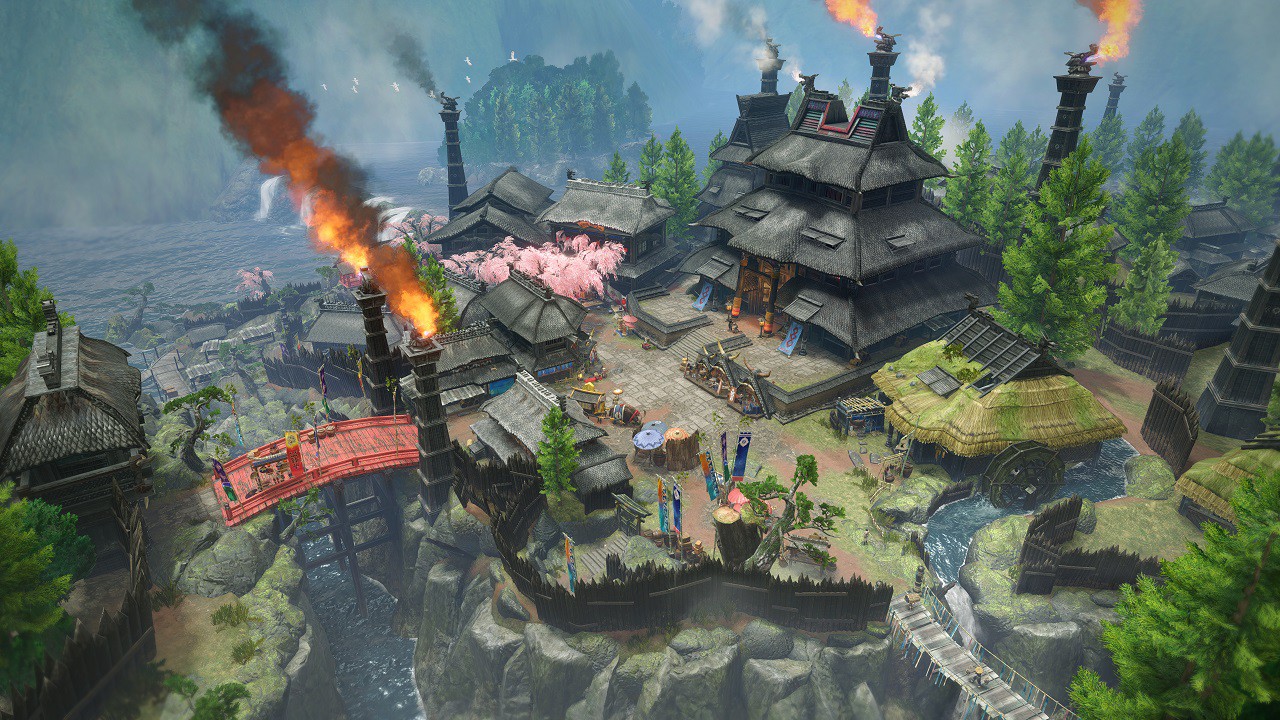
Monster Hunter’s setting seems to exist in a delicate balance. Monsters and the hunting thereof dominate the world economy, but also put every human settlement under constant threat of attack. The environment and ecology are beautiful, but dangerous.
Kamura Village in Monster Hunter Rise is so idyllic that I would love to spend the rest of my life there, living in a community full of friendly denizens while practicing dog, cat, and owl husbandry. Kamura’s citizens are also ready and able to take up arms in case a monster rampage comes along, which is inspirational in its own way. I guess if I want to live a life eating mochi prepared by cat chefs under the shade of a cherry blossom tree, I should practice my gunlance footwork.
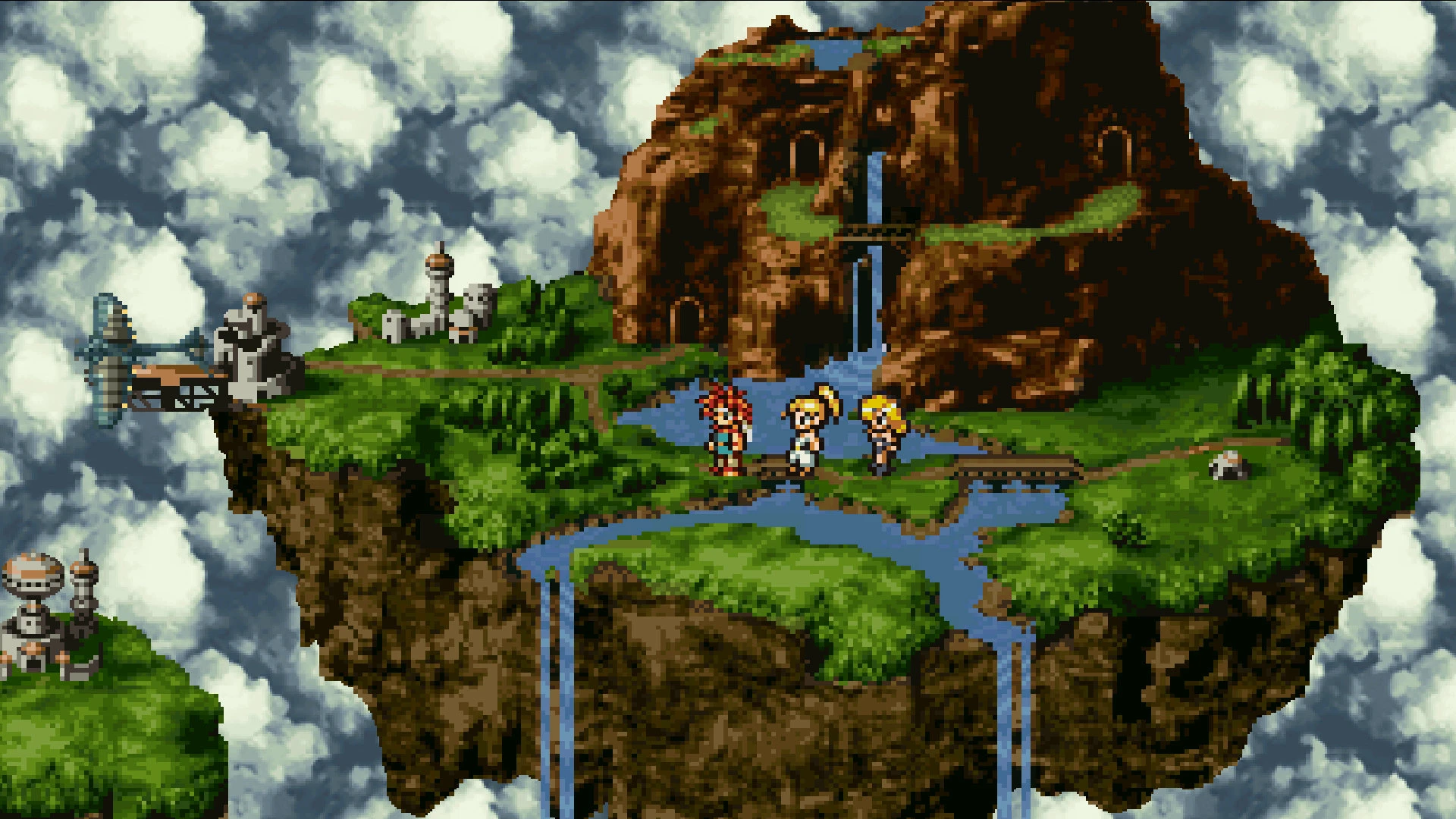
Kingdom of Zeal (12,000 BC) – Chrono Trigger
by Patrick Gann
I love a good floating island/continent in any fantasy setting. The only problem is that what comes up tends to come down. In 12,000 BC, during a major turning point in Chrono Trigger’s plot, we reach the Kingdom of Zeal. A series of floating islands connected by bridges, with small cities dotting the landscape on the way up to Zeal Palace itself. Everyone is enlightened, and everything is beautiful, and the view is brilliant… so long as you don’t look at the desolation below and grapple with the have/have-not disparity.
Given what happens to this magical floating island chain… It’s definitely a place to visit but not to live! “The Black Wind Howls…”
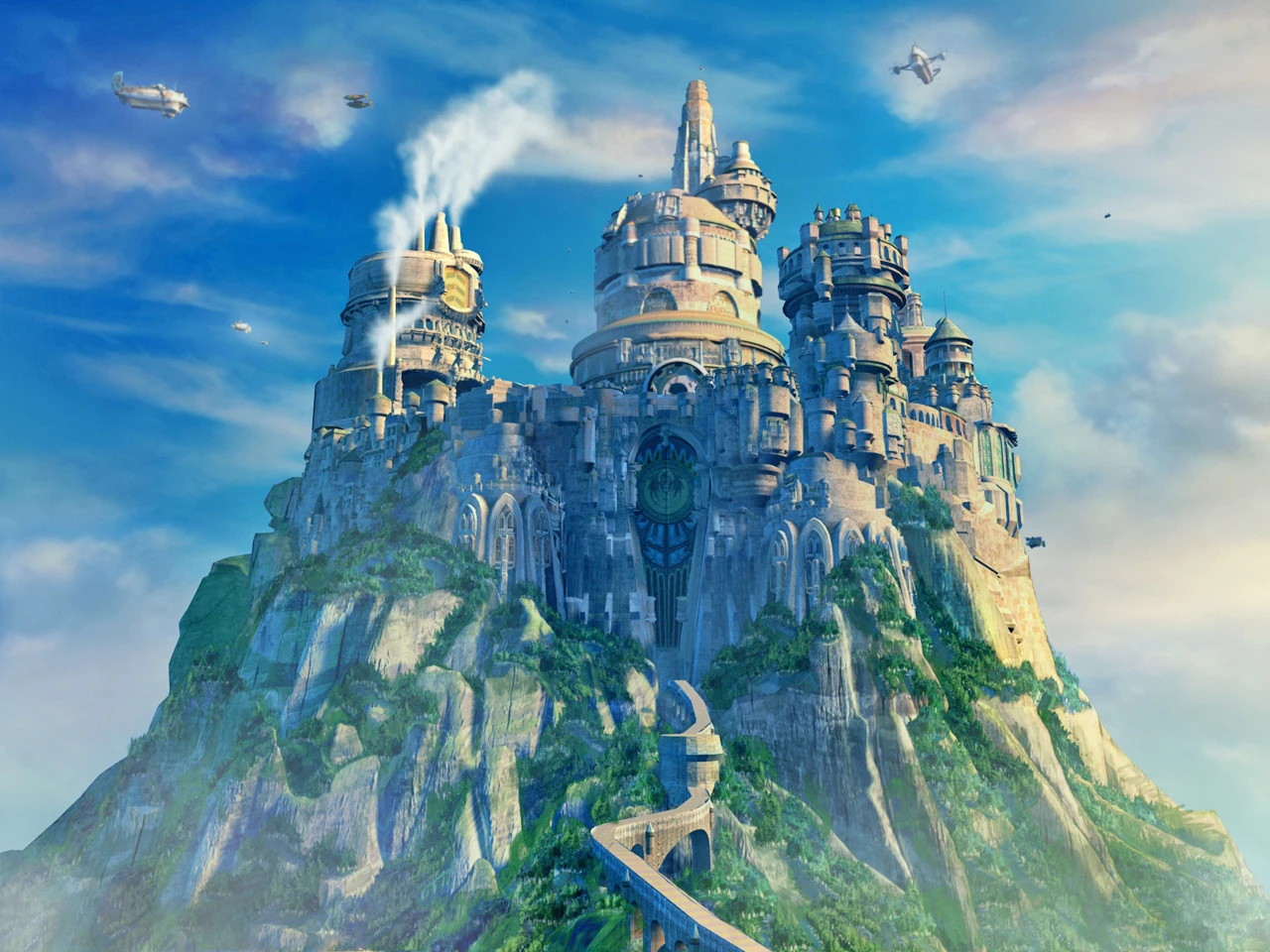
Lindblum – Final Fantasy IX
by Rob White
Lindblum from Final Fantasy IX is such a cool city. I love that it looks like it’s been built into a hill with houses and towers all jutting out across the surface, crowned by Lindblum Castle. It strikes a nice balance between the hubbub of city life without being too far removed from the natural world outside its walls. It’s full of residents but seemingly moving at a slightly slower pace than you might expect from a city of its size. Maybe it’s the very “traditional” fantasy aesthetic of the city which influences this feeling too—many buildings look quaint and homely, the streets are cobbled and winding, and the whole place is just rather cozy. The most modern things there are the airships coming and going from the castle’s dock and air-cabs that provide transport between the different areas.
My only reservation would be the annual Festival of the Hunt tradition, where wild monsters are released to run around the streets—I hope the government provides good housing and life insurance.
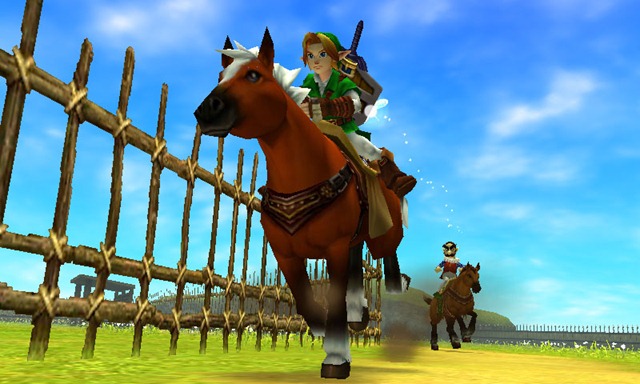
Lon Lon Ranch – The Legend of Zelda: Ocarina of Time
by Pete Leavitt
When it was released, Ocarina of Time felt massive. As has been expressed many times since, going back with modern eyes reveals how geographically small the game actually is. What it may lack in square mileage, it makes up for in character, and Lon Lon Ranch exemplifies this. It is an idyllic ranch under a bright blue sky, with bipolar chickens and a generous, talking cow. Riding the horse Epona felt magical. The control on horseback, as well as the animations and other details, made Epona one of the most cherished parts of the adventure. Her caretaker, Malon, with her apparent sweetness and love, reflects in the comportment of loyal Epona.
It’s true that a rather dark drama plays out here, what with Ingo the ranch hand’s evident mistreatment by the owner, Talon, who doesn’t seem to do much. You could almost sympathize with the reappropriation of the ranch to Ingo by Ganondorf, were it not for Ingo’s transformation into the tyrant he imagined Talon to be, but this duality makes Lon Lon Ranch all the more believable and, perhaps, relatable. It’s a small, somewhat mismanaged operation that created some unfairness, but it is a beautiful place for Link to take a break and make two true friends.
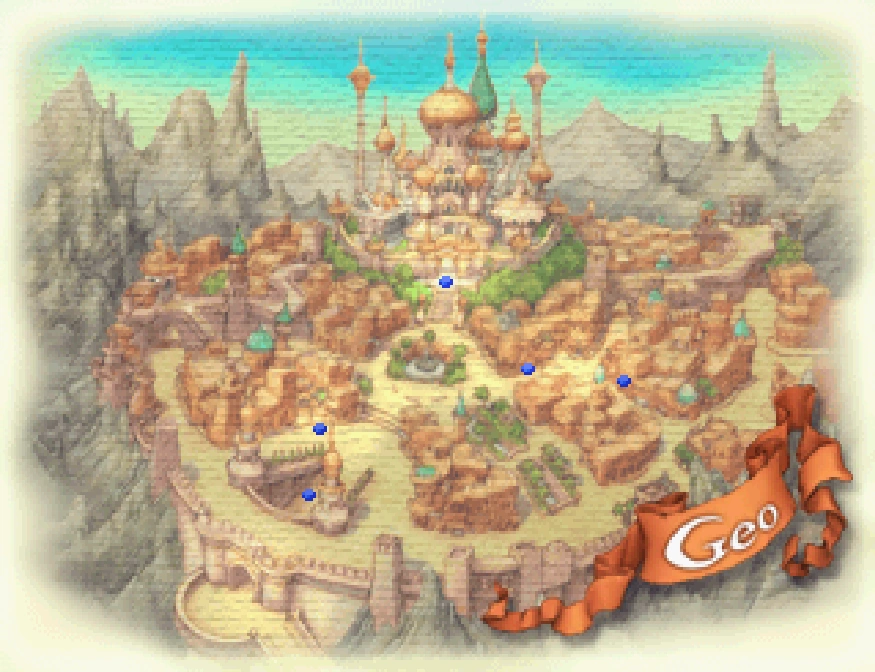
Magic City Geo – Legend of Mana
by Hilary Andreff
When considering RPG locations for this feature, I tried to think about the day to day. Would I enjoy commuting from location to location? Is there enough variety in sights and characters to keep me happy? Through this lens, the beautiful and magical Geo from Legend of Mana was a clear frontrunner. I joke about wanting to be a lifelong student, so the magic academy there is ideal. There’s a scenic beach and a wide variety of shops. Plenty of plot points and interesting character moments occur there, so I could possibly aid some legendary heroes passing through. (Especially if it involves the Jumi. Love them.)
Legend of Mana is often praised for its visual design, and Geo is no exception. The buildings, streets, and locales are pretty breathtaking as you navigate, and I appreciate that you actually have to keep track of what day of the week it is while you’re there—LoM has days devoted to the different Mana spirits. Also, why wouldn’t I want to visit an inn run by a sentient teapot?
New LA – Xenoblade Chronicles X
by Stephanie Sybydlo
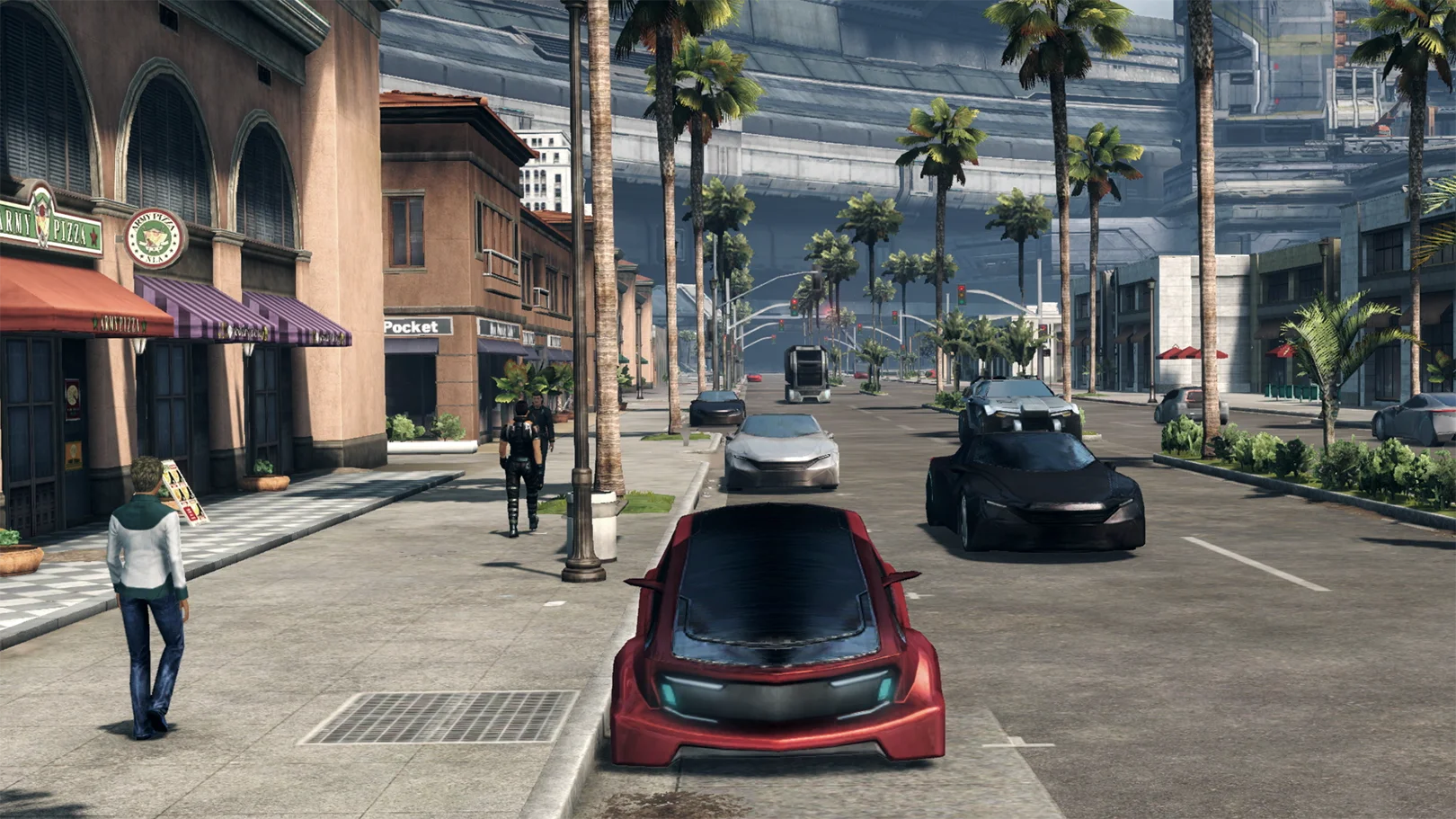
Those who dislike New LA will often cite the music. And though I can look down on its repetitiveness (more lengthy RPGs should opt for longer musical loops), I’m also not sure what tune you’d expect from a high-tech Earth colony that’s home to scientists, engineers, military mercenaries, and civilians, while also being a refuge to other alien life stuck on the Planet Mira! To me, there’s no other sound to encapsulate how many roles this singular hub needs to serve. Xenoblade Chronicles X‘s New Los Angeles is your home away from home, and though the circumstances for how we got here are dire, it’s at least some weight off your shoulder that it’s a burden shared with an entire sci-fi habitat; working (i.e. questing) together to make it all work, and with amenities to make it feel “like home” (like the shopping district, pizza place, or basketball court). But toss a few new moons in the sky, see some mechs flying around, and spot enemy indigens scattering across the continent to really remind you you’re not in Kansas anymore… Numbered Xenoblade games seem to veer more anime fantasy—but X is like 1997’s Starship Troopers military vibe meets Star Trek‘s positive ideology, and I love it.
Pascal’s Village – NieR: Automata
by Aleks Franiczek
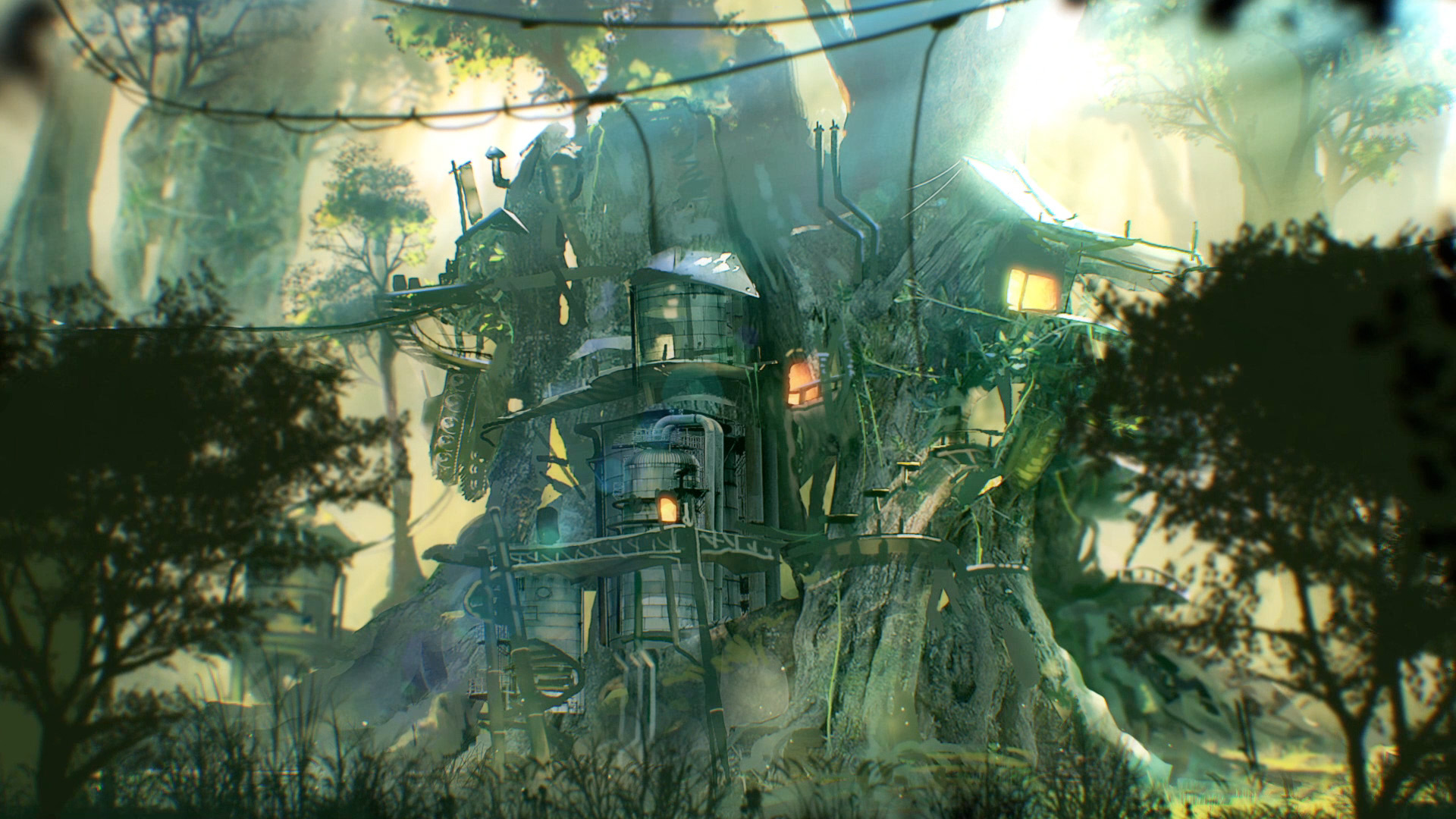
While I’m no proponent of an AI robot takeover, I can’t deny that all the cute little machine lifeforms that inhabit Pascal’s Village circuited their way into my flesh-and-blood heart. Maybe it’s the way they uncannily emulate common human relations. Maybe it’s the way they uncannily cite great human philosophers. Maybe it’s just their chunky cylindrical body shapes. All I know is that I wouldn’t mind visiting their peaceful forest haven and getting to better observe what their daily interactions look like. It would at least be way more interesting and memorable than talking to an LLM on my computer screen.
I could have lengthy discussions about existentialism with the top hat-wearing Jean-Paul. I could better understand the wholesome relationship between Big Sister and Little Sister. All while the village’s fantastic theme loops in the background. Although I guess NieR: Automata‘s music wouldn’t actually be playing while there, would it… Oh well. I’ll bring a portable speaker with me.
Saturn Valley – EarthBound
By Aubrey Bryn
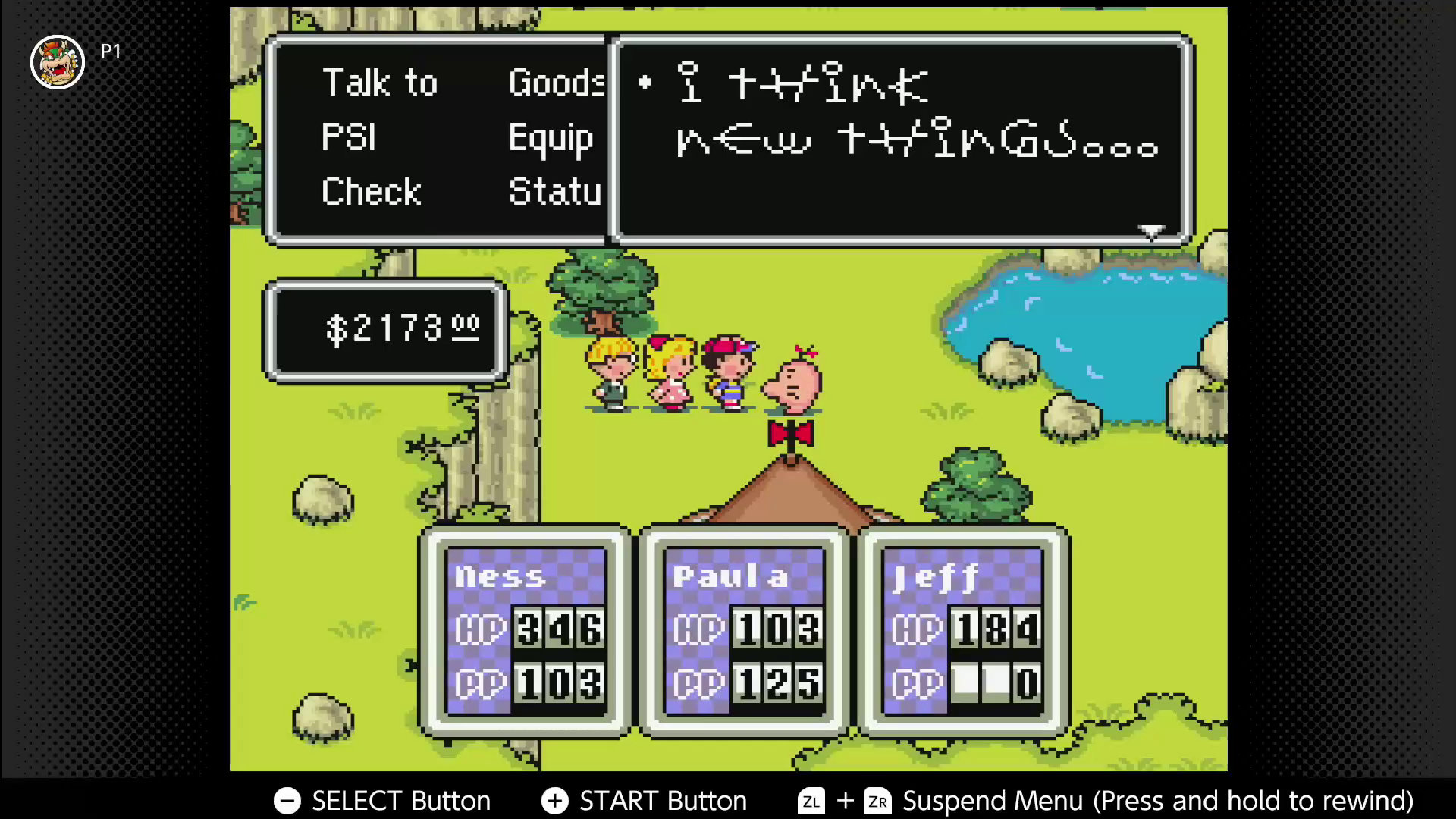
For as interesting and awe-inspiring many RPG towns and villages can be, sometimes what you need is something with more whimsy, which EarthBound‘s Mr. Saturn have in abundance. The Mr. Saturn are not judgmental and they don’t fight each other; they just hang out and do their thing.
Plus, Saturn Valley has all the amenities I could ask for—a hospital, hotel, multiple vendors, ducks, and a hot spring! What else could you want? The only real downside is the nearby factory, but hopefully a protagonist will come deal with it while I relax.
BOING!
Skyloft – The Legend of Zelda: Skyward Sword
by Matt Wardell
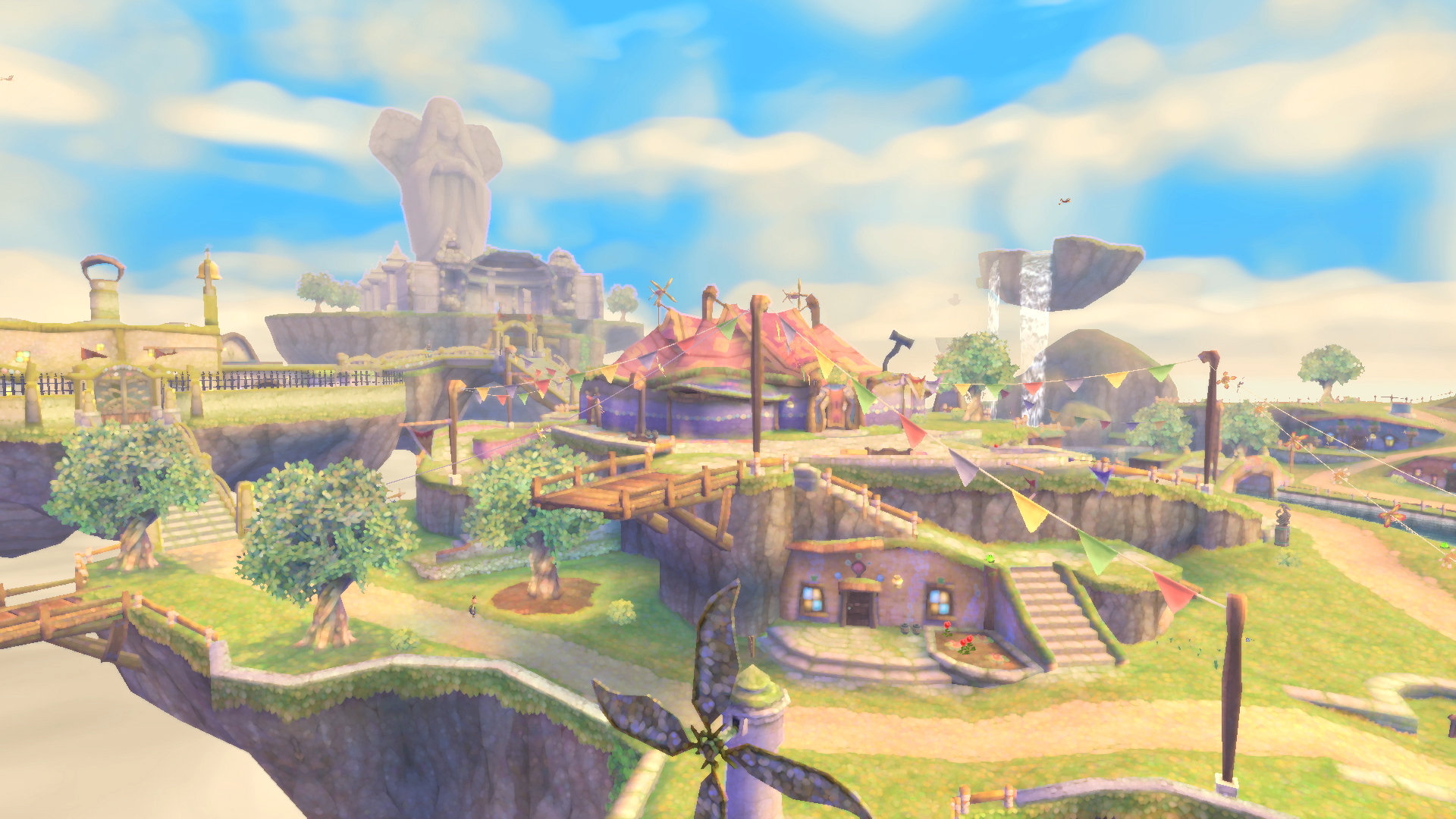
Evil wizard pigs and fearsome beasties notwithstanding, there are few Zelda towns that I wouldn’t want to live in, as my colleagues have shown in this article. But I raise you: do those other towns let you travel around by giant Shoebill-inspired Loftwing birds? Didn’t think so. The floating town of Skyloft boasts fluffy cloud vistas, a warm and creamy colour palette, and one of the series’ more interconnected communities in terms of its residents and secret goodies. With a farm, school, library, shrine, and shops, it also feels like a living and livable space. It’s like the Shire in the sky… the Skyre!
Skyloft brings the pastoral vibes Zelda towns are beloved for, but spices it up with dashes of adventure. Just be sure your Loftwing is nearby before diving off the edge.
Springvale – Genshin Impact
by Pete Leavitt
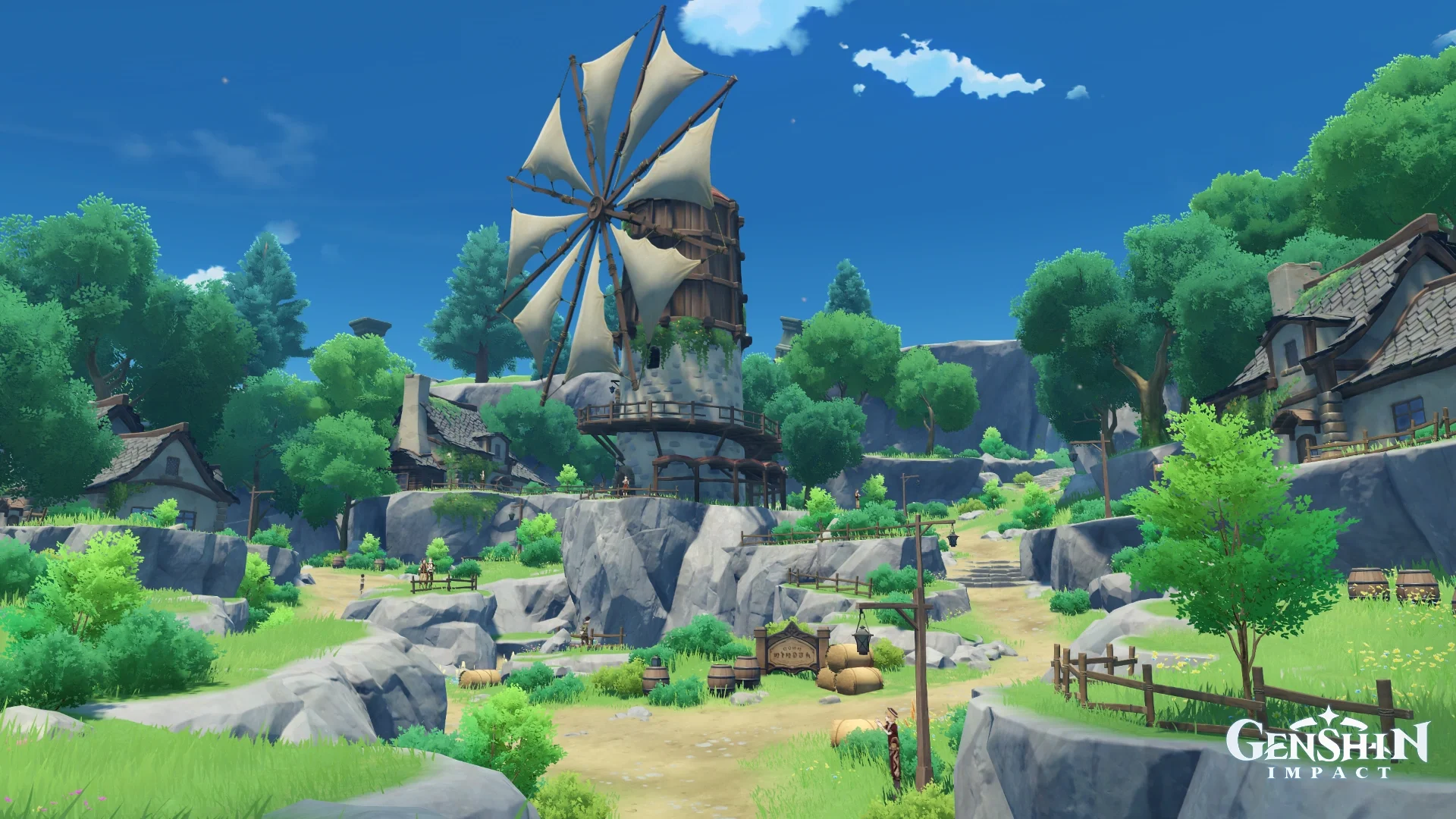
Genshin Impact spawned a revolution of massive, flashy, high production value RPGs with allegedly no monetary cost to play. I have no issues admitting that it was a very special work to me personally, and although I don’t play it anymore, I look back on it with nothing but fondness and gratitude for what I was able to get out of it. I’ve tried many of the games that came in its wake, and although they are probably pretty good and, for some, they’ll have the effect this had for me, I found that the cadence and pacing of Genshin Impact remained somewhat unique compared to the rest. Namely, it was not afraid to slow down.
Springvale is a town you encounter very early. It isn’t noteworthy; it’s just a hunting village outside of Monstadt with a yearly cooking competition and a large windmill as its only claims to fame, but the characters you meet sweeten the pot, and the whole gumbo comes together with the breathtakingly contemplative melody that plays for you within its boundaries. All that ever needed to be said about the history, tradition, and culture of Springvale is said in its wistful, stirring instrumental theme. Especially the guitar version.

Tatsumi Port Island – Persona 3 Reload
by Paul Skevington
I want to go to the beautiful island surrounded by bright, azure water and watch the wind turbine as it spins lazily. There’s an old store selling used books that I could spend hours in, a karaoke bar if you want to be mildly embarrassed on a night out with friends, and a weird antique shop filled with curiosities. Club Escapade is calling me too, with its upstairs area tucked away from the dancing crowds, perfect for private conversations. Yes, it’s got some shady areas, and something very off-putting happens at night, but nobody in Persona 3 Reload remembers anything about that, so why worry? I’ll shake the shadows from my mind with a tasty meal at Hagakure Ramen, or Wild Duck Burger if I’m feeling like an unhealthy treat. The real attraction of Tatsumi Port Island, though, is its isolation; it’s a little world separated from the rest of the world by a blue barrier. Despite its issues, I’m longing to visit it and the people who live there.

Tuliyollal – Final Fantasy XIV: Dawntrail
by Mario Garcia
Bustling markets. Laid-back beaches. Gorgeous architecture. Delicious tacos. Cute clothes. They can all be found in Tuliyollal, the lively, multi-ethnic, harmonious capital of Tural. After the doom and gloom of Endwalker, the developers opted in Dawntrail to take our Warriors of Light to a city that represents a hopeful vision of the world we had fought to preserve.
And it’s a lovely city! For one, the For’ard Cabins is my favorite inn in the game, solely for how idyllic and peaceful its atmosphere is. Get me one of those cabins set up as a beachside home, and I’d be set! I also love how beautiful and alive this hub feels. There are tons of cute touches, like NPCs going about their days in the markets, grabbing food at a taco stand, and the like.
As a Latino player, it’s fantastic getting to see cultures from throughout the Americas represented so vibrantly in Tulilloyal. This is a space that wears its history on its sleeve and celebrates it, and I appreciate being able to enjoy that in one of my favorite online worlds.
Whirling-in-Rags – Disco Elysium

by Mark Roddison
From the first time Harrier wakes from his all-night bender, surveying the wreckage of his tiny, rented room, the Whirling-in-Rags discotheque/motel hooks its weathered melancholia and local history into your journey through Disco Elysium. It’s no surprise the grimy lino floors and smeared windows literally take central place in Harrier’s investigations around Revachol, nor that so many profound character moments happen within its cracked orifices and faded function rooms. From the bullish machoism of Titus Hardie, to the tense encounter with Klassje, and not to mention all that happens in its rear courtyard, Whirling-in-Rags drills itself into gaming history and memory. It’s a place you’d reluctantly try just once, only to be so seduced by its faded grandeur you’d be found the following morning, beer in one hand; the other cupped around the karaoke microphone. The owner (quoting a lyric from the actual composer’s work) puts it best: “Hail holy queen of the sea, you’re whirling in rags, you’re vast and you’re sad.”
BONUS!
We had a couple of our newest RPGFan team members come in after our deadline and still interested in contributing, so, surprise, you’re actually getting a list of 27 RPG locations we want to visit or vacation in!
Besaid – Final Fantasy X
by Benjamin McVey
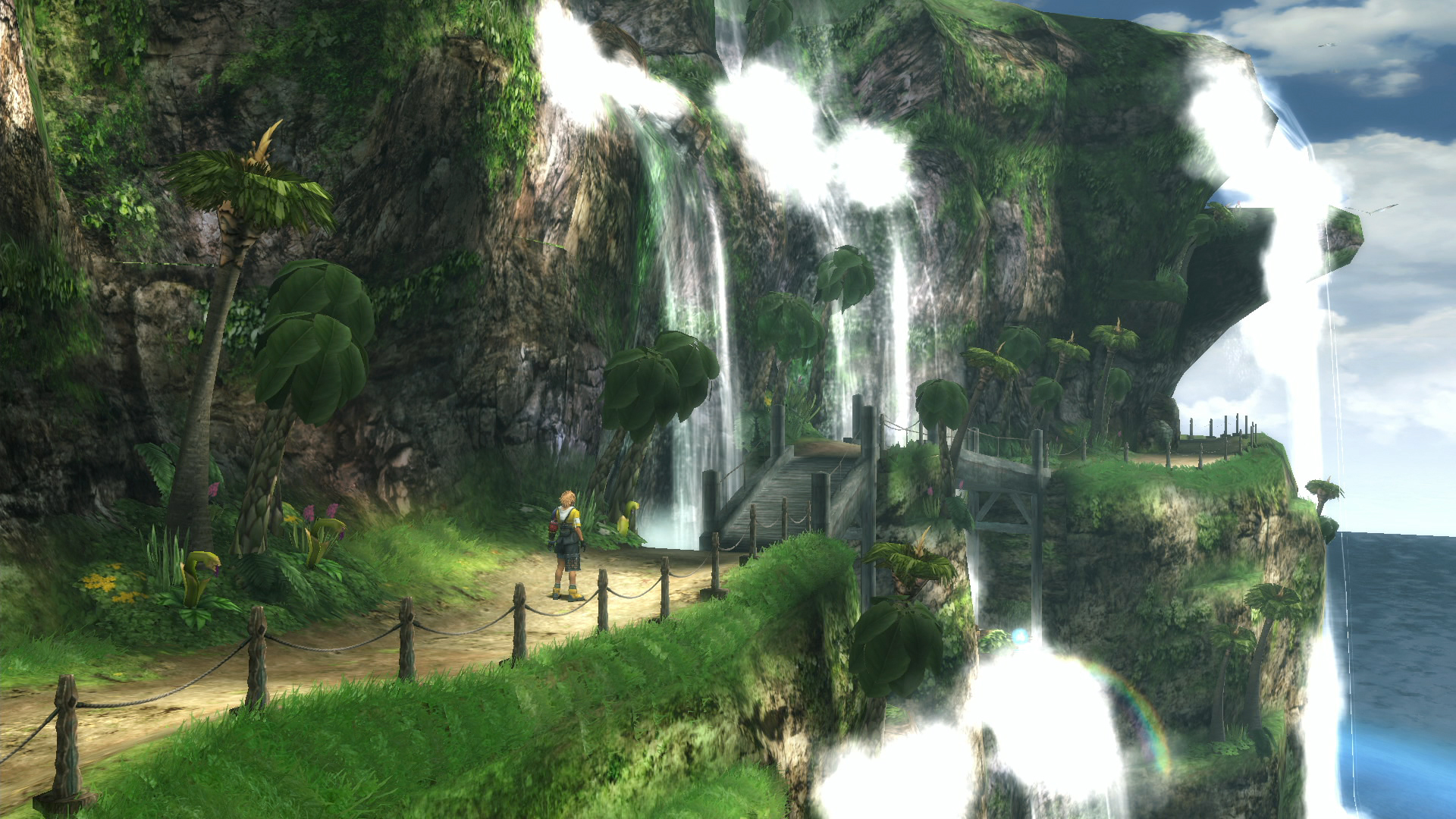
Now, in real life, I detest beaches. I would go as far to say that the only good part of human-induced climate change is that most beaches will disappear. Bye-bye sticky silica (scientific name for sand), bye-bye punk kids, bye-bye the surgical-like application of sunscreen.
Given this, why on earth would I defend and adore Besaid from Final Fantasy X? Well, Besaid transcends real-world coastal misery. As you arrive, you are surrounded by water more pure than any perfume commercial. Transmitted through the electron gun of a CRT, the yellowy, Vaseline-like sand looks enticing. You are treated to its iconic theme music, whose piano melody is instantly catchy and tinged with a beautiful sadness. It sings of something that no longer exists—spoilers: you. On this digital coast, you’ll meet and make lifelong friends like Lulu, Yuna, and Wakka. I don’t know if there is an afterlife, but if I must spend eternity on a beach, it might as well be Besaid.
“Thinking down those lines leads to nothing good, ya?” — Wakka
Doolin – Folklore
by Hagen McMenemy
Many RPG locations are defined by what we can do within them: who we talk to, where we go, what secrets hide in corners. Those are the mechanical bones of a place, and they matter enormously.
But some locations burrow under your skin in a quieter register. The pull is toward the temporal instead of the objective, the temptation to stand still and let the place work on you over time.
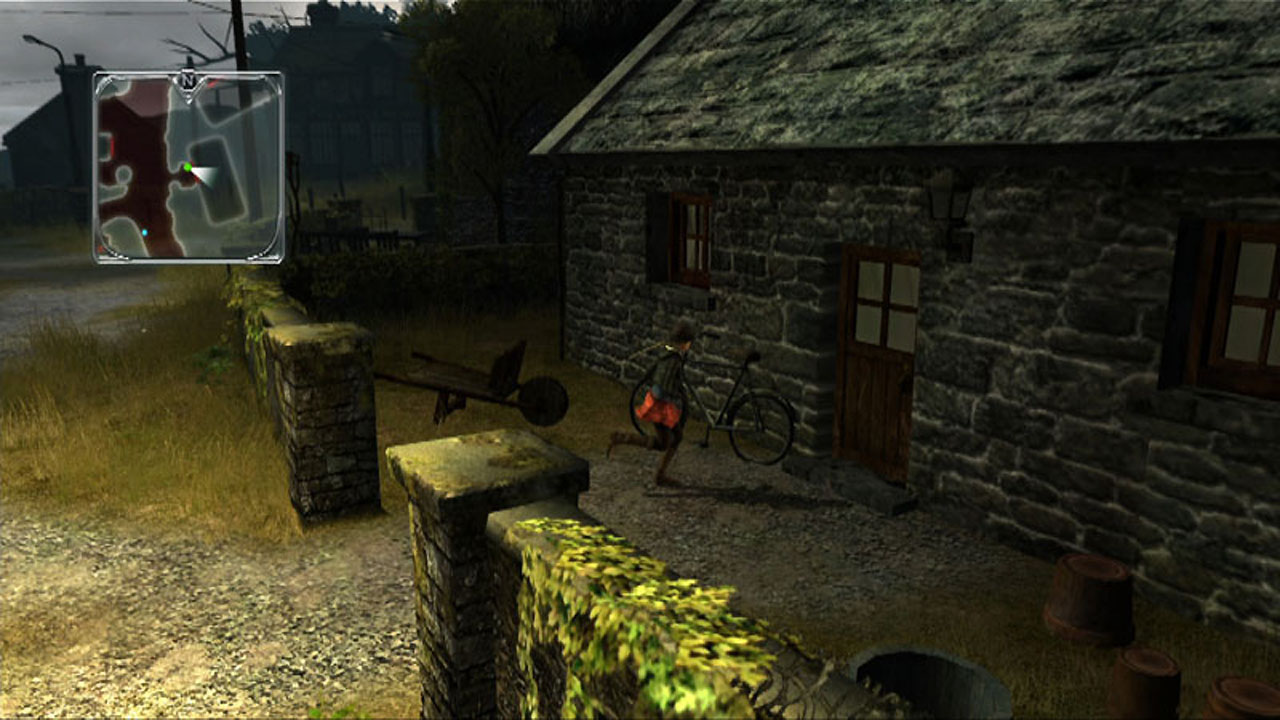
Doolin, the coastal village in 2007’s Folklore, is the clearest example of these intangibles I can name. It’s barely a town, more a handful of houses under a sky that never clears, rendered like a painted backdrop that gives the village a faint unreality even by its own fiction’s standards.
Wind through empty streets, leaves crunching underfoot, cold rain tapping the windows: an ambient hush that never resolves into silence or noise. It isn’t built to impress but to unsettle, the way déjà vu does, or trying to recall a dream you know you had but can’t reconstruct. Narratively, it’s the seam between the living and the dead, but you don’t need the plot to feel that. Walking its streets already puts you in between things.
By the time you’ve spent a few hours there, Doolin stops being a setting and becomes a mood you’ve already carried for years.